Chief Justice Roberts Goes Postal on Trump's USPS Rule

Read the original at Reason ↗
Cite

Blackman, J. (2026, September 15). Chief Justice Roberts Goes Postal on Trump's USPS Rule. Reason. https://reason.com/volokh/2026/09/14/chief-justice-roberts-goes-postal-on-trumps-usps-rule/

Dated when The Aporia collected the article, usually within hours of publication. Check the original for its exact date and byline.

Reason · collected 2026-09-15 · by Josh Blackman

Quick Summary

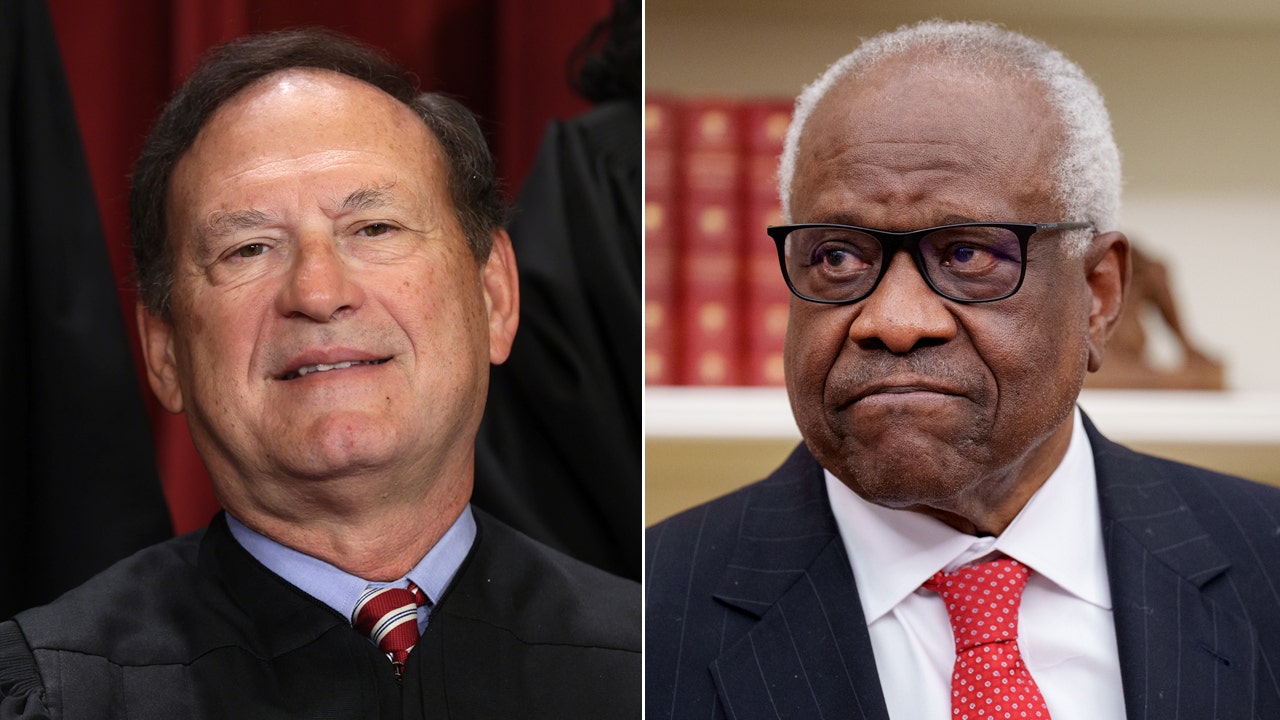
Chief Justice John Roberts wrote a brief majority opinion denying President Trump's request for an emergency stay in United States Postal Service v. California, stating that the government was unlikely to succeed on the merits and that equitable factors did not favor granting the stay. Justices Alito and Thomas dissented, arguing that the government should have been granted the stay, while Justice Kavanaugh agreed with them on the merits but joined Roberts's opinion denying relief based on equitable grounds. The article highlights Chief Justice Roberts’s approach in this case as different from his previous stance, suggesting a shift in handling cases involving Trump administration policies.
Written by AI on 2026-09-15, from this article's own text only (the story summary below draws on all the coverage).
See how they differ ↓

AI analysis

Story summary

Postmaster General David Steiner announced that the U.S. Postal Service has halted work on a controversial computer system developed under President Donald Trump's executive order, aimed at limiting voting by mail. This decision follows Supreme Court rulings striking down the executive order and issuing injunctions against implementing it. The suspension was confirmed in an interview with The Associated Press, where Steiner, who previously worked as CEO of Waste Management, emphasized his agency’s role as independent from political directives despite navigating financial hardships and political turbulence caused by Trump's policies. Unlike Trump, who criticized the court decisions, Steiner avoided commenting on the rulings' merits or implications for voter eligibility ahead of critical midterm elections in November.

Written for “Trump Mail Voting Restrictions” on 2026-11-20, grounded in this article and the 46 other(s) covering the same event.

How they differ

23 outlets covered “Trump Mail Voting Restrictions”.

What each outlet says

One AI summary per outlet of its latest article on this story, written from that article alone and checked against it. Open the article for the outlet's own words.

ReasonThis outlet15 Sep

Chief Justice John Roberts wrote a brief majority opinion denying President Trump's request for an emergency stay in United States Postal Service v. California, stating that the government was unlikely to succeed on the merits and that equitable factors did not favor granting the stay. Justices Alito and Thomas dissented, arguing that the government should have been granted the stay, while Justice Kavanaugh agreed…

Chief Justice Roberts Goes Postal on Trump's USPS Rule (this article)3 articles from Reason on this story
The Guardian21 Sep

Claire Finkelstein discusses the U.S. Supreme Court's recent decision regarding USPS restrictions on mail-in ballots, which temporarily halted changes set to take effect before the midterm elections. While this move is celebrated as a victory for voting rights, Finkelstein argues that it merely postpones addressing whether these new rules are fundamentally permissible under federal law. The article highlights the…

The US supreme court issued a fragile win for voting rights – the real test comes later | Claire Finkelstein →4 articles from The Guardian on this story
The Independent18 Sep

Postmaster General David Steiner told The Associated Press that work on a database central to President Trump's efforts to restrict voting by mail has been suspended following the Supreme Court’s decision against Trump's executive order. Steiner, who avoids commenting on political matters, emphasized his role as an operational leader of an independent agency and did not criticize the court's ruling or Trump’s…

Postmaster General breaks silence on Trump’s failed mail voting crackdown →4 articles from The Independent on this story
Toronto Star18 Sep

The Postmaster General of the United States Postal Service has halted development on a disputed computer system that was pivotal to President Trump's efforts to restrict mail voting, following the Supreme Court’s rejection of his executive order. Additionally, a federal judge ordered the Kennedy Center to give 30 days' notice for any significant changes to the building structure, in response to recent threats by…

The Latest: Postal chief says work has stopped on system key to Trump effort to limit mail voting →4 articles from Toronto Star on this story
Washington Examiner18 Sep

Justice Brett Kavanaugh wrote in concurrence that despite the Supreme Court’s decision not to lift an injunction blocking President Trump's new US Postal Service (USPS) election rules due to timing constraints, the regulations themselves could fall within USPS's statutory authority. The article discusses how Trump’s March 31 executive order aimed to enhance security measures for mail-in ballots by directing USPS to…

Brett Kavanaugh gets Trump’s mail ballot rules right →3 articles from Washington Examiner on this story
NBC News15 Sep

The Supreme Court blocked a new U.S. Postal Service regulation aimed at mail-in ballots just weeks before midterm elections, siding with states and advocacy groups who argued that implementing the rule would disrupt voting processes and prevent millions from casting their ballots. The ruling was 7-2, with Justices Clarence Thomas and Samuel Alito dissenting. Challengers, including California and the League of Women…

Supreme Court says Trump can’t enforce new mail-in ballot regulation →3 articles from NBC News on this story
Show 17 more outlets
Al Jazeera15 Sep

United States Attorney General Todd Blanche stated that the Trump administration will follow the Supreme Court's ruling against implementing new restrictions on mail-in ballots for the November 3 midterm elections, despite President Donald Trump’s criticism of the decision. The court’s action, which left existing voting procedures intact, was met with praise from Blanche but faced harsh condemnation from Trump, who…

Blanche says admin will comply with mail ballot ruling, defends Trump →3 articles from Al Jazeera on this story
CBS News15 Sep

The Supreme Court decided on Monday to prevent changes to mail voting rules proposed by the Trump administration, ensuring current regulations remain in place for the upcoming November midterm elections. This ruling is seen as a significant setback for the administration's efforts to modify election procedures related to mail-in ballots.

Supreme Court hands Trump administration major blow on mail-in voting →3 articles from CBS News on this story
South China Morning Post15 Sep

On Monday, the US Supreme Court denied President Trump's request to lift an order that halted his plan to restrict mail-in voting ahead of the November midterm elections. The majority opinion, with only two conservative justices dissenting, ruled against the president’s attempt, maintaining current state voting procedures. Senate Minority Leader Chuck Schumer commented that the president’s proposal was…

US Supreme Court blocks Trump mail ballot restrictions before midterms →2 articles from South China Morning Post on this story
Fox News17 Sep

Supreme Court Justice Brett Kavanaugh issued a concurrence in United States Postal Service v. California, suggesting there might be grounds for the U.S. Postal Service to enact President Trump's ballot-mail rules in the future. Despite denying Trump’s emergency request for the 2026 midterms, the ruling leaves room for potential reconsideration by the Supreme Court later. Jason Snead of Honest Elections Project notes…

Kavanaugh throws Trump 'a lifeline' on mail ballot rules despite Supreme Court loss before midterms →2 articles from Fox News on this story
NPR15 Sep

The Supreme Court rejected President Trump's attempt to impose new restrictions on mail-in voting for the upcoming midterm elections, ensuring ballots will continue to be delivered as usual by the U.S. Postal Service. Meanwhile, the Kennedy Center faces potential bankruptcy and could close soon due to financial struggles exacerbated by political controversies tied to renaming the institution after Trump.

SCOTUS rejects Trump's mail voting limits. And, the Kennedy Center financial crisis →2 articles from NPR on this story
The Hindu15 Sep

On September 13, 2026, U.S. District Judge Carl J. Nichols in Washington, D.C., issued a preliminary injunction against President Donald Trump’s executive order limiting mail balloting, following similar actions by another federal judge and the U.S. Supreme Court's consideration of the issue. The ruling aims to prevent disenfranchisement due to ballots not being counted as election day approaches. This decision…

Second federal judge freezes Trump mail ballot order with U.S. Supreme Court poised to weigh in →2 articles from The Hindu on this story
Daily Mail15 Sep

President Donald Trump attacked the Supreme Court after it rejected his executive order aimed at changing mail-in voting practices ahead of midterm elections. The court, in an emergency ruling, dismissed the request from Trump's lawyers to allow the Postal Service to 'check' ballots against voter databases, arguing that implementing such changes so close to election day would be impractical. In response, Trump…

Trump unleashes fury on Supreme Court he built as he fumes they 'set America back a hundred years' after voting defeat →2 articles from Daily Mail on this story
Mother Jones15 Sep

On Monday, the Supreme Court blocked President Trump's effort to implement new US Postal Service rules limiting ballot delivery for the midterms, arguing that it was unlikely to prevail legally and that such action could disenfranchise many voters. Justices Alito and Thomas dissented, suggesting support for similar actions in future elections. The article describes this as part of a broader pattern of Trump…

Supreme Court Blocks Trump’s Mail Ballot Scheme →
Los Angeles Times15 Sep

The Supreme Court has halted President Trump’s plan to restrict voting by mail for this year's elections, agreeing with California Attorney General Rob Bonta and 22 other states that it is too late to implement new postal service rules. This decision leaves in place a federal judge’s order preventing the U.S. Postal Service from enforcing the proposed regulations, which would have required unique bar codes for every…

Supreme Court halts Trump's proposed limits on mail ballots for this year's elections →
The Bulwark15 Sep

The Bulwark’s Sam Stein and Andrew Egger report on a Supreme Court decision that rejected former President Donald Trump's executive order imposing restrictions on mail-in voting. The article focuses on this ruling as a significant moment in addressing concerns over access to postal voting during elections.

BREAKING: Supreme Court REJECTS Trump's Mail-In Ballot Restrictions →
BBC15 Sep

The US Supreme Court has rejected President Donald Trump's plan to impose new restrictions on voting by mail before November’s midterm elections. The justices upheld a federal judge's order, preventing the USPS from implementing rules that would have required ballots to be delivered only to voters listed as citizens, which Democrats and some election officials argued could suppress voter turnout. In response, Trump…

Trump criticises Supreme Court after justices block mail-in ballot restrictions →
CBC15 Sep

The U.S. Supreme Court refused a request by President Trump's Justice Department to allow the U.S. Postal Service to enforce new rules restricting mail-in ballots before November’s midterm elections, dealing a blow to efforts to limit voting by mail. The court rejected the move without comment, except for dissenting opinions from Justices Alito and Thomas, who criticized some of the legal challenges as unlikely to…

U.S. Supreme Court rejects Trump's bid to restrict mail-in ballots ahead of November midterms →
Euronews15 Sep

The US Supreme Court denied President Trump's request to restrict mail ballots for the midterm elections, allowing states to continue their usual processes. This decision affects nearly one-third of votes cast and represents a significant defeat for Trump, who has long opposed mail voting despite using it himself. The ruling came after some states had already begun sending out ballots, making any last-minute changes…

US Supreme Court deals blow to Trump's attempts to restrict mail ballots ahead of midterm election →
The Straits Times15 Sep

On September 14, the US Supreme Court declined to allow the United States Postal Service (USPS) to enforce a new rule that would have restricted mail-in ballots. This ruling supports ongoing legal challenges by states and voting rights groups against the USPS measure, which was introduced after President Trump's March executive order aimed at tightening rules for mail voting ahead of November’s midterm elections…

In loss for Trump, Supreme Court won’t let US Postal Service restrict mail ballots →
UPI15 Sep

On September 14, the U.S. Supreme Court rejected President Donald Trump's plan to impose new restrictions on mail-in ballots ahead of the November midterm elections, ruling that his administration was unlikely to succeed in challenging a lower court’s decision against these changes. The court voted 7-2 with Alito and Thomas dissenting. Trump had proposed rules giving the U.S. Postal Service authority to verify voter…

Supreme Court rejects Trump plan to limit mail-in voting for midterms →
ABC News (AU)15 Sep

US President Donald Trump criticized the Supreme Court for blocking a regulation he pushed to restrict mail-in voting ahead of November's midterm elections. The rule would have required voter-specific data and use of USPS-approved envelopes with barcodes. In response to the court’s brief unsigned decision rejecting this plan, Trump accused the justices of being "bullied" by the left on social media. Attorney-General…

Trump criticises Supreme Court for rejecting restrictions on mail-in ballots →
New York Post17 Sep

Supreme Court Justice Brett Kavanaugh wrote a concurring opinion suggesting that the United States Postal Service (USPS) may have the authority to implement President Trump’s ballot-mail rules in the future, despite the Supreme Court rejecting their immediate implementation for the 2026 midterm elections. The court denied an emergency request by the Trump administration to lift a lower court injunction blocking the…

Kavanaugh throws Trump ‘a lifeline’ on mail ballot rules despite Supreme Court rejecting restrictions →

Where they agree and split

Agreed

Reported by outlets on both sides of the middle

The postal service could refuse to deliver ballots to states that didn’t comply.

8 outlets
Show 3 more

Mail ballots already are being sent out in at least three states — Alabama, North Carolina and Wisconsin — and more states are preparing to distribute mail ballots this week.

8 outlets

“The government is unlikely to succeed on the merits of its challenge to the district court’s preliminary injunction,” states the one-paragraph unsigned order.

7 outlets

The Trump administration has asked the Supreme Court to lift Talwani’s injunction and allow the Postal Service rules to take effect while litigation continues.

6 outlets

Disputed

Picked by our model, which is sometimes wrong

  • Outlets differ on the implications of the Supreme Court's decision: some describe it as a major setback for Trump, while others suggest there is still potential for future implementation of the rules.67

Framing

How the first headlines put it

  • The South China Morning Post and The Independent frame the event differently, with the former focusing on judicial decisions blocking Trump's restrictions while the latter emphasizes the Supreme Court’s rejection as a humiliating blow to Trump.16
  • The Washington Examiner highlights the urgency of time running out for implementing the executive order, whereas The Guardian focuses more on the implications for election integrity and voter access.28
Stated as fact2
The headlines (2)

Trump’s mail-in voting restrictions blocked by a second judge South China Morning Post · stated as fact

Time is running out for Trump’s mail-in voting executive order Washington Examiner · stated as fact

Words to watch (3)

Supreme Court refuses to allow Trump's mail voting restrictions for the midterms NPR

Supreme Court Refuses to Block Lower-Court Ruling Against Trump's Mail-in Ballot Executive Order Reason

Supreme Court deals humiliating blow to Trump by throwing out mail ballot ban The Independent

The full story: what happened, how it changed, and all 47 articles →

Compared with similar articles

This article reads leans left and hedges 12% of its claims. Each row says how that neighbour differs.
Mother Jones
Leans strongly left further left than this Hedges 9 of 73 claims Outlet record 60/100
Los Angeles Times
Leans left Hedges 9 of 43 claims Outlet record 95/100
Fox News
Hedges 2 of 13 claims Outlet record 67/100
BBC News
Hedges 7 of 45 claims Outlet record 65/100
CBS News
Leans left Hedges 5 of 38 claims Outlet record 67/100
Reason
Leans strongly left further left than this Hedges 1 of 15 claims Outlet record 67/100
Al Jazeera
Leans left Hedges 4 of 16 claims Outlet record 60/100
The Hindu
Leans left Hedges 6 of 31 claims Outlet record 60/100
The Independent
Hedges 6 of 24 claims Outlet record 59/100

Story

Trump Mail Voting Restrictions
Politics · 47 article(s) covering the same event. Compare every outlet's account →
How this article was measured signals, leaning charts, publisher record, byline, topics and claims

Signals How these are calculated →

Claims extracted
57
sentences that state something as happening or true
Uncertain
12%
7 of 57 hedged ("reportedly", "may", "according to")
Leaning
Leans left
of the writing, not the subject · beta estimate
Publisher signals
67/100
Reason's corrections and hedging, across everything collected from it. Not a measure of accuracy.
Outlets on this story
47
Politics
Same framing elsewhere
1
articles that frame the event the way this one does
Analyzed 2026-09-15 · how these are computed

How this is being covered How these are calculated →

Article leaning vs. publisher reliability
Source leaning vs. consistency

Publisher

Reason · 1437 article(s) · 4 correction(s) detected
Running correction rate · 4 correction(s)

Who wrote this

Josh Blackman
110 article(s) here · 1 carrying a prediction
The results are worth a careful study to forecast the future religious landscape in the United States, and how those numbers will affect debates about religious liberty.
Secretary of State Marco Rubio delivered the Olson Lecture, White House Counsel Will Scharf had a fireside chat, White House Advisor May Mailman discussed over-regulation, and Gene Hamilton favored restrictive immigration policy on behalf of America First Legal Foundation.
2026-11-15 · assertive framing · The Mayflower Extract
In the Spring of 2026, I communicated to the White House Counsel's Office that, if a vacancy opened on the Eighth Circuit, would be interested in being considered for the vacancy.
The goal, of course, was to ensure that states with one or more Democratic senators would not be able to block all circuit court nominees.
2026-11-13 · assertive framing · At Large Circuit Nominees?
First, it is good to be back at the Mayflower--well at least good for those of us who made it in.
2026-11-13 · assertive framing · Back At The Mayflower
Even if a Republican wins the 2028 presidential election, it will be virtually impossible for the Senate to flip red during his term.
2026-11-11 · assertive framing · Who Is Left On The Bench For 2033?
Maybe Trump determined that he needed as many judges confirmed before January, so the identity of the judge didn't matter.
2026-11-11 · assertive framing · The President Nominates Circuit Judges, Not Senators
Given the large Democratic Senate majority and unfavorable maps for 2028 and 2030, a Republican Senate with the votes to confirm originalist judges may not return until 2033 at the earliest.
I have known both of these sharp legal minds for some time, and would welcome their addition to the bench.
"The loudest voices that people hear are these megachurches, and they think that's what we're all doing," said the Rev. Janet Maykus.
2026-11-09 · assertive framing · Talarico's Christianity
Also by Josh Blackman
The Mayflower Extract
2026-11-15 · Reason
Nothing else under this byline is closely related to this article, so these are simply their most recent.
All 110 articles by Josh Blackman →

Topics

California Court Missouri United States Postal Service the District Court's

Subjects

Alito PERSON · 9× Court ORG · 9× Kavanaugh PERSON · 8× Trump PERSON · 6× Missouri GPE · 3× Roberts PERSON · 3× Barrett PERSON · 2× Thomas PERSON · 2× California GPE · 1× United States Postal Service ORG · 1×

Narrative

Indeed, this Court spent from late July to the end of August drafting nearly 40 pages of opinions, including two dissents, despite the Government's public notice that it would not publish a final rule while subject tothe injunctions, see 91 Fed. Reg. 44880, and its representation that it had a strong interest in issuing its rule in early- to mid-August to allow time to implement it.
framing: assertive · carried by 1 article(s) · first seen 2026-09-15
The majority couldn't be bothered to say anything more than a sentence.
2026-09-15 · Reason
Chief Justice Roberts Goes Postal on Trump's USPS Rule · assertive framing

Claims (57 extracted, 7 hedged)

Mostly law professors | Sometimes contrarian | Often libertarian | Always independent This evening, the Court finally decided United States Postal Service v. California. asserted
Court → decide → California
Very often, the procedural posture of a case is described as tortured. asserted
posture → describe → case
This posture is torturous for everyone involved. asserted
posture → involve → everyone
Here, I'll offer a few high-level thoughts. asserted
I → offer → thoughts
First, the majority opinion, perhaps to its credit, offers two sentences of analysis. asserted
opinion → offer → analysis
The Government is unlikely to succeed on the merits of its challenge to the District Court's preliminary injunction. asserted
Government → succeed → injunction
And the equitable factors applicable for obtaining emergency relief from this Court do not favor a stay. asserted
factors → obtain → stay
I say perhaps, because the Court reaches out to decide the merits on the emergency docket without any analysis. asserted
Court → say → analysis
Justice Alito, joined by Justice Thomas, offers a thorough analysis of why he thinks the government wins on the merits. asserted
government → join → merits
Justice Kavanaugh agrees with Justice Alito on the merits. asserted
Kavanaugh → agree → merits
The majority couldn't be bothered to say anything more than a sentence. asserted
majority → bother → sentence
This stay application has been pending on the docket for about eight days, but this issue has been percolating for months. asserted
issue → pende → months
Surely, Chief Justice Roberts could have whipped up a few sentences to explain why Trump loses. uncertain
Trump → whip → sentences
He made up a few such sentences in the ballroom case. asserted
He → make → case
All the Court had to write to deny the stay was that the equities did not favor emergency relief. asserted
equities → have → relief
Those are the grounds on which Justice Kavanaugh ruled. asserted
Kavanaugh → rule → which
But the Chief Justice didn't want this case to come back, so he reached the merits. asserted
he → want → merits
If there is no need to decide more, the Court should not decide more. asserted
Court → be → more
Except when Trump is involved. asserted
Trump → involve → ?
Regrettably, Justices Gorsuch and Barrett joined the Chief's drive-by shooting of Trump's policy. asserted
Gorsuch → join → policy
Second, let's turn to Justice Kavanaugh. asserted
's → let → Kavanaugh
It seems clear he will deny any application that urges sudden changes to election rules before the election. asserted
that → seem → election
I think there were serious questions about whether the litigants from Missouri had appellate standing. asserted
litigants → think → standing
Likewise, in the postal case, Justice Alito points out there are serious questions about standing. asserted
Alito → point → standing
But on the emergency docket, when the equities are strong enough, the Court can just ignore standing. asserted
Court → ignore → standing
Why did Justice Kavanaugh bother signaling his vote? asserted
Kavanaugh → bother → vote
In case after case, Kavanaugh finds a way to rule against Trump while saying he would rule for him if the facts were different. asserted
facts → find → him
Kavanaugh, having ruled that the equities cut against Trump, has no reason to say which way the merits go. asserted
merits → rule → reason
If Roberts and Kavanaugh were on the same wavelength eight years ago, now they are quite at odds when push comes to shove. asserted
push → come → shove
Fourth, it is curious why Alito and Thomas said nothing in the Missouri cases. asserted
Alito → say → cases
I thought of a passage from Mollie Hemingway's excellent new book on Justice Alito: asserted
I → think → Alito
Around the Court, Alito's chambers are seen as the "Green Berets," an elite unit that improves any position it enters. asserted
it → see → position
The justice often uses military lingo, explaining to his clerks, for example, that "I don't think we need to take point on that one" means "it's not worth sticking our neck out on that issue." asserted
it → use → issue
I guess it was not worth Alito sticking his neck out in Missouri, especially since Kavanaugh was locked in and the issue would not return to the Court. asserted
issue → guess → Court
But Alito thought it was worth taking point in the postal service case, especially since the litigation would continue in the lower courts. asserted
litigation → think → courts
Fifth, Justice Alito (as noted above) raises some important issues concerning standing. asserted
Alito → note → standing
To begin, the District Court issued a nationwide injunction based on claims asserted by several plaintiff organizations that likely lack standing. uncertain
that → begin → standing
These organizations first claim a direct organizational injury because the rule supposedly thwarts their ability to educate members about voting. uncertain
rule → claim → voting
Yet this theory of injury is based on "'a setback to the organization's abstract social interests'" and an effortto "spend its way into standing simply by expending money to gather information and advocate against the defendant's action[s]." asserted
theory → base → ]
Justice Gorsuch has made it his life's mission to root out offended observer standing and related doctrines, such a diversion of resource standing. asserted
it → make → standing
…and 17 more, not listed.

Give feedback · no sign-in needed

No sign-in needed for now. Your note is sent without a name, so it cannot be answered.

History Support