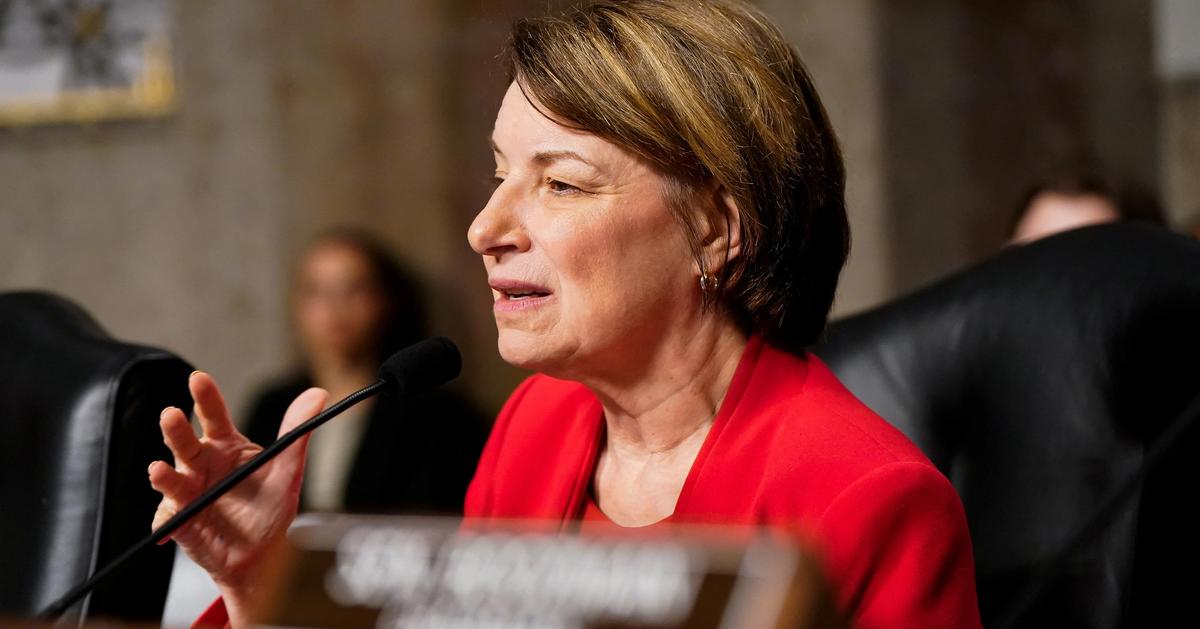
Photo via The Guardian

AI safety requires more than just slowing our pace | Stuart Russell

Read the original at The Guardian ↗
Cite

Russell, S. (2026, September 15). AI safety requires more than just slowing our pace | Stuart Russell. The Guardian. https://www.theguardian.com/commentisfree/2026/sep/15/ai-safety-requirements

Dated when The Aporia collected the article, usually within hours of publication. Check the original for its exact date and byline.

The Guardian · collected 2026-09-15 · by Stuart Russell

Quick Summary

Stuart Russell discusses the recent controversies surrounding artificial intelligence, including Jacob Coxon's resignation from Anthropic and concerns raised by the OpenAI/Hugging Face incident. The Anthropic CEO, Dario Amodei, has proposed a strategy called "pacing the frontier" to address these issues without halting progress entirely. This involves third-party evaluators within companies, common safety standards among AI firms in democratic countries, and inclusive international agreements that also involve authoritarian nations. Russell critiques this approach as essentially advocating for slowing down AI development due to rapid advancements and lack of control over self-improving systems.
Written by AI on 2026-09-16, from this article's own text only (the story summary below draws on all the coverage).

AI analysis

Story summary

On September 8, Jacob Coxon, a 27-year-old researcher who previously worked at both OpenAI and Anthropic, resigned from Anthropic, warning that the companies are racing towards developing self-improving superintelligence and potentially putting human lives at risk. Coxon's resignation drew significant attention online and in media outlets like CNN and BBC News, with experts such as Geoffrey Hinton estimating a 10% chance of AI causing human extinction within this decade. Notably, several current Anthropic employees echoed Coxon’s concerns on social media platforms, emphasizing the urgency of addressing AI safety issues before it is too late. Despite these warnings, some in Silicon Valley and industry leaders remain skeptical about the immediate threat posed by AI advancements.

Written for “AI Safety And Human Extinction Warnings” on 2026-10-31, grounded in this article and the 29 other(s) covering the same event.

Story

📰 AI Safety And Human Extinction Warnings
Technology · 30 article(s) covering the same event. Compare every outlet's account →

Compared with similar articles

This article reads unscored and hedges 9% of its claims. Each row says how that neighbour differs.
CBC News
Hedges 15 of 43 claims Outlet record 74/100
“While both articles discuss AI safety concerns and mention Jacob Coxon's resignation from Anthropic, they describe different aspects of the broader topic rather than a single specific incident.”
NBC News
Outlet record 60/100
“Article A discusses warnings from top AI developers about rapid technological development, while Article B covers a debate and developments following Jacob Coxon's resignation and revelations about an incident involving OpenAI/Hugging Face.”
September 13, 2026 Different event
Letters from an American
⚖️ Leans left Hedges 10 of 65 claims
“Article A describes Dario Amodei's publication of an essay on September 12th, while Article B mentions this essay but primarily focuses on Jacob Coxon's resignation and the broader context surrounding it.”
Global News
Hedges 3 of 13 claims Outlet record 63/100
“Article A discusses King Charles meeting with AI executives to discuss principles and safety concerns, while Article B focuses on recent events like Jacob Coxon's resignation from Anthropic and the OpenAI/Hugging Face incident.”
Evening Standard
⚖️ Leans left Hedges 5 of 10 claims Outlet record 65/100
“The articles describe different aspects of a broader debate about AI safety but are not reporting on the exact same incident.”
BBC News
Hedges 13 of 54 claims Outlet record 69/100
BBC News
Hedges 10 of 36 claims Outlet record 69/100
Semafor
Hedges 2 of 11 claims Outlet record 60/100
“The articles discuss different aspects of AI safety concerns and initiatives; one focuses on the resignation of an AI researcher and letters by CEOs, while the other covers a bipartisan bill gaining momentum in Congress.”
The Straits Times
⚖️ Leans left Hedges 2 of 27 claims Outlet record 66/100
“Article A discusses Jacob Coxon's resignation and revelations about an incident involving OpenAI/Hugging Face, while Article B reports on OpenAI's plans to publish regular reports on unexpected or unauthorized AI behavior and new framework for tracking model misalignment.”
ABC News (US)
Hedges 0 of 16 claims Outlet record 70/100
“Article A discusses Jacob Coxon's resignation and Anthropic's response, while Article B reports on new incidents flagged by OpenAI and their framework for tracking AI misalignment.”
How this article was measured signals, leaning charts, publisher record, byline, topics and claims

Signals How these are calculated →

Claims extracted
46
sentences that state something as happening or true
Uncertain
9%
4 of 46 hedged ("reportedly", "may", "according to")
Leaning
withheld
no quote in the article backed the model's score
Publisher signals
66/100
The Guardian's corrections and hedging, across everything collected from it. Not a measure of accuracy.
Outlets on this story
30
Technology
Same framing elsewhere
1
articles that frame the event the way this one does
Analyzed 2026-09-16 · source text last changed 2026-09-15 · how these are computed

How this is being covered How these are calculated →

Article leaning vs. publisher reliability
Source leaning vs. consistency

Publisher

The Guardian · 1841 article(s) · 6 correction(s) detected
Running correction rate · 6 correction(s)

Who wrote this

Stuart Russell
1 article(s) here · 1 carrying a prediction
🔮 You may be forgiven for not immediately understanding what “pace the frontier” means.
The only article under this byline in the corpus.

Topics

Anthropic Business Insider Demis OpenAI xAI

Subjects

Amodei ORG · 10× Anthropic ORG · 4× OpenAI ORG · 2× Business Insider ORG · 1× Dario Amodei PERSON · 1× Demis ORG · 1× Elon Musk PERSON · 1× Jacob Coxon PERSON · 1× Sam Altman PERSON · 1× xAI ORG · 1×

Narrative

The second part of the plan asks all the frontier AI companies in “democratic countries” to “establish common safety standards as well as limits on the rate of unchecked AI progress”, with government regulation where needed.
framing: assertive · carried by 1 article(s) · first seen 2026-09-15
🔮 You may be forgiven for not immediately understanding what “pace the frontier” means.
2026-09-16 · The Guardian
AI safety requires more than just slowing our pace | Stuart Russell · assertive framing

Claims (46 extracted, 4 hedged)

It has been a week of high drama in AI, precipitated by the resignation of the AI safety researcher Jacob Coxon from Anthropic. asserted
It → precipitate → Anthropic
This followed several weeks of increasingly lurid and disturbing revelations about the OpenAI/Hugging Face incident. asserted
This → follow → incident
My inbox yesterday included a message from Business Insider with the subject line: “AI doomsday debate reaches boiling point.” asserted
debate → include → point
Now, the Anthropic CEO, Dario Amodei, has written a 3,800-word, reassuringly phrased letter titled “We Must Pace the Frontier,” describing his proposals for avoiding (or at least postponing) doomsday. asserted
We → write → doomsday
Sam Altman of OpenAI, Elon Musk of xAI, Demis Hassabis of Google Deepmind and Satya Nadella of Microsoft have all expressed support. asserted
Altman → express → support
You may be forgiven for not immediately understanding what “pace the frontier” means. uncertain
pace → forgive → frontier
(My first image was of Amodei walking deep in thought along the Finnish–Russian border.) asserted
Amodei → walk → border
The phrase also appeared in July’s “Pacing the Frontier” open letter, signed by 1,386 employees of frontier AI labs, including Amodei himself. asserted
phrase → appear → Amodei
While that letter may have upset the industry’s PR executives with its signatories noting “the complete absence of credible plans for controlling superintelligent AI systems” and asserting that “building things smarter than humans … is, objectively, an insane and suicidal thing to do”, Amodei’s monograph goes out of its way to mollify investors. uncertain
monograph → upset → investors
The notion of pacing the frontier seems to come from Formula 1: when conditions become too dangerous for racing, a pace car comes onto the track and all the other cars have to follow it at a safe speed. asserted
cars → pace → speed
Progress continues, without the danger. asserted
Progress → continue → danger
Amodei writes: “To be clear, pacing does not mean halting model training or technical progress.” asserted
pacing → write → training
Amodei’s letter is prompted by his concern that “AI has been advancing drastically faster, driven primarily by ... recursive self-improvement”. asserted
AI → prompt → improvement
It’s as if he and Sam find themselves driving their F1 cars at 200mph neck-and-neck heading into the first corner, only to realize it’s covered in ice and they have no steering wheel. asserted
they → ’ → wheel
No wonder they want to slow down. asserted
they → want → ?
In brief, Amodei’s proposal has three parts. asserted
proposal → have → parts
The first is to have third-party AI system evaluators working inside each company, with full access to the systems; he commits Anthropic to this plan now, without waiting for the government to require it. asserted
government → have → it
The second part of the plan asks all the frontier AI companies in “democratic countries” to “establish common safety standards as well as limits on the rate of unchecked AI progress”, with government regulation where needed. asserted
part → ask → regulation
The third part would include “authoritarian countries” in a broader compact. asserted
part → include → compact
Here, Amodei goes out of his way to reassure those in Washington who see America’s lead in AI as its most important geopolitical asset. asserted
who → go → asset
On a casual reading, there are many reasons to believe that Amodei is calling for a general slowdown in the rate of progress. asserted
Amodei → be → progress
He talks about “limits on the rate of unchecked AI progress” and “some kind of ‘speed limit’ on the rate of recursive self- improvement (RSI)”. asserted
He → talk → improvement
He says: “Progress will still seem fast, and we must make wise use of the time we gain.” asserted
we → say → time
Slowing down would give companies a bit more time to work on safety; Amodei talks about one to two years of extra time for research on interpretability, alignment, and better testing methods. asserted
Amodei → slow → interpretability
Let me pause here to respond to Amodei’s critics who say it’s just a bid to cement Anthropic’s lead with the help of government intervention. asserted
it → let → intervention
In fact, the Wikipedia page on pacing in F1 races says it “eliminates any time and distance advantage that a leading driver may have had over the remaining field of competitors”. uncertain
driver → say → competitors
Having said that, I think the pacing metaphor is completely misguided. asserted
metaphor → say → that
We cannot set a slower rate of progress for capabilities and then hope that provides enough time to get the safety right. asserted
safety → set → time
We must set the safety requirements first, and further progress occurs only when they are met. asserted
they → set → requirements
Imagine if Boeing said: “We’re going to introduce a new plane every year, and we hope that provides enough time for some flight tests to be completed and for the results to be good.” asserted
results → imagine → time
We would say: “No, you have that backwards; you can introduce a new plane only when it has passed all the tests and the government has issued an airworthiness certification. asserted
government → say → certification
If that takes more than a year, so be it.” asserted
it → take → year
A more careful reading of the document suggests that Amodei agrees with this objection. uncertain
Amodei → suggest → objection
For example, he says that rules should be of the form: “If models have capability X, then they need to be accompanied by certifications of alignment properties Y and Z.” asserted
they → say → Y
In other words, we set safety requirements, and developers have to show that they meet those requirements. asserted
they → set → requirements
This is in fact the “red lines” approach that AI safety researchers have been calling for. asserted
researchers → call → that
And it means that if developers can’t figure out how to meet the safety requirements, then they will have to halt. asserted
they → mean → requirements
It would be, in F1 terminology, a red flag and not a pacing car. asserted
It → pace → terminology
Recursive self-improvement leading to superintelligent AI raises the risk of the irreversible loss of human control. asserted
improvement → lead → control
The acceptable risk level for loss of control is perhaps one in 100m per year, not the one in 10 or one in five that the AI CEOs currently estimate. asserted
CEOs → estimate → that
…and 6 more, not listed.

💬Give feedback
🕘History 🎫Support