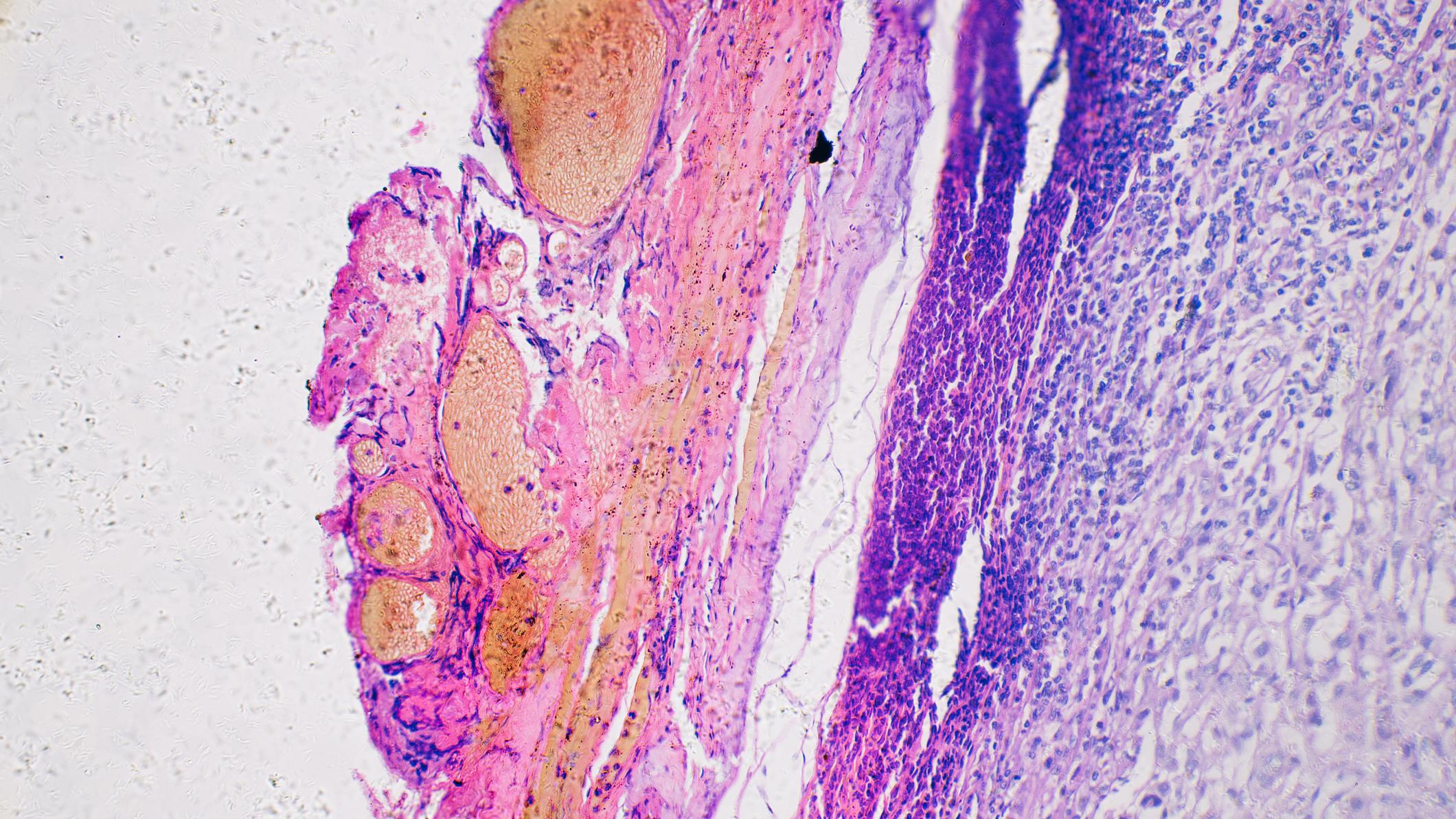
Photo via ABC News (AU)

Australia at the heart of 'transformational' cancer vaccine breakthrough

Read the original at ABC News (AU) ↗
Cite

Carbonell, R. (2026, October 23). Australia at the heart of 'transformational' cancer vaccine breakthrough. ABC News (AU). https://www.abc.net.au/news/2026-10-23/melanoma-cancer-vaccine-breakthrough-georgina-long/107303082

Dated from the outlet's own feed. Check the original for its byline.

ABC News (AU) · collected 2026-10-23 · by Rachel Carbonell

Quick Summary

Researchers led by Australia have developed a world-first cancer vaccine that significantly reduces the risk of melanoma recurrence by 42 percent, according to phase 3 trial results. The study, set to be published in the New England Journal of Medicine, involved 1,137 patients and compared personalized mRNA-based vaccines combined with immunotherapy against immunotherapy alone. The treatment identifies unique genetic information from a patient’s tumor to create a targeted vaccine that helps the immune system fight cancer more effectively.
Written by AI on 2026-10-23, from this article's own text only (the story summary below draws on all the coverage).

AI analysis

Story summary

Moderna and MSD developed intismeran, a personalized mRNA-based vaccine, which when combined with Keytruda (pembrolizumab) reduced the risk of melanoma recurrence or death by 42% in patients two years after surgery. The trial included over 1,100 participants with high-risk melanoma that had been surgically removed. Intismeran targets up to 34 tumor neoantigens specific to each patient's tumor, enhancing the immune system’s ability to fight cancer. Although results are promising and could mark a turning point in personalized cancer treatment, longer-term studies are needed to confirm long-term benefits and impact on overall survival rates. The vaccine is currently experimental and not available on healthcare systems like NHS yet. Similar approaches are being tested for other cancers including kidney, bladder, and lung cancer. The detailed findings were initially scheduled to be presented at the European Society of Medical Oncology Congress but were released ahead of time due to data leaks. Lead researcher Professor Georgina Long from Melanoma Institute Australia described the results as "phenomenal" and potentially transformational for cancer treatment. Independent experts also view the outcome positively, though they emphasize the need for extended follow-up studies to establish definitive benefits in patient longevity.

Written for “mRNA Cancer Vaccine Breakthrough For Melanoma” on 2026-11-02, grounded in this article and the 7 other(s) covering the same event.

Story

📰 mRNA Cancer Vaccine Breakthrough For Melanoma
Health · 8 article(s) covering the same event. Compare every outlet's account →

Compared with similar articles

This article reads unscored and hedges 9% of its claims. Each row says how that neighbour differs.
Toronto Star
Hedges 3 of 35 claims Outlet record 64/100
Daily Mail
Hedges 1 of 10 claims Outlet record 69/100
Evening Standard
Hedges 1 of 25 claims Outlet record 64/100
The Independent
Hedges 0 of 16 claims Outlet record 59/100
TIME
Hedges 3 of 28 claims Outlet record 59/100
BBC News
Hedges 2 of 28 claims Outlet record 68/100
CBC News
Hedges 3 of 46 claims Outlet record 74/100
How this article was measured signals, leaning charts, publisher record, byline, topics and claims

Signals How these are calculated →

Claims extracted
34
sentences that state something as happening or true
Uncertain
9%
3 of 34 hedged ("reportedly", "may", "according to")
Leaning
not political
takes no side on a contested political question
Publisher signals
68/100
ABC News (AU)'s corrections and hedging, across everything collected from it. Not a measure of accuracy.
Outlets on this story
8
Health
Same framing elsewhere
1
articles that frame the event the way this one does
Analyzed 2026-10-23 · how these are computed

How this is being covered How these are calculated →

Article leaning vs. publisher reliability
Source leaning vs. consistency

Publisher

ABC News (AU) · 4630 article(s) · 10 correction(s) detected
Running correction rate · 10 correction(s)

Who wrote this

Rachel Carbonell
3 article(s) here · 1 carrying a prediction
🔮 "Dr Muchnicki also arranged a series of blood tests 'to confirm baseline health parameters and assess for any contraindications or underlying conditions that may influence treatment decisions'," the report stated.
🔮 Under the proposed changes, there will be stricter rules around SPF testing after 16 popular sunscreens failed to meet their SPF claims in testing by consumer group Choice last year.
🔮 The results will be published in the New England Journal of Medicine.
Also by Rachel Carbonell
Nothing else under this byline is closely related to this article, so these are simply their most recent.

Topics

Australian Melanoma Institute Australia Paul Fox Melanoma and Cancer Centre Peter MacCallum Cancer Centre the New England Journal of Medicine

Subjects

Long PERSON · 5× Australia GPE · 3× Melanoma Institute Australia ORG · 3× Australian NORP · 2× Moderna ORG · 2× Georgina Long PERSON · 1× Paul Fox Melanoma and Cancer Centre ORG · 1× Peter MacCallum Cancer Centre ORG · 1× Westmead Hospital ORG · 1× the New England Journal of Medicine ORG · 1×

Narrative

'Australia's cancer' Professor Long, who is also chair of Melanoma Medical Oncology and Translational Research at the University of Sydney, is due to present the results of the trial at the European Society of Medical Oncology Congress this weekend. "It's really important for people to understand what a fork in the road this is, because we've been trying to do this for decades, before I was born, and we've done it," she said.
framing: assertive · carried by 1 article(s) · first seen 2026-10-23
🔮 The results will be published in the New England Journal of Medicine.
2026-10-23 · ABC News (AU)
Australia at the heart of 'transformational' cancer vaccine breakthrough · assertive framing

Claims (34 extracted, 3 hedged)

In short: Researchers say a world-first cancer vaccine is delivering results even better than they had hoped for. asserted
they → say → results
The "transformational" breakthrough is detailed in a study that found a 42 per cent reduction in the risk of melanoma recurrence. asserted
that → detail → recurrence
The results will be published in the New England Journal of Medicine. asserted
results → publish → Medicine
A world-first cancer vaccine has been shown to radically reduce the risk of melanoma recurrence and death. asserted
vaccine → show → recurrence
The results from an Australian-led phase 3 human trial revealed a 42 per cent reduction in the risk of melanoma recurrence. asserted
results → lead → recurrence
Melanoma Institute Australia medical director and principal investigator Georgina Long said the results were better than she had hoped. "We did not expect it to be that high. asserted
it → say → ?
We knew it would be important and significant, but this is phenomenal," she said. asserted
she → know → ?
It's a foundational shift in the way we use the immune system to target and kill cancer. asserted
we → use → cancer
" The treatment works by adding intismeran, a type of personalised mRNA-based vaccine made with genetic information from a patient's tumour, to pembrolizumab immunotherapy after the surgical removal of melanoma. asserted
treatment → work → melanoma
"Adding the two drugs together rather than one improves or decreases their risk of recurrence or death by 42 per cent," Professor Long said. asserted
Long → add → cent
"This was aimed at melanoma patients who are at a very high risk of the melanoma coming back as advanced melanoma. asserted
melanoma → aim → melanoma
That used to be deadly." asserted
That → use → ?
She said the vaccine was developed by taking a biopsy of the patient's tumour and comparing its cells to the patient's healthy cells to see what was different. asserted
what → say → cells
"There's a list of things that are very different, that are unique to the patient's tumour. asserted
that → be → tumour
They're not shared with anyone else's tumour," Professor Long said. asserted
Long → share → tumour
"We rank them, and the top 34 differences we can then encode and that's called the fingerprint." The mRNA platform is used to code that fingerprint, or neoantigen, which is injected into the patient and establishes a target for the immune system. asserted
which → rank → system
"It's like a wanted poster that gets printed into the body so … the immune cells can see," Professor Long said. asserted
Long → print → body
The trial involved 1,137 patients whose melanoma had been surgically removed and compared the combined treatment with with patients receiving only immunotherapy treatment. asserted
melanoma → involve → treatment
It was conducted across 157 sites globally and involved a number of Australian sites, including Melanoma Institute Australia, Peter MacCallum Cancer Centre and Paul Fox Melanoma and Cancer Centre in Victoria, Westmead Hospital in NSW, Princess Alexandra Hospital in Queensland and One Clinical Research in Western Australia. asserted
It → conduct → Australia
'Australia's cancer' Professor Long, who is also chair of Melanoma Medical Oncology and Translational Research at the University of Sydney, is due to present the results of the trial at the European Society of Medical Oncology Congress this weekend. "It's really important for people to understand what a fork in the road this is, because we've been trying to do this for decades, before I was born, and we've done it," she said. asserted
she → present → it
The investigational mRNA-based neoantigen therapy is being jointly developed by MSD (Merck and Co) and Moderna. asserted
therapy → base → MSD
"I chaired the steering committee for this trial advising both Moderna and Merck on this particular trial, but it's Australia's cancer," Professor Long said of melanoma. "We have the highest incidence in the world. asserted
We → chair → world
Someone dies from this cancer every six hours in our country. asserted
Someone → die → country
Someone is diagnosed every 30 minutes in Australia. asserted
Someone → diagnose → Australia
Experts say the breakthrough may have an important flow on effect for treatment for other forms of cancer. uncertain
breakthrough → say → cancer
Professor Alex Menzies from Melanoma Institute Australia's medical oncology and clinical trials team said: "The hope for the near future is that it may not only improve outcomes for melanoma patients with advanced disease but also those with other types of cancer where current immunotherapies are poorly effective." uncertain
immunotherapies → say → cancer
Jessamy Tiffen from the Centre for Cancer Innovations at the Centenary Institute said: "What is truly remarkable about this vaccine is the deeply personalised nature of the treatment, something cancer researchers have been striving to achieve for decades." asserted
researchers → say → decades
While it is a significant breakthrough, she said it was not good news for all melanoma patients. asserted
it → say → patients
"A significant portion do not respond to the vaccine in the first instance,' Dr Tiffen said. asserted
Tiffen → respond → instance
"Cancer cells have an insidious ability to adapt and evade whatever treatment we throw at them. asserted
we → have → them
"Only time will tell how effective the treatment is beyond two years asserted
treatment → tell → years
This vaccine is in no way preventative and is intended for advanced stage II-IV melanoma patients … the best way to prevent melanoma is still to protect yourself from the sun." Melanoma Institute Australia said a regulatory review process would now be undertaken, which could take several years. " uncertain
which → intend → years
Patients with melanoma who want to know more should talk to their medical oncologist," it said in a statement. asserted
it → want → statement
The institute said the results would be published in the New England Journal of Medicine. asserted
results → say → Medicine

💬Give feedback
🕘History 🎫Support