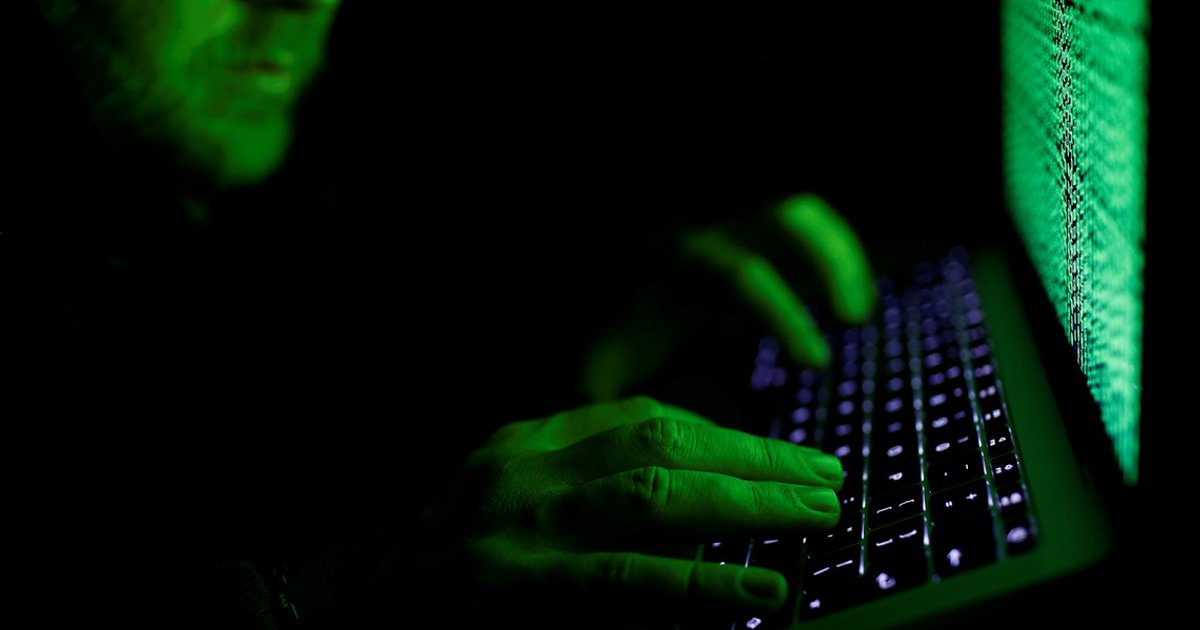
Photo via CBS News

PHP bug "about as bad as it can get," cybersecurity reporter says

Read the original at CBS News ↗
Cite

PHP bug "about as bad as it can get," cybersecurity reporter says. (2026, October 23). CBS News. https://www.cbsnews.com/video/php-bug-about-as-bad-as-it-can-get-cybersecurity-reporter-says/

Dated from the outlet's own feed. Check the original for its byline.

CBS News · collected 2026-10-23

Quick Summary

Raphael Satter, a Reuters cybersecurity reporter, discusses a significant bug in the PHP programming language that may affect up to 70% of the world’s websites, potentially exposing them to serious security risks. The article highlights the severity of the issue by quoting experts who consider it one of the worst possible vulnerabilities for this technology.
Written by AI on 2026-10-23, from this article's own text only (the story summary below draws on all the coverage).

AI analysis

Story summary

As of October 21, 2026, critical vulnerabilities were discovered in PHP, a widely used web programming language, prompting European and British authorities to recommend that many websites temporarily go dark. This led to several major sites, including government pages in Europe, the BBC, and other organizations like Wikipedia and Pinboard, being taken offline on Wednesday morning as website operators scrambled to apply security updates or risk potential cyberattacks. The vulnerabilities, rated at a critical severity of 9.2 out of 10, could allow hackers to remotely execute code, potentially compromising sensitive data and networks. Reports suggest that up to 70% of the world's websites may be affected by these issues, as PHP underpins large parts of the internet infrastructure. The discovery underscores concerns about the rapid spread of AI in cybersecurity, with some experts calling it "one of the first areas where we are going to see the harmful impact of AI."

Written for “AI-detected PHP Security Flaw” on 2026-11-01, grounded in this article and the 26 other(s) covering the same event.

Story

📰 AI-detected PHP Security Flaw
Technology · 27 article(s) covering the same event. Compare every outlet's account →

Compared with similar articles

This article reads unscored and hedges 50% of its claims. Each row says how that neighbour differs.
BBC News
Hedges 4 of 25 claims Outlet record 68/100
“The articles discuss related issues but different aspects of the PHP security update; Article A reports on specific websites being taken down, while Article B focuses on an expert's analysis of the vulnerability.”
ABC News (AU)
Hedges 5 of 27 claims Outlet record 68/100
“Both articles discuss a critical flaw in PHP affecting many websites, but they are written on different dates and provide distinct information without clearly describing the exact same incident.”
CBS News
Hedges 0 of 2 claims Outlet record 66/100
Daily Mail
Hedges 8 of 36 claims Outlet record 68/100
“While both articles discuss a PHP security flaw, they describe different aspects of the issue and are published on different dates.”
Toronto Star
Hedges 7 of 23 claims Outlet record 64/100
The Straits Times
Hedges 1 of 15 claims Outlet record 66/100
“The articles discuss different aspects related to PHP but describe distinct events: one focuses on a critical vulnerability in PHP, while the other discusses the funding and staffing of the PHP Foundation.”
The Straits Times
Hedges 2 of 13 claims Outlet record 66/100
“The articles discuss related vulnerabilities in PHP but describe different aspects of the event; Article A covers the immediate impact on government websites, while Article B provides a broader analysis and expert opinion.”
The Straits Times
Hedges 4 of 26 claims Outlet record 66/100
“Article A describes the immediate reaction to vulnerabilities in PHP that caused government websites to go offline, while Article B provides a broader analysis of the severity and impact of the PHP bug across all websites.”
Toronto Star
Hedges 1 of 3 claims Outlet record 64/100
“While both articles discuss a critical vulnerability in PHP, they describe different aspects of the event and are not reporting on the exact same incident at the same time.”
How this article was measured signals, leaning charts, publisher record, byline, topics and claims

Signals How these are calculated →

Claims extracted
2
sentences that state something as happening or true
Uncertain
50%
1 of 2 hedged ("reportedly", "may", "according to")
Leaning
not political
takes no side on a contested political question
Publisher signals
66/100
CBS News's corrections and hedging, across everything collected from it. Not a measure of accuracy.
Outlets on this story
27
Technology
Same framing elsewhere
1
articles that frame the event the way this one does
Analyzed 2026-10-23 · how these are computed

How this is being covered How these are calculated →

Article leaning vs. publisher reliability
Source leaning vs. consistency

Publisher

CBS News · 4290 article(s) · 6 correction(s) detected
Running correction rate · 6 correction(s)

Who wrote this

No reporter is named on this article.

Topics

Reuters

Subjects

Raphael Satter PERSON · 1× Reuters ORG · 1×

Narrative

Reuters cybersecurity reporter Raphael Satter explains more about this critical vulnerability.
framing: mixed · carried by 1 article(s) · first seen 2026-10-23
🔮 A bug in the PHP programming language could put up to 70% of the world's websites at risk, experts say.

Claims (2 extracted, 1 hedged)

A bug in the PHP programming language could put up to 70% of the world's websites at risk, experts say. uncertain
experts → put → risk
Reuters cybersecurity reporter Raphael Satter explains more about this critical vulnerability. asserted
Satter → explain → vulnerability
💬Give feedback
🕘History 🎫Support