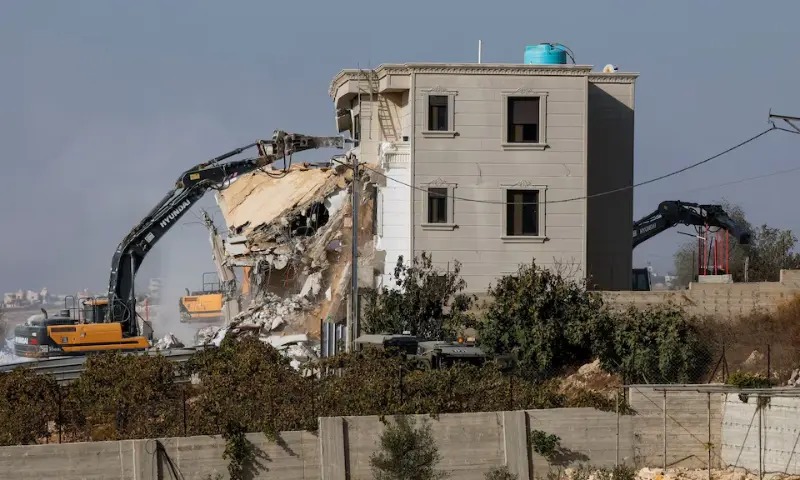
Hebron, occupied West Bank – Sufyan al-Qawasmi stood near the rubble of his factories in the Farsh al-Hawa area of Hebron, lamenting the business he watched vanish beneath the debris.
asserted
he → stand → debris
Israeli bulldozers demolished the factories on Friday without any prior warning or notice, following a shooting attack carried out by two Palestinians that morning near Hebron’s western entrance.
asserted
bulldozers → demolish → entrance
The attack killed two Israeli soldiers, as well as the two Palestinian gunmen, and prompted Israeli Prime Minister Benjamin Netanyahu to announce a large-scale military operation across Hebron and order preparations for a wider closure of the illegally occupied West Bank.
asserted
attack → kill → Bank
Recommended Stories
list of 3 items- list 1 of 3Israel expands expulsions in occupied West Bank to cement control
- list 2 of 3Palestinians are opening their doors to the displaced of besieged Hebron
- list 3 of 3Netanyahu’s pitch: Can Israel use crypto to evade economic sanctions?
Demolitions are regularly used by Israel to punish Palestinians, typically the family members of attackers, but in al-Qawasmi’s case, for the misfortune of being close to the site of an attack.
asserted
Demolitions → expand → attack
Human rights groups decry the practice, which is regarded as collective punishment.
asserted
which → decry → punishment
Israeli Finance Minister Bezalel Smotrich justified the demolitions as “establishing deterrence and exacting a price”.
asserted
Smotrich → justify → price
The Israeli bulldozers destroyed a business that al-Qawasmi’s family had built up for his whole life, and provided a livelihood for more than 70 people.
asserted
family → destroy → people
The first factory, which produced ceramics, is the same age as he is – it was established 50 years ago.
asserted
it → produce → ceramics
Fifteen years later, the family opened a marble factory.
asserted
family → open → factory
Their business flourished, becoming one of the most significant industrial operations in the West Bank, with goods exported to Israel.
asserted
business → flourish → Israel
In the space of a few hours on Friday, the ceramic factory and marble factory were gone, as well as several neighbouring buildings, including a three-storey house and various commercial facilities.
asserted
factory → go → house
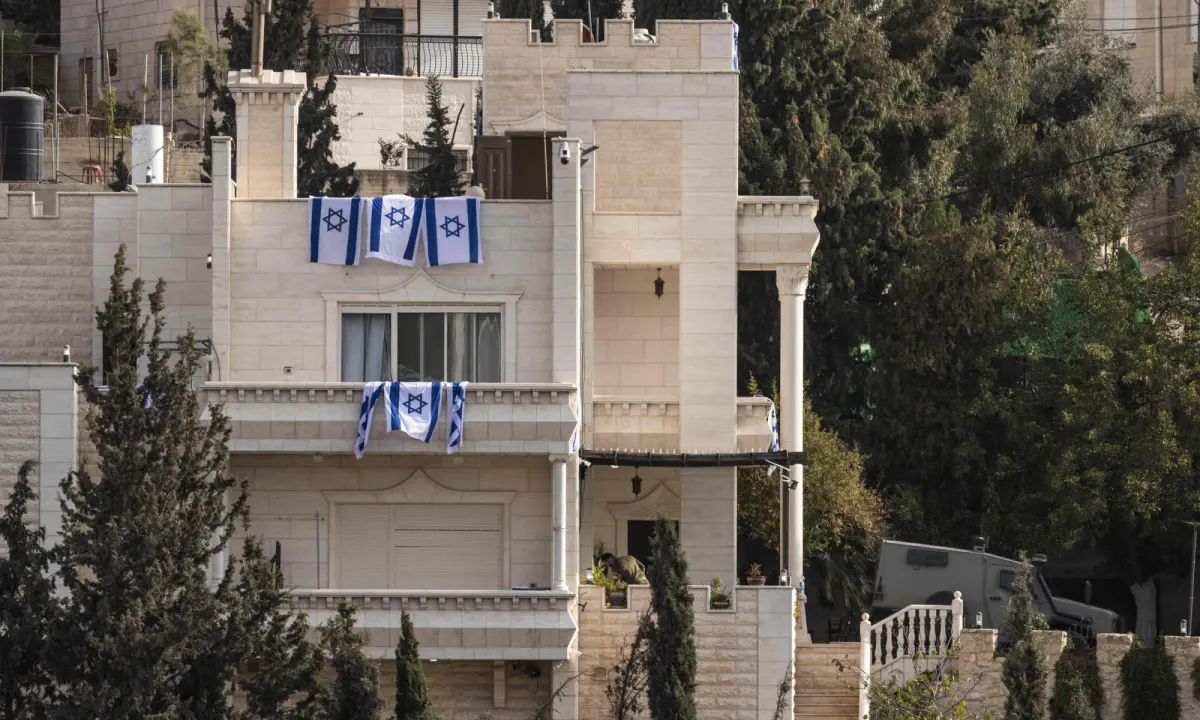
Simultaneously, the city faced an Israeli military incursion that included the closure of all entrances, raids, arrests, and the forced evacuation of more than 3,000 Palestinians from their homes, severely disrupting the lives of residents and the city’s commercial activity.
asserted
that → face → residents
The message was clear: the whole city would be punished for the actions of the attackers.
asserted
city → punish → attackers
A devastating loss
Al-Qawasmi says he was given no chance to retrieve goods from the family businesses’ warehouses and factories before the demolitions began, leaving the stock buried under the rubble, where it remains.
asserted
it → say → rubble
“We managed to retrieve some marble slabs and store them in facilities belonging to friends nearby, but most of the stock was destroyed,” he told Al Jazeera.
asserted
he → manage → Jazeera
Al-Qawasmi says that 1,300 square metres of their business’ property was destroyed, including the family’s offices.
asserted
metres → say → offices
He estimates the losses at no less than 60 million shekels ($19m).
asserted
He → estimate → shekels
According to the Hebron Chamber of Commerce and Industry, Hebron serves as a primary pillar of the Palestinian economy, contributing approximately 42 percent of the Palestinian gross domestic product (GDP).
uncertain
Hebron → accord → product
It is home to more than 23,000 economic establishments, including more than 5,000 industrial and artisanal facilities that employ approximately 40,000 workers.
asserted
that → include → workers
Hebron’s economy is notably diverse, encompassing sectors such as stone and marble, plastics, metals, food production, leather and footwear, and glass, alongside robust commercial and agricultural activity.
asserted
economy → encompass → activity
Adnan al-Natsha, vice president of the Hebron Chamber of Commerce, told Al Jazeera that there are no precise figures yet regarding the total losses resulting from the Israeli military operation so far.
asserted
Natsha → tell → operation
He noted that work is currently under way to compile statistics on the damage inflicted on businesses and homes, losses estimated to be in the millions of dollars.
asserted
work → note → dollars
Al-Natsha explained that the extensive Israeli measures, including closing off areas of the city, displacing residents from their homes, demolishing buildings and shutting down commercial shops, have exacerbated the already difficult economic situation in Hebron – which already has an illegal Israeli settlement in its commercial centre that severely disrupts Palestinian movement and trade there.
asserted
that → explain → movement
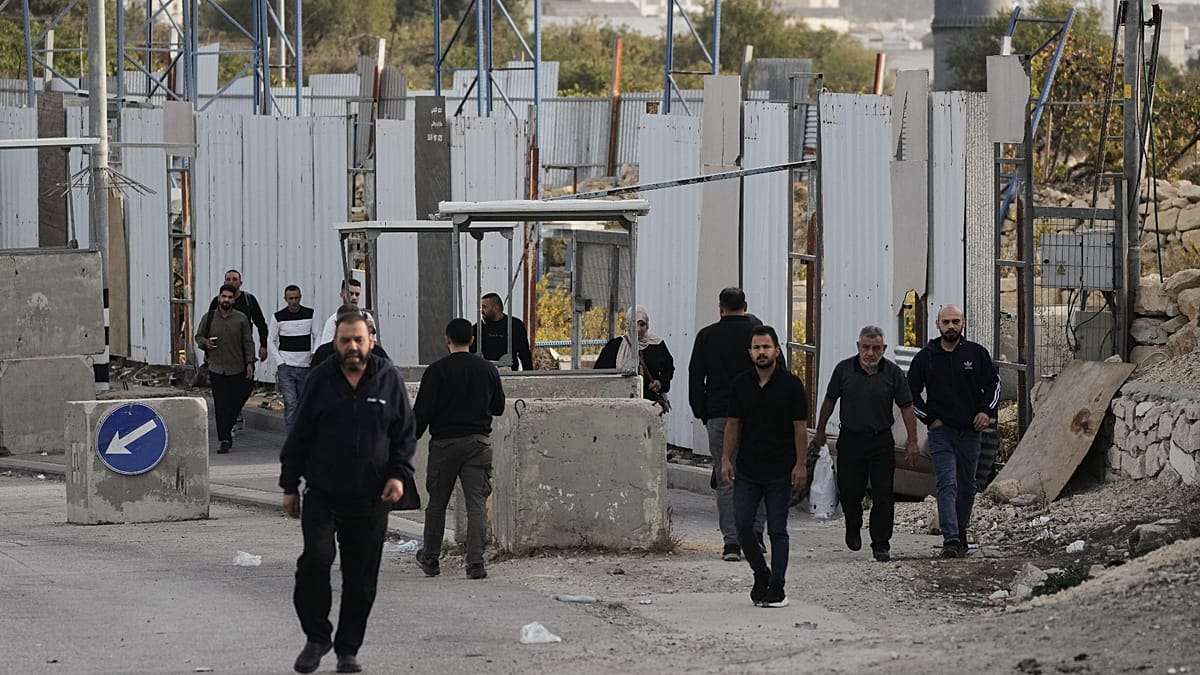
“Business owners have been unable to operate their facilities because workers couldn’t reach their workplaces, and employees have been unable to get to their jobs.
asserted
employees → operate → jobs
The impact of these measures is not limited to Hebron; it extends to the Palestinian economy as a whole,” he stated, adding that work was ongoing to assess the losses and damages of the ongoing Israeli operation so far.
asserted
work → limit → operation
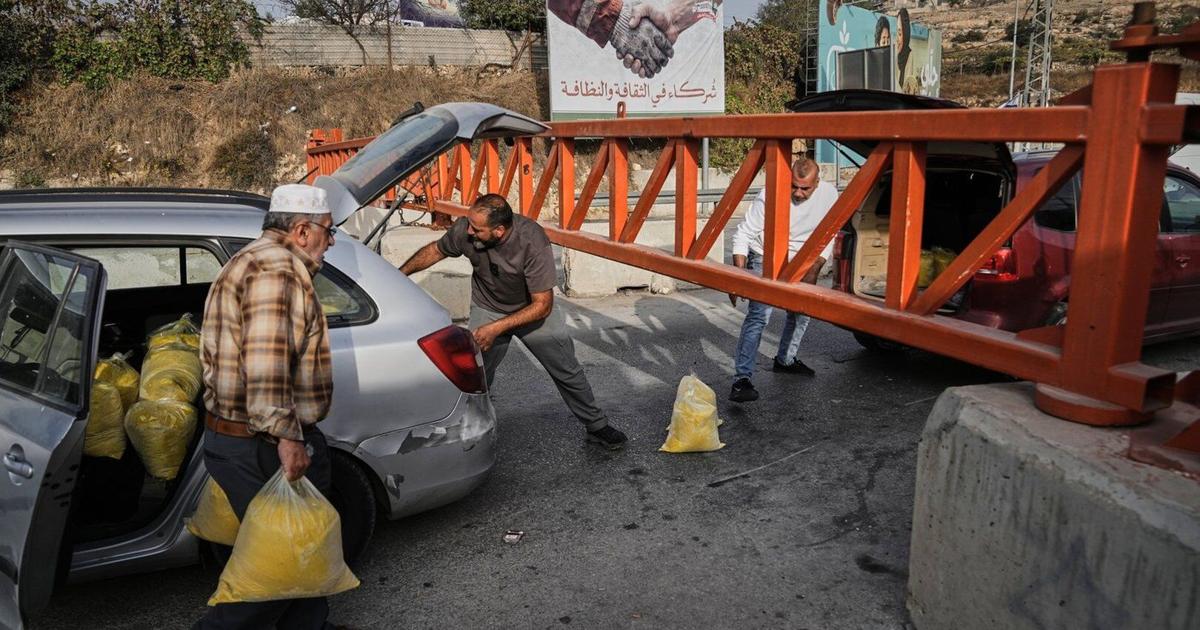
The Israeli military continues to lock down Hebron, including the installation of checkpoints, earthen berms, and concrete blocks across the city, as it conducts raids.
asserted
it → continue → raids
As a consequence, economic activity has been severely disrupted.
asserted
activity → disrupt → consequence
Ibrahim Ahmaro, who owns a vegetable shop in the al-Jalada neighbourhood, one of the areas targeted by the Israeli operation, told Al Jazeera that he had been arranging his stock on Friday, preparing for Saturday, which is typically the busiest day for commerce due to the arrival of buses carrying Palestinian citizens of Israel shopping for cheaper produce.
asserted
which → own → produce
Military vehicles suddenly stormed the area, and soldiers forced Ahmaro to leave his shop immediately.
asserted
soldiers → storm → shop
He says that he wasn’t given an opportunity to turn on the refrigeration units, which would have kept his goods from spoiling, nor allowed to retrieve his vehicle, which remained parked in front of the shop.
asserted
which → say → shop
“My brother, the staff and I all left, thinking it would only be for a few hours.
asserted
it → leave → hours
Instead, we were met with a total lockdown of the area, and we were unable to reach our shops, meaning everything inside was lost after being left unattended for days,” he added.
asserted
he → meet → days
On Sunday morning, Ahmaro was able to return to check on his stock, despite the heavy military presence in the area.
asserted
Ahmaro → return → area
As soon as he entered, he said soldiers attacked him inside the shop and forced him out.
asserted
soldiers → enter → him
He pleaded with them to let him remove at least a few crates; they granted him a few minutes to do so.
asserted
they → plead → minutes
“I placed the crates 400 metres away from the shops so that local residents, facing the lockdown, could take whatever they needed.
uncertain
they → place → whatever
My losses on these goods alone exceed 50,000 shekels [$16,200],” he said with a sigh.
asserted
he → exceed → sigh
Economic expert Ali Oweiwi said that the Israeli military’s restrictions and lockdowns imposed on Hebron have created significant challenges for commercial and industrial establishments, which rely on road access to transport production supplies and distribute their products.
asserted
which → say → products
He explained that the impact of the closure is not limited to retail shops but extends to companies, factories, suppliers, and the transport and logistics sector, not to mention the workers who are forced to take alternative routes to reach their workplaces, all of which ultimately affect consumers.
asserted
all → explain → consumers
Oweiwi said that if the Israeli operation concludes within a day or two, the economy might recover relatively quickly.
uncertain
economy → say → day
…and 3 more, not listed.
 The Aporia