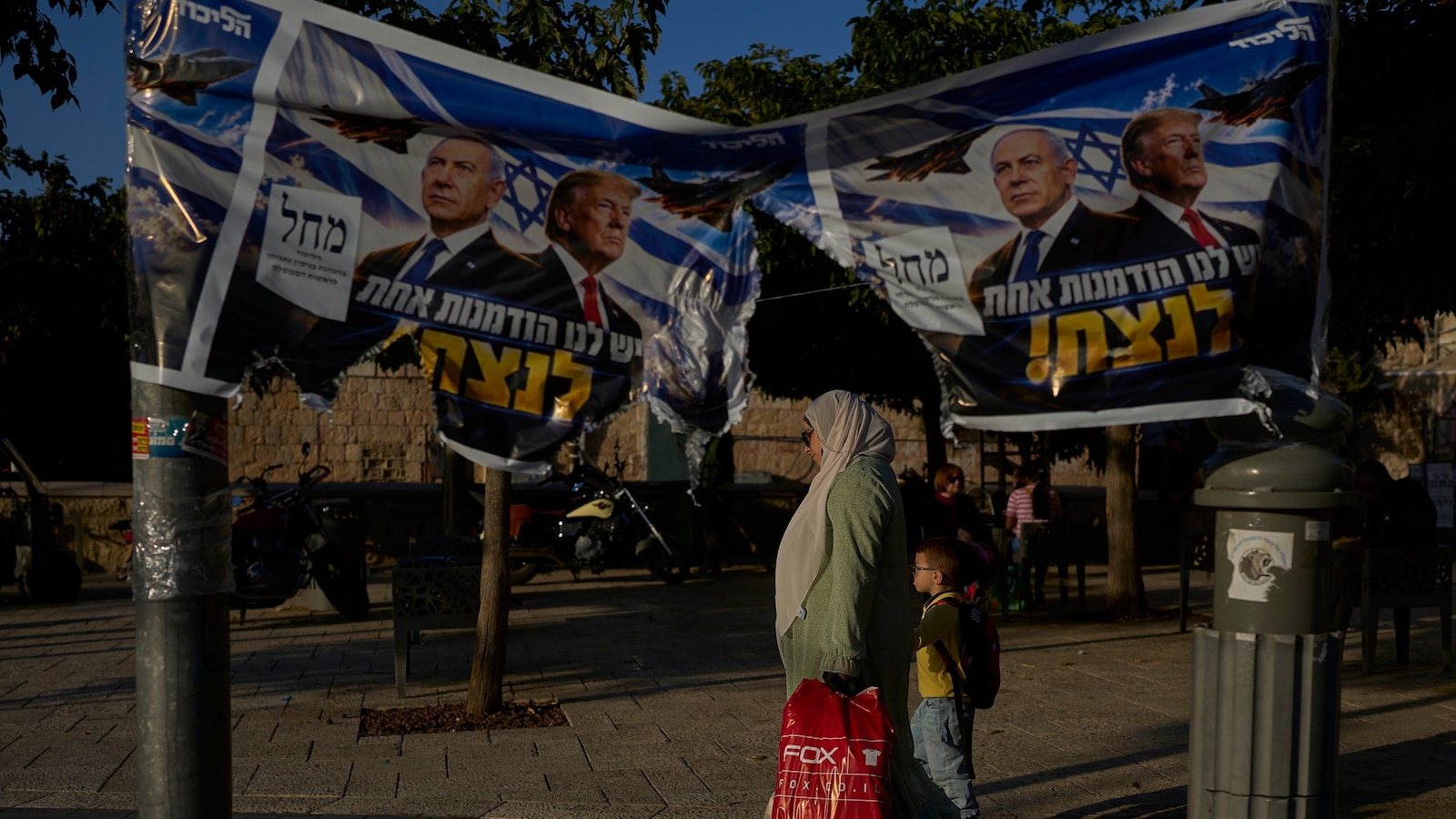
Photo via The Guardian

Israel election: what we know so far

Read the original at The Guardian ↗
Cite

Yerushalmy, J. (2026, October 28). Israel election: what we know so far. The Guardian. https://www.theguardian.com/world/2026/oct/28/israel-election-results-what-we-know-so-far-ntwnfb

Dated from the outlet's own feed. Check the original for its byline.

The Guardian · collected 2026-10-28 · by Jonathan Yerushalmy

Quick Summary

With nearly all votes counted in Israel's recent election, Benjamin Netanyahu's coalition has lost its majority, while his primary opposition bloc led by Gadi Eisenkot also failed to secure an outright win. Projections show Netanyahu’s bloc with 53 seats and the opposition on 48, with Palestinian parties receiving a combined 19 seats; sixty-one seats are needed for a governing majority in the Knesset. Notably, the Palestinian Israeli parties achieved historically strong results, reflecting increased voter turnout driven by community concerns over discrimination under Netanyahu's leadership.
Written by AI on 2026-10-29, from this article's own text only (the story summary below draws on all the coverage).

AI analysis

Story summary

On October 27, 2026, Israelis voted in a parliamentary election for the Knesset, amid ongoing tensions from previous conflicts including Hamas's attacks in 2023 and the war in Gaza. The elections were seen as a critical moment to address issues such as military service exemptions for ultra-Orthodox Jews and how to respond to security failures. Former Israeli army chief Gadi Eisenkot emerged as a significant challenger to Prime Minister Benjamin Netanyahu, who has held office for an extended period. Thousands rallied in Tel Aviv against Netanyahu, calling for a commission of inquiry into the October 7 attacks. Arab-Israeli parties were poised to play a crucial role in potentially forming an opposition alliance aimed at removing Netanyahu from power. Palestinian-led parties secured 19 seats in the election, marking a historic result and complicating future coalition-building efforts. The election outcome was inconclusive, raising questions about potential political gridlock and the normalization of extreme nationalism in Israel's politics.

Written for “Israel Knesset Elections Outcome” on 2026-11-03, grounded in this article and the 258 other(s) covering the same event.

Story

📰 Israel Knesset Elections Outcome
Politics · 259 article(s) covering the same event. Compare every outlet's account →

Compared with similar articles

This article reads leans left and hedges 19% of its claims. Each row says how that neighbour differs.
National Post
Hedges 3 of 42 claims Outlet record 60/100
Washington Examiner
Hedges 1 of 3 claims Outlet record 70/100
The Straits Times
⚖️ Leans right further right than this Hedges 10 of 34 claims Outlet record 66/100
BBC News
Hedges 4 of 30 claims Outlet record 68/100
The Straits Times
⚖️ Leans left Hedges 0 of 2 claims Outlet record 66/100
CBC News
⚖️ Leans right further right than this Hedges 8 of 35 claims Outlet record 60/100
ABC News (US)
Hedges 4 of 18 claims Outlet record 70/100
Al Jazeera
⚖️ Leans right further right than this Hedges 3 of 60 claims Outlet record 60/100
The Guardian
⚖️ Leans left Hedges 12 of 45 claims Outlet record 66/100
How this article was measured signals, leaning charts, publisher record, byline, topics and claims

Signals How these are calculated →

Claims extracted
16
sentences that state something as happening or true
Uncertain
19%
3 of 16 hedged ("reportedly", "may", "according to")
Leaning
Leans left
of the writing, not the subject · beta estimate
Publisher signals
66/100
The Guardian's corrections and hedging, across everything collected from it. Not a measure of accuracy.
Outlets on this story
259
Politics
Same framing elsewhere
1
articles that frame the event the way this one does
Analyzed 2026-10-29 · how these are computed

How this is being covered How these are calculated →

Article leaning vs. publisher reliability
Source leaning vs. consistency

Publisher

The Guardian · 2862 article(s) · 6 correction(s) detected
Running correction rate · 6 correction(s)

Who wrote this

Jonathan Yerushalmy
6 article(s) here · 1 carrying a prediction
🔮 Israel election results live: count of absentee ballots under way as coalition talks set to begin With the final count unlikely to shift results significantly, experts say Gadi Eisenkot’s hopes of unseating Benjamin Netanyahu rest on his willingness to work with Palestinian parties Final ballots being tallied with results expected to show no clear winner Hello and welcome to our continuing coverage of the Israeli election. With 91% of votes now counted, the current results show prime minister Benjamin Netanyahu’s bloc projected to receive 53 seats, with the grouping of his opponent Gadi Eisenkot on 48 and the Palestinian parties on track to receive a record 19 seats.
🔮 - Israeli media report that Netanyahu’s bloc is ahead, with projections he could take 53 seats under the current vote share, but this could change further.
2026-10-28 · assertive framing · Israel election: what we know so far
🔮 The Palestinian parties are projected to dramatically increase their representation in the Knesset, with predictions they could win as many as 18 seats, up from 10.
🔮 Flydubai said its flights to and from Israel would be suspended while the investigation takes place and urged all parties “to refrain from premature speculation while authorities gather the facts”.
🔮 On Monday, experts warned that the closure of Saudi Arabia’s east-west pipeline – which has been vital for Riyadh to move oil from the strait of Hormuz to the Red Sea export hub of Yanbu – will further pile pressure on its shipments and global oil supplies.
Also by Jonathan Yerushalmy
Nothing else under this byline is closely related to this article, so these are simply their most recent.
All 6 articles by Jonathan Yerushalmy →

Topics

Israel Israeli Jewish Knesset Palestinian

Subjects

Netanyahu PERSON · 8× Israeli NORP · 7× Palestinian NORP · 6× Israel GPE · 4× Eisenkot PERSON · 2× Benjamin Netanyahu’s PERSON · 1× Gadi Eisenkot PERSON · 1× Gadi Eisenkot’s PERSON · 1× Jewish NORP · 1× Knesset ORG · 1×

Narrative

- The key question is whether the Eisenkot-led “Change” bloc (consisting of the rightwinger Naftali Bennett’s Together party, the centre-left Yair Golan’s Democrats and the rightwing Yisrael Beiteinu party) will partner with Palestinian Israeli parties or if they will resort to a new election, or even working with Netanyahu.
framing: assertive · carried by 1 article(s) · first seen 2026-10-29
🔮 - Israeli media report that Netanyahu’s bloc is ahead, with projections he could take 53 seats under the current vote share, but this could change further.
2026-10-29 · The Guardian
Israel election: what we know so far · assertive framing

Claims (16 extracted, 3 hedged)

- With almost all votes counted, Benjamin Netanyahu’s coalition government has lost its majority, but his main opponents, an alliance of Jewish Israeli parties unofficially led by Gadi Eisenkot, have also failed to gain an outright majority. asserted
opponents → count → majority
- Israeli media report that Netanyahu’s bloc is ahead, with projections he could take 53 seats under the current vote share, but this could change further. uncertain
this → report → share
The projections put Gadi Eisenkot’s opposition bloc on 48 seats and the Palestinian parties on 19 seats. asserted
projections → put → seats
Sixty-one seats are needed to form a majority to govern in the Knesset. asserted
seats → need → Knesset
- The remainder of votes to be counted come from absentee ballots, according to Israeli media. uncertain
remainder → count → media
We can expect absentee ballots to be counted on Wednesday night, with final results by Thursday. asserted
ballots → expect → Thursday
- The Palestinian Israeli parties have received a historically strong vote. asserted
parties → receive → vote
The Joint List, a new ticket of several Arab-majority parties, triumphed with at least 12 seats, while Ra’am, the other Islamic party, won seven. asserted
Ra’am → triumph → seven
- The key question is whether the Eisenkot-led “Change” bloc (consisting of the rightwinger Naftali Bennett’s Together party, the centre-left Yair Golan’s Democrats and the rightwing Yisrael Beiteinu party) will partner with Palestinian Israeli parties or if they will resort to a new election, or even working with Netanyahu. asserted
they → lead → Netanyahu
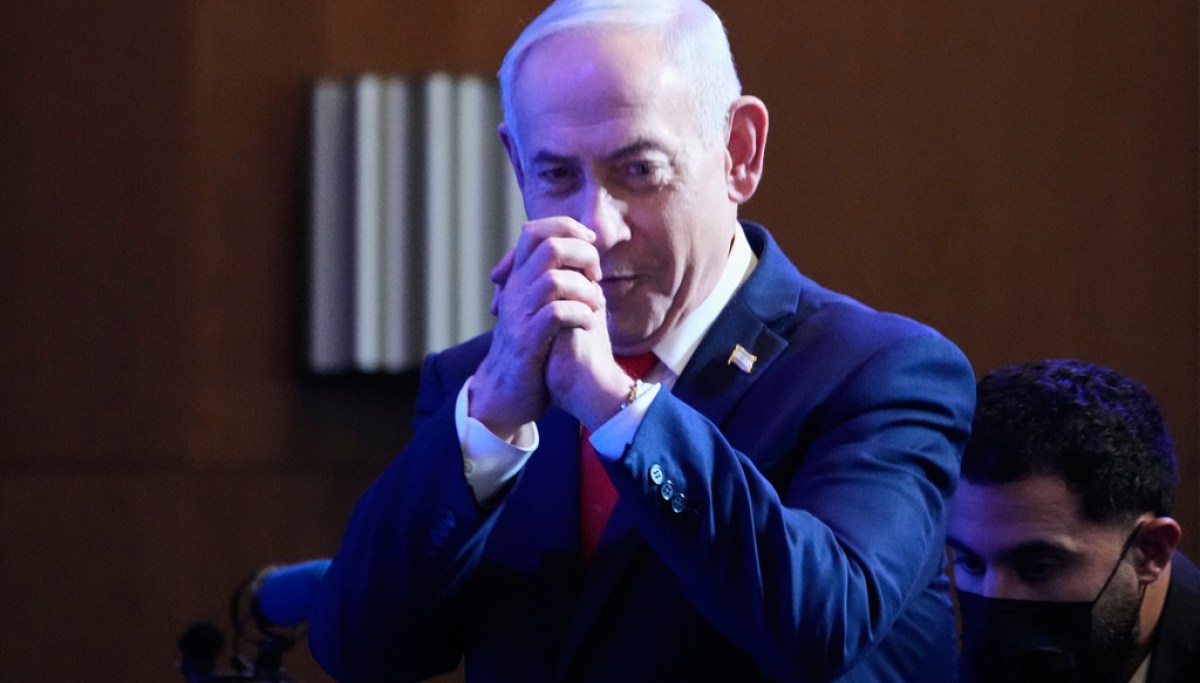
- Netanyahu took the stage at a post-election rally in Jerusalem just after 3am, telling his supporters that official results will show that “Likud is the largest party in Israel”. asserted
Likud → take → Israel
He told his supporters that the country must “establish a strong, rightwing national government” – adding that a government that relied on the support of Palestinian parties must not be formed. asserted
that → tell → parties
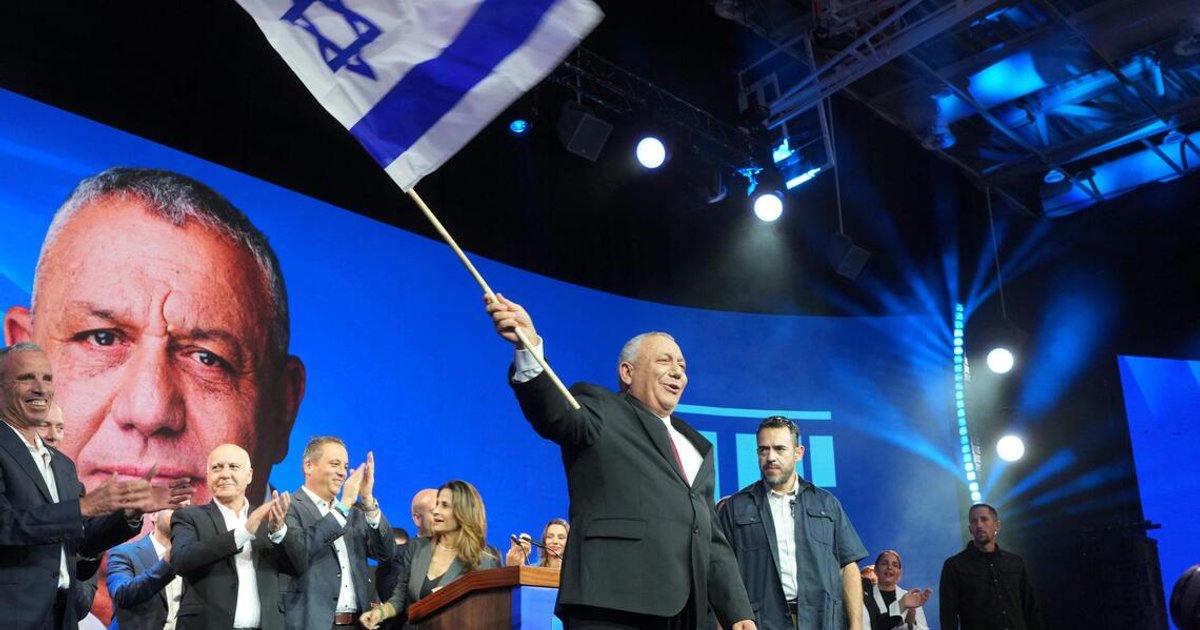
- Eisenkot told cheering supporters in Tel Aviv that the “Israeli public has voted against Netanyahu’s service as Israel’s prime minister … a worthy leader would have accepted the people’s non-confidence and announced today his retirement from politics”. asserted
leader → tell → politics
In his speech, he also warned Netanyahu not to “use Israel’s security” for political ends, playing on fears that the prime minister could use this period of uncertainty to launch a new attack on Iran. - The Palestinian Israeli vote, which represents about 20% of the population, had long been seen as a decisive factor for who will be able to form government, and the high turnout of this election was driven by the community experiencing increased racism and discrimination under Netanyahu’s government. uncertain
turnout → warn → government
- This is the most voted-for election in Israel’s political history, with many Israelis flying back into the country to cast their vote, and nearly 80% of IDF soldiers voting. asserted
% → vote → soldiers
- Donald Trump said his endorsement had helped Netanyahu perform better than polling estimates. asserted
Netanyahu → say → estimates
With nearly all votes counted, Netanyahu’s coalition government has lost its majority, but main opponents also fail to gain outright majority; marked gains by Palestinian parties asserted
opponents → count → parties

💬Give feedback
🕘History 🎫Support