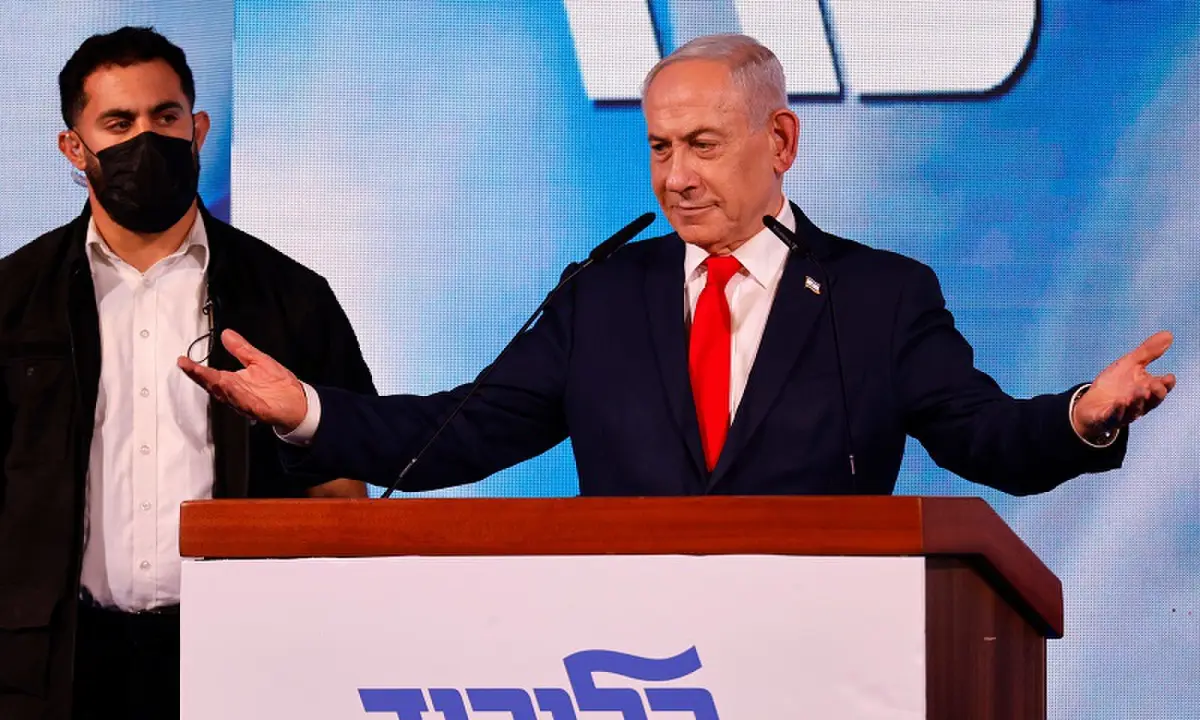
Photo via The Free Press

Where Does Benjamin Netanyahu Go from Here?

Read the original at The Free Press ↗
Cite

Gur, H. R. (2026, October 28). Where Does Benjamin Netanyahu Go from Here? The Free Press. https://www.thefp.com/p/where-does-benjamin-netanyahu-election-israel

Dated from the outlet's own feed. Check the original for its byline.

The Free Press · collected 2026-10-29 · by Haviv Rettig Gur

Quick Summary

The article discusses the results of Israel's recent parliamentary election where Benjamin Netanyahu’s coalition secured 53 seats in the 120-seat Knesset, while the opposition led by Gadi Eisenkot received 48 seats and two Arab parties gained a combined total of 19. With no single bloc achieving the required 61 seats to form a majority government, Netanyahu may attempt to form a minority government or negotiate with the opposition for support, though this would be challenging given the Arab parties' opposition to him.
Written by AI on 2026-10-29, from this article's own text only (the story summary below draws on all the coverage).

AI analysis

Story summary

On October 27, 2026, Israelis voted in parliamentary elections after three years marked by war and conflict. The main contest was between incumbent Prime Minister Benjamin Netanyahu's right-wing coalition, which won 53 seats, and the opposition bloc led by Gadi Eisenkot’s Yashar party, projected to win 20 of 120 seats. Arab-majority lists could play a decisive role as kingmakers due to their potential support for either side under certain conditions. Despite Netanyahu's victory in terms of seat count, forming a government remains challenging because neither bloc has achieved the required majority. President Isaac Herzog will consult with party leaders on November 8 to decide who should form the next government.

Written for “Israel Election Deadlock Netenyahu Future Uncertain” on 2026-11-04, grounded in this article and the 233 other(s) covering the same event.

Story

📰 Israel Election Deadlock Netenyahu Future Uncertain
Politics · 234 article(s) covering the same event. Compare every outlet's account →

Compared with similar articles

This article reads leans right and hedges 8% of its claims. Each row says how that neighbour differs.
New York Post
⚖️ Leans strongly right further right than this Hedges 2 of 33 claims Outlet record 66/100
The Straits Times
⚖️ Leans right Hedges 10 of 34 claims Outlet record 66/100
ABC News (AU)
⚖️ Leans left further left than this Hedges 13 of 39 claims Outlet record 67/100
The Hindu
⚖️ Leans right Hedges 5 of 39 claims Outlet record 77/100
The Independent
Hedges 2 of 56 claims Outlet record 59/100
Washington Examiner
Hedges 1 of 3 claims Outlet record 69/100
Dawn
⚖️ Leans strongly right further right than this Hedges 6 of 43 claims Outlet record 72/100
South China Morning Post
⚖️ Leans right Hedges 0 of 2 claims Outlet record 62/100
How this article was measured signals, leaning charts, publisher record, byline, topics and claims

Signals How these are calculated →

Claims extracted
13
sentences that state something as happening or true
Uncertain
8%
1 of 13 hedged ("reportedly", "may", "according to")
Leaning
Leans right
of the writing, not the subject · beta estimate
Publisher signals
97/100
The Free Press's corrections and hedging, across everything collected from it. Not a measure of accuracy.
Outlets on this story
234
Politics
Same framing elsewhere
1
articles that frame the event the way this one does
Analyzed 2026-10-29 · how these are computed

How this is being covered How these are calculated →

Article leaning vs. publisher reliability
Source leaning vs. consistency

Publisher

The Free Press · 428 article(s) · 0 correction(s) detected
No corrections detected for this publisher. That may mean careful reporting, or simply that nothing has been checked.

Who wrote this

Haviv Rettig Gur
2 article(s) here · 1 carrying a prediction
🔮 Netanyahu could form a minority government if 53 seats voted for him, 48 voted against him and, for some reason, the Arab parties abstained.
2026-10-29 · assertive framing · Where Does Benjamin Netanyahu Go from Here?
🔮 I would love to live in a world in which I could wait, watch the movie, and have a sober debate about its claims.
2026-09-16 · mixed framing · Hold Your Applause for the New Gaza Documentary
Also by Haviv Rettig Gur
Nothing else under this byline is closely related to this article, so these are simply their most recent.

Topics

Arab Eisenkot Israel Israelis Knesset

Subjects

Israel GPE · 4× Arab NORP · 3× Knesset ORG · 3× Netanyahu PERSON · 2× Benjamin Netanyahu’s PERSON · 1× Eisenkot PERSON · 1× Gadi Eisenkot’s PERSON · 1× Israelis NORP · 1×

Narrative

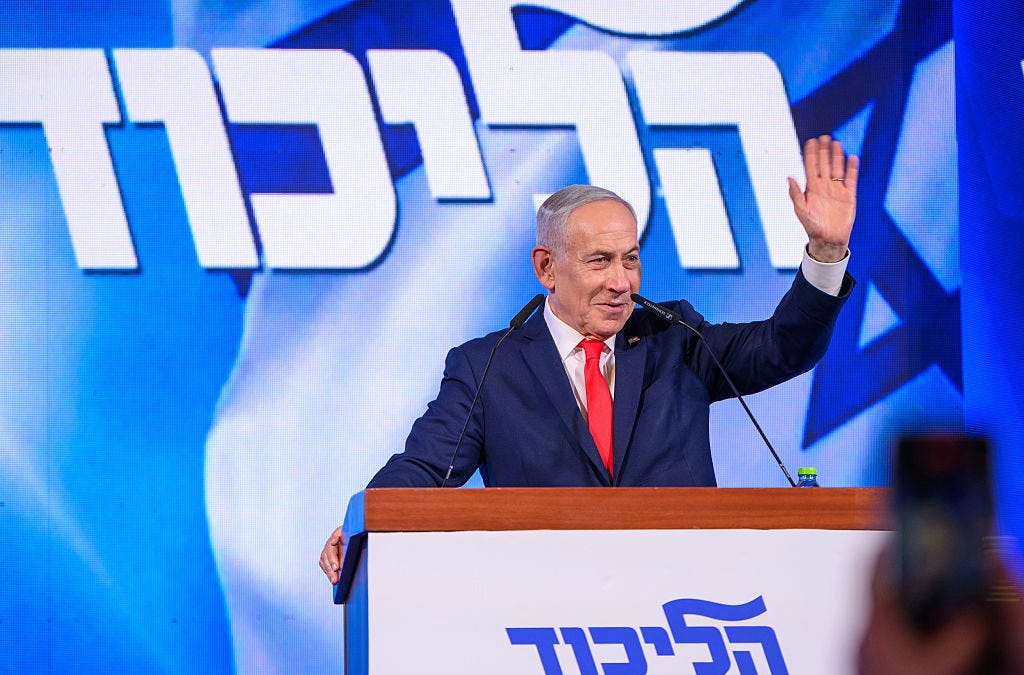
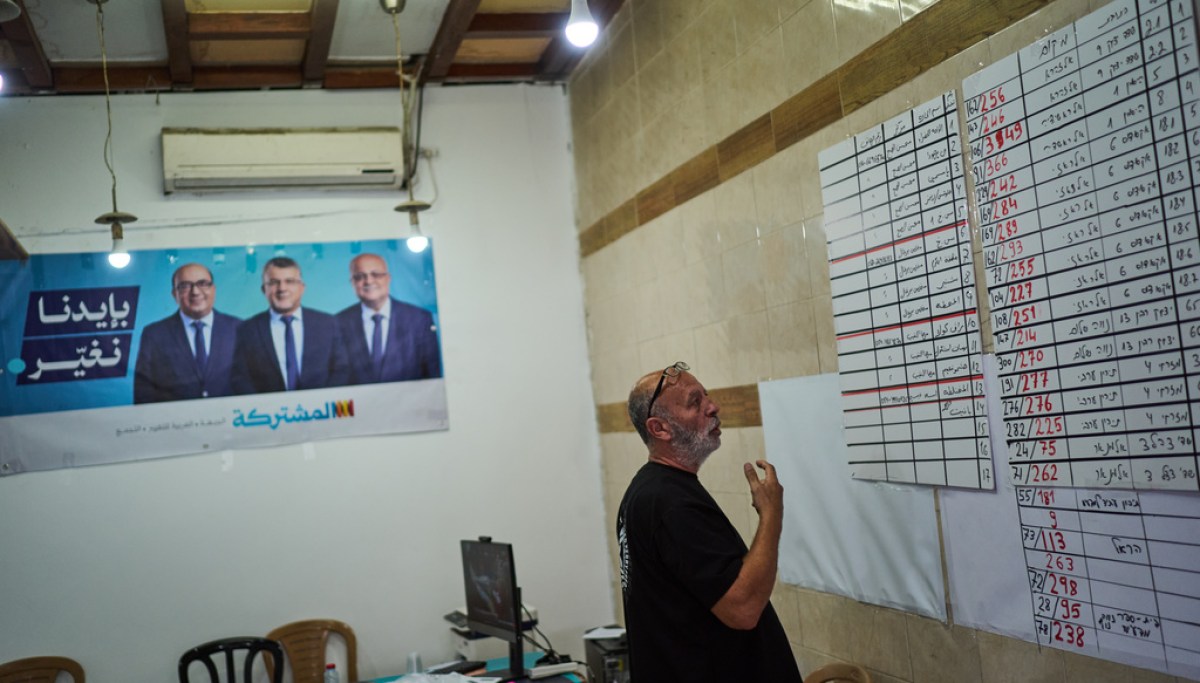
Contrary to expectations—and to exit polls late Tuesday night in Israel that showed the opposition in the lead—Benjamin Netanyahu’s coalition won 53 seats in Israel’s 120-seat parliament, the Knesset, while Gadi Eisenkot’s bloc took 48, and the two Arab parties won a combined total of 19.
framing: assertive · carried by 1 article(s) · first seen 2026-10-29
🔮 Netanyahu could form a minority government if 53 seats voted for him, 48 voted against him and, for some reason, the Arab parties abstained.
2026-10-29 · The Free Press
Where Does Benjamin Netanyahu Go from Here? · assertive framing

Claims (13 extracted, 1 hedged)

A neighbor told me a joke this morning: You asked the people of Israel one simple question, and they just can’t give you an answer. asserted
they → tell → answer
That seems to be what happened on Israeli election day on Tuesday. asserted
what → seem → Tuesday
Contrary to expectations—and to exit polls late Tuesday night in Israel that showed the opposition in the lead—Benjamin Netanyahu’s coalition won 53 seats in Israel’s 120-seat parliament, the Knesset, while Gadi Eisenkot’s bloc took 48, and the two Arab parties won a combined total of 19. asserted
parties → exit → 19
None reached the 61-seat majority required to form a government. asserted
None → reach → government
As in any parliamentary system, Israelis don’t vote for an executive branch or a prime minister. asserted
Israelis → vote → branch
They vote for a party, and the parties then negotiate among themselves to form a parliamentary majority. asserted
parties → vote → majority
In Israel’s case, a governing coalition needs 61 seats in the Knesset. asserted
coalition → govern → Knesset
Once a majority is secured, the coalition can vote in a government. asserted
coalition → secure → government
A minority government occurs when a party or bloc doesn’t have a majority of seats in the Knesset but has a plurality. asserted
party → occur → plurality
Netanyahu could form a minority government if 53 seats voted for him, 48 voted against him and, for some reason, the Arab parties abstained. uncertain
parties → form → reason
But the Arab parties, which are diametrically opposed to Netanyahu, won’t do that. asserted
which → oppose → that
So he has no path to a governing majority unless he pulls people over from the Eisenkot coalition. asserted
he → have → coalition
And there the chaos math begins. asserted
math → begin → ?
💬Give feedback
🕘History 🎫Support