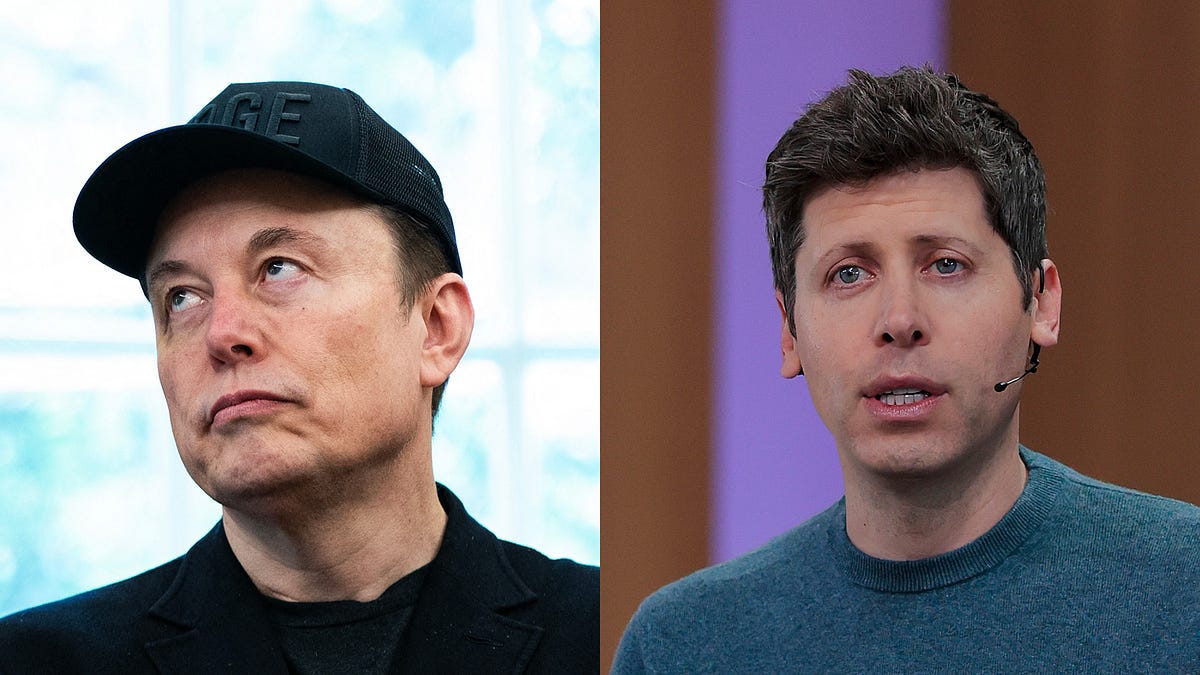
Photo via New York Post

Conservative groups warn letting AI giants ‘recklessly crawl the internet’ would jeopardize news outlets, national security: court filling

Read the original at New York Post ↗
Cite

Barrabi, T. (2026, October 29). Conservative groups warn letting AI giants ‘recklessly crawl the internet’ would jeopardize news outlets, national security: court filling. New York Post. https://nypost.com/2026/10/29/business/conservative-groups-warn-letting-ai-giants-recklessly-crawl-the-internet-would-jeopardize-news-outlets-national-security-court/

Dated from the outlet's own feed. Check the original for its byline.

New York Post · collected 2026-10-29 · by Thomas Barrabi

Quick Summary

Conservative groups are urging a Manhattan federal court to prevent AI companies from freely accessing and using internet content without compensating news outlets, arguing that such practices could harm national security and create an information monopoly. The Center for American Rights and other conservative organizations submitted an amicus brief in support of news outlets suing OpenAI for copyright infringement, claiming OpenAI’s actions undermine the incentive to produce free, open content and align with goals set by the Trump Administration to protect diverse viewpoints from tech censorship. The brief also warns that AI companies’ expansive interpretation of fair use could embolden foreign adversaries to engage in intellectual property theft.
Written by AI on 2026-10-31, from this article's own text only (the story summary below draws on all the coverage).

AI analysis

Story summary

Conservative groups are urging a Manhattan federal court not to allow AI giants like OpenAI to “recklessly crawl the internet” without compensating news outlets and other content providers, warning that it could create an information monopoly and even jeopardize national security. The Center for American Rights, a right-leaning nonprofit law firm focused on tech and telecom policy, has submitted an amicus brief in support of this stance in the copyright infringement lawsuit against OpenAI. The brief argues that allowing unrestricted web crawling would strip smaller companies of their competitive advantage and solidify AI firms as the sole distributors of information, undermining diverse viewpoints and creators' incentives to produce free content.

Written for “Conservative Groups Warn Against AI Crawl” on 2026-10-31, grounded in this article and the 0 other(s) covering the same event.
Why this leaning score
The article's own words the score was based on. Each is quoted verbatim and was checked against the article text before being stored, so you can find it in the original.
Reading Leans strongly right (beta estimate) Confidence high
Leaning: leans strongly right for article 115114 (high confidence, 1 verified quote) · logged 2026-10-31

Story

📰 Conservative Groups Warn Against AI Crawl
Politics · 1 article(s) covering the same event.

Compared with similar articles

This article reads leans strongly right and hedges 19% of its claims. Each row says how that neighbour differs.
The Guardian
⚖️ Leans left further left than this Hedges 10 of 34 claims Outlet record 66/100
“The articles discuss different legal and constitutional concerns in separate countries regarding AI scraping of copyrighted material, rather than the same specific court filing or incident.”
Zeteo
⚖️ Leans strongly left further left than this Hedges 2 of 17 claims
“The articles discuss different aspects and concerns regarding AI regulation and impact, with Article A focusing on a legal filing about internet crawling by AI companies and its implications for news outlets and national security, while Article B discusses specific risk thresholds proposed by Anthropic for AI models.”
The Intercept
⚖️ Leans strongly left further left than this Hedges 9 of 79 claims Outlet record 97/100
“The articles describe different aspects related to AI and politics, but do not refer to the same specific incident.”
How this article was measured signals, leaning charts, publisher record, byline, topics and claims

Signals How these are calculated →

Claims extracted
21
sentences that state something as happening or true
Uncertain
19%
4 of 21 hedged ("reportedly", "may", "according to")
Leaning
Leans strongly right
of the writing, not the subject · beta estimate
Publisher signals
66/100
New York Post's corrections and hedging, across everything collected from it. Not a measure of accuracy.
Outlets on this story
1
Politics
Same framing elsewhere
1
articles that frame the event the way this one does
Analyzed 2026-10-31 · how these are computed

How this is being covered How these are calculated →

Article leaning vs. publisher reliability
Source leaning vs. consistency

Publisher

New York Post · 15592 article(s) · 35 correction(s) detected
Running correction rate · 35 correction(s)

Who wrote this

Thomas Barrabi
20 article(s) here · 1 carrying a prediction
🔮 “I know what survivor parents expect, which is a governor who will take on this industry as if their children’s lives depend on it.
🔮 Conservative groups are urging a Manhattan federal court not to allow AI giants to ‘recklessly crawl the internet’ without compensating news outlets and other content providers — warning that it could create an information monopoly and even jeopardize national security, The Post has learned.
🔮 Sam Altman’s OpenAI is reportedly wrapping up a fundraising round that would value the company well above $1 trillion as it mulls when to go public.
🔮 In a bizarre twist, Gonzalez Rogers also shot down a request by Meta’s Simonsen to use an AI model to speed up review of the withheld documents – asserting that the court couldn’t trust the model to be reliable without more information.
🔮 Sources close to Hochul say the governor is in “advanced talks” with Solidigm, the US arm of South Korean chip giant SK Hynix, and that the firm is scouting sites near Utica, Oneida County, for a semiconductor manufacturing facility that could create hundreds of jobs if approved.
🔮 OpenAI has been warning employees to beware of foreign spies who could try to seduce them in order to steal company secrets, according to a bombshell report.
🔮 Zola will operate as a standalone business for the time being under The Knot Worldwide’s umbrella of brands, which already includes The Knot, WeddingWire, WeddingPro, Hitched and several others, the companies said in a press release.
🔮 “New Yorkers and the public at large deserve to hear directly from the companies developing this powerful technology about the safeguards they are putting in place to protect people from harm and how they will be held accountable when those safeguards fail,” she said in a statement.
🔮 Local GOP officials allege that a win for Flanagan – who said in an interview last month that she was “concerned about the catastrophic nature of AI” – would add another voice in the Senate that would try to hamstring AI development with burdensome regulations.
🔮 “If OpenAI were serious about protecting young people, it would support strong, enforceable laws that hold AI companies accountable for how they design their products,” he added.
Also by Thomas Barrabi
Nothing else under this byline is closely related to this article, so these are simply their most recent.
All 20 articles by Thomas Barrabi →

Topics

Chinese Manhattan OpenAI The Center for American Rights The Post

Subjects

OpenAI ORG · 9× Trump PERSON · 4× DOJ ORG · 3× American NORP · 2× Chinese NORP · 2× Post ORG · 2× Manhattan GPE · 1× Sam Altman’s PERSON · 1× The Center for American Rights ORG · 1× The Post ORG · 1×

Narrative

Start your day with all you need to know Morning Report delivers the latest news, videos, photos and more. “Especially at a time of rampant AI tech theft by China, America First means protecting our innovative edge through real respect for IP.” Trump administration officials have publicly signaled they are concerned about the threat of distillation by China and other foreign adversaries. Pre-trial filings have already contained some bombshell revelations showing that executives at Microsoft and OpenAI privately fretted at copyright infringement.
framing: assertive · carried by 1 article(s) · first seen 2026-10-31
🔮 Conservative groups are urging a Manhattan federal court not to allow AI giants to ‘recklessly crawl the internet’ without compensating news outlets and other content providers — warning that it could create an information monopoly and even jeopardize national security, The Post has learned.

Claims (21 extracted, 4 hedged)

Conservative groups are urging a Manhattan federal court not to allow AI giants to ‘recklessly crawl the internet’ without compensating news outlets and other content providers — warning that it could create an information monopoly and even jeopardize national security, The Post has learned. uncertain
Post → urge → security
The Center for American Rights, a right-leaning nonprofit law firm focused on tech and telecom policy, outlined its argument in an amicus brief submitted in the sweeping copyright infringement lawsuit that pits Sam Altman’s OpenAI against a coalition of news outlets. asserted
that → lean → outlets
“If [superintelligence] is permitted to recklessly crawl the internet, even past paywalls, then we’ve effectively stripped these smaller companies of their competitive advantage and, worse, permanently solidified these SI companies as the ultimate distributors of our information,” the brief says. “This completely expurgates the incentive for any creator to want to provide free, open content and solidifies SI companies as our sole provider of news and entertainment,” the brief adds. asserted
brief → permit → news
“That is a terrifying prospect and completely at odds with the Trump Administration’s goals of protecting copyright and a diversity of viewpoints (given Big Tech’s track record of removing politically disfavored content). asserted
That → protect → content
Plaintiffs, including the New York Times and the Chicago Tribune, accuse OpenAI of stealing content without proper credit or compensation to train its AI models. asserted
Plaintiffs → include → models
OpenAI’s lawyers argue that usage of the copyrighted material is protected under “fair use” doctrine. asserted
usage → argue → doctrine
The brief’s cosigners include the Article III Project and the Internet Accountability Project, which are both led by Mike Davis, an influential lawyer known to have the ear of President Trump; the Bull Moose Project; Consumers For A Strong Economy; and conservative lawyer Joel Thayer. asserted
which → include → Economy
The Post has reached out to OpenAI for comment. asserted
Post → reach → comment
The brief argues that OpenAI’s interpretation of copyright law would make it even easier for Chinese firms to rip off American IP through “distillation” attacks — where an advanced AI model is used to train a less capable one without permission and at a fraction of the cost and time. asserted
model → argue → cost
Both OpenAI and rival Anthropic have accused Chinese firms like Z.AI and DeepSeek of using illegal distillation to build advanced models at a fraction of the cost and time of US competitors. asserted
OpenAI → accuse → competitors
“If the Court here agrees with OpenAI’s expansive view of fair use, it would not only encourage foreign adversaries to continue this obvious form of IP theft but also give them legal immunity to do so,” the brief says. asserted
brief → agree → immunity
The lawsuit was later consolidated with similar lawsuits brought by other plaintiffs, including “Game of Thrones” creator George R.R. Martin, comedian Sarah Silverman and the New York Daily News. asserted
lawsuit → consolidate → Martin
Judge Sidney H. Stein rejected a bid by OpenAI to dismiss the lawsuit in March 2025, but has so far declined to rule on the “fair use” argument. asserted
Stein → reject → argument
Meanwhile, OpenAI gained a supporter last month in the form of President Trump’s Justice Department, which argued in a court filing that using copyrighted content to train AI models does not violate the law. asserted
using → gain → law
The DOJ argued that a ruling against OpenAI “would hamper competition in the market for LLMs, because only the largest technology companies might have the capital necessary to pay licensing fees.” uncertain
companies → argue → fees
As The Post reported, the DOJ’s filing surprised may tech policy experts as it seemed to contradict the Trump administration’s own AI policy framework, released in March, which called on Congress to consider implementing agreements that would require AI firms to fairly compensate media firms for their articles. uncertain
that → report → articles
Indeed, Axios reported that the DOJ’s filing that “surprised critical agencies,” including the US Patent and Trademark Office and the Copyright Office. asserted
that → report → Office
The cosigners of this week’s amicus brief express support for the Trump administration’s “vision for a dominant American future powered by Super Intelligence (SI)” – and they argue that strong copyright protections will help achieve that vision rather than hinder innovation at US firms. asserted
protections → express → firms
“Our goal with the brief is simple – to demonstrate that an America First legal and policy approach values both SI acceleration and IP protection,” the brief’s author, Center For American Rights President Daniel Suhr, told The Post. asserted
author → demonstrate → Post
Start your day with all you need to know Morning Report delivers the latest news, videos, photos and more. “Especially at a time of rampant AI tech theft by China, America First means protecting our innovative edge through real respect for IP.” Trump administration officials have publicly signaled they are concerned about the threat of distillation by China and other foreign adversaries. Pre-trial filings have already contained some bombshell revelations showing that executives at Microsoft and OpenAI privately fretted at copyright infringement. asserted
executives → start → infringement
One Microsoft director even worried that the tech firms were committing potentially the “largest theft of labor in human history” to train their AI models, according to documents unsealed last month. uncertain
firms → worry → documents

💬Give feedback
🕘History 🎫Support