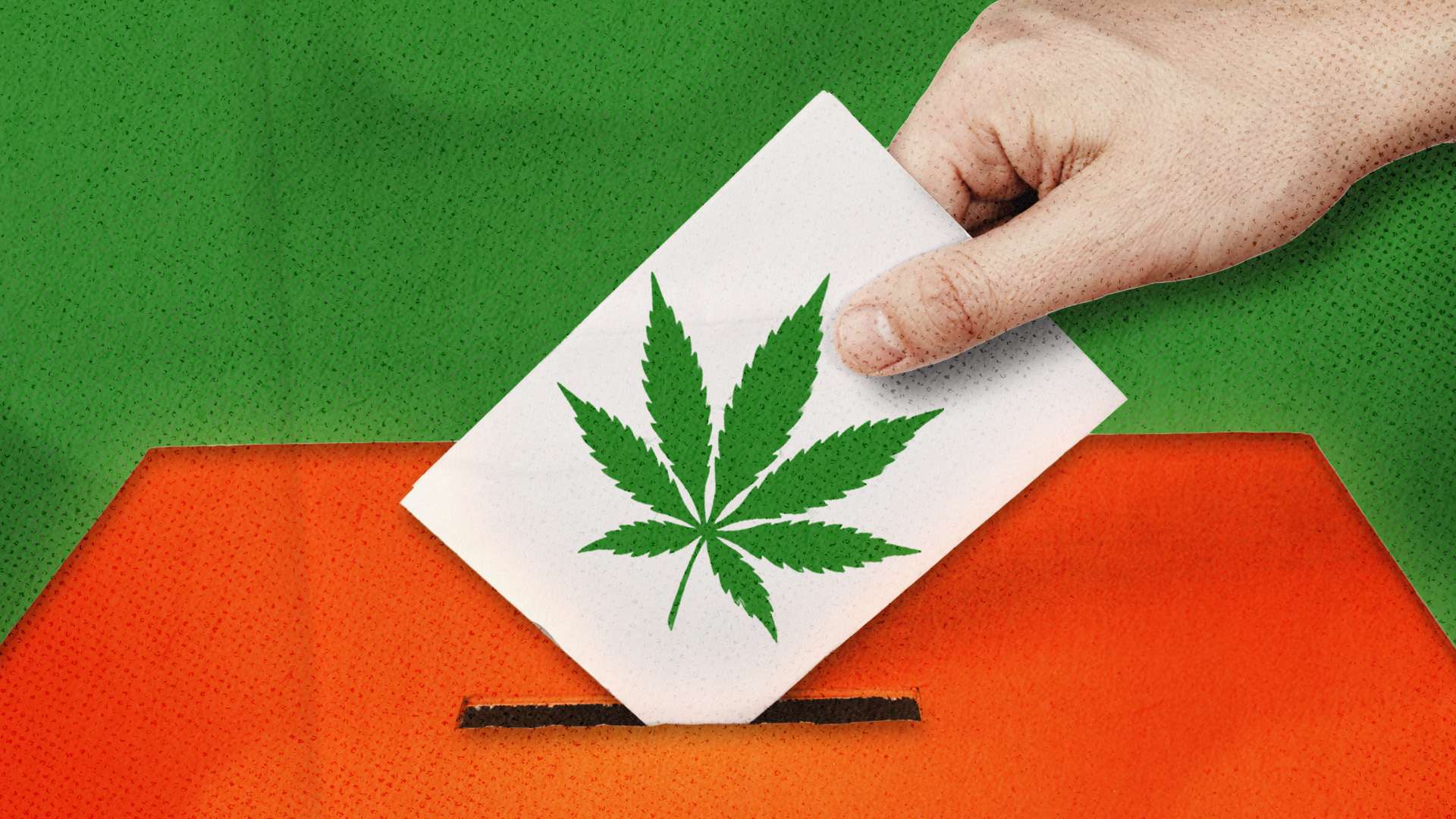
A decade ago, 54 percent of Massachusetts voters said yes to Question 4, a ballot initiative that legalized possession, home cultivation, and commercial distribution of recreational marijuana.
asserted
that → say → marijuana
Judging from recent surveys, voters are not inclined to reverse that decision by approving Question 8, an initiative on next Tuesday's ballot.
asserted
voters → judge → ballot
Question 8, a.k.a. the Eliminate Recreational Marijuana Sales and Allow Limited Possession Initiative, would permit adults 21 or older to possess up to an ounce of cannabis.
asserted
Question → eliminate → cannabis
But they would have to get it from the black market, since Question 8 would not allow them to grow it or buy it from state-licensed retailers.
asserted
them → have → retailers
The initiative "would keep personal possession of marijuana legal, keep medical marijuana legal, and stop commercial marijuana stores," its supporters say.
asserted
supporters → keep → stores
They allege that legalization has impaired "productivity" and led to increases in "fatal car accidents," "workplace injuries," "healthcare costs," "crime (like DUI's)," "ER visits," and "mental health conditions like psychosis, severe anxiety, and schizophrenia, particularly in young adults."
asserted
legalization → allege → adults
Voters do not seem impressed by those arguments.
asserted
Voters → seem → arguments
In eight polls between mid-February and mid-October, support for Question 8 ranged from 20 percent to 41 percent.
asserted
support → range → percent
In the most recent survey, conducted by The Boston Globe, 71 percent of respondents said they planned to vote no on Question 8, which suggests that experience with legalization has substantially increased opposition to pot prohibition in Massachusetts.
uncertain
experience → conduct → Massachusetts
Question 8's sponsor, the Coalition for a Healthy Massachusetts, is funded almost entirely by Smart Approaches to Marijuana (SAM).
asserted
sponsor → fund → Marijuana
As of October 20, the Virginia-based group had spent $3.7 million on the project, compared to $2.8 million in spending by the opposition, which includes several marijuana businesses.
asserted
which → base → businesses
SAM's co-founder, Kevin Sabet, who served as a drug policy adviser during the Clinton, George W. Bush, and Obama administrations, says he was motivated by the concerns of Massachusetts residents who approached him.
asserted
who → serve → him
"Many of them voted for this initiative 10 years ago and feel betrayed," Sabet told WGBH, an NPR station in Boston.
asserted
Sabet → vote → Boston
If so, the polls indicate such converts are far outnumbered by former Question 4 opponents who have traveled that road in the opposite direction.
asserted
who → indicate → direction
"We're under no illusions that the bluest state in the country is going to pass this easily with flying colors," Sabet told WBUR, another Boston NPR station, a few weeks ago.
asserted
Sabet → go → WBUR
"But we want to have that conversation."
The conversation clearly is not going the way Sabet hoped.
asserted
Sabet → want → conversation
Massachusetts, which was the fifth state to legalize recreational marijuana, is now one of two dozen, which together account for most of the U.S. population.
asserted
which → legalize → population
In October 2025, Gallup put nationwide support for marijuana legalization at 64 percent, which was down a bit from the peak of 70 percent recorded in 2023 but still 16 points higher than in 2012, when Colorado and Washington started this ball rolling.
asserted
ball → put → 2012
Public support for legalizing recreational marijuana tends to be even higher in states that have done it.
asserted
that → legalize → it
In Civiqs surveys last December, support in 15 states where voters had approved legalization ranged from 62 percent in Missouri to 77 percent in Oregon.
asserted
voters → approve → Oregon
It had increased since legalization in every state but New Jersey, where it was down one point from the 67 percent of voters who approved Public Question 1 in 2020.
asserted
who → increase → 2020
In Massachusetts, support had risen from 54 percent to 76 percent.
asserted
support → rise → percent
The fate of two other drug policy initiatives that voters will consider next week is less clear.
asserted
voters → consider → that
As far as I can tell, pollsters have not asked voters about them.
asserted
pollsters → tell → them
Colorado's Proposition 132 would make manufacturing or distributing any amount of illicit fentanyl a Level 1 drug felony punishable by a mandatory minimum sentence of eight years.
asserted
manufacturing → make → years
Under current law, the penalties vary depending on the amount of fentanyl involved.
asserted
penalties → vary → fentanyl
In Idaho, House Joint Resolution 4, a proposed constitutional amendment, would strip voters of the power to legalize marijuana or any other psychoactive substance.
asserted
Resolution → propose → marijuana
If the initiative passes, which requires approval by a simple majority, that power will be reserved to the state legislature.
asserted
power → pass → legislature
 The Aporia