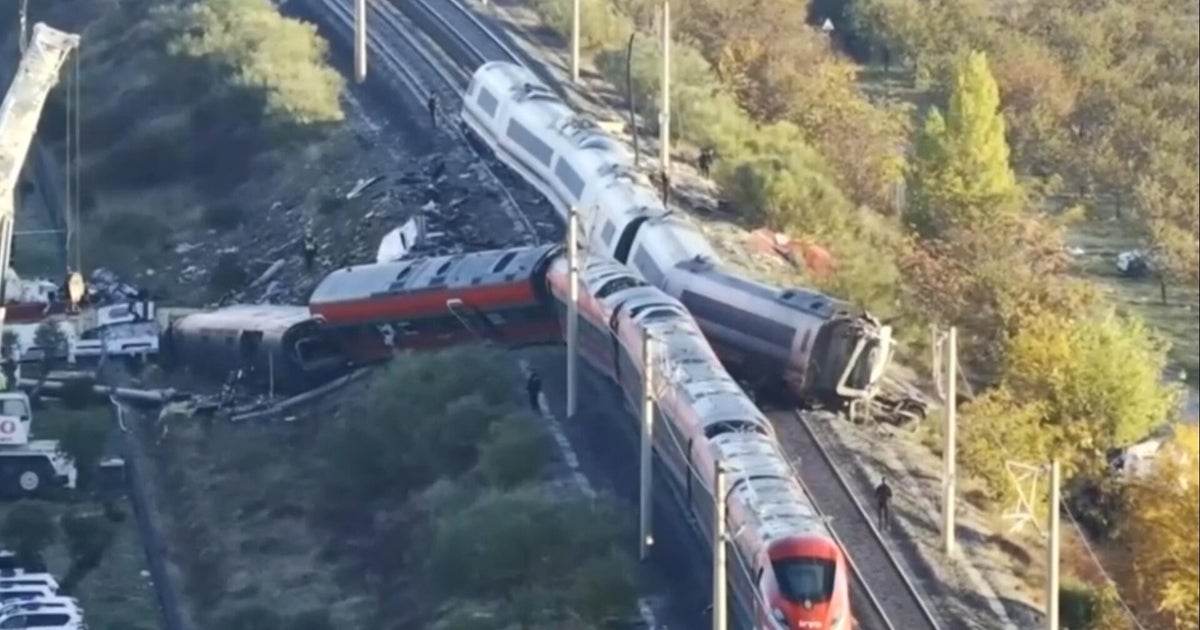
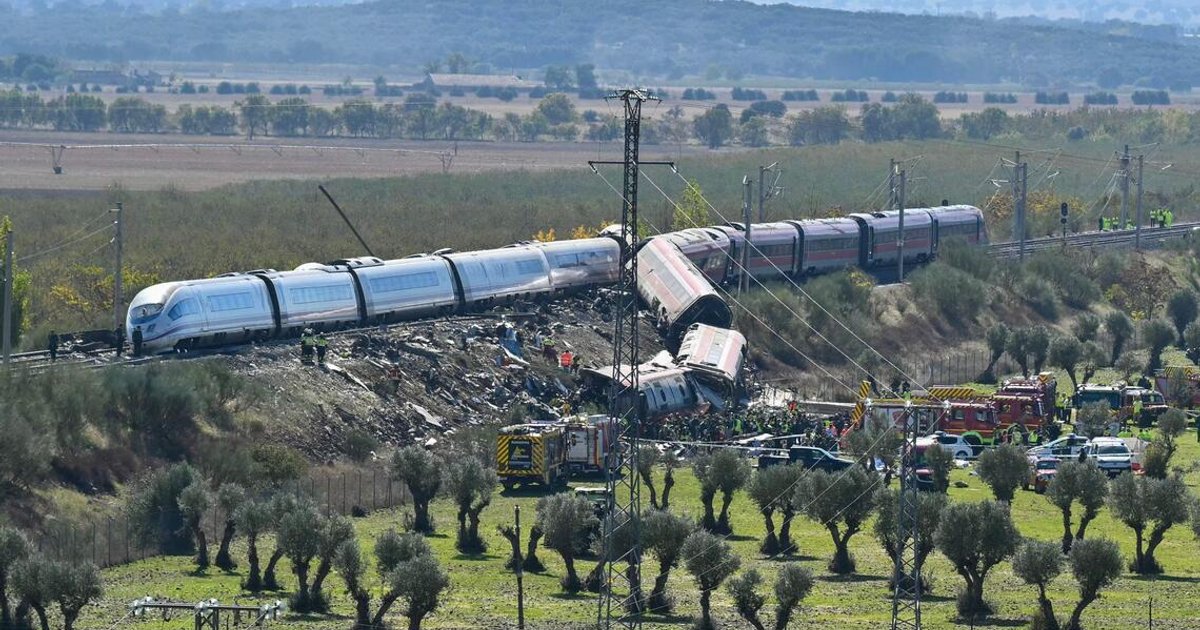
Photo via CBC News

Did human error cause Spain's deadly high-speed train crash? | About That

Read the original at CBC News ↗
Cite

Did human error cause Spain's deadly high-speed train crash? | About That. (2026, October 30). CBC News. https://www.cbc.ca/player/play/9.7403717?cmp=rss

Dated from the outlet's own feed. Check the original for its byline.

CBC News · collected 2026-10-31

Quick Summary

A high-speed train in central Spain crashed into a stopped train while traveling over 150 km/h, resulting in at least 69 deaths and numerous injuries. Andrew Chang analyzes dispatcher communications and the railway's signaling system to suggest that a technical malfunction might have contributed to the accident. The piece focuses on potential human error or technical issues as key factors behind the crash.
Written by AI on 2026-10-31, from this article's own text only (the story summary below draws on all the coverage).

AI analysis

Story summary

As of November 3, 2026, 69 people died and dozens more were injured after two high-speed trains collided in central Spain. The crash occurred around 9 AM local time on October 27 between the towns of Mora and Orgaz in the province of Toledo, about 150km south of Madrid. One train was a Renfe AVE service from Madrid to Seville, while the other was an Iryo train traveling in the opposite direction. The cause is attributed to human error by the control center in Madrid, which failed to inform the driver of the Renfe train that another train had stopped ahead on the tracks.

Spanish authorities confirmed two Australians among the fatalities. Emergency services reported injuries and asked local officials to prepare a sports pavilion for passengers. The rail operator ADIF suspended service between Madrid and Seville following the incident.

Written for “Spain Train Crash Victims Identified” on 2026-11-05, grounded in this article and the 149 other(s) covering the same event.

Story

📰 Spain Train Crash Victims Identified
World · 150 article(s) covering the same event. Compare every outlet's account →

Compared with similar articles

This article reads unscored and hedges 33% of its claims. Each row says how that neighbour differs.
BBC News
Hedges 0 of 34 claims Outlet record 66/100
Al Jazeera
Hedges 7 of 66 claims Outlet record 60/100
The Hindu
Hedges 0 of 3 claims Outlet record 77/100
The Independent
Hedges 2 of 14 claims Outlet record 59/100
Toronto Star
⚖️ Leans left Hedges 3 of 38 claims Outlet record 64/100
The Independent
Hedges 2 of 40 claims Outlet record 59/100
The Guardian
Hedges 3 of 26 claims Outlet record 66/100
The Straits Times
Hedges 1 of 6 claims Outlet record 66/100
How this article was measured signals, leaning charts, publisher record, byline, topics and claims

Signals How these are calculated →

Claims extracted
3
sentences that state something as happening or true
Uncertain
33%
1 of 3 hedged ("reportedly", "may", "according to")
Leaning
not political
takes no side on a contested political question
Publisher signals
60/100
CBC News's corrections and hedging, across everything collected from it. Not a measure of accuracy.
Outlets on this story
150
World
Same framing elsewhere
1
articles that frame the event the way this one does
Analyzed 2026-10-31 · how these are computed

How this is being covered How these are calculated →

Article leaning vs. publisher reliability
Source leaning vs. consistency

Publisher

CBC News · 815 article(s) · 1 correction(s) detected
Running correction rate · 1 correction(s)

Who wrote this

No reporter is named on this article.

Topics

Adobe Stock Getty Images Reuters Spain The Canadian Press

Subjects

Spain GPE · 2× Adobe Stock ORG · 1× Andrew Chang PERSON · 1× Getty Images ORG · 1× Reuters ORG · 1× The Canadian Press ORG · 1×

Narrative

| About That A high-speed train travelling at more than 150 km/h collided with a stopped train in central Spain, killing at least 69 people and injuring dozens more.
framing: mixed · carried by 1 article(s) · first seen 2026-10-31
🔮 Andrew Chang breaks down dispatcher audio and information about the railway's signalling system to explain how a technical glitch may have led to the fatal crash.

Claims (3 extracted, 1 hedged)

Did human error cause Spain's deadly high-speed train crash? asserted
error → cause → crash
| About That A high-speed train travelling at more than 150 km/h collided with a stopped train in central Spain, killing at least 69 people and injuring dozens more. asserted
train → travel → dozens
Andrew Chang breaks down dispatcher audio and information about the railway's signalling system to explain how a technical glitch may have led to the fatal crash. uncertain
glitch → break → crash
💬Give feedback · no sign-in needed

No sign-in needed for now. Your note is sent without a name, so it cannot be answered.

🕘History 🎫Support