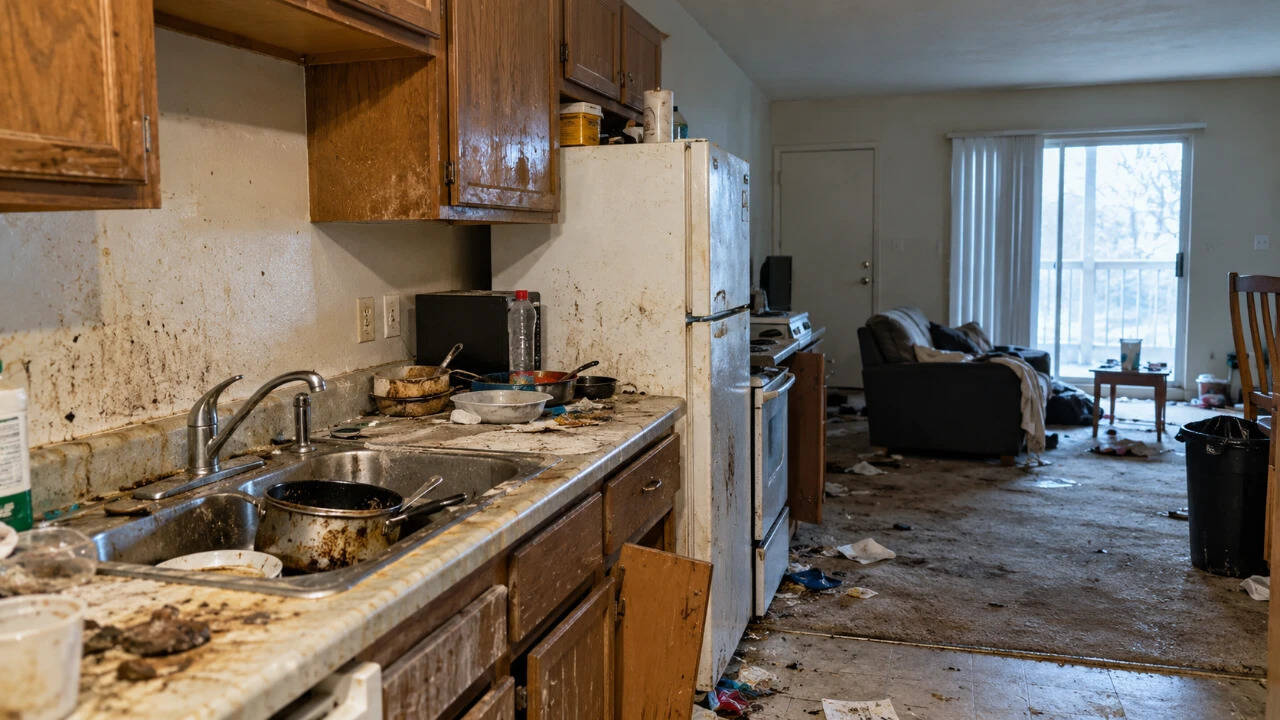
An Indiana landlord who won $6,200 from a former tenant over unpaid rent and damage to an apartment will now receive only $2,400 after a state appeals court ruled on Thursday that the property owner had failed to follow an important requirement under state law.
asserted
owner → win → law
According to the
judgment, the landlord had not sent the tenant a written list explaining the damage and the money being claimed for repairs.
uncertain
landlord → accord → repairs
The court ruled that this failure prevented the landlord from recovering repair and cleaning costs, although the unpaid rent was still due.
asserted
rent → rule → costs
The dispute involved John Tuttle, who rented an apartment owned by TRS99 LLC, a company managed by Bruce Skiles.
asserted
who → involve → Skiles
Tuttle lived in the property from 2024 until January 2026.
asserted
Tuttle → live → January
He began falling behind on rent in January 2025, and by the time his tenancy ended, he owed $2,400.
asserted
he → begin → 2,400
On January 3 this year, Skiles informed Tuttle through a text message that his lease would end on January 31.
asserted
lease → inform → January
As the deadline approached, Tuttle asked for another week because he was unsure whether he could finish moving out in time.
uncertain
he → approach → time
Skiles did not agree to the extension, and Tuttle eventually said he would leave by the agreed date.
asserted
he → agree → date
However, when Skiles visited the apartment on January 31, he found that Tuttle had not removed all his belongings.
asserted
Tuttle → visit → belongings
The landlord also claimed that the property had been left in poor condition, with spoiled food, a strong smell of cigarette smoke and damaged kitchen and bathroom fittings.
asserted
property → claim → smoke
What followed was a disagreement over who should pay for the condition of the apartment and what had happened to the tenant's belongings.
asserted
what → follow → belongings
Landlord claimed more than $13,000
asserted
Landlord → claim → 13,000
According to the court's judgment, Skiles found food rotting in pots, pans and appliances when he entered the apartment.
uncertain
he → accord → apartment
Spoiled food and milk had also been left inside the refrigerator.
asserted
food → leave → refrigerator
He reported that the kitchen sink and bathroom toilet were damaged and could not be used.
uncertain
sink → report → ?
Skiles remained at the apartment for the rest of January 31, but Tuttle did not return to clean the property or collect his remaining belongings.
asserted
Tuttle → remain → belongings
On February 3, Skiles took the matter to a small claims court, seeking unpaid rent and compensation for cleaning and repairs.
uncertain
Skiles → take → cleaning
During a hearing in May, he said Tuttle had violated the lease by smoking inside the apartment and causing damage beyond normal wear and tear.
uncertain
Tuttle → say → wear
The landlord submitted expenses totalling $13,183 for labour and supplies.
asserted
landlord → submit → labour
However, the trial court did not award the full amount.
asserted
court → award → amount
Instead, it ordered Tuttle to pay $2,400 in outstanding rent, $2,900 for repairs and $900 for dumpster rental.
asserted
it → order → rental
The total came to $6,200, excluding court costs.
asserted
total → come → costs
Tuttle challenged the decision, arguing that the landlord had kept his security deposit without sending him the written breakdown of damage required under Indiana law.
asserted
landlord → challenge → law
Role of the missing damage list
Under Indiana law, landlords must send former tenants an itemised list of damage claims within 45 days after their occupancy ends, subject to the tenant providing a mailing address in writing.
uncertain
tenant → miss → writing
The landlord must also return the security deposit after making any permitted deductions.
asserted
landlord → return → deductions
During the trial, Tuttle's lawyer asked Skiles whether he had returned the security deposit.
asserted
he → ask → deposit
Skiles replied, "I did not."
asserted
I → reply → ?
When asked whether he had provided a notice explaining why the deposit was being withheld, along with an itemised list of damages, Skiles again answered, "I did not."
asserted
I → ask → damages
This admission became central to the appeal.
asserted
admission → become → appeal
The appeals court explained that failure to follow the notice requirement prevents a landlord from recovering money for physical damage to the rented property.
asserted
failure → explain → property
However, it does not prevent the landlord from claiming unpaid rent.
asserted
it → prevent → rent
TRS99 LLC argued on appeal that there was no evidence Tuttle had supplied a mailing address in writing.
asserted
Tuttle → argue → writing
The judges declined to consider that argument because the landlord had not raised it during the original trial.
asserted
landlord → decline → trial
As a result, the appeals court removed the $3,800 awarded for repairs and dumpster rental, leaving only the $2,400 in unpaid rent.
asserted
court → remove → rent
Tenant also loses claims
Tuttle had also filed a claim against the landlord, alleging that he had been prevented from collecting his belongings and that some of his property had been destroyed or disposed of.
uncertain
some → lose → property
He told the trial court that he had not finished moving because a snowstorm was expected and he did not have enough time to remove everything.
asserted
he → tell → everything
He also claimed Skiles had said he would dispose of the remaining belongings as he saw fit.
asserted
he → claim → belongings
However, Tuttle did not identify the specific items left behind or provide evidence of their value.
asserted
Tuttle → identify → value
He also failed to establish how much security deposit he had originally paid.
asserted
he → fail → deposit
…and 4 more, not listed.
 The Aporia