After last year's storm, this remote Alaska town is still picking up the pieces
Last fall, the remnants of Typhoon Halong tore through numerous small Alaska Native villages off the road system in Western Alaska.
asserted
remnants → pick → Alaska
The storm destroyed infrastructure, floated homes off their foundations, and displaced over a thousand people.
asserted
storm → destroy → people
A year later, hundreds remain displaced as the slow work of repair in a remote part of the state continues.
asserted
work → remain → state
And in one of the hardest hit communities – the small town of Kipnuk – people still aren't sure when they'll be moving back.
asserted
they → hit → Kipnuk
'Working as fast as we can'
The village of under 200 homes is situated on the wide open tundra and only consistently accessible by plane.
asserted
village → work → plane
A year ago, 90% of the residences here were damaged by the remnants of Typhoon Halong, according to the State of Alaska's Emergency Operations Center.
uncertain
% → damage → Center
Dozens were swept off their foundations, some with families still inside.
asserted
some → sweep → families
The community is now largely scattered across Alaska – some outside the region their ancestors have lived in for thousands of years.
asserted
ancestors → scatter → years
Throughout the past year, crews have been working on repairs.
asserted
crews → work → repairs
On a clear day in August, Eddie Chuckwuk's construction crew attempted what sounded like magic: raising a building back onto its foundations using air compressors.
asserted
what → attempt → compressors
Chuckwuk is one of several dozen people who have been working long days to rebuild the place where he grew up.
asserted
he → work → place
"We're working as fast as possible as we can to get the people back in town," Chuckwuk says.
asserted
Chuckwuk → work → town
"That's what I just want to see – for everybody to come back and enjoy where they grew up instead of being placed in a different place … where they're not used to.
asserted
they → want → where
Challenges remain in moving back
This work is critical to getting Kipnuk's homes in shape to live in again, but the town is far from being fully restored.
asserted
town → remain → shape
According to the state, most people in Kipnuk didn't have home or flood insurance.
uncertain
people → accord → insurance
They estimate that funds from the Federal Emergency Management Agency will make most of the homes livable by Thanksgiving – meaning replacing wet insulation and repairing windows, doors and roofs.
asserted
most → estimate → windows
But the funds won't be enough to return some severely damaged homes to how they were before the storm.
asserted
they → return → storm
The state is currently appealing for additional funding to build replacement housing.
asserted
state → appeal → housing
There's also no estimate on when the school will reopen.
asserted
school → be → ?
Leona Paul, who has been working as a cook to feed the construction teams, says even if the houses are habitable, some people were too traumatized by the storm to return.
asserted
people → work → storm
"I think it's too overwhelming for them," she says, "especially the older people.
asserted
she → think → them
And climate change is making towns like Kipnuk more vulnerable to future storms.
asserted
towns → make → storms
Most people in town want to rebuild the village somewhere safer but the funding they have received so far from FEMA can only go towards restoring what was damaged.
asserted
what → want → FEMA
Kipnuk hasn't yet found the money to move.
asserted
Kipnuk → find → money
Living away from home takes a toll
Right now residents may not have a better option other than moving back.
uncertain
residents → live → option
Many say living in bigger towns, or cities like Anchorage, has been tough.
asserted
living → say → Anchorage
People aren't speaking as much Yugtun – the native language.
asserted
People → speak → Yugtun
They're farther from loved ones.
asserted
They → love → ones
Their kids, who are used to playing all over town, have to watch out for cars.
asserted
who → use → cars
Leona Paul, who spent part of the summer in Kipnuk, says she likes being there.
asserted
she → spend → Kipnuk
"You're free to do anything you want," she says.
asserted
she → do → anything
"In a city you just can't do whatever you want."
asserted
you → do → whatever
Being displaced from the village has also meant separation from the Alaska Native cultural practices of hunting and gathering traditional food on the land.
asserted
Being → displace → land
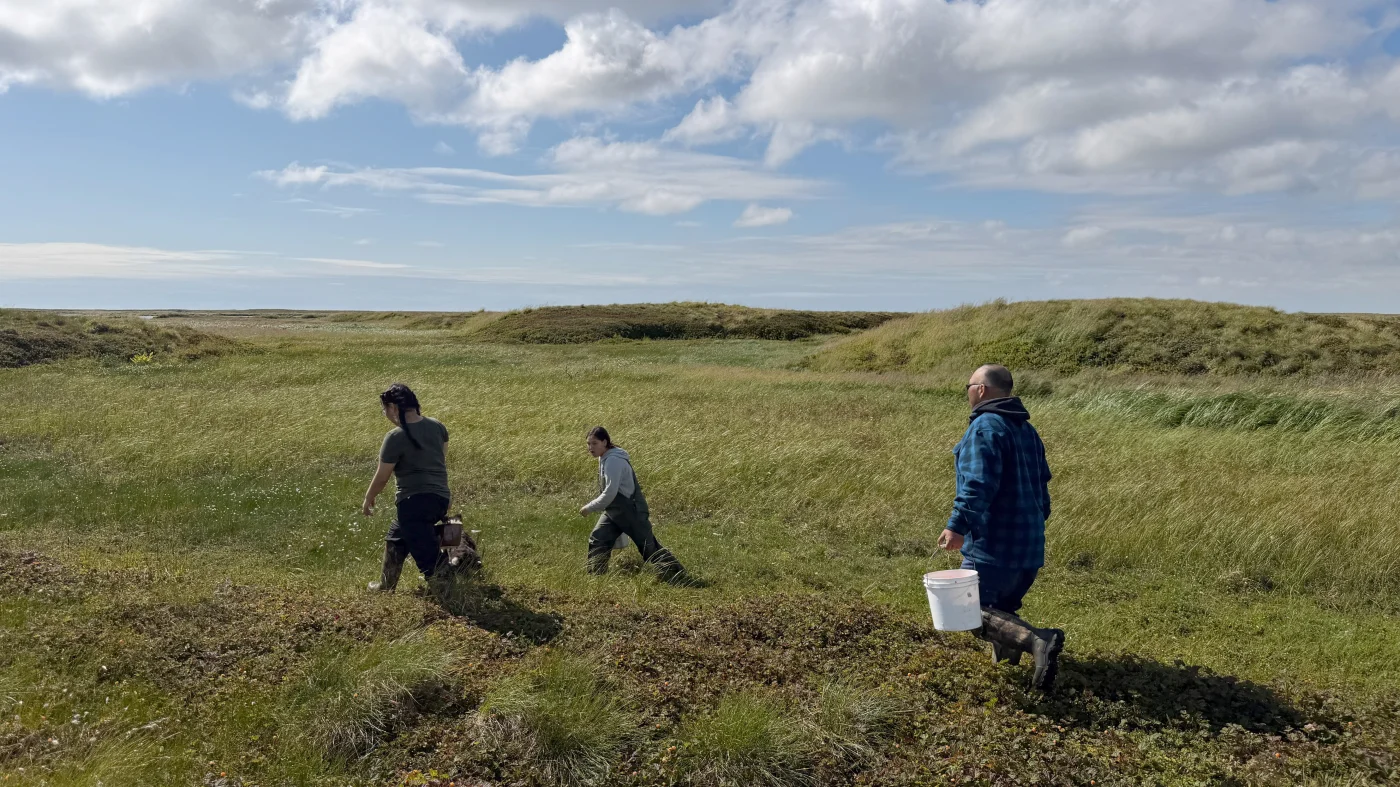
Some residents, like Burt Paul's family, traveled home for the summer to practice subsistence and be together.
asserted
residents → travel → subsistence
Upriver from Kipnuk on a lush tundra bluff, his family filled buckets with sweet, orange salmonberries, or naunraqs as they are called in coastal Yugtun.
asserted
they → fill → Yugtun
He says after last fall's destruction – he didn't know when he'd see these native plants growing again.
asserted
plants → say → destruction
"It beats my mind that I see food growing, grass growing, fish coming in," he says.
asserted
he → beat → mind
Paul's family evacuated after the storm, but he stayed behind in Kipnuk, acting as a community leader through the aftermath.
asserted
he → evacuate → aftermath
Usually, his family goes camping and berry picking for days.
asserted
family → go → days
This summer, their trips were shorter – confined to when everyone was in town.
asserted
everyone → confine → town
…and 1 more, not listed.
 The Aporia