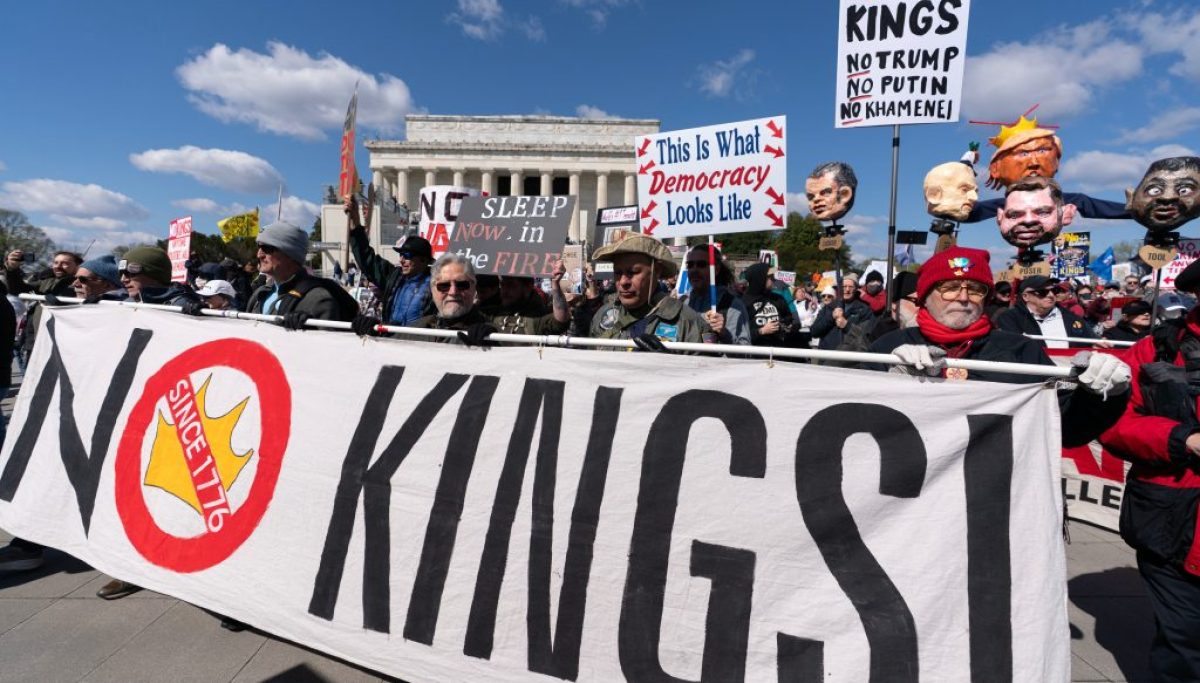
Photo via Washington Examiner

Obama had the Tea Party. Trump has ‘No Kings.’ You know how this story ends

Read the original at Washington Examiner ↗
Cite

Adams, D. (2026, October 31). Obama had the Tea Party. Trump has ‘No Kings.’ You know how this story ends. Washington Examiner. https://www.washingtonexaminer.com/op-eds/4786342/no-kings-movement-tea-party-2026-midterm-elections/

Dated from the outlet's own feed. Check the original for its byline.

Washington Examiner · collected 2026-10-31 · by Don Adams

Quick Summary

The article discusses how opposition to Barack Obama's presidency after his inauguration in January 2009 led to the formation of the modern-day Tea Party movement following CNBC editor Rick Santelli's February 19 rant against government intervention in financial markets. Initially dismissed by Democrats and largely ignored by media, the Tea Party gained prominence when Scott Brown won a special U.S. Senate election in Massachusetts on January 19, 2010, marking its political influence.
Written by AI on 2026-10-31, from this article's own text only (the story summary below draws on all the coverage).

AI analysis

Story summary

In January 2010, the Tea Party movement gained significant credibility when Scott Brown, a Republican endorsed by the Tea Party, won a special election for the U.S. Senate seat previously held by the late Ted Kennedy in liberal Massachusetts. This victory came after Barack Obama became president in January 2009 and faced growing opposition from Republicans and conservative groups like the Tea Party, which formed following a live rant on CNBC by editor Rick Santelli in February 2009. Initially dismissed by Democrats and largely ignored by media outlets, this win marked a turning point for the Tea Party's influence in national politics.

Written for “Trump's No Kings Campaign” on 2026-11-01, grounded in this article and the 0 other(s) covering the same event.

Story

📰 Trump's No Kings Campaign
Politics · 1 article(s) covering the same event.

Compared with similar articles

Nothing to compare against. No article is close enough to this one for the pipeline to have linked or judged the pair.
How this article was measured signals, leaning charts, publisher record, byline, topics and claims

Signals How these are calculated →

Claims extracted
4
sentences that state something as happening or true
Uncertain
0%
0 of 4 hedged ("reportedly", "may", "according to")
Leaning
Leans right
of the writing, not the subject · beta estimate
Publisher signals
70/100
Washington Examiner's corrections and hedging, across everything collected from it. Not a measure of accuracy.
Outlets on this story
1
Politics
Same framing elsewhere
1
articles that frame the event the way this one does
Analyzed 2026-10-31 · how these are computed

How this is being covered How these are calculated →

Article leaning vs. publisher reliability
Source leaning vs. consistency

Publisher

Washington Examiner · 3888 article(s) · 7 correction(s) detected
Running correction rate · 7 correction(s)

Who wrote this

Don Adams
1 article(s) here · 0 carrying a prediction
The only article under this byline in the corpus.

Topics

CNBC Democrats Republican Tea Party the Tea Party

Subjects

Tea Party ORG · 2× the Tea Party ORG · 2× Barack Obama PERSON · 1× CNBC ORG · 1× Democrats NORP · 1× GOP ORG · 1× John McCain PERSON · 1× Republican NORP · 1× Rick Santelli PERSON · 1× Scott Brown PERSON · 1×

Narrative

It wasn’t until GOP and Tea Party-endorsed candidate Scott Brown won Ted Kennedy’s former U.S. Senate seat in a special election held Jan. 19, 2010, in liberal Massachusetts, that anyone really started taking the Tea Party seriously.
framing: assertive · carried by 1 article(s) · first seen 2026-10-31
2026-10-31 · Washington Examiner
Obama had the Tea Party. Trump has ‘No Kings.’ You know how this story ends · assertive framing

Claims (4 extracted, 0 hedged)

In January 2009, then-President Barack Obama had no sooner assumed office after handily defeating the Republican nominee, John McCain, when opposition to his overreaching agenda galvanized a center-right movement. asserted
opposition → assume → movement
At the suggestion of CNBC editor Rick Santelli, whose live, on-air rant of Feb. 19 of that year perfectly captured the spirit of the opposition, the modern-day Tea Party was formed. asserted
Party → capture → opposition
Initially, the Tea Party was ridiculed by Democrats and ignored by the media — despite its large, nationwide Tax Day Tea Parties. asserted
Party → ridicule → Parties
It wasn’t until GOP and Tea Party-endorsed candidate Scott Brown won Ted Kennedy’s former U.S. Senate seat in a special election held Jan. 19, 2010, in liberal Massachusetts, that anyone really started taking the Tea Party seriously. asserted
anyone → endorse → Party
💬Give feedback
🕘History 🎫Support