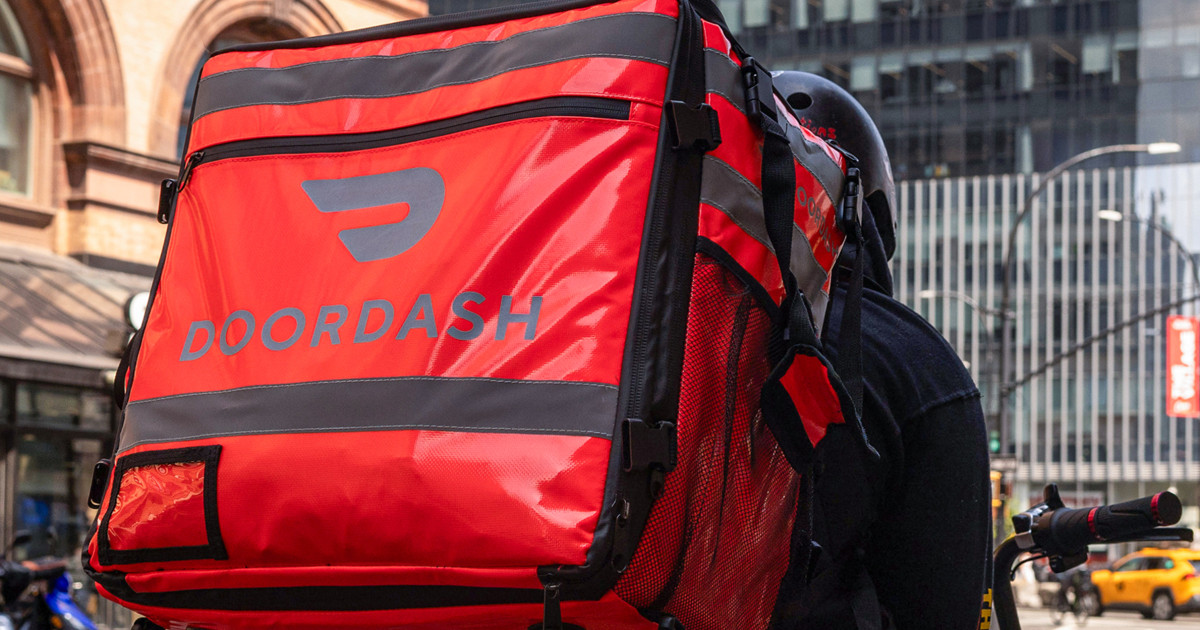
Photo via New York Post

New DoorDash rival promises cheaper takeout — but can it deliver?

Read the original at New York Post ↗
Cite

Weiss, A. (2026, October 31). New DoorDash rival promises cheaper takeout — but can it deliver? New York Post. https://nypost.com/2026/10/31/lifestyle/doordash-rival-olo-promises-to-lower-prices-we-put-it-to-the-test/

Dated from the outlet's own feed. Check the original for its byline.

New York Post · collected 2026-10-31 · by Aurielle Weiss

Quick Summary

Olo, launched on October 20, is a new food delivery platform promising lower prices by eliminating hidden fees like commissions charged by competitors such as DoorDash and Uber Eats. With over 250 restaurant partnerships including Five Guys and Waffle House, Olo charges only a flat "network fee" of 5% plus a separate delivery fee. However, the article highlights potential issues with data privacy; despite lacking in-app advertisements, Olo shares user data with advertisers to target them elsewhere, echoing concerns about consumer privacy raised against DoorDash earlier this year.
Written by AI on 2026-10-31, from this article's own text only (the story summary below draws on all the coverage).

AI analysis

Story summary

Olo, a new food ordering platform launched on October 20, 2026, promises cheaper takeout by eliminating sneaky fees and inflated prices. Unlike its rival DoorDash, which boasts over 615,000 partnerships, Olo currently partners with around 250 national and regional restaurant brands such as Five Guys, Waffle House, and Dave’s Hot Chicken. Olo charges a flat fee of 5%, called the "network fee," plus a delivery fee for orders, but it does not impose additional commissions on restaurants, which helps keep prices lower for customers. This comes amid DoorDash's recent acquisition of Instacart for $17 billion, raising concerns about potential price hikes in the market.

Written for “New DoorDash Rival Promises Cheaper Takeout” on 2026-10-31, grounded in this article and the 0 other(s) covering the same event.
Why this leaning score
The article's own words the score was based on. Each is quoted verbatim and was checked against the article text before being stored, so you can find it in the original.
Reading Leans left (beta estimate) Confidence high 1 quote(s) discarded as not found in the article
Leaning: leans left for article 119736 (high confidence, 1 verified quote) · logged 2026-10-31

Story

📰 New DoorDash Rival Promises Cheaper Takeout
Economy/Business · 1 article(s) covering the same event.

Compared with similar articles

This article reads leans left and hedges 20% of its claims. Each row says how that neighbour differs.
New York Post
Hedges 3 of 14 claims Outlet record 66/100
“Article A discusses DoorDash's talks to acquire Instacart for $17 billion, while Article B mentions that DoorDash has already acquired Instacart and introduces a new competitor named Olo.”
NBC News
Hedges 1 of 21 claims Outlet record 60/100
“Article A reports on DoorDash acquiring Instacart for $17 billion, while Article B discusses a new competitor to DoorDash called Olo and mentions the acquisition of Instacart in passing.”
CBS News
Hedges 1 of 5 claims Outlet record 66/100
“Article A reports on DoorDash acquiring Instacart for $17 billion, while Article B discusses a new competitor to DoorDash called Olo and mentions the acquisition in context but does not describe it as the main event.”
BBC News
Hedges 2 of 19 claims Outlet record 68/100
“Article A discusses DoorDash's acquisition of Instacart, while Article B mentions this deal but focuses on a new competitor named Olo.”
Global News
Hedges 3 of 14 claims Outlet record 63/100
“The articles discuss different events: one is about DoorDash acquiring Instacart, while the other introduces a new competitor to DoorDash.”
The Guardian
Hedges 3 of 24 claims Outlet record 66/100
“Article A reports on DoorDash's acquisition of Instacart for $17bn, while Article B discusses a new rival to DoorDash called Olo that promises cheaper takeout services.”
How this article was measured signals, leaning charts, publisher record, byline, topics and claims

Signals How these are calculated →

Claims extracted
45
sentences that state something as happening or true
Uncertain
20%
9 of 45 hedged ("reportedly", "may", "according to")
Leaning
Leans left
of the writing, not the subject · beta estimate
Publisher signals
66/100
New York Post's corrections and hedging, across everything collected from it. Not a measure of accuracy.
Outlets on this story
1
Economy/Business
Same framing elsewhere
1
articles that frame the event the way this one does
Analyzed 2026-10-31 · how these are computed

How this is being covered How these are calculated →

Article leaning vs. publisher reliability
Source leaning vs. consistency

Publisher

New York Post · 15592 article(s) · 35 correction(s) detected
Running correction rate · 35 correction(s)

Who wrote this

Aurielle Weiss
36 article(s) here · 1 carrying a prediction
🔮 The debut comes as the app’s Goliath-sized rival, DoorDash, snapped up Instacart for $17B — which experts warn could lead to even higher prices.
🔮 Social Security recipients will see an “extra” payment this month — kind of.
🔮 Rival Rinse will be rolling out SuDway — a soap that smells like a “New York slice with hints of bodega,” according to the website’s description.
🔮 Starting on Jan. 1, the popular airline will be changing the terms of its Rapid Rewards program — a longtime favorite where travelers scored free flights using the Companion Pass.
🔮 Tractor Supply will instead be launching locations with a much larger square footage than existing stores.
🔮 The new program — called the Enumeration at Birth (EAB) program — will now be adding information about Trump Accounts to Social Security cards issued to newborns.
🔮 While gas prices do vary by state, the priciest stretch to fill up in would be California.
🔮 The brand — which is owned by PepsiCo — will drop two new holiday flavors at the end of October.
🔮 According to the IRS, over 20 million taxpayers are expected to file tax returns by the extended due date.
🔮 Well, Google may have given you the right answer.
Also by Aurielle Weiss
Nothing else under this byline is closely related to this article, so these are simply their most recent.
All 36 articles by Aurielle Weiss →

Topics

DoorDash Five Guys Instacart Olo the Olo App

Subjects

DoorDash ORG · 7× Olo ORG · 7× Post ORG · 2× The Post ORG · 2× Dave’s Hot Chicken ORG · 1× Five Guys ORG · 1× Goliath PERSON · 1× Instacart ORG · 1× Uber Eats ORG · 1× Waffle House ORG · 1×

Narrative

Olo currently has over 250 national and regional restaurant brands with names like Five Guys, Waffle House and Dave’s Hot Chicken — small fry compared to DoorDash, which brags roughly 615,000 partnerships.
framing: assertive · carried by 1 article(s) · first seen 2026-10-31
🔮 The debut comes as the app’s Goliath-sized rival, DoorDash, snapped up Instacart for $17B — which experts warn could lead to even higher prices.
2026-10-31 · New York Post
New DoorDash rival promises cheaper takeout — but can it deliver? · assertive framing

Claims (45 extracted, 9 hedged)

Launched on Oct. 20, Olo is a new ordering platform offering pickup and delivery with one major promise — no sneaky fees. asserted
Olo → launch → promise
The debut comes as the app’s Goliath-sized rival, DoorDash, snapped up Instacart for $17B — which experts warn could lead to even higher prices. uncertain
experts → come → prices
Olo currently has over 250 national and regional restaurant brands with names like Five Guys, Waffle House and Dave’s Hot Chicken — small fry compared to DoorDash, which brags roughly 615,000 partnerships. asserted
which → have → partnerships
No inflated prices, they promise — no added charges, no sponsored ads. asserted
they → promise → ?
What you see on the menu when you’re at the actual restaurant is what you see when you’re ordering through the app. asserted
you → see → app
To make money, the brand promises just one flat fee of 5%, called the “network fee.” asserted
brand → make → %
Plus, users will still need to pay a delivery fee on delivery orders. asserted
users → need → orders
However, creators say the app eliminates the main cost driving up customer prices. asserted
app → say → prices
It’s called the commissions fee — where apps like DoorDash and Uber Eats charge restaurants anywhere from 15% to 30% commissions on delivery orders. asserted
apps → call → orders
This fee makes the restaurants raise prices to cover costs — but the Olo App is commission-free. asserted
App → make → costs
So what’s the catch? asserted
catch → ’ → ?
While Olo may offer lower prices, The Post did a deep dive and found two problems consumers may face — transparency and convenience. uncertain
consumers → offer → problems
Over the past year, consumers have been hearing two phrases — dynamic pricing and surveillance pricing. asserted
consumers → hear → phrases
While they’re used interchangeably, there’s a bit of a difference. asserted
they → use → difference
Either way, it’s using data behind the scenes to work against you. asserted
it → use → you
While higher prices might be off the table with Olo, it is still acting like its rivals — serving up your data on a metaphorical silver platter. uncertain
it → act → platter
According to its press release, the Olo App is “free of sponsored ads and content.” uncertain
App → accord → ads
That may be true on its surface — but its privacy policy says something else. uncertain
policy → say → something
The brand says it gives certain data to advertisers so its partners can “market or sell their services to you,” and “deliver targeted advertisements through the services and on third-party platforms.” asserted
partners → say → platforms
Translation — your data is given to advertisers so they can sell you things. asserted
they → give → things
So, while you may not see ads on the Olo platform, you will most likely get served ads somewhere else based on the data Olo collects. uncertain
Olo → see → data
Of course, DoorDash is hardly known as a beacon of consumer goodwill. asserted
DoorDash → know → goodwill
The popular delivery app has publicly been accused of surveillance pricing and hidden fees. asserted
app → accuse → pricing
In fact, Groundwork Collaborative president and CEO Lindsay Owens, testified in an August 2026 Senate hearing which exposed a now-abandoned patent. asserted
which → testify → patent
The DoorDash patent would have measured user agitation — designed to detect when a customer was frustrated, hungry, impatient or in a hurry — and was ominously titled “Detecting User Agitation Application Interaction.” The patent was recently abandoned and now cannot be used. While Olo might not have any sneaky tricks up their digital sleeve just yet, can the new app beat its competitors and dominate the delivery game? uncertain
app → measure → game
Rich Pleeth is the CEO and co-founder of Finmile — a company providing operational superintelligence for logistics and complex physical operations. asserted
Pleeth → provide → logistics
He told The Post that in order for the brand to take on its rivals, it needs to deliver on price and convenience. asserted
it → tell → price
“The comparison needs to happen at checkout. asserted
comparison → need → checkout
Olo says it removes menu markups, but delivery fees still apply. asserted
fees → say → markups
Compare the same basket, to the same address, including fees and any offers or membership benefits,” Pleeth told The Post. asserted
Pleeth → compare → Post
To serve journalism — and our stomachs — The Post did just that and downloaded the new app, comparing it to the most-used delivery app, DoorDash. asserted
Post → serve → app
Right off the bat — it’s clear Olo does not have many options. asserted
Olo → ’ → options
Try and type in most major fast food spots and you won’t find them. asserted
you → try → them
When you do find one, get ready to walk — not all places will deliver. asserted
places → find → one
That’s because the New York City-based app does not have the network of delivery drivers DoorDash boasts — now up to over seven million independent contractors, known as Dashers. asserted
DoorDash → ’ → Dashers
Another feature that’s notably missing is the restaurants page. asserted
that → miss → ?
While it’s a small factor — it’s felt. asserted
it → ’ → ?
Customers are used to dedicated spots on Uber Eats and DoorDash showing hungry customers which restaurants to choose from. asserted
spots → use → restaurants
The Post ordered two identical items from both Olo and DoorDash — a cheeseburger, fries and a drink from Five Guys. asserted
Post → order → Guys
Olo charged just $24.81 — a $1.09 Network Fee and $1.93 for tax but did not have delivery available. asserted
delivery → charge → tax
…and 5 more, not listed.

💬Give feedback
🕘History 🎫Support