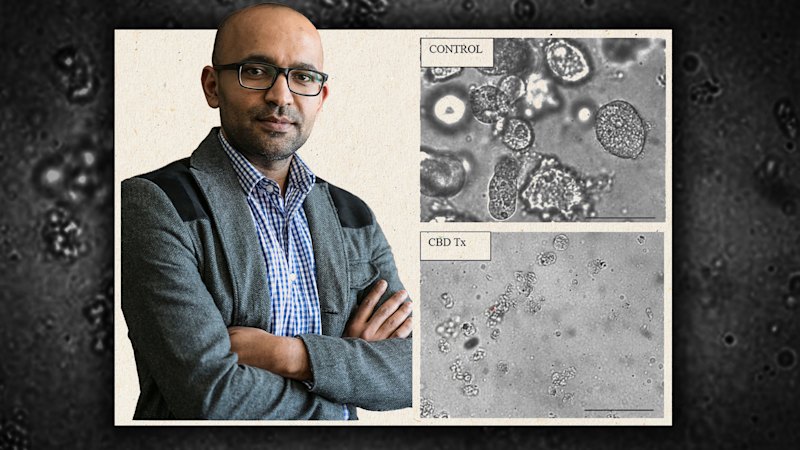
In December 2024, researchers at the Florey Institute of Neuroscience and Mental Health were called into a meeting with senior leadership.
asserted
researchers → call → leadership
Recollections differ about the tone of the meeting, but the message was clear.
asserted
message → differ → meeting
Taxpayer-funded research grants are the lifeblood of independent research institutes – and the Florey was not winning nearly enough.
asserted
Florey → fund → institutes
“At a time when most researchers were devastated at finding they were unsuccessful after spending months preparing applications,” one said, leadership “got up in front of everyone and berated us for not doing good enough”.
asserted
leadership → devastate → us
“After that meeting, everyone was walking around chatting to colleagues saying ‘can you believe it?
asserted
you → walk → it
I can’t believe that happened’.
asserted
that → believe → ?
Yesterday, an investigation by this masthead revealed the venerable institute – which the Rockefeller Foundation helped establish and was named after penicillin pioneer and Nobel Laureate Howard Florey – had become embroiled in chaos as it faced financial strife and an exodus of top research talent.
asserted
it → reveal → talent
Today, the investigation focuses on the scientific fallout from that turmoil – numerous complaints about the culture inside the Florey and the string of court cases in which it is now embroiled.
asserted
it → focus → which
This masthead has spoken to 22 former or current Florey staff – very few willing to be identified publicly for fear of retribution – to build a picture of a once-great institution under extreme financial pressure and facing accusations of building an unhealthy atmosphere for a workforce trying to solve dementia, Alzheimer’s, epilepsy, MND and mental health conditions.
“They’ve created this culture: the scientists are the ones to blame for the problem they are in.
asserted
they → speak → problem
A pure toxic culture has developed,” said a current researcher, speaking under condition of anonymity for fear of reprisal.
asserted
researcher → develop → reprisal
“They have taken the option to go completely corporate.
asserted
They → take → option
You can’t do that with a research institute because you’re just going to end up getting rid of most people – and the rest are going to want to leave.”
asserted
rest → do → people
A Florey spokeswoman said falls in grant income “reflect[ed] a tightening national funding environment” and “notably, funding for dementia reduced by 48% over the same time period” according to the National Health and Medical Research Council, website and annual disease funding statistics.
uncertain
funding → say → Council
They denied anyone had been “berated” about grant success rates, and said the meeting discussed “low national success rates”.
asserted
meeting → deny → rates
“This was a constructive discussion that identified other grant schemes that our researchers could apply to.”
uncertain
researchers → identify → that
But a confidential Florey presentation from February 2025 lamented “limited grant success in 2024 funding round, below expectations, partly due to inconsistent and inefficient grant support”.
“Every funding round was just a constant disappointment,” said a former staff member.
asserted
member → lament → support
In response to poor success rates, the institute proposed implementing an internal vetting system before grants could be submitted.
uncertain
grants → propose → system
“The result is less grants being submitted in order to artificially inflate the apparent success rate, a metric which has absolutely no impact on researchers,” said a former researcher.
asserted
researcher → submit → researchers
A spokeswoman for the Florey said it was “committed to attracting and retaining the brightest minds in medical research, while supporting professional development and opportunities across the medical research sector”.
asserted
it → say → sector
The institute does not prevent researchers from submitting grant applications, she said.
asserted
she → prevent → applications
Three current and two former researchers said the turmoil, staff losses and cost-cutting at the institute made it hard to do quality science.
asserted
it → say → science
“It’s so sad.
asserted
It → ’ → ?
Seeing the good these scientists want to do and can do, but at the top there’s this group that is so focused on money, nothing else really matters,” said a former staff member.
asserted
member → see → money
“And that’s the most disappointing thing.
asserted
that → ’ → ?
There was this obsession with monetising anything they could – the science got lost, it really got lost.”
uncertain
it → be → anything
Yesterday, this masthead’s investigation into the Florey revealed it had been running multimillion-dollar deficits since 2022, while commercial revenues – crucial to the Florey business model – have nearly halved since 2022.
asserted
revenues → reveal → 2022
“We need to continue to look at all measures that can help The Florey’s ongoing financial sustainability,” a confidential presentation from February 2025 reads.
asserted
presentation → need → February
In an effort to cut costs, “they are nickel-and-diming everything”, said a current researcher.
asserted
researcher → cut → everything
“Every penny gets fought over.”
asserted
penny → fight → ?
In early 2024, Florey scientists were told they would be asked to pay “bench fees”: thousands of dollars per researcher for using the Florey’s laboratory benches to do science.
asserted
they → tell → science
Staff have been limited from accessing machines and ordering chemicals essential to basic experiments, two current researchers said.
asserted
researchers → limit → experiments
‘They took their phones and laptops.
asserted
They → take → phones
They cut their access to the building.
asserted
They → cut → building
They asked someone to export all their WhatsApp chats.’Researcher
asserted
They → ask → chats
“They have brought in lots of different costs.
asserted
They → bring → costs
They are charging extra things, and making it almost impossible to do research,” said a current Florey scientist, speaking anonymously due to fear of retribution.
asserted
scientist → charge → retribution
“Can you tell me any organisation in research that’s able to work on a cost-recovery basis?
asserted
that → tell → basis
That’s not how it works.”
asserted
it → ’ → ?
Following complaints from staff, leadership did not end up imposing the new “bench fees”; a spokeswoman said it did not operate a full cost-recovery model.
asserted
it → follow → model
But the incident is emblematic of a new, corporate culture focused on cost cuts at the venerable institute, staff say.
asserted
staff → focus → institute
…and 50 more, not listed.
 The Aporia