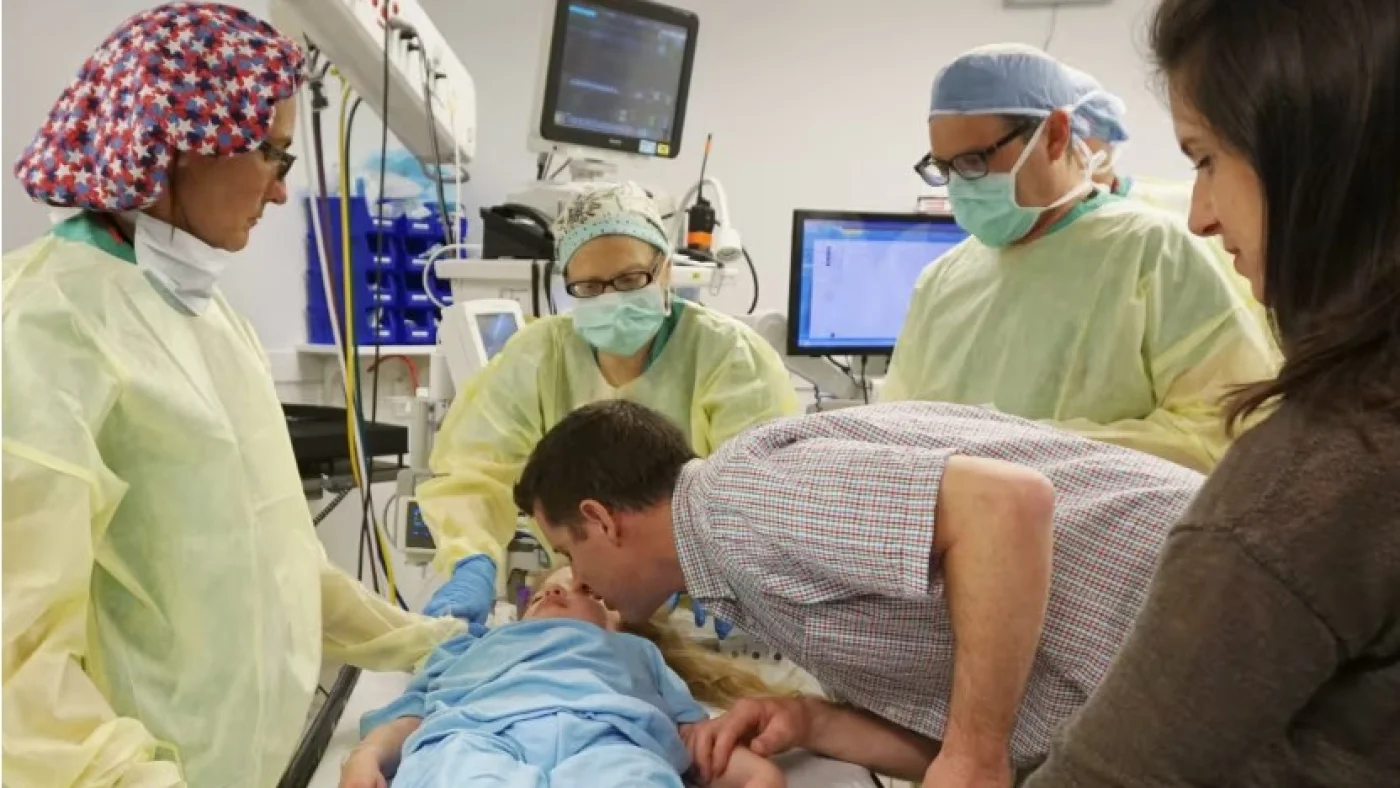
Photo via NPR

How one family gave a critical boost to gene therapy research

Read the original at NPR ↗
Cite

Lupkin, S. (2026, November 1). How one family gave a critical boost to gene therapy research. NPR. https://www.npr.org/2026/11/01/nx-s1-6014739/sanfilippo-gene-therapy-fayuvi

Dated from the outlet's own feed. Check the original for its byline.

NPR · collected 2026-11-01 · by Sydney Lupkin

Quick Summary

Eliza O'Neill was diagnosed with Sanfilippo syndrome in 2013, a rare genetic disorder causing severe developmental and health issues. Her parents, Cara and Glenn O'Neill, learned that researcher Haiyan Fu at Nationwide Children's Hospital had been developing a gene therapy for the condition since the late-1990s but needed funding to continue her work. The O'Neills created the Cure Sanfilippo Foundation and joined forces with other patient foundations to support Fu’s research, eventually raising funds through social media campaigns like viral videos, enabling the first human trial of the gene therapy.
Written by AI on 2026-11-01, from this article's own text only (the story summary below draws on all the coverage).

AI analysis

Story summary

Eliza O'Neill, diagnosed with the rare genetic disorder Sanfilippo syndrome in 2013 at age three, has become a pivotal figure in advancing gene therapy research. Her mother, Cara O'Neill, a pediatrician in Columbia, S.C., noticed Eliza falling behind on developmental milestones and was shocked by the diagnosis of Sanfilippo syndrome, which affects children's ability to break down heparin sulfate, leading to severe cognitive decline and other health issues. The Cure Sanfilippo Foundation, founded by families affected by this condition, has since played a crucial role in funding research at institutions like Nationwide Children's Hospital. Eliza’s case highlights the critical need for early diagnosis and innovative treatments for rare genetic disorders.

Written for “Gene Therapy Research Advances” on 2026-11-01, grounded in this article and the 0 other(s) covering the same event.

Story

📰 Gene Therapy Research Advances
Science · 1 article(s) covering the same event.

Compared with similar articles

Nothing to compare against. No article is close enough to this one for the pipeline to have linked or judged the pair.
How this article was measured signals, leaning charts, publisher record, byline, topics and claims

Signals How these are calculated →

Claims extracted
60
sentences that state something as happening or true
Uncertain
8%
5 of 60 hedged ("reportedly", "may", "according to")
Leaning
not political
takes no side on a contested political question
Publisher signals
60/100
NPR's corrections and hedging, across everything collected from it. Not a measure of accuracy.
Outlets on this story
1
Science
Same framing elsewhere
1
articles that frame the event the way this one does
Analyzed 2026-11-01 · how these are computed

How this is being covered How these are calculated →

Article leaning vs. publisher reliability
Source leaning vs. consistency

Publisher

NPR · 1002 article(s) · 3 correction(s) detected
Running correction rate · 3 correction(s)

Who wrote this

Sydney Lupkin
3 article(s) here · 1 carrying a prediction
🔮 "She would always go get my high heels from the closet and clop around in those — which she scared us to death," says her mom, Cara O'Neill, a pediatrician in Columbia, S.C. But by the time Eliza turned 3, her parents noticed she was falling behind on developmental milestones.
🔮 Trump administration will allow pharmacies to make popular peptides Unproven but popular peptides touted for wellness have been available on the gray market, despite an official ban.
🔮 Last year on Sept. 30, the president and his health officials gathered in the Oval Office to announce a major agreement with Pfizer — the first of what he said would be a series of deals with pharmaceutical companies.
Also by Sydney Lupkin
Nothing else under this byline is closely related to this article, so these are simply their most recent.

Topics

Columbia Columbus Nationwide Children's Hospital S.C. the Cure Sanfilippo Foundation

Subjects

Eliza PERSON · 4× Cara PERSON · 2× Glenn O'Neill PERSON · 2× O'Neills PERSON · 2× Ultragenyx ORG · 2× Cara O'Neill PERSON · 1× Columbia GPE · 1× Eliza O'Neill PERSON · 1× S.C. GPE · 1× the Cure Sanfilippo Foundation ORG · 1×

Narrative

"She would always go get my high heels from the closet and clop around in those — which she scared us to death," says her mom, Cara O'Neill, a pediatrician in Columbia, S.C. But by the time Eliza turned 3, her parents noticed she was falling behind on developmental milestones.
framing: assertive · carried by 1 article(s) · first seen 2026-11-01
🔮 "She would always go get my high heels from the closet and clop around in those — which she scared us to death," says her mom, Cara O'Neill, a pediatrician in Columbia, S.C. But by the time Eliza turned 3, her parents noticed she was falling behind on developmental milestones.
2026-11-01 · NPR
How one family gave a critical boost to gene therapy research · assertive framing

Claims (60 extracted, 5 hedged)

How one family gave a critical boost to gene therapy research asserted
family → give → research
When Eliza O'Neill was little, she was one of those kids who always needed to have an accessory, like a hat or a scarf. asserted
who → need → hat
"She would always go get my high heels from the closet and clop around in those — which she scared us to death," says her mom, Cara O'Neill, a pediatrician in Columbia, S.C. But by the time Eliza turned 3, her parents noticed she was falling behind on developmental milestones. asserted
she → go → milestones
She was diagnosed with a pragmatic speech delay, meaning she had learned a lot of words, for example, but she wasn't using them in a typical way in social situations. asserted
she → diagnose → situations
In 2013, one of Cara's colleagues suggested testing Eliza for a group of metabolic disorders — just to rule them out. uncertain
one → suggest → them
But the test came back positive for something called Sanfilippo syndrome. asserted
test → come → something
Cara remembered learning about the rare inherited disease back in medical school. asserted
Cara → remember → school
"When they said the word, it all kind of came rushing back," she says. asserted
she → say → word
Children with Sanfilippo have a faulty gene that leaves them unable to break down heparin sulfate, a molecule critical to normal cell function. asserted
that → have → function
As it builds up in the body, it causes severe complications. asserted
it → build → complications
Kids with Sanfilippo lose their ability to speak and walk. asserted
Kids → lose → ability
They have seizures, and they usually don't live past their teens, according to the Cure Sanfilippo Foundation, which the O'Neills started and continue to run. uncertain
O'Neills → have → which
For Eliza's dad, Glenn O'Neill, it took a little while after learning Eliza's test results for the diagnosis to sink in. asserted
diagnosis → take → results
"It wasn't really until I got home that I realized how quickly the degeneration happened," he says. asserted
he → get → ?
"And that was really the point where we said, 'Gosh. asserted
we → say → ?
Whatever we need to do, we need to do it now.' asserted
we → need → it
" Researching a treatment At Nationwide Children's Hospital in Columbus, Ohio, researcher Haiyan Fu had been working on a gene therapy in mice for Sanfilippo since the late-1990s. asserted
Fu → research → late-1990s
The therapy used a modified virus to deliver a working copy of the broken gene to patients' cells. asserted
therapy → use → cells
Fu realized the experimental therapy was promising. asserted
therapy → realize → ?
"And if we treat early, it could be potentially a cure," she says. uncertain
she → treat → ?
"So I can't give up." asserted
I → give → ?
Keeping it going – and funded – was challenging, though. asserted
Keeping → keep → it
She thought she would have to quit in 2009. asserted
she → think → 2009
But the families of kids with Sanfilippo stopped her. asserted
families → stop → her
"They said, 'You can't leave. asserted
You → say → ?
Can we give you some of the funds for you to, you know, carry on?'" asserted
you → give → funds
Fu recalls, explaining that these families had helped her from the beginning and didn't want to see her work stop. asserted
work → recall → beginning
In all, eight patient foundations, including Ben's Dream and a Cure for Kirby, kept Fu's work going until the research was ready for the first human trial. asserted
research → include → trial
Raising the money But a clinical trial would be expensive. asserted
trial → raise → money
Glenn O'Neill had an idea for how to raise the money. asserted
O'Neill → have → money
"We reached out on a whim to some strangers that we found on the internet about making a viral video," he says, referring to filmmaker Benjamin Von Wong, who made them a video over a few days in 2014. asserted
them → reach → 2014
It worked. asserted
It → work → ?
In the spring of 2014, the Saving Eliza video helped the O'Neills break GoFundMe's record at the time, raising a million dollars in just a few weeks. asserted
O'Neills → save → weeks
Soon, it hit $2 million. asserted
it → hit → million
The money raised helped fund the first human trial, which started in May 2016. uncertain
which → raise → May
The experiments were promising enough for the biotech industry to take notice. asserted
industry → take → notice
Ultimately, a biotech company called Ultragenyx acquired the rights to the gene therapy in 2022 and kept studying it. asserted
company → call → it
A few years later, the company submitted data to the Food and Drug Administration for review. asserted
company → submit → review
The FDA approved the gene therapy in September. asserted
FDA → approve → September
The one-time infusion is called Fayuvi. asserted
infusion → call → ?
…and 20 more, not listed.

💬Give feedback
🕘History 🎫Support