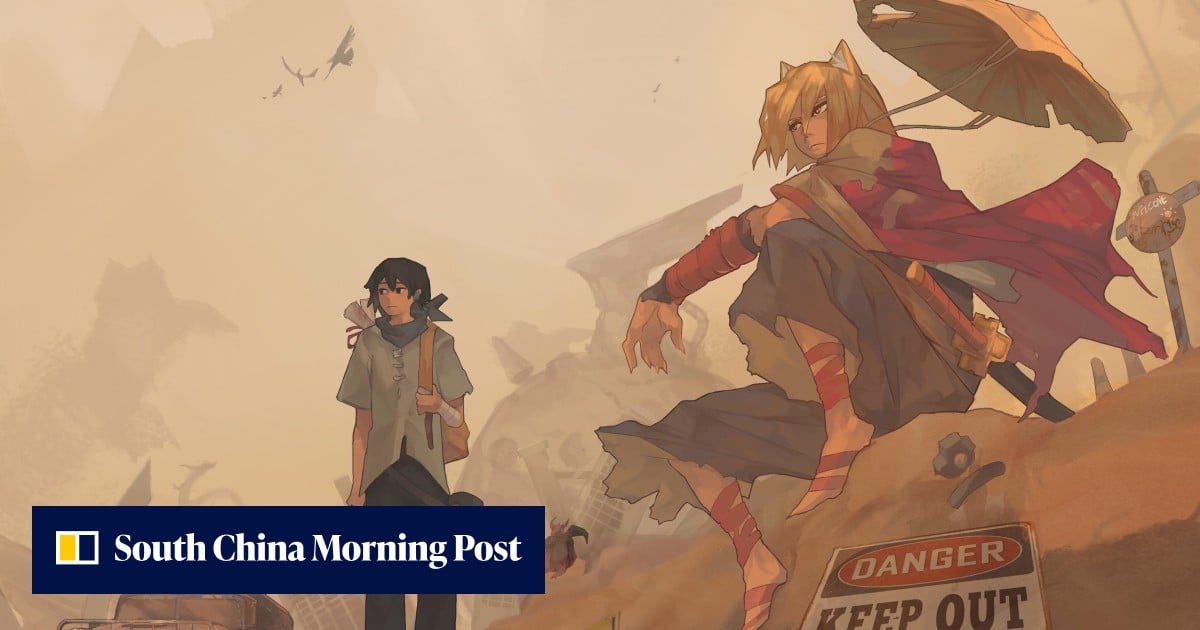
Photo via South China Morning Post

Humans vs AI art: why game studios hire Southeast Asian talent

Read the original at South China Morning Post ↗
Cite

Jones, A. (2026, November 2). Humans vs AI art: why game studios hire Southeast Asian talent. South China Morning Post. https://www.scmp.com/week-asia/economics/article/3372761/humans-vs-ai-art-why-game-studios-hire-southeast-asian-talent

Dated from the outlet's own feed. Check the original for its byline.

South China Morning Post · collected 2026-11-02 · by Aidan Jones

Quick Summary

The article discusses why game studios continue to hire human animators from Southeast Asian countries like Thailand, Malaysia, and Vietnam despite advancements in AI technology. Studios still prefer human-made art for their games, as AI has not fully replaced skilled animators who charge lower rates compared to those in Western or Japanese markets. However, the piece also notes that AI is increasingly being used to write code, create visual assets, and generate voice-overs, raising questions about the future of manual labor in the industry.
Written by AI on 2026-11-02, from this article's own text only (the story summary below draws on all the coverage).

AI analysis

Story summary

As of November 2, 2026, despite the growing use of artificial intelligence (AI) for tasks like coding and creating visual assets in game development, Southeast Asian animators, particularly students and recent graduates from countries such as Thailand, Malaysia, and Vietnam, continue to be hired by game studios. These artists charge significantly less compared to those based in the West or Japan. The trend highlights a current preference for human-created art among gamers, even as AI threatens to replace many traditional roles in the industry.

Written for “Humans Vs AI Art Debate” on 2026-11-02, grounded in this article and the 0 other(s) covering the same event.

Story

📰 Humans Vs AI Art Debate
Technology · 1 article(s) covering the same event.

Compared with similar articles

Nothing to compare against. No article is close enough to this one for the pipeline to have linked or judged the pair.
How this article was measured signals, leaning charts, publisher record, byline, topics and claims

Signals How these are calculated →

Claims extracted
4
sentences that state something as happening or true
Uncertain
0%
0 of 4 hedged ("reportedly", "may", "according to")
Leaning
Leans right
of the writing, not the subject · beta estimate
Publisher signals
63/100
South China Morning Post's corrections and hedging, across everything collected from it. Not a measure of accuracy.
Outlets on this story
1
Technology
Same framing elsewhere
1
articles that frame the event the way this one does
Analyzed 2026-11-02 · how these are computed

How this is being covered How these are calculated →

Article leaning vs. publisher reliability
Source leaning vs. consistency

Publisher

South China Morning Post · 3600 article(s) · 7 correction(s) detected
Running correction rate · 7 correction(s)

Who wrote this

Aidan Jones
16 article(s) here · 1 carrying a prediction
🔮 Today, the technology is increasingly being deployed to write code, create visual assets and even synthesise real-time voice-overs, supplanting humans who would have otherwise done the work.
🔮 Days of incessant rains that overwhelmed Bangkok’s creaking drainage system appeared to have let up on Sunday morning, leaving residents cautiously hopeful that the water may have stopped rising. But densely populated eastern Bangkok remains hard hit, with canals unable to drain the volume of water pouring out from inundated roads and homes.
🔮 Thailand’s Bangkok declares flood disaster across city as thousands flee from homes Rains have pounded the city since Wednesday, with no respite forecast until late Sunday as waters rise to at least two feet Entire Bangkok neighbourhoods were inundated on Saturday as the city government declared a flood disaster after the worst rains in years overwhelmed the Thai capital, submerging roads, cars and forcing thousands to leave their homes. Bangkok is flood-prone, especially during the monsoon season, but waters rarely linger for long.
Also by Aidan Jones
What’s behind the quiet US diplomatic thaw with Myanmar?
2026-10-21 · South China Morning Post
Nothing else under this byline is closely related to this article, so these are simply their most recent.
All 16 articles by Aidan Jones →

Topics

Japan Malaysia Southeast Asian Thailand Vietnam

Subjects

Malaysia GPE · 2× Thailand GPE · 2× Japan GPE · 1× Southeast Asian NORP · 1× Vietnam GPE · 1×

Narrative

Yet studios do still pay people to animate their characters – many of them students and recent graduates in Thailand, Malaysia and Vietnam, who charge far less than artists based in the West or Japan.
framing: assertive · carried by 1 article(s) · first seen 2026-11-02
🔮 Today, the technology is increasingly being deployed to write code, create visual assets and even synthesise real-time voice-overs, supplanting humans who would have otherwise done the work.
2026-11-02 · South China Morning Post
Humans vs AI art: why game studios hire Southeast Asian talent · assertive framing

Claims (4 extracted, 0 hedged)

Humans vs AI art: why game studios hire Southeast Asian talent asserted
studios → hire → talent
Gamers still want human-made art and studios are paying animators from Thailand to Malaysia to make it. asserted
studios → want → it
Today, the technology is increasingly being deployed to write code, create visual assets and even synthesise real-time voice-overs, supplanting humans who would have otherwise done the work. asserted
who → deploy → work
Yet studios do still pay people to animate their characters – many of them students and recent graduates in Thailand, Malaysia and Vietnam, who charge far less than artists based in the West or Japan. asserted
who → pay → West
💬Give feedback
🕘History 🎫Support