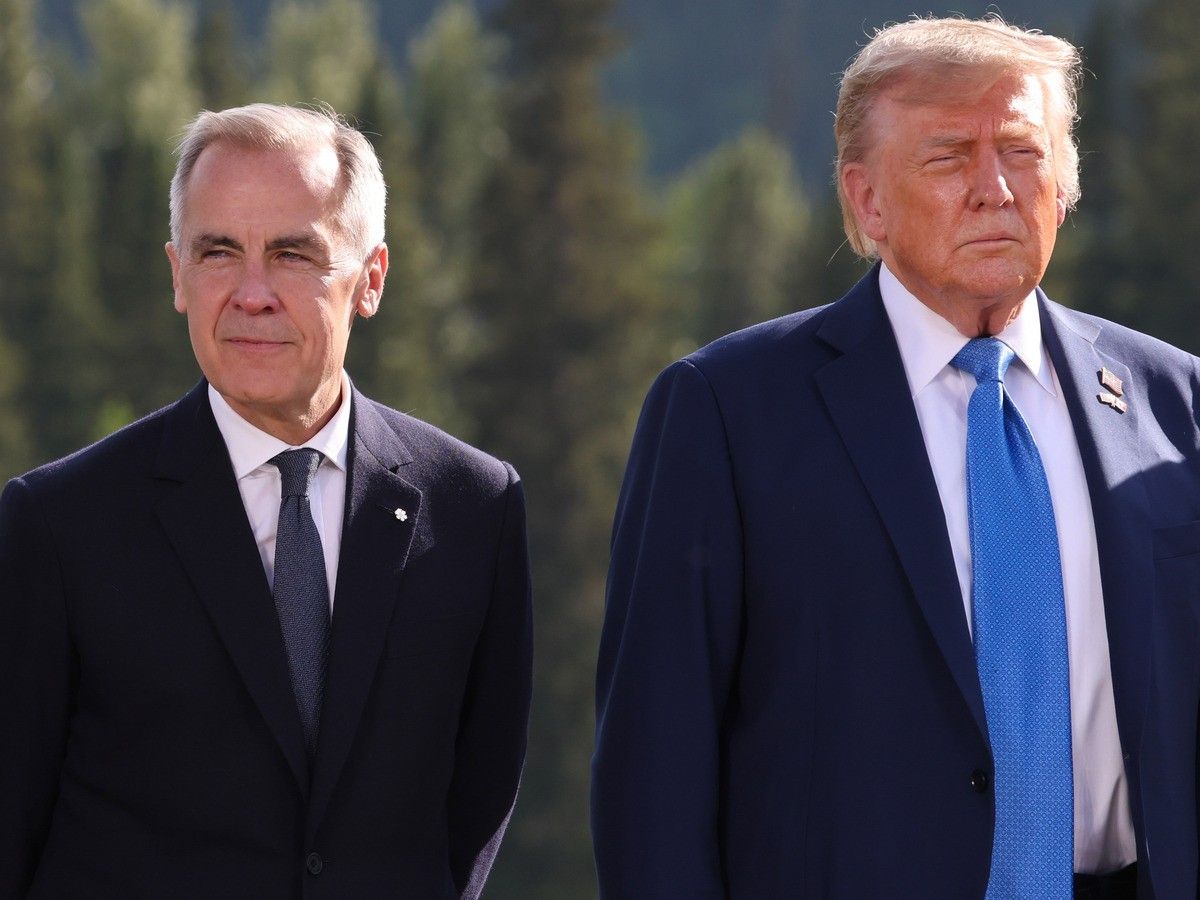
Photo via The Dispatch

Trump Is Using a Trade Law Relic to Illegally Punish Canada

Read the original at The Dispatch ↗
Cite

Somin, I. (2026, November 2). Trump Is Using a Trade Law Relic to Illegally Punish Canada. The Dispatch. https://thedispatch.com/article/trump-canada-tariffs-section-338-lawsuit/

Dated from the outlet's own feed. Check the original for its byline.

The Dispatch · collected 2026-11-02 · by Ilya Somin

Quick Summary

President Donald Trump is using the Smoot-Hawley Tariff Act of 1930, an outdated and historically controversial trade law, to justify imposing new import levies on Canada despite previous court rulings against similar actions he has taken. This law, associated with worsening economic conditions during the Great Depression, is now being invoked by Trump as a legal basis for his tariff policies.
Written by AI on 2026-11-02, from this article's own text only (the story summary below draws on all the coverage).

AI analysis

Story summary

President Donald Trump has attempted to use the Smoot-Hawley Tariff Act of 1930, an obscure and outdated trade law, to justify imposing a 50 percent tariff on various Canadian imports. These tariffs target products such as motor vehicles, furniture, and dairy items, with Gellert Global Group Corp. filing a lawsuit against them in the U.S. Court of International Trade on October 20, 2026. Courts have previously ruled against Trump's previous attempts to impose similar tariffs under other legal provisions, invalidating some using the International Emergency Economic Powers Act (IEEPA) in February. The use of Section 338 from the Smoot-Hawley Act raises concerns about violating constitutional principles that restrict presidential power over trade policies traditionally reserved for Congress.
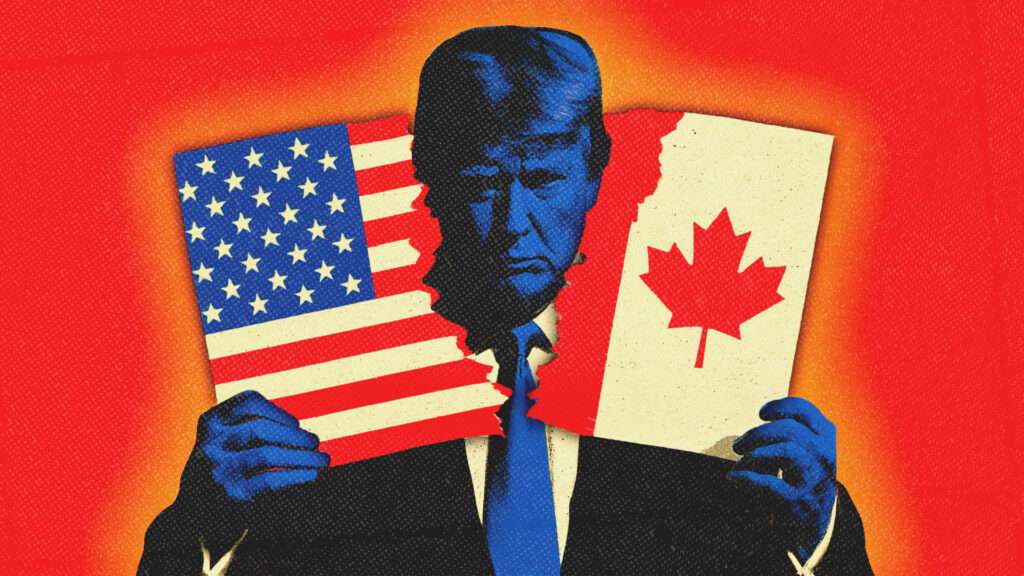
Written for “Trump's Section 338 Tariffs Against Canada” on 2026-11-03, grounded in this article and the 1 other(s) covering the same event.

Story

📰 Trump's Section 338 Tariffs Against Canada
Politics · 2 article(s) covering the same event. See how they differ ↓

Compared with similar articles

This article reads leans left and hedges 0% of its claims. Each row says how that neighbour differs.
Reason
⚖️ Leans strongly left further left than this Hedges 2 of 29 claims Outlet record 67/100
Toronto Star
⚖️ Leans left Hedges 5 of 35 claims Outlet record 64/100
“The articles discuss different aspects of U.S.-Canada trade relations without clearly referring to the exact same incident.”
National Post
⚖️ Leans strongly left further left than this Hedges 5 of 54 claims Outlet record 60/100
“The articles discuss different aspects of Trump's trade policies towards Canada, with Article A focusing on the outcome and resilience of the Canadian economy, while Article B discusses legal challenges to the tariffs.”
Toronto Star
⚖️ Leans left Hedges 2 of 88 claims Outlet record 64/100
“The articles discuss related topics (Trump's actions affecting US-Canada relations) but describe different aspects and outcomes.”
BBC News
⚖️ Leans left Hedges 6 of 62 claims Outlet record 68/100
“The articles discuss different aspects of Trump's tariffs on Canada; Article A focuses on the impact on a specific town, while Article B discusses legal challenges and outdated laws.”
How this article was measured signals, leaning charts, publisher record, byline, topics and claims

Signals How these are calculated →

Claims extracted
3
sentences that state something as happening or true
Uncertain
0%
0 of 3 hedged ("reportedly", "may", "according to")
Leaning
Leans left
of the writing, not the subject · beta estimate
Publisher signals
61/100
The Dispatch's corrections and hedging, across everything collected from it. Not a measure of accuracy.
Outlets on this story
2
Politics
Same framing elsewhere
1
articles that frame the event the way this one does
Analyzed 2026-11-02 · how these are computed

How this is being covered How these are calculated →

Article leaning vs. publisher reliability
Source leaning vs. consistency

Publisher

The Dispatch · 413 article(s) · 1 correction(s) detected
Running correction rate · 1 correction(s)

Who wrote this

Ilya Somin
29 article(s) here · 0 carrying a prediction
🔮 If Section 338 is still valid and does grant the kind of nearly unlimited authority Trump claims, that would violate the constitutional "nondelegation" doctrine, which restricts delegation of legislative power to the executive…
🔮 Today, in United States v. Alaska, federal district Judge Sharon Gleason ruled against the Trump administration's lawsuit seeking to block certification of Alaska Senate election results on the grounds that doing so might be necessary to prevent "voter confusion" caused by the presence of two candidates with very similar names on the ballot.
🔮 In the original series, the Klingons and Romulans are mostly depicted as evil and irreconcilable enemies of the Federation, in TNG the Klingons have become allies and there is hope that there will be peace with the Romulans, as well.
2026-10-31 · assertive framing · Sir Patrick Stewart, RIP
🔮 But I have a few additions and caveats that I will append after quoting a few key passages from Dan's post.
2026-10-30 · assertive framing · A Libertarian Perspective on the 2026 Election
🔮 I would add, as I did in this article, that invocations of emergency powers should be subject to nondeferential judicial review, to ensure that they are used only in the event of genuine emergencies, not bogus ones.
2026-10-30 · assertive framing · New Brennan Center Report on Curbing Executive Power
🔮 Some of those who vote for the "wrong" Dan Sullivan might rank the "right" one second.
🔮 It also adopts a properly restrictive definition of "rebellion" (which is one of the conditions that might justify federalization of the National Guard).
🔮 Today, the Trump Justice Department filed a federal lawsuit seeking to block Alaska Senate election results on the grounds they might be influenced by voter "confusion" between incumbent Republican Senator Dan S. Sullivan and a separate Republican candidate with a very similar name (Dan L. Sullivan).
🔮 And I think he actually agrees with me more than the framing of his post might suggest.
2026-10-17 · assertive framing · Who Should Defend Democracy?
🔮 I would like to thank Matt for his interesting and insightful response.
Also by Ilya Somin
Sir Patrick Stewart, RIP
2026-10-31 · Reason
Nothing else under this byline is closely related to this article, so these are simply their most recent.
All 29 articles by Ilya Somin →

Topics

the Great Depression the Smoot-Hawley Tariff Act

Subjects

Donald Trump PERSON · 1×

Narrative

His latest tool is the Smoot-Hawley Tariff Act of 1930, the notorious legislation that gravely exacerbated the Great Depression.
framing: assertive · carried by 1 article(s) · first seen 2026-11-02
2026-11-02 · The Dispatch
Trump Is Using a Trade Law Relic to Illegally Punish Canada · assertive framing

Claims (3 extracted, 0 hedged)

Courts have already ruled against two avenues President Donald Trump used to impose this tariff regime. asserted
Trump → rule → regime
That hasn’t stopped his efforts to attempt to deploy obscure or outdated trade law provisions to justify new import levies. asserted
That → stop → levies
His latest tool is the Smoot-Hawley Tariff Act of 1930, the notorious legislation that gravely exacerbated the Great Depression. asserted
that → exacerbate → Depression
💬Give feedback
🕘History 🎫Support