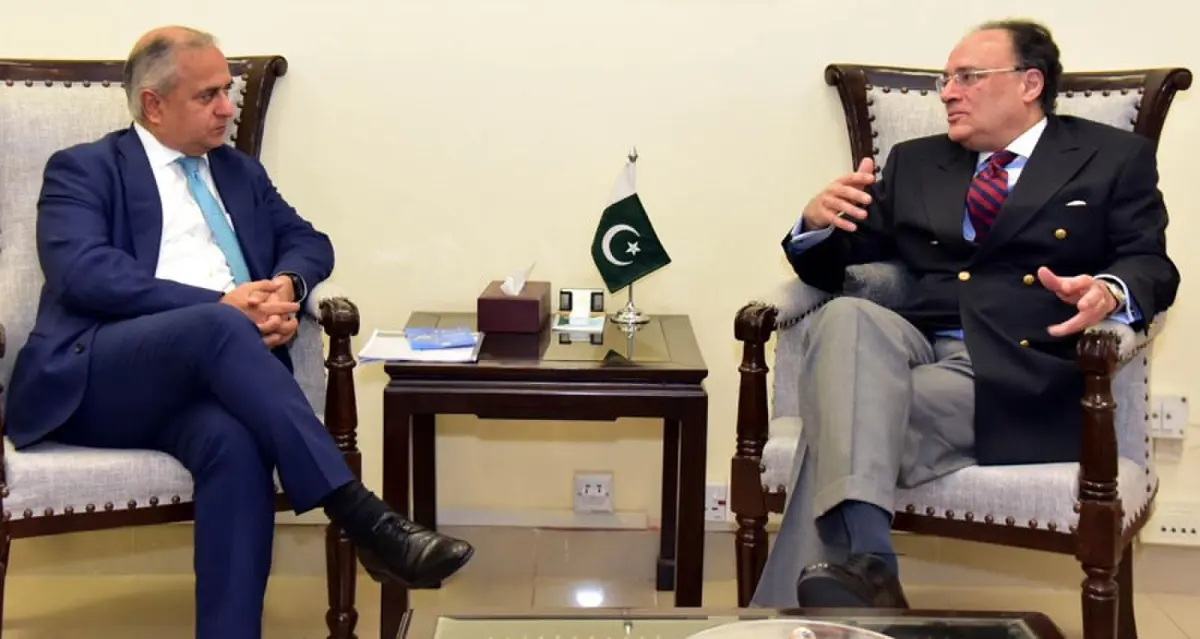
Photo via Dawn

Consumer inflation falls to 9.6pc in Oct from 10.3pc in Sept

Read the original at Dawn ↗
Cite

Khan, M. Z. (2026, November 2). Consumer inflation falls to 9.6pc in Oct from 10.3pc in Sept. Dawn. https://www.dawn.com/news/2041620/consumer-inflation-falls-to-96pc-in-oct-from-103pc-in-sept

Dated from the outlet's own feed. Check the original for its byline.

Dawn · collected 2026-11-02 · by Mubarak Zeb Khan

Quick Summary

Consumer inflation in Pakistan decreased to 9.6% in October from 10.3% in September, according to data released by the Pakistan Bureau of Statistics. This reduction primarily stemmed from a slowdown in perishable food prices but saw continued increases in electricity and transport costs. Urban areas experienced an annual inflation rate of 9.8%, while rural areas saw a slight drop to 9.5%. The finance ministry attributes this easing, within its projected range of 9.5% to 10.5%, to improved crop supplies and expects it may provide some relief for consumers despite ongoing pressures on non-food expenses.
Written by AI on 2026-11-02, from this article's own text only (the story summary below draws on all the coverage).

AI analysis

Story summary

As of November 2, 2026, consumer inflation in Pakistan fell to 9.6% in October from 10.3% in September, according to the Pakistan Bureau of Statistics. This marks a second consecutive month of slowing inflation rates, reversing the sharp increase seen in August when food and energy prices surged to push the annual rate up to 11.1% from 9.2% in July.

The decrease was observed both in urban areas, where inflation dipped slightly to 9.8%, and in rural regions, where it fell to 9.5%. The decline aligns with the Ministry of Finance’s projection range of 9.5% to 10.5% for October, offering some economic relief despite a month-on-month increase of 1.1%.

The easing of headline inflation and improved crop supplies could help alleviate food price pressures in coming months. However, the annual inflation rate stands significantly higher than last year's 6.2% for the same period, reflecting broader economic challenges still facing Pakistan.
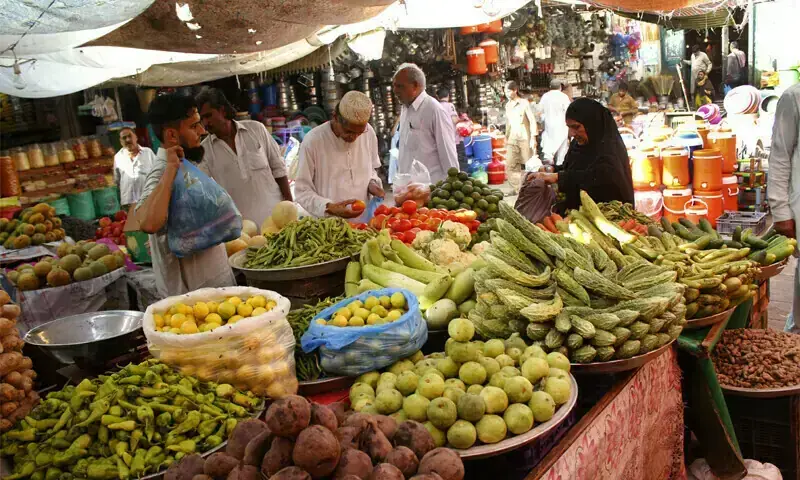

Written for “Us Inflation Drops” on 2026-11-02, grounded in this article and the 0 other(s) covering the same event.
Why this leaning score
This article does not take a side on a contested political question, so it has no leaning score. That is an answer rather than a gap: a match report or a rescue can be warmly or critically written without being left or right, and scoring it anyway is how approval of a subject gets recorded as a political position.
No political leaning scored for article 123003 · logged 2026-11-02

Story

📰 Us Inflation Drops
Economy/Business · 1 article(s) covering the same event.

Compared with similar articles

This article reads unscored and hedges 6% of its claims. Each row says how that neighbour differs.
Dawn
Hedges 2 of 15 claims Outlet record 72/100
“The articles report on different time periods of inflation data, with Article A covering the week ending October 29 and Article B covering the entire month of October.”
How this article was measured signals, leaning charts, publisher record, byline, topics and claims

Signals How these are calculated →

Claims extracted
18
sentences that state something as happening or true
Uncertain
6%
1 of 18 hedged ("reportedly", "may", "according to")
Leaning
not political
takes no side on a contested political question
Publisher signals
72/100
Dawn's corrections and hedging, across everything collected from it. Not a measure of accuracy.
Outlets on this story
1
Economy/Business
Same framing elsewhere
1
articles that frame the event the way this one does
Analyzed 2026-11-02 · how these are computed

How this is being covered How these are calculated →

Article leaning vs. publisher reliability
Source leaning vs. consistency

Publisher

Dawn · 2585 article(s) · 3 correction(s) detected
Running correction rate · 3 correction(s)

Who wrote this

Mubarak Zeb Khan
16 article(s) here · 0 carrying a prediction
🔮 Unwilling to reduce the petroleum levy, the government has continued to raise petrol and diesel prices.
🔮 Prime Minister Shehbaz Sharif on Monday warned tax officers that resistance to the ongoing reforms in the Federal Board of Revenue (FBR) would not be tolerated, directing the authorities to implement proposed measures to minimise the country’s tax gap.
2026-10-20 · assertive framing · PM warns against resistance to FBR reforms
🔮 In May 2026, the government had projected the economy to grow by 3.70pc in FY26, revising its earlier estimate of 4pc.
🔮 “The decline in export trade volume is unprecedented,” Mr Mukhtar said, warning that only financially strong exporters would survive the prevailing conditions.
🔮 Short-term inflation has remained in double digits for several consecutive weeks, largely on the back of persistent increases in petroleum prices. Unwilling to ease the petroleum levy, the government has continued to raise petrol and diesel prices on a daily basis.
2026-10-09 · assertive framing · Short-term inflation rises to 11.97pc, PBS data shows
🔮 The FBR issued SRO 1751 of 2026 on Wednesday to notify that production by registered manufacturers of leather and paper and paperboard would be electronically monitored under Chapter XIV BA of the Sales Tax Rules 2006.
2026-10-08 · assertive framing · FBR expands electronic production monitoring
🔮 The draft rules will be finalised after three days, following feedback from stakeholders.
🔮 A SLOWDOWN in inflation may offer some statistical relief to the government, but prices of everyday essentials remain substantially higher than they were two years ago.
2026-10-04 · assertive framing · Analysis: Why lower inflation still feels expensive
🔮 To curb harassment of taxpayers and streamline the movement of goods, the Federal Board of Revenue (FBR) has announced that transferring goods from a factory to a registered person’s own warehouse under the same Sales Tax Registration Number (STRN) would not be treated as a taxable supply.
2026-09-29 · assertive framing · No tax on factory to warehouse movements
🔮 • 11 specialised professional cadres in bureaucracy proposed • BS-20, above posts may be opened to officials, academics, private-sector professionals ISLAMABAD:
2026-09-20 · assertive framing · Govt finalises sweeping civil service reforms
Also by Mubarak Zeb Khan
Nothing else under this byline is closely related to this article, so these are simply their most recent.
All 16 articles by Mubarak Zeb Khan →

Topics

ISLAMABAD the Consumer Price Index the Ministry of Finance the Pakistan Bureau of Statistics

Subjects

ISLAMABAD GPE · 1× the Consumer Price Index ORG · 1× the Ministry of Finance ORG · 1× the Pakistan Bureau of Statistics ORG · 1×

Narrative

The slowdown in the inflation rate for the second consecutive month, measured by the Consumer Price Index, reversed the sharp increase recorded in August, when higher food and energy prices pushed the annual rate to 11.1pc from 9.2pc in July.
framing: assertive · carried by 1 article(s) · first seen 2026-11-02
2026-11-02 · Dawn
Consumer inflation falls to 9.6pc in Oct from 10.3pc in Sept · assertive framing

Claims (18 extracted, 1 hedged)

Consumer inflation eased to 9.6 per cent in October from 10.3pc a month earlier, mainly due to a slight slowdown in perishable food products, the Pakistan Bureau of Statistics said on Monday. asserted
Bureau → ease → Monday
The slowdown in the inflation rate for the second consecutive month, measured by the Consumer Price Index, reversed the sharp increase recorded in August, when higher food and energy prices pushed the annual rate to 11.1pc from 9.2pc in July. asserted
prices → measure → July
The easing was recorded in both places, in rural areas where inflation fell to 9.5pc from 10.1pc, while urban inflation edged down to 9.8pc from 10.5pc. asserted
inflation → record → 10.5pc
According to the finance ministry, easing headline inflation offers some relief, while improved crop supplies can help ease food price pressures. uncertain
supplies → accord → pressures
However, despite the decline in the annual rate, prices rose 1.1pc month-on-month in October. asserted
prices → rise → October
The average inflation between July and October stood at 10.05pc compared with 4.79pc over the corresponding period last year. asserted
inflation → stand → period
The easing was largely driven by perishable food prices. asserted
easing → drive → prices
Food inflation dropped to 7.8pc in urban areas in October from 8.1pc in September. asserted
inflation → drop → September
The decline was much sharper in rural areas, where food inflation fell to 7.1pc from 7.7pc a month earlier. asserted
inflation → fall → 7.7pc
However, non-food inflation moved in the opposite direction, indicating continued pressure on household expenses. asserted
inflation → move → expenses
Urban non-food inflation decelerated to 10.6pc from 11.5pc in September, while rural non-food inflation fell to 12.3pc from 13.1pc. asserted
inflation → decelerate → 13.1pc
The latest data shows that the composition of inflation shifted in October. asserted
composition → show → October
While food inflation slowed sharply, electricity and transport costs continued to rise. asserted
costs → slow → ?
Electricity charges increased by 8.50pc from the previous month, while transport prices rose by 30.39pc in urban areas. asserted
prices → increase → areas
At the national level, transport costs increased by 1.79pc during October from the previous month and were 28.61pc higher than in the same month last year. asserted
costs → increase → month
Housing, water, electricity, gas and fuels increased by 0.25pc during the month and by 11.03pc on an annual basis. asserted
Housing → increase → basis
Core inflation, which excludes volatile food and energy components, also eased slightly. asserted
which → exclude → components
It stood at 7.8pc in urban areas in October, compared with 8.6pc in September, while the rural rate declined to 7.1pc from 8.1pc. asserted
rate → stand → 8.1pc
💬Give feedback
🕘History 🎫Support