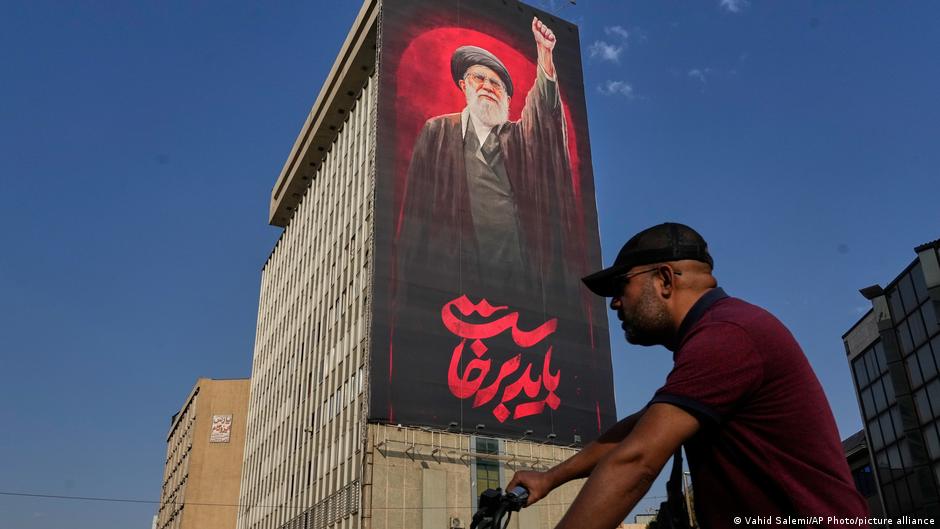
Photo via Deutsche Welle

What might Trump have planned for Iran following the midterm election?

Read the original at Deutsche Welle ↗
Cite

Gholami, N. (2026, November 2). What might Trump have planned for Iran following the midterm election? Deutsche Welle. https://www.dw.com/en/what-might-trump-have-planned-for-iran-following-the-midterm-election/a-79831816?maca=en-rss-en-world-4025-rdf

Dated from the outlet's own feed. Check the original for its byline.

Deutsche Welle · collected 2026-11-02 · by Niloofar Gholami

Quick Summary

DW examines potential outcomes and implications of the US midterm elections on the ongoing conflict with Iran, considering both domestic American politics and international dynamics. The article discusses possible courses of action by former President Donald Trump should Democrats gain control of Congress, highlighting risks associated with continued military engagements. Experts consulted suggest that regardless of political shifts in Washington or Israel, tensions over Iran's nuclear program will likely persist, complicating efforts towards peace or resolution.
Written by AI on 2026-11-02, from this article's own text only (the story summary below draws on all the coverage).

AI analysis

Story summary

As of November 2, 2026, the US Republican Party faces midterm elections with President Donald Trump's administration unable to resolve the ongoing conflict with Iran. If Republicans lose control of Congress, Trump will have to navigate a different political landscape for the remainder of his second term. Analysts predict that a Democratic victory could force Trump to focus more on domestic issues and expose the financial costs of the war in Congress. However, Trump might continue limited military strikes without formally declaring war. Omid Memarian, an expert from DAWN think tank, suggests Trump will seek a diplomatic exit strategy that "saves face" post-election. The nuclear program remains the primary issue between Washington and Tehran, with both sides disagreeing on how to proceed with negotiations.

Written for “Trump Iran Policy Post Midterms” on 2026-11-03, grounded in this article and the 1 other(s) covering the same event.
Why this leaning score
The article's own words the score was based on. Each is quoted verbatim and was checked against the article text before being stored, so you can find it in the original.
Reading Leans right (beta estimate) Confidence medium
Leaning: leans right for article 123596 (medium confidence, 2 verified quotes) · logged 2026-11-02

Story

📰 Trump Iran Policy Post Midterms
Politics · 2 article(s) covering the same event. See how they differ ↓

Compared with similar articles

This article reads leans right and hedges 25% of its claims. Each row says how that neighbour differs.
The Free Press
⚖️ Leans right Hedges 0 of 7 claims Outlet record 96/100
“The articles discuss different periods and potential outcomes regarding Iran-U.S. relations and policy decisions, not a single specific incident.”
The Free Press
⚖️ Leans right Hedges 2 of 14 claims Outlet record 96/100
“The articles discuss similar topics regarding potential actions against Iran by Trump post-midterms but do not describe the same specific incident or occurrence.”
Al Jazeera
⚖️ Leans left further left than this Hedges 5 of 37 claims Outlet record 60/100
“The articles discuss different aspects and timelines related to Iran-US relations without describing the exact same incident.”
Times of India
Hedges 3 of 24 claims Outlet record 59/100
“Article A reports specifically about a phone call between Trump and Netanyahu discussing potential military strikes after midterms, while Article B discusses broader factors influencing the Iran situation post-midterms.”
CBS News
Outlet record 66/100
“Both articles discuss potential future actions related to Iran and Trump following midterm elections but do not describe a single, specific incident.”
Deutsche Welle
Hedges 17 of 66 claims Outlet record 95/100
Semafor
⚖️ Leans right Hedges 1 of 6 claims Outlet record 59/100
“The articles discuss Trump's potential actions towards Iran post-midterms but describe different aspects and timelines.”
CBC News
⚖️ Leans left further left than this Hedges 6 of 40 claims Outlet record 60/100
“The articles discuss different time periods and perspectives related to the Iran conflict: Article A focuses on the immediate aftermath of a military strike in February and its impact on midterm elections, while Article B discusses potential plans after the midterm elections.”
Al Jazeera
⚖️ Leans left further left than this Hedges 0 of 2 claims Outlet record 60/100
“Article A describes a briefing about Trump's plan to restart war with Iran, while Article B discusses potential scenarios and factors influencing the course of the war following midterm elections.”
Daily Mail
⚖️ Leans strongly right further right than this Hedges 19 of 78 claims Outlet record 69/100
“The articles discuss potential military actions against Iran under Trump but refer to different contexts and timelines, one focusing on naval deployments post-midterms, while the other discusses broader implications of midterm election results.”
How this article was measured signals, leaning charts, publisher record, byline, topics and claims

Signals How these are calculated →

Claims extracted
67
sentences that state something as happening or true
Uncertain
25%
17 of 67 hedged ("reportedly", "may", "according to")
Leaning
Leans right
of the writing, not the subject · beta estimate
Publisher signals
95/100
Deutsche Welle's corrections and hedging, across everything collected from it. Not a measure of accuracy.
Outlets on this story
2
Politics
Same framing elsewhere
1
articles that frame the event the way this one does
Analyzed 2026-11-02 · how these are computed

How this is being covered How these are calculated →

Article leaning vs. publisher reliability
Source leaning vs. consistency

Publisher

Deutsche Welle · 564 article(s) · 0 correction(s) detected
No corrections detected for this publisher. That may mean careful reporting, or simply that nothing has been checked.

Who wrote this

Niloofar Gholami
5 article(s) here · 1 carrying a prediction
🔮 If the Republicans lose control of the US Congress, the administration will have to navigate an entirely different political landscape for the rest of Trump's second term, but the course of the war is not decided just in Washington — or in Tehran.
🔮 If the Republican lose control of the US Congress, the administration will have to navigate an entirely different political landscape for the rest of Trump's second term, but the course of the war is not decided just in Washington — or in Tehran.
🔮 Failure to do so may expose him to rejection, humiliation or social exclusion within his community.
2026-10-17 · assertive framing · Femicide in Iran: When 'honor' becomes a death sentence
🔮 Failure to do so may expose him to rejection, humiliation or social exclusion within his community.
2026-10-16 · assertive framing · Iran: When 'honor' becomes a death sentence for women
🔮 Under the version advanced on Sunday, contacts with foreign media, cooperation with overseas universities and research institutions, communication with foreign embassies and organizations, and the receipt of foreign financial support could be banned, require prior authorization or carry criminal penalties.
Also by Niloofar Gholami
Nothing else under this byline is closely related to this article, so these are simply their most recent.

Topics

Congress Iran Israel The US Republican Party Washington

Subjects

Iran GPE · 12× Memarian PERSON · 8× Trump PERSON · 8× Israel GPE · 6× Netanyahu PERSON · 5× Washington GPE · 5× Congress ORG · 2× Finland GPE · 2× Gadi Eisenkot PERSON · 2× Rezaeedaryakenari PERSON · 2×

Narrative

If the Republicans lose control of the US Congress, the administration will have to navigate an entirely different political landscape for the rest of Trump's second term, but the course of the war is not decided just in Washington — or in Tehran.
framing: mixed · carried by 1 article(s) · first seen 2026-11-02
🔮 If the Republicans lose control of the US Congress, the administration will have to navigate an entirely different political landscape for the rest of Trump's second term, but the course of the war is not decided just in Washington — or in Tehran.
2026-11-02 · Deutsche Welle
What might Trump have planned for Iran following the midterm election? · mixed framing

Claims (67 extracted, 17 hedged)

The US Republican Party is entering the midterm elections with Donald Trump's administration seemingly unable to either win or diplomatically resolve the Iran war. asserted
administration → enter → war
If the Republicans lose control of the US Congress, the administration will have to navigate an entirely different political landscape for the rest of Trump's second term, but the course of the war is not decided just in Washington — or in Tehran. asserted
course → lose → Tehran
Seeking to identify key factors that could tip the balance towards war or peace in Iran, DW spoke with Omid Memarian of DAWN, a Washington-based think tank focused on reforming the US's Middle East policy; the Finland-based political scientist Leila Morovati; and Babak Rezaeedaryakenari, a professor of international relations at Leiden University in the Netherlands. uncertain
DW → seek → Netherlands
US midterms: Is Trump set for more scrutiny? asserted
Trump → set → scrutiny
A Democratic victory would push Trump to focus more on domestic issues and would likely expose the financial costs of the war in the US Congress, Memarian told DW. asserted
Memarian → push → DW
However, Trump could continue limited strikes on Iran without formally declaring war. uncertain
Trump → continue → war
Memarian said Trump would seek a way out that "saves face" after Tuesday's election. asserted
that → say → election
With Trump, Memarian said, Iran is engaged in a "big gamble with someone who does not behave like a conventional politician." asserted
who → say → politician
This increases the risk of renewed attacks. asserted
This → increase → attacks
Rezaeedaryakenari made a similar point: "The president has broad authority and freedom of action, especially in foreign policy and the conduct of military operations. asserted
president → make → operations
A Republican defeat, even with increased pressure from Congress, doesn't necessarily stop new attacks." asserted
defeat → increase → attacks
2. Deadlock in Israel puts pressure on Netanyahu Israel's October 27 election ended in deadlock. asserted
election → put → deadlock
Neither the coalition around incumbent Prime Minister Benjamin Netanyahu, nor the camp supporting former IDF chief Gadi Eisenkot managed to secure an outright majority. asserted
coalition → support → majority
Memarian said the political uncertainty could push Netanyahu to act on major decisions while he still wields power — making the transition period the "most fragile and dangerous" for renewed escalation. uncertain
period → say → escalation
A change of government in Israel would not fundamentally alter Israel's Iran policy, Memarian said. asserted
Memarian → alter → policy
Netanyahu's main rival, former military chief Gadi Eisenkot, "may be more deferential to America" and coordinate more closely with Washington. uncertain
rival → coordinate → Washington
But ties with Trump are personal, and Eisenkot "certainly won't be like Netanyahu, who could sell any plan or scenario to Trump." uncertain
who → sell → Trump
Rezaeedaryakenari said Israel's security concerns about Iran "are not limited to Netanyahu himself." asserted
concerns → say → Netanyahu
A new government could change the timing of a confrontation and coordination with Washington, but the security establishment and ruling coalition would also shape the risk of an attack, he said. uncertain
he → change → attack
3. Nuclear impasse: 'The ladder of tension' Iran's nuclear program remains the biggest open issue between the governments, with the US rejecting the Iranian narrative that the program is meant only for civilian use. asserted
program → remain → use
But the two sides are also at odds on how the talks themselves should be set up, Memarian said. asserted
Memarian → set → odds
"The US wants negotiations to start not only with a focus on Iran's nuclear program, but with concessions right at the outset," he said. asserted
he → want → outset
Iran seeks the lifting of sanctions and the release of frozen assets before nuclear talks begin. asserted
talks → seek → assets
If the sides don't move closer, Memarian warns, the odds of a renewed war rise. asserted
odds → move → war
Until the sides agree on an agenda, Memarian said, they are likely to keep "climbing the ladder of tension." Morovati, a Finland-based political analyst, said the nuclear program was "the crux" of the standoff. asserted
program → agree → standoff
Iran's government sees it as a survival guarantee and bargaining chip, she said. asserted
she → see → guarantee
In turn, Washington fears that a nuclear Iran would upend its security calculations and long-term strategy for the Middle East and beyond, which is why it insists on putting the issue on the table first. asserted
it → fear → table
Before the United States and Israel launched the war in late February, about 20% of the world's oil passed through the Strait of Hormuz. asserted
% → launch → Hormuz
Iran has since drastically cut on the energy exports through the naval chokepoint, using at as leverage on US and Israel. asserted
Iran → cut → US
But, Memarian said, Iran's restrictions in the strait won't trigger escalation on their own. asserted
restrictions → say → own
Should US officials decide that a broader attack is needed to change Iran's calculations, any incident could serve as a pretext, Memarian said. uncertain
Memarian → decide → pretext
If Washington considers the risks too high, it may opt for an economic blockade while keeping negotiations on the table. uncertain
it → consider → table
In that scenario, "even occasional tensions in the Strait of Hormuz won't pull America into war," according to the US-based analyst. uncertain
tensions → pull → analyst
The Houthis in Yemen: Iran's allies, not subordinates The Houthi rebels in Yemen have also been targeting energy exports on the Red Sea — including attacks on Saudi cities and infrastructure. asserted
rebels → target → cities
But Memarian notes the Yemeni rebels' roots and struggle are "entirely domestic and organic" despite their ideological closeness to Tehran. asserted
roots → note → Tehran
Memarian said the Houthis made "pragmatic calculations" and their actions did not necessarily translate into an escalation between Iran and the United States. asserted
actions → say → Iran
Still, the United States could use the rebels' action as a pretext to strike Iran again. uncertain
States → use → Iran
Rezaeedaryakenari offered a slightly different assessment. asserted
Rezaeedaryakenari → offer → assessment
Houthi attacks on shipping and on countries in the region, he says, "can both widen the war and accelerate coalition-building against the Islamic Republic." asserted
he → say → Republic
Countries that don't want war with Tehran "may turn to closer military cooperation to protect their trade and security." uncertain
that → want → trade
…and 27 more, not listed.

💬Give feedback
🕘History 🎫Support