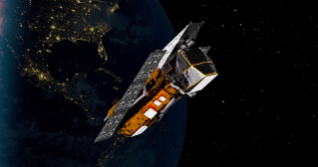
Photo via CBS News

NASA telescope is plunging back to Earth after 22 years in orbit

Read the original at CBS News ↗
Cite

NASA telescope is plunging back to Earth after 22 years in orbit. (2026, November 2). CBS News. https://www.cbsnews.com/news/nasa-telescope-swift-observatory-plunging-back-to-earth/

Dated from the outlet's own feed. Check the original for its byline.

CBS News · collected 2026-11-02

Quick Summary

NASA reports that its Swift Observatory, which has been orbiting Earth since November 2004, is expected to re-enter the atmosphere on Wednesday around 3:30 a.m. EST, with an uncertainty of 11 hours. The telescope, weighing approximately 3,200 pounds, will likely disintegrate upon entry, though some parts may survive and land in oceans or uninhabited areas. NASA estimates that there is a 1 in 2,100 chance of harm coming to anyone on Earth. Swift has contributed significantly to astronomical research over its two-decade lifespan, detecting more than 2,000 gamma-ray bursts and 1,400 exploding stars before its systems were shut down due to its declining orbit.
Written by AI on 2026-11-02, from this article's own text only (the story summary below draws on all the coverage).

AI analysis

Story summary

As of November 3, NASA's Neil Gehrels Swift Observatory, an aging telescope that has been orbiting Earth for nearly two decades, is expected to crash back down within hours. The U.S. Space Force predicts it will re-enter the atmosphere around 4:37 AM AEDT on November 4, with some uncertainty in the exact timing.

Most of the 1.5-ton telescope, equivalent to about 3,200 pounds, is expected to burn up upon re-entry, but denser parts like tungsten components and mirror sections could survive. These pieces are most likely to land in the ocean, though they may impact regions such as Africa, Australia, India, Southeast Asia, or Central and South America.

The Swift Observatory was launched in 2004 to study gamma-ray bursts and has made significant contributions to astrophysics with over 2,000 observations of these events. The telescope's orbit decayed faster than expected due to intense solar activity over the past few years, leading NASA to abandon efforts to rescue it earlier this year when its systems shut down in late October.

Written for “NASA Telescope Plunging Back to Earth” on 2026-11-03, grounded in this article and the 5 other(s) covering the same event.
Why this leaning score
This article does not take a side on a contested political question, so it has no leaning score. That is an answer rather than a gap: a match report or a rescue can be warmly or critically written without being left or right, and scoring it anyway is how approval of a subject gets recorded as a political position.
No political leaning scored for article 123890 · logged 2026-11-02

Story

📰 NASA Telescope Plunging Back to Earth
Science · 6 article(s) covering the same event. Compare every outlet's account →

Compared with similar articles

This article reads unscored and hedges 4% of its claims. Each row says how that neighbour differs.
CBC News
Hedges 1 of 21 claims Outlet record 60/100
ABC News (AU)
Hedges 7 of 39 claims Outlet record 68/100
Global News
Hedges 1 of 21 claims Outlet record 63/100
The Independent
Hedges 2 of 15 claims Outlet record 59/100
Toronto Star
Hedges 1 of 21 claims Outlet record 64/100
How this article was measured signals, leaning charts, publisher record, byline, topics and claims

Signals How these are calculated →

Claims extracted
26
sentences that state something as happening or true
Uncertain
4%
1 of 26 hedged ("reportedly", "may", "according to")
Leaning
not political
takes no side on a contested political question
Publisher signals
66/100
CBS News's corrections and hedging, across everything collected from it. Not a measure of accuracy.
Outlets on this story
6
Science
Same framing elsewhere
1
articles that frame the event the way this one does
Analyzed 2026-11-02 · how these are computed

How this is being covered How these are calculated →

Article leaning vs. publisher reliability
Source leaning vs. consistency

Publisher

CBS News · 4465 article(s) · 6 correction(s) detected
Running correction rate · 6 correction(s)

Who wrote this

No reporter is named on this article.

Topics

Australia India NASA Swift the U.S. Space Force

Subjects

NASA ORG · 7× the U.S. Space Force ORG · 2× Astrophysics Division ORG · 1× Australia GPE · 1× Brad Cenko PERSON · 1× India GPE · 1× John Nousek PERSON · 1× Pennsylvania State University's ORG · 1× Shawn Domagal-Goldman PERSON · 1× Space Force ORG · 1×

Narrative

But by late October, the telescope was too low to remain steady for observations, and its systems were shut down. Its final tally: more than 2,000 gamma-ray bursts and 1,400 exploding stars, not to mention a slew of comets, asteroids and star-shredding black holes.
framing: assertive · carried by 1 article(s) · first seen 2026-11-02
🔮 An said Monday it predicts the Swift Observatory will likely come crashing down on Wednesday.
2026-11-02 · CBS News
NASA telescope is plunging back to Earth after 22 years in orbit · assertive framing

Claims (26 extracted, 1 hedged)

An said Monday it predicts the Swift Observatory will likely come crashing down on Wednesday. asserted
Observatory → say → Wednesday
is barely clinging to space after a failed left it tottering lower and lower. asserted
failed → cling → it
The space agencyMost of the 1 ½-ton telescope is expected to burn up in the atmosphere. asserted
agencyMost → expect → atmosphere
But a handful of pieces made of denser-than-lead tungsten and some mirror parts could survive reentry, according to NASA's Brad Cenko, the mission's chief scientist. uncertain
handful → make → Cenko
"As of Monday, the U.S. Space Force predicted that the roughly 3,200-pound spacecraft will re-enter the atmosphere at approximately 3:30 a.m. EST, Nov. 4, with an uncertainty of 11 hours," NASA said on Monday. asserted
NASA → predict → Monday
Any surviving wreckage will most likely plunge into the ocean. asserted
wreckage → survive → ocean
The U.S. Space Force is tracking the telescope's dwindling path. asserted
Force → track → path
In a statement on Monday, NASA said the "risk of harm coming to anyone on Earth is unlikely" — roughly 1 in 2,100. asserted
harm → say → 2,100
"NASA and Space Force will continue to monitor the re-entry and update predictions," the agency said. asserted
agency → continue → predictions
Its cosmic cremation has the Swift team mourning, yet full of gratitude, for the observations the telescope made during its 22 years in orbit. asserted
telescope → have → orbit
Swift blasted off on Nov. 20, 2004, to search for some of the biggest explosions in the universe: gamma-ray bursts and supernovas. asserted
Swift → blast → universe
"We've known this day would come since before Swift was launched. asserted
Swift → know → ?
At least in low-Earth orbit, what goes up must come down. asserted
goes → go → orbit
And that end is catastrophic," said Pennsylvania State University's John Nousek, an astronomer who led the control team. asserted
who → say → team
Intense solar activity over the past few years dragged Swift down faster than usual. asserted
activity → drag → Swift
NASA hired Katalyst Space a year ago to mount a rush rescue. asserted
NASA → hire → rescue
But the company's three-armed robot named Link ran into trouble after launching in July and got no closer than 7 miles to 9 miles to the telescope. asserted
robot → name → telescope
Link plunged back to Earth in September. asserted
Link → plunge → September
Swift resumed observations once the rescue attempt was called off, discovering even more gamma-ray bursts and other ultrahigh-energy events. asserted
attempt → resume → bursts
But by late October, the telescope was too low to remain steady for observations, and its systems were shut down. Its final tally: more than 2,000 gamma-ray bursts and 1,400 exploding stars, not to mention a slew of comets, asteroids and star-shredding black holes. asserted
tally → remain → comets
The telescope's superpower was its ability to swivel swiftly — thus its name — toward erupting celestial events. asserted
superpower → swivel → events
Shawn Domagal-Goldman, Astrophysics Division director at NASA, told "CBS Mornings" in June that nothing pinpoints gamma-ray bursts like the Swift Observatory. asserted
nothing → tell → Observatory
"A nuclear weapon going off doesn't even compare to the magnitude of energy that comes out of these things and it's literally the biggest explosions in the universe," Domagal-Goldman said. asserted
Goldman → go → universe
NASA considered Swift a first responder for the Hubble and Webb space telescopes and others that would follow its alerts and provide deeper investigations. asserted
that → consider → investigations
Scientists are still figuring out how to fill the gap. asserted
Scientists → figure → gap
"Our fervent hope is that the lessons learned by the successes of Swift can be applied to new generations of space missions to accelerate our discoveries about the universe," Nousek said in an email. asserted
Nousek → learn → email

💬Give feedback
🕘History 🎫Support