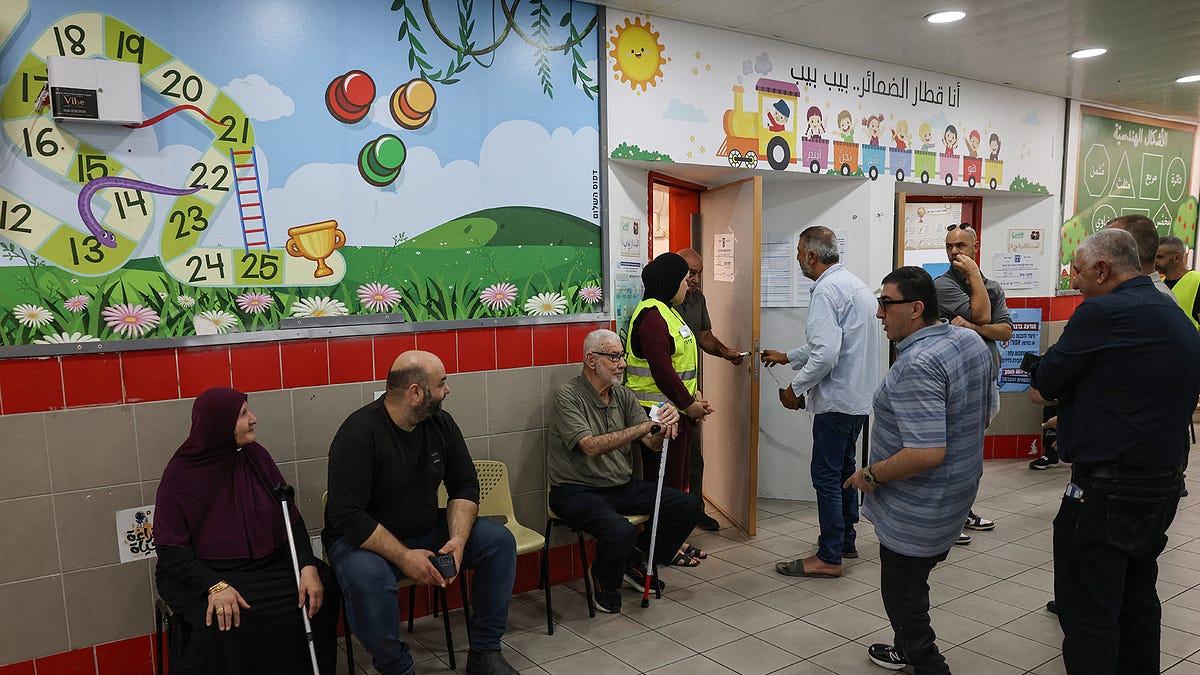
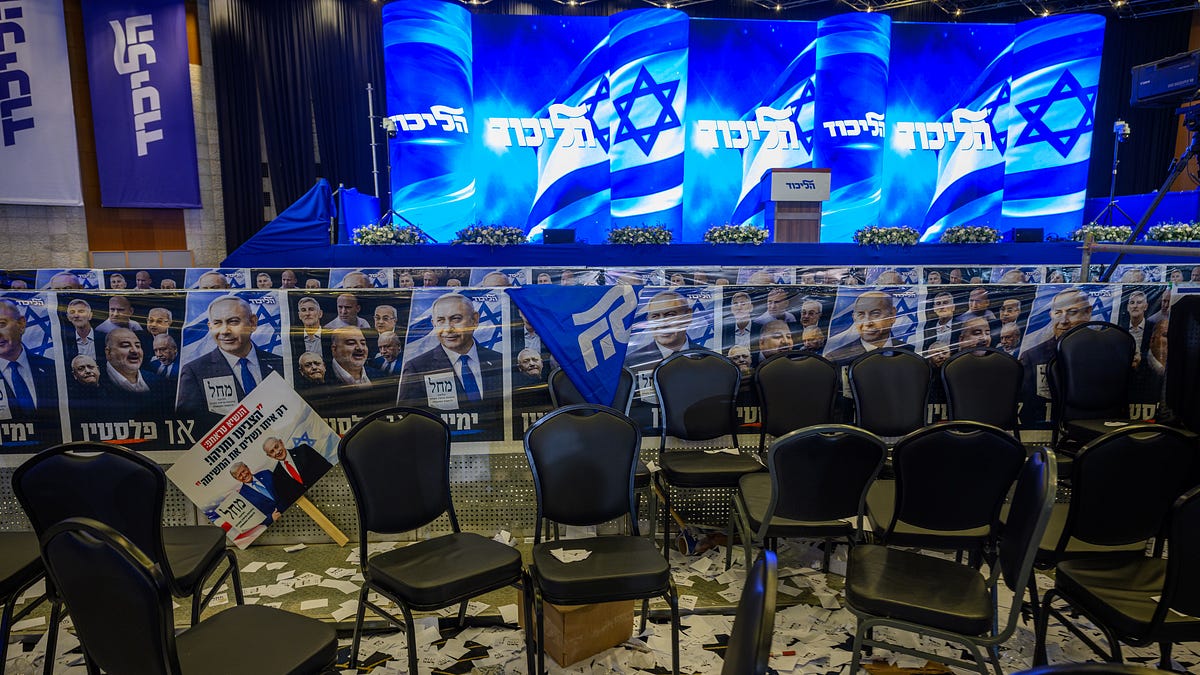
Photo via The Hindu

An anti-climactic outcome in the Knesset elections

Read the original at The Hindu ↗
Cite

Sachdev, M. (2026, November 2). An anti-climactic outcome in the Knesset elections. The Hindu. https://www.thehindu.com/opinion/op-ed/an-anti-climactic-outcome-in-the-knesset-elections/article71658190.ece

Dated from the outlet's own feed. Check the original for its byline.

The Hindu · collected 2026-11-02 · by Mahesh Sachdev

Quick Summary

The Israeli Knesset elections concluded with an inconclusive outcome that reflects the country's deepening division along nationalist lines and ethnic splits. With only 11 out of 38 parties likely to secure seats in a 120-member legislature, the centrist bloc, the ruling extreme right coalition, and the Israeli-Arab bloc received approximately 48%, 53%, and 19% of the seats respectively. Voter turnout surged to 77.7%, indicating high political engagement among Israel's total electorate of 7.3 million voters, with nearly half a million new voters participating since the last election in 2022.
Written by AI on 2026-11-02, from this article's own text only (the story summary below draws on all the coverage).

AI analysis

Story summary

On October 27, 2026, Israelis voted in a parliamentary election for the Knesset, amid ongoing tensions from previous conflicts including Hamas's attacks in 2023 and the war in Gaza. The elections were seen as a critical moment to address issues such as military service exemptions for ultra-Orthodox Jews and how to respond to security failures. Former Israeli army chief Gadi Eisenkot emerged as a significant challenger to Prime Minister Benjamin Netanyahu, who has held office for an extended period. Thousands rallied in Tel Aviv against Netanyahu, calling for a commission of inquiry into the October 7 attacks. Arab-Israeli parties were poised to play a crucial role in potentially forming an opposition alliance aimed at removing Netanyahu from power. Palestinian-led parties secured 19 seats in the election, marking a historic result and complicating future coalition-building efforts. The election outcome was inconclusive, raising questions about potential political gridlock and the normalization of extreme nationalism in Israel's politics.

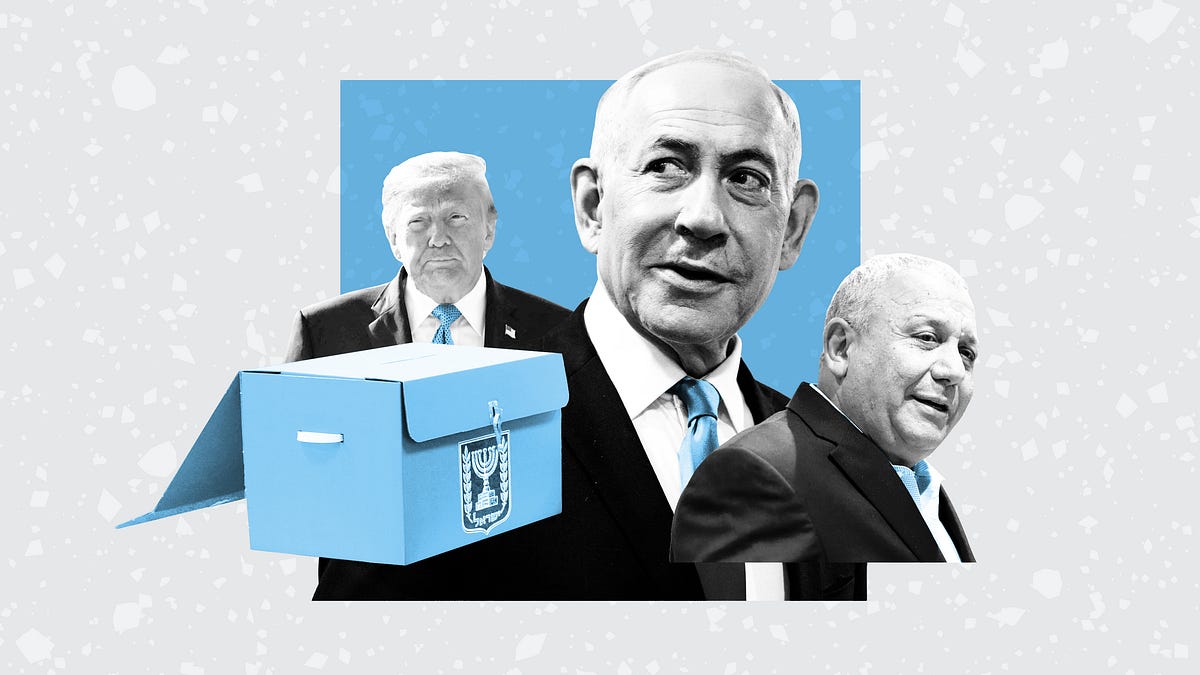
Written for “Israel Knesset Elections Outcome” on 2026-11-03, grounded in this article and the 258 other(s) covering the same event.

Story

📰 Israel Knesset Elections Outcome
Politics · 259 article(s) covering the same event. Compare every outlet's account →

Compared with similar articles

This article reads unscored and hedges 0% of its claims. Each row says how that neighbour differs.
The Hindu
⚖️ Leans strongly left Hedges 3 of 19 claims Outlet record 77/100
The Bulwark
⚖️ Leans strongly left Hedges 12 of 68 claims
Al Jazeera
⚖️ Leans left Hedges 0 of 1 claims Outlet record 60/100
“The articles discuss different aspects of political events in Israel but do not describe the same specific incident.”
New York Post
⚖️ Leans strongly right Hedges 3 of 28 claims Outlet record 66/100
“Article A discusses Israel's relationship with America in light of upcoming or recent elections, while Article B focuses on the outcome and trends from a specific election date.”
The Guardian
⚖️ Leans left Hedges 2 of 20 claims Outlet record 66/100
“Article A discusses public opinion on Israeli settlements policy and potential sanctions, while Article B covers the outcome of the Knesset election with a focus on political parties and voting trends.”
Al Jazeera
⚖️ Leans strongly left Hedges 0 of 4 claims Outlet record 60/100
Zeteo
⚖️ Leans strongly left Hedges 1 of 41 claims
“Article A discusses the use of imagery for hasbara during the election, while Article B provides an analysis and summary of the election results themselves.”
BBC News
⚖️ Leans left Hedges 6 of 42 claims Outlet record 68/100
Al Jazeera
⚖️ Leans right Hedges 3 of 60 claims Outlet record 60/100
Eizenkot’s Choice Same event
Persuasion
⚖️ Leans left Hedges 3 of 46 claims
How this article was measured signals, leaning charts, publisher record, byline, topics and claims

Signals How these are calculated →

Claims extracted
9
sentences that state something as happening or true
Uncertain
0%
0 of 9 hedged ("reportedly", "may", "according to")
Leaning
not political
takes no side on a contested political question
Publisher signals
77/100
The Hindu's corrections and hedging, across everything collected from it. Not a measure of accuracy.
Outlets on this story
259
Politics
Same framing elsewhere
1
articles that frame the event the way this one does
Analyzed 2026-11-02 · how these are computed

How this is being covered How these are calculated →

Article leaning vs. publisher reliability
Source leaning vs. consistency

Publisher

The Hindu · 799 article(s) · 2 correction(s) detected
Running correction rate · 2 correction(s)

Who wrote this

Mahesh Sachdev
1 article(s) here · 0 carrying a prediction
The only article under this byline in the corpus.

Topics

Hamas Israel Israeli Jewish Knesset

Subjects

Israel GPE · 2× Israeli NORP · 2× Knesset ORG · 2× Hamas ORG · 1× Jewish NORP · 1×

Narrative

For the Israeli Knesset election hyped as “consequential” and a “day of reckoning for the October 7 Hamas attack”, the verdict points to new trends and the normalisation of trenchant nationalism.
framing: assertive · carried by 1 article(s) · first seen 2026-11-02
2026-11-02 · The Hindu
An anti-climactic outcome in the Knesset elections · assertive framing

Claims (9 extracted, 0 hedged)

For the Israeli Knesset election hyped as “consequential” and a “day of reckoning for the October 7 Hamas attack”, the verdict points to new trends and the normalisation of trenchant nationalism. asserted
verdict → hype → nationalism
The inconclusive outcome risks disappointing most stakeholders. asserted
outcome → risk → stakeholders
Israel, being at the epicentre of the ongoing regional tumult, needs a real-time analysis. asserted
Israel → need → analysis
Yet it has 38 officially recognised political parties vying for 120 Knesset seats, of which only 11 parties are likely to cross the 3.25% voting threshold needed to enter the legislature. asserted
parties → have → legislature
The parties are currently arrayed in three coalitions: the ruling extreme right, the centrist bloc and the Israeli-Arab bloc which got 53, 48 and 19 seats, respectively. asserted
which → array → seats
The last group representing a 21% minority is largely untouchable for mainstream Jewish parties. asserted
group → represent → parties
The electorate is also split along ethnic and origin-based lines into occidental, oriental and orthodox cohorts. asserted
electorate → split → cohorts
Since the last elections in 2022, nearly half a million new voters have come of age. asserted
voters → come → age
The voter turnout jumped by nearly a tenth to 77.7% — a sign of sharp political engagement. asserted
turnout → jump → engagement
💬Give feedback
🕘History 🎫Support