Many Americans are worried about healthcare costs as midterms approach.
asserted
midterms → approach → costs
Why do they keep rising?
asserted
they → keep → ?
Adoption of AI and more GLP-1 use could be making costs rise, some experts say.
uncertain
experts → make → AI
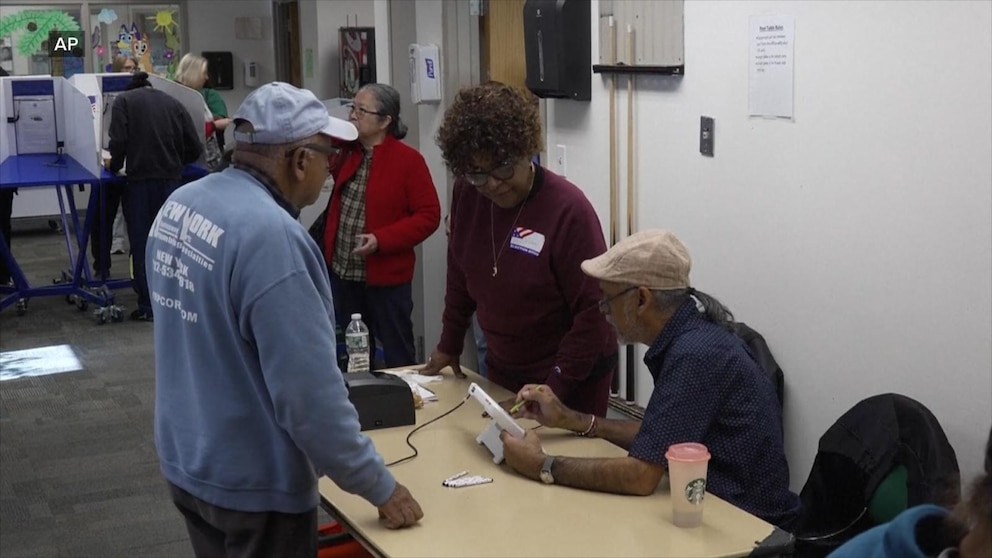
As Americans prepare to vote in Tuesday's midterm elections, rising healthcare costs are among the top financial and economic concerns, according to recent polling.
uncertain
costs → prepare → polling
A quarter of voters say they are "very worried" about being able to afford healthcare costs and more than one-third say they are "somewhat worried," according to a KFF poll earlier this month.
uncertain
they → say → poll
Those who get their health insurance through the Affordable Care Act (ACA) saw their average monthly benchmark premium jump from $497 per month in 2025 to $625 in 2026, according to KFF, particularly after enhanced premium tax credits expired at the end of last year.
uncertain
credits → get → year
A new analysis from KFF published Friday found that finalized benchmark silver premiums for healthcare plans under the ACA will rise by an average of 13% next year, marking the second year in a row of double-digit percentage increases.
asserted
premiums → publish → increases
Premiums have risen even for those with employer-sponsored health insurance.
asserted
Premiums → rise → insurance
Workers are paying nearly 10% more for their premiums, according to a new KFF survey published earlier this month.
uncertain
Workers → pay → survey
The average single-coverage deductible for workers increased by 43% since 2015, according to KFF, reaching $1,886 in 2025.
uncertain
deductible → increase → 2025
Prescription drug spending rose in 2025 by 12.7% to $915 billion and is on track to surpass $1 trillion in 2026, a report from the American Society of Health-System Pharmacists (ASHP) found.
asserted
report → rise → Pharmacists
The top 25 brand-name drugs have seen their prices increase by an average of 81% since entering the U.S. market, according to a report this year from AARP's Public Policy Institute.
uncertain
prices → see → Institute
While prescription drug spending and higher insurance premiums are contributing factors, as many U.S. voters face sticker shock, some healthcare and economic policy experts say there are many other reasons why health costs are rising, and that Americans may experience short-term pain before seeing any relief.
"At this point in time, I am not seeing that there's going to be any sort of magic bullet in the short term to bring costs down," Sabrina Corlette, a research professor, founder and co-director of the Center on Health Insurance Reforms at Georgetown University McCourt School of Public Policy, told ABC News.
uncertain
Corlette → contribute → News
Corlette expressed concern that prices will rise even more in the coming years.
asserted
prices → express → years
"I hate to be a Debbie Downer here, but I think it's [going to] get worse before it gets better," she said.
asserted
she → hate → ?
Here are three reasons some experts say are why healthcare costs have risen recently.
asserted
costs → say → ?
The experts told ABC News that, recently, more providers -- including hospitals and doctors' offices -- are reportedly using ambient artificial intelligence (AI) scribes to document visits, scan lab results and generate medical notes to reduce administrative tasks for physicians.
uncertain
providers → tell → physicians
Insurance companies, including Blue Cross Blue Shield, and healthcare analytics companies, including Trilliant Health, have suggested the use of such scribes is leading to secondary diagnoses or even a mismatch between the care patients receive and the bills sent to insurance companies.
uncertain
patients → include → companies
"There's been the adoption of some new AI tools used by providers and one of the things that that seems to be allowing is more aggressive coding," Zack Cooper, an associate professor of public health and economics at Yale University and director of the Health Care Affordability Lab at Yale, told ABC News.
asserted
Cooper → be → News
Cooper said the use of some AI tools is pushing some patients into higher billing categories.
asserted
use → say → categories
Corlette shared a personal experience with this, during which she visited a doctor for an annual check-up and said she had a co-payment for the first time.
asserted
she → share → time
Corlette said her doctor told her an ambient scribe was being used at the start of her visit.
asserted
scribe → say → visit
When she called the doctor's office to ask about the co-pay, "they were like, 'Well, you asked a question that made your visit no longer preventive.
asserted
visit → call → question
Instead, it became a diagnostic visit, and so that means that you have a cost-sharing obligation,'" Corlette said.
asserted
Corlette → become → obligation
"It was literally like a 20-second question and answer that I think normally, if it was just me and my doctor, she probably wouldn't have bothered to put it into the notes," Corlette continued.
asserted
Corlette → think → notes
"But the ambient scribe picked up that conversation, put it in and then turned it into a higher code on the claims form."
Corlette said she paid the co-pay.
uncertain
she → pick → pay
Corlette said it seems the use of AI could result in higher claims costs for insurance companies, but it's hard to determine what this will mean in terms of overall healthcare costs in the long-term.
uncertain
this → say → term
She added that insurance companies have also been accused of using AI to deny care or coverage.
asserted
companies → add → care
In November 2023, a lawsuit was filed against UnitedHealthcare, claiming one of its subsidiaries denied claims for post-acute care using an artificial intelligence program without human review.
uncertain
one → file → review
UnitedHealthcare told ABC News its "predict tool" is not used to make adverse coverage determinations, but rather to provide information to families, caregivers and providers on what care or services a patient may need in a facility and after returning home
"We believe the lawsuit has no merit and we look forward to vigorously defending ourselves," UnitedHealthcare said.
uncertain
UnitedHealthcare → tell → ourselves
Additionally, a 2024 Senate subcommittee report found denial rates for post-acute care in Humana and UnitedHealthcare's Medicare Advantage plans and post-acute requests subjected to prior authorization for CVS rose significantly after increased use of automated tools, predictive technologies or AI.
asserted
rates → find → tools
CVS told ABC News in a statement that the company has invested in AI and other technologies to streamline processes and improve experiences for patients, providers and CVS employees.
"We never use AI to deny claims, but instead to accelerate real-time approvals of prior authorizations, expedite payment to providers and enable our colleagues to deliver more effective and efficient customer service," CVS said in a statement.
uncertain
CVS → tell → statement
In a statement to ABC News, UnitedHealthcare said the report "mischaracterizes the Medicare Advantage program and our clinical practices," and ignored criteria from the Centers for Medicare & Medicaid Services that "demanded greater scrutiny around post-acute care."
asserted
that → say → care
"Compared to beneficiaries enrolled in Original Medicare, Medicare Advantage members experience 45% lower out-of-pocket costs and have more than a 40% lower rate of avoidable hospitalizations and report a 96% satisfaction rating -- all at a lower cost to the Government," the insurer's statement read.
asserted
statement → compare → Government
"Hospital monopolies, brand drugmakers and certain private equity-backed providers are driving up premiums and out-of-pocket costs for American families and employers through their consistent anticompetitive practices and excessive price hikes," Chris Bond, spokesperson for AHIP, a national trade association and advocacy group representing U.S. insurance providers, told ABC News in a statement.
asserted
Bond → back → statement
"Health plans are doing everything they can to help shield Americans from the full impact of rising costs, but commonsense, bipartisan reforms are needed to address the healthcare affordability crisis," Bond added.
asserted
Bond → do → crisis
In a statement to ABC News, Chanse Jones, deputy vice president of PharmaceuticalResearch and Manufacturers of America (PhRMA), a trade association representing biopharmaceutical research and biotechnology companies, said that list prices do not account for rebates and discounts that insurers and pharmacy benefit mangers (PBM) receive on medications.
asserted
insurers → represent → medications
"Patients do not often benefit directly from these savings due to the insurance benefit design choices of PBMs and insurers -- for example, formulary placement, cost-sharing design and decisions about whether negotiated savings are shared with patients -- which play a central role in determining what patients pay out of pocket for medicines," Jones said.
asserted
Jones → benefit → medicines
The American Hospital Association (AHA) told ABC News in a statement that it shares concerns about healthcare affordability.
asserted
it → tell → affordability
It said "affiliation," which may include mergers and acquisitions, "can help keep hospitals open and preserve 24/7 access to care, particularly in rural and other underserved communities.
uncertain
which → say → communities
…and 31 more, not listed.
 The Aporia