
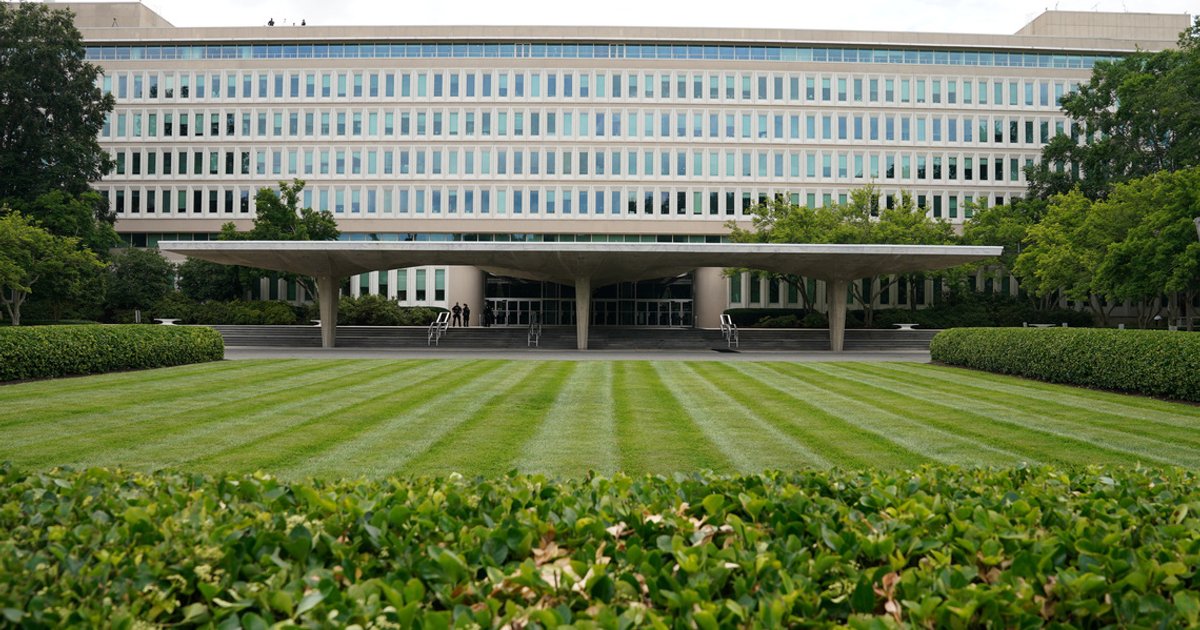
Photo via The Dispatch

How Congress Can Help Rebuild a Demoralized Intelligence Community

Read the original at The Dispatch ↗
Cite

Curlee, J. (2026, November 3). How Congress Can Help Rebuild a Demoralized Intelligence Community. The Dispatch. https://thedispatch.com/article/intelligence-community-national-security-council-iran-war-demoralized/

Dated from the outlet's own feed. Check the original for its byline.

The Dispatch · collected 2026-11-03 · by Julia Curlee

Quick Summary

A recent article discusses the challenges faced by intelligence officers in the CIA, highlighting a cultural understanding that there are policy successes but only intelligence failures. The piece cites an example from Iran where warnings about potential consequences were accurate, yet political decisions led to dismantling critical machinery needed to assess risks properly. Before military strikes on February 28, the Joint Chiefs of Staff cautioned the president about Tehran’s capability to respond by closing the Strait of Hormuz, a prediction based on long-standing Pentagon simulations.
Written by AI on 2026-11-03, from this article's own text only (the story summary below draws on all the coverage).

AI analysis

Story summary

In early November 2026, The Dispatch published an article discussing how the U.S. intelligence community was demoralized following the strikes on Iran in February 28, 2026. Before these strikes, the Joint Chiefs of Staff warned President Biden that Tehran could close the strategically vital Strait of Hormuz, a prediction based on long-standing Pentagon war games scenarios. The article argues that despite accurate warnings from intelligence agencies, the White House had weakened the mechanisms meant to help presidents evaluate such risks and make informed decisions about national security interests.
Written for “Congress Helps Intelligence Community” on 2026-11-04, grounded in this article and the 0 other(s) covering the same event.

Story

📰 Congress Helps Intelligence Community
Politics · 1 article(s) covering the same event.

Compared with similar articles

This article reads centre and hedges 33% of its claims. Each row says how that neighbour differs.
The Straits Times
⚖️ Leans strongly left further left than this Hedges 4 of 34 claims Outlet record 66/100
“The articles discuss different aspects of US intelligence operations and their issues under a hypothetical Trump presidency, but do not describe the same specific incident.”
How this article was measured signals, leaning charts, publisher record, byline, topics and claims

Signals How these are calculated →

Claims extracted
3
sentences that state something as happening or true
Uncertain
33%
1 of 3 hedged ("reportedly", "may", "according to")
Leaning
Centre
of the writing, not the subject · beta estimate
Publisher signals
61/100
The Dispatch's corrections and hedging, across everything collected from it. Not a measure of accuracy.
Outlets on this story
1
Politics
Same framing elsewhere
1
articles that frame the event the way this one does
Analyzed 2026-11-03 · how these are computed

How this is being covered How these are calculated →

Article leaning vs. publisher reliability
Source leaning vs. consistency

Publisher

The Dispatch · 427 article(s) · 2 correction(s) detected
Running correction rate · 2 correction(s)

Who wrote this

Julia Curlee
1 article(s) here · 1 carrying a prediction
🔮 Before the first strikes on Iran on February 28, the Joint Chiefs of Staff warned the president that Tehran could close the Strait of Hormuz, as Pentagon war games had assumed for decades.
The only article under this byline in the corpus.

Topics

CIA Iran U.S. the Joint Chiefs of Staff the White House

Subjects

Iran GPE · 2× CIA ORG · 1× Pentagon ORG · 1× Tehran GPE · 1× U.S. GPE · 1× the Joint Chiefs of Staff ORG · 1× the White House ORG · 1×

Narrative

In Iran, the law broke: The warnings were right, but the White House had dismantled the machinery that helps a president weigh warnings and choose among competing U.S. interests.
framing: mixed · carried by 1 article(s) · first seen 2026-11-03
🔮 Before the first strikes on Iran on February 28, the Joint Chiefs of Staff warned the president that Tehran could close the Strait of Hormuz, as Pentagon war games had assumed for decades.
2026-11-03 · The Dispatch
How Congress Can Help Rebuild a Demoralized Intelligence Community · mixed framing

Claims (3 extracted, 1 hedged)

Young CIA officers soon learn a law when they join the agency: There are only policy successes and intelligence failures. asserted
they → learn → agency
In Iran, the law broke: The warnings were right, but the White House had dismantled the machinery that helps a president weigh warnings and choose among competing U.S. interests. asserted
president → break → interests
Before the first strikes on Iran on February 28, the Joint Chiefs of Staff warned the president that Tehran could close the Strait of Hormuz, as Pentagon war games had assumed for decades. uncertain
games → warn → decades
💬Give feedback
🕘History 🎫Support