 The Aporia
Redhouse, N. (2026, November 3). There’s a problem with mince pies and spring. It goes way deeper than hot cross buns. The Sydney Morning Herald. https://www.smh.com.au/lifestyle/life-and-relationships/there-s-a-problem-with-mince-pies-and-spring-it-goes-way-deeper-than-hot-cross-buns-20261103-p614r1.html?ref=rss&utm_medium=rss&utm_source=rss_feed
Redhouse, Nicola. “There’s a problem with mince pies and spring. It goes way deeper than hot cross buns.” The Sydney Morning Herald, 3 Nov. 2026, https://www.smh.com.au/lifestyle/life-and-relationships/there-s-a-problem-with-mince-pies-and-spring-it-goes-way-deeper-than-hot-cross-buns-20261103-p614r1.html?ref=rss&utm_medium=rss&utm_source=rss_feed.
Redhouse, Nicola. “There’s a problem with mince pies and spring. It goes way deeper than hot cross buns.” The Sydney Morning Herald, November 3, 2026. https://www.smh.com.au/lifestyle/life-and-relationships/there-s-a-problem-with-mince-pies-and-spring-it-goes-way-deeper-than-hot-cross-buns-20261103-p614r1.html?ref=rss&utm_medium=rss&utm_source=rss_feed.
Dated from the outlet's own feed. Check the original for its byline.
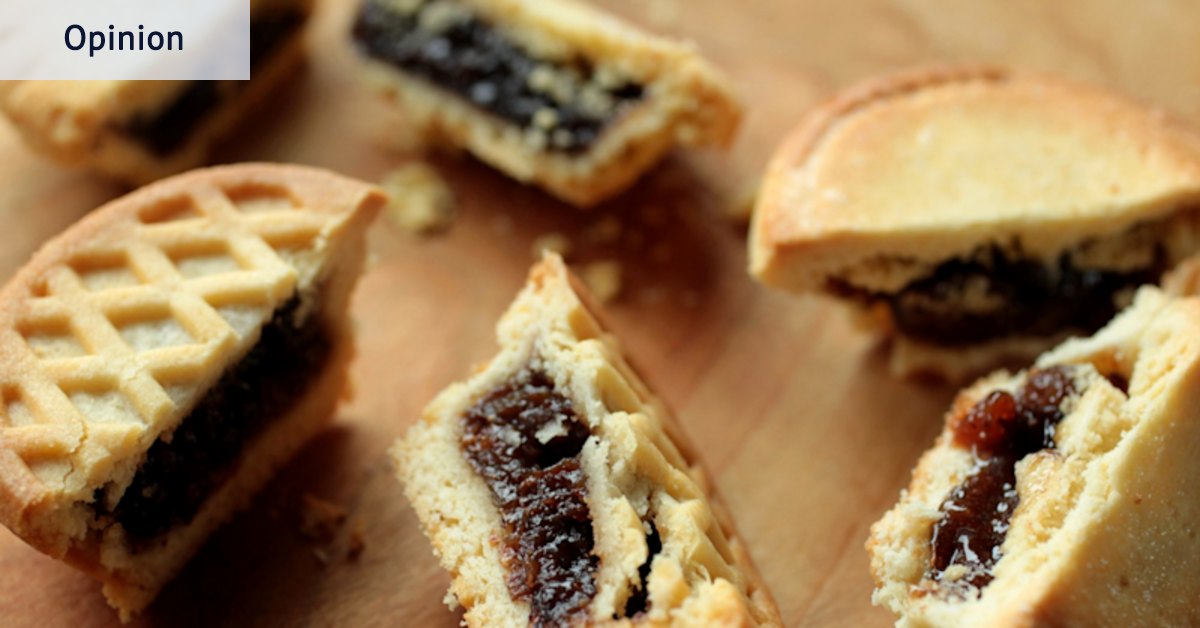
The author of a recent article in the Sydney Morning Herald expresses concern about the premature appearance of Christmas mince pies in stores during autumn, which she terms "the Mince Pie Creep." She argues that these pies are not just an innocent seasonal treat but a sign stimulus—like environmental cues for animals—that triggers humans to engage in excessive consumer behavior. The author contrasts this with the declining ubiquity of hot cross buns around Easter and suggests deeper unease about mince pies due to their high sugar content and potential to induce unhealthy behaviors. She likens the human response to seeing these pies to monarch butterflies heading south or male stickleback fish attacking rivals, emphasizing how such cues can lead people to indulge in unnecessary purchases despite environmental concerns.
I no longer believe the Christmas mince pie is an innocent little pastry designed to bring cheer – that it holds enough sugar to induce a diabetic-grade thirst is another matter.
Rather, it is what animal behaviourists call a sign stimulus: a specific environmental cue that triggers instinctive behaviour. For monarch butterflies, shorter days and colder temperatures are a sign stimulus to swivel their antennae compasses and head to the butterfly equivalent of Copacabana.
And the Christmas mince pie signals to Homo sapiens with a shopping centre or the internet within reach to launch themselves into a mindless consumer frenzy.
It’s possible the early spring Christmas mince pie harbours something like the alien spore pods in The Body Snatchers, which released tiny mind-controlling pathogens. I cannot otherwise explain why, in the face of every shred of evidence that we are burning down this planet, come October – the very same time the pies now appear – the average human brain starts accommodating two separate realities to justify frittering away money on more crap that has racked up a zillion carbon emissions and will end up in landfill.
We know that the Arctic is melting, bushfires are raging and average temperatures are climbing. That significant weather events are making us uninsurable, that disasters such as the Nepal flood are happening more often and that microplastics are clogging every waterway from our oceans to our tear ducts.
But, understandably, we prefer to stay in our own little house of fun, where we can find joy in having five strands of single-use candy cane fairy lights twinkling around our necks and line our pockets with multiple Festive Pokémon figurines and dance with our limited-edition Christmas tunes robotic vacuum.