Photo via The Guardian

Midterm elections 2026: how are votes counted and when will we know the results?

Read the original at The Guardian ↗
Cite

Leingang, R. (2026, November 3). Midterm elections 2026: how are votes counted and when will we know the results? The Guardian. https://www.theguardian.com/us-news/2026/nov/03/midterm-elections-2026-how-are-votes-counted-and-when-will-we-know-the-results

Dated from the outlet's own feed. Check the original for its byline.

The Guardian · collected 2026-11-03 · by Rachel Leingang

Quick Summary

US midterm election results can vary widely in how quickly they become available due to differences in state procedures. With all 435 House seats and 33 Senate seats up for grabs along with numerous other races, the process of counting votes can take from hours to weeks depending on factors like ballot curing periods and post-election day mail ballots. Election officials are cautious about potential misinformation during this period, especially given past actions by figures like former President Trump who have disputed previous election results. Voting tabulation involves machine counts checked with hand audits, and even in slower-counting states, a majority of votes were typically counted within eight hours in 2024, according to MIT’s Election Data and Science Lab.
Written by AI on 2026-11-03, from this article's own text only (the story summary below draws on all the coverage).

AI analysis

Story summary

On November 3, 2026, millions of Americans cast their ballots in closely contested midterm elections that could determine which party—President Donald Trump's Republicans or the opposition Democrats—controls Congress. All 435 House seats and 35 Senate seats were up for grabs. The results may not be clear immediately due to varying state rules on when vote counts are released, such as in Kentucky and Indiana where counties reporting early can skew initial perceptions of outcomes. Additionally, the Associated Press will call races across all districts but delays could occur given complex voting patterns and recounts in close contests.

Written for “US Midterm Election Results Timing” on 2026-11-04, grounded in this article and the 7 other(s) covering the same event.

Story

📰 US Midterm Election Results Timing
Politics · 8 article(s) covering the same event. Compare every outlet's account →

Compared with similar articles

This article reads leans left and hedges 14% of its claims. Each row says how that neighbour differs.
Al Jazeera
Hedges 11 of 59 claims Outlet record 60/100
The Hindu
Hedges 3 of 35 claims Outlet record 77/100
“Both articles discuss aspects of the 2026 midterm elections, but they describe different phases or informational points about the election results rather than the same specific incident.”
The Straits Times
Hedges 2 of 36 claims Outlet record 66/100
“The articles discuss general processes for calling midterms but describe different aspects of the election night process, with Article A focusing on news organizations' practices and Article B detailing voter experiences.”
The Hindu
Hedges 0 of 10 claims Outlet record 77/100
“The articles discuss general aspects of voting and vote counting procedures for U.S. midterm elections, but they do not describe a single specific incident or occurrence.”
Toronto Star
Hedges 0 of 3 claims Outlet record 64/100
“Both articles discuss the broader process of vote counting and results determination for the midterm elections but do not describe a single specific incident or occurrence.”
BBC News
Hedges 13 of 67 claims Outlet record 68/100
Washington Examiner
⚖️ Leans right further right than this Hedges 1 of 7 claims Outlet record 69/100
“The articles discuss election delays and processes in general but do not describe the same specific incident or occurrence.”
New York Post
Hedges 11 of 75 claims Outlet record 66/100
“Both articles discuss general information about the 2026 midterm elections but do not describe a single specific incident or outcome.”
Euronews
Hedges 0 of 4 claims Outlet record 60/100
“Article A covers live updates of election results, while Article B explains the process of vote counting in midterms; they address similar topics but describe different aspects.”
The Independent
Hedges 10 of 55 claims Outlet record 59/100
“The articles discuss the context and process of voting in the 2026 US midterm elections, but do not describe a single specific incident or occurrence.”
How this article was measured signals, leaning charts, publisher record, byline, topics and claims

Signals How these are calculated →

Claims extracted
50
sentences that state something as happening or true
Uncertain
14%
7 of 50 hedged ("reportedly", "may", "according to")
Leaning
Leans left
of the writing, not the subject · beta estimate
Publisher signals
66/100
The Guardian's corrections and hedging, across everything collected from it. Not a measure of accuracy.
Outlets on this story
8
Politics
Same framing elsewhere
1
articles that frame the event the way this one does
Analyzed 2026-11-03 · how these are computed

How this is being covered How these are calculated →

Article leaning vs. publisher reliability
Source leaning vs. consistency

Publisher

The Guardian · 1979 article(s) · 6 correction(s) detected
Running correction rate · 6 correction(s)

Who wrote this

Rachel Leingang
11 article(s) here · 1 carrying a prediction
🔮 Democrats and independents have found a lane in rural areas stretched thin by gas costs, fertilizer increases, tariffs and healthcare cuts, though the third district was always expected to be competitive.
🔮 There’s no simple answer as to when US voters will know the results of the midterms.
🔮 Polls are suggesting it will not be a close-run thing.
2026-11-03 · assertive framing · The candidates who will decide the US midterm elections
🔮 US voters will soon deliver a national verdict on the second presidency of Donald Trump.
🔮 Hennepin county attorney Mary Moriarty announced the charges at a press conference on Wednesday, saying both would be charged with felonies for unlawful voting and identity theft.
🔮 While marquee races from Maine to Michigan get all the attention, and draw in a ton of money, a significant batch of lower-profile contests across the US could result in upsets.
🔮 ,” Ossoff said of the late civil rights icon and long-serving Georgia congressman, “Mike Collins would be grabbing a billy club.
🔮 In late August, a federal appeals court declined to dismiss criminal charges against McIver, who is charged with interfering with an arrest in May 2025 outside Delaney Hall, an immigration detention facility that has drawn protests over poor conditions inside.
🔮 It could decide the balance of power in Washington this November and stymie the president’s final years in office – and help determine what comes next for the left after Trump.
🔮 Crockett has said she “will be campaigning down ballot” when asked in recent weeks by CNN’s Laura Coates whether she would be campaigning with Talarico, saying she wanted to make sure that people in lower-profile races weren’t getting “overshadowed” by a focus just on the top of the ticket.
Also by Rachel Leingang
Nothing else under this byline is closely related to this article, so these are simply their most recent.
All 11 articles by Rachel Leingang →

Topics

AFP MIT Milwaukee Wisconsin the House of Representatives

Subjects

AFP ORG · 1× Alex Wroblewski PERSON · 1× California GPE · 1× Democrat NORP · 1× Donald Trump PERSON · 1× Election Data and Science Lab ORG · 1× MIT ORG · 1× Milwaukee GPE · 1× Wisconsin GPE · 1× the House of Representatives ORG · 1×

Narrative

Mail voting patterns, which can impact lead-shifting as votes are counted, are not the same in each place, and in recent years, they have changed based on perceptions of whether mail voting is safe and accurate.
framing: assertive · carried by 1 article(s) · first seen 2026-11-03
🔮 There’s no simple answer as to when US voters will know the results of the midterms.

Claims (50 extracted, 7 hedged)

There’s no simple answer as to when US voters will know the results of the midterms. asserted
voters → ’ → midterms
Elections are managed locally throughout the US, and it’s different in each state. asserted
it → manage → state
Sometimes, if a race isn’t close, there’s a near-instantaneous sense of who won. asserted
who → ’ → ?
In more contested races, it can take many hours, days or even weeks. asserted
it → contest → hours
That’s not to mention local councils and school boards. asserted
That → ’ → councils
The lag between voting and knowing results can lead to an information vacuum and uncertainty that partisan actors may exploit to spread lies about stolen elections. uncertain
actors → vote → elections
Donald Trump , who has denied the results of his 2020 loss and other elections when he hasn’t liked the results, has tried to assert federal control over elections, which the courts have rebuffed. asserted
courts → deny → which
Here’s what you need to know about how votes are tabulated and when we may expect to know the results. uncertain
we → ’ → results
How are votes counted? asserted
votes → count → ?
Local election officials process and count ballots in Milwaukee, Wisconsin, on election day, on 5 November 2024. asserted
officials → process → November
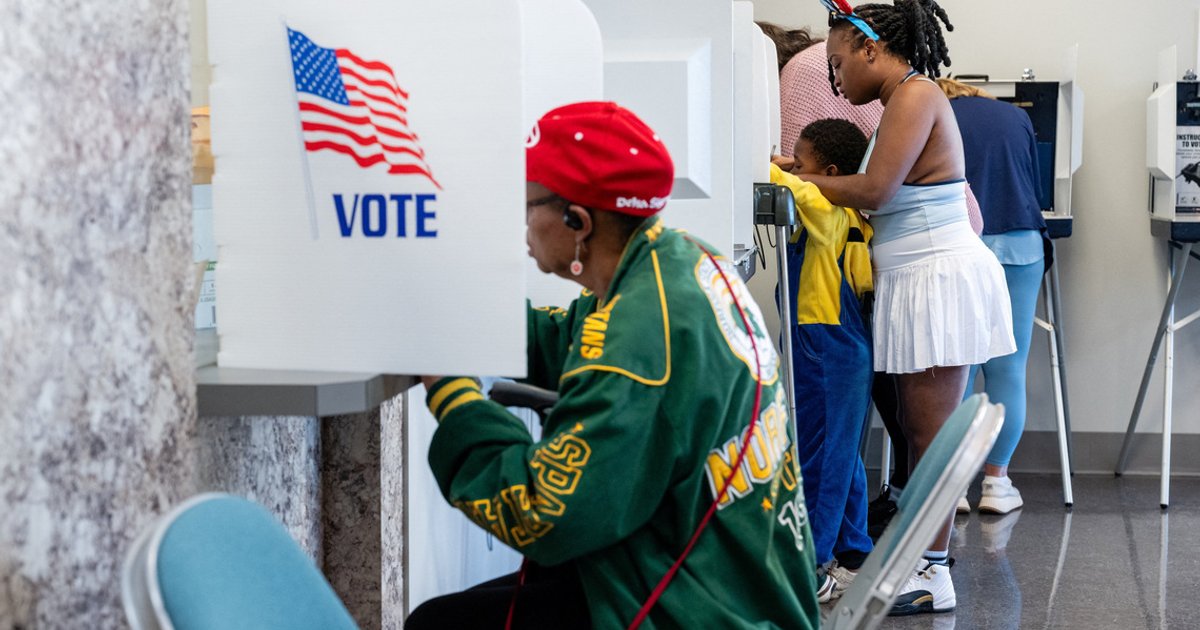
voters cast ballots in person during early voting or on election day, and many millions also vote by mail. asserted
millions → cast → mail
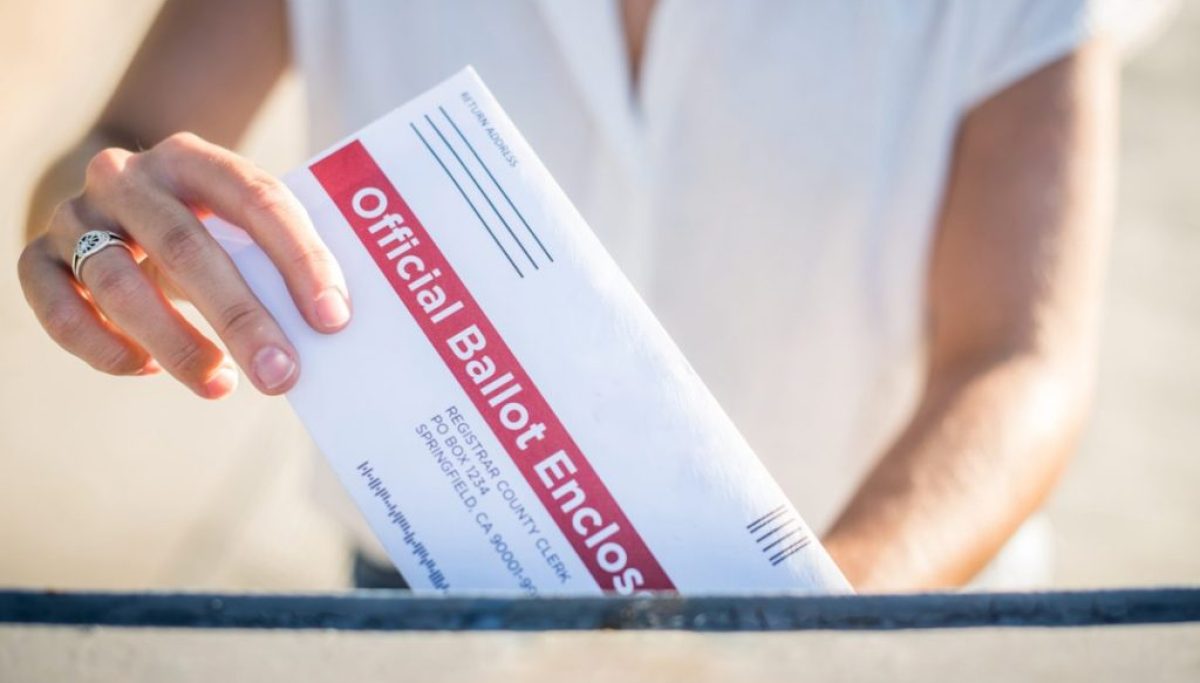
Some states send out mail ballots to all voters, while others have systems in place where a voter can request a mail ballot. asserted
voter → send → ballot
Some states will count ballots sent by mail for days after election day so long as they are postmarked by election day, a practice recently upheld by the US supreme court. asserted
they → count → court
Paper ballots are typically tabulated by machines, with partial hand counts and audits checking those results for accuracy. asserted
counts → tabulate → accuracy
Results are often uploaded in batches. asserted
Results → upload → batches
In some places, mail ballots that arrive on election day are tabulated in advance then released soon after polls close, usually about an hour after closure. asserted
polls → arrive → closure
There are also curing periods, where voters who need to provide additional information or verify the accuracy of their signature on a mail ballot have an opportunity to make sure their votes are counted. asserted
votes → be → opportunity
These ballots often are the last ones tabulated. asserted
ballots → tabulate → ?
Tabulation can take longer in places that are more populous or that have rules that allow for broader voting access, like universal mail voting or curing periods. asserted
that → take → voting
It may also seem like it takes longer in closely watched races, but this is often a factor of the closeness of the race and importance of each ballot. uncertain
this → seem → ballot
In 2024, MIT’s Election Data and Science Lab notes , even the slowest-counting states had tabulated a majority of their votes within about eight hours. asserted
states → note → hours
All but California had counted more than 75% of votes after two days. asserted
All → count → days
Results of a race are not considered final until they are canvassed and certified by local authorities, though winners are often clear well before these final deadlines. asserted
winners → consider → deadlines
If races fall within a very narrow margin, usually a fraction of a percent, they could trigger an automatic recount under state or local laws. uncertain
they → fall → laws
These recounts can substantially delay results. asserted
recounts → delay → results
News outlets usually do not call races if they are within the automatic recount margin. asserted
they → call → margin
How do news organizations call winners? asserted
organizations → call → winners
organizations, most notably the Associated Press, predict a winner based on early, unofficial results. asserted
organizations → predict → results
These race calls do not impede official election processes – ballots will still all be counted and certified, even if winners are called well before all ballots are counted. asserted
ballots → impede → processes
Candidates often wait for a race call by the AP and other organizations before declaring victory. asserted
Candidates → wait → victory
In some instances, if races are closer or if they don’t trust results, candidates may not concede after a media race call. uncertain
candidates → trust → call
The AP has said it doesn’t call races unless it is “highly confident of the outcome”. asserted
it → say → outcome
Its research team analyzes local rules and procedures, past races and ballot return patterns. asserted
team → analyze → rules
Some of these race calls come soon after results roll in, usually in races that are in strongly partisan districts or without meaningful opposition. asserted
that → come → opposition
In 2024, the presidential race was called by the early morning hours of the next day. asserted
race → call → day
But, the MIT Election Data and Science Lab notes , the last US House race in 2024 wasn’t called until 3 December. asserted
race → note → December
Can winners ‘change’ overnight? asserted
winners → change → ?
The sun sets behind the US Capitol Dome on 4 September 2026 in Washington DC. asserted
sun → set → DC
more ballots are counted, a candidate may gain or lose the lead in any given race. uncertain
candidate → count → race
This is a function of ballots being counted, not some sort of nefariousness. asserted
This → count → nefariousness
…and 10 more, not listed.

💬Give feedback
🕘History 🎫Support