Photo via Times of India

Spanish woman trains 18 rescued donkeys to help prevent wildfires

Read the original at Times of India ↗
Cite

TOI Science Desk. (2026, August 19). Spanish woman trains 18 rescued donkeys to help prevent wildfires. Times of India. https://timesofindia.indiatimes.com/science/a-spanish-woman-turned-18-rescued-donkeys-into-a-wildfire-fighting-team-with-the-animals-grazing-for-up-to-7-hours-a-day-her-unusual-conservation-idea-is-helping-prevent-fires-before-they-start/articleshow/133328932.cms

Dated when The Aporia collected the article, usually within hours of publication. Check the original for its exact date and byline.

Times of India · collected 2026-08-19 · by TOI Science Desk

Quick Summary

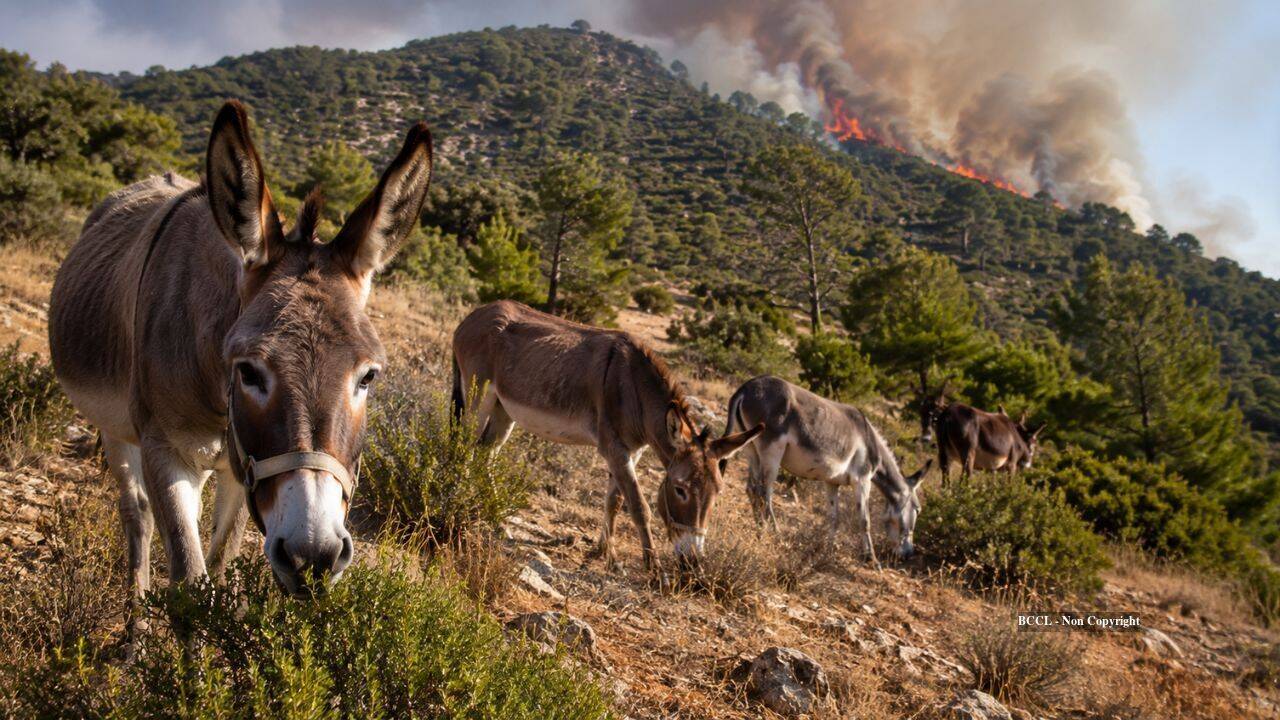
A Spanish woman named Luis Manuel Bejarano has transformed her rescue mission into an innovative wildfire prevention project in Andalusia's Doñana National Park. Since 2014, 18 rescued donkeys have been grazing for up to seven hours a day, clearing dry vegetation and creating natural firebreaks that prevent wildfires from starting. Each donkey is given a plot of land 40 meters long and 15 meters wide, forming a network of cleared corridors that serve as firebreaks. The project has seen success in reducing the risk of fires, with the park remaining largely free of wildfires over the past decade.
Written by AI on 2026-08-19, from this article's own text only (the story summary below draws on all the coverage).

AI analysis

Story summary

In Andalusia, Spain, a group of 18 rescued donkeys are being trained by a Spanish woman to help prevent wildfires. The donkeys, part of a conservation project called El Burrito Feliz, graze for up to 7 hours a day in the Doñana National Park, eating dry vegetation that would otherwise become highly flammable during Spain's hot summer months. Since 2014, this innovative approach has been used to create natural firebreaks and prevent wildfires from starting. The donkeys were once destined for neglect or slaughter, but are now being used as an effective tool in wildfire prevention, thanks to the efforts of a Spanish woman who started rescuing them. Every day between March and November, the donkeys spend their days grazing through carefully controlled areas, clearing dry grasses, shrubs, weeds, and other vegetation that would otherwise become highly flammable. This approach has been reported by Good News Network as one of Spain's most innovative wildfire prevention projects.

Written for “Wildfire Prevention Donkey Rescue” on 2026-11-02, grounded in this article and the 0 other(s) covering the same event.

Story

📰 Wildfire Prevention Donkey Rescue
Environment · 1 article(s) covering the same event.

Compared with similar articles

Nothing to compare against. No article is close enough to this one for the pipeline to have linked or judged the pair.
How this article was measured signals, leaning charts, publisher record, byline, topics and claims

Signals How these are calculated →

Claims extracted
34
sentences that state something as happening or true
Uncertain
6%
2 of 34 hedged ("reportedly", "may", "according to")
Leaning
not political
takes no side on a contested political question
Publisher signals
59/100
Times of India's corrections and hedging, across everything collected from it. Not a measure of accuracy.
Outlets on this story
1
Environment
Same framing elsewhere
1
articles that frame the event the way this one does
Analyzed 2026-08-19 · how these are computed

How this is being covered How these are calculated →

Article leaning vs. publisher reliability
Source leaning vs. consistency

Publisher

Times of India · 3892 article(s) · 2 correction(s) detected
Running correction rate · 2 correction(s)

Who wrote this

TOI Science Desk
302 article(s) here · 1 carrying a prediction
🔮 The mathematicians at the University of California, Davis, argue that the answer may already lie within Einstein’s own equations and that an invisible form of energy may not be needed at all.
🔮 The work will be carried out by the West Tennessee River Basin Authority, which is preparing a plan to restore the river and the land around it.
🔮 Cornell University scientists have developed genetically engineered tomato plants that turn red-purple when nitrogen becomes scarce, giving farmers a visible warning that crops may need fertiliser.
🔮 By studying these crystals and other mineral grains, scientists could establish the meteorite's age and identify later changes caused by water.
🔮 Centuries later, bronze objects found in Scandinavia would preserve chemical signatures consistent with the metals produced at this Spanish site, offering evidence of connections that may have crossed much of Europe.
🔮 Deposited impurities and staining may also have contributed, while low temperatures and humidity could cause the fabric to crack.
🔮 Two male king cobras meeting during the breeding season may engage in a prolonged contest, using their bodies to wrestle for control rather than relying on the venomous strikes associated with these snakes.
🔮 She explored whether an inexpensive device could capture airborne genetic material and support the detection of bacterial pathogens.
🔮 This control may help it maintain its orientation and move along a narrow path without losing its bearings.
🔮 The university says the sculpture will subsequently go on permanent display at its Turner Museum of Glass.
Wire or desk byline, not an individual reporter.
Also by TOI Science Desk
Nothing else under this byline is closely related to this article, so these are simply their most recent.
All 302 articles by TOI Science Desk →

Topics

Andalusia El Burrito Feliz Good News Network Spain Spanish

Subjects

Spain GPE · 4× Andalusia GPE · 1× Bejarano PERSON · 1× Catalonia GPE · 1× El Burrito Feliz ORG · 1× Good News Network ORG · 1× Luis Manuel Bejarano PERSON · 1× Spanish NORP · 1× UNESCO ORG · 1× World Heritage ORG · 1×

Narrative

Each animal is rescued, treated by veterinarians and released into controlled grazing areas, where they spend their days munching on vegetation that would otherwise accumulate on Mediterranean hillsides.
framing: assertive · carried by 1 article(s) · first seen 2026-08-19
🔮 As they feed, they consume dry grasses, shrubs, weeds, and other vegetation that would otherwise become highly flammable during Spain’s scorching summer months.
2026-08-19 · Times of India
Spanish woman trains 18 rescued donkeys to help prevent wildfires · assertive framing

Claims (34 extracted, 2 hedged)

In the sun-drenched hills of Andalusia, Spain, an unlikely team of firefighters is making headlines. asserted
team → drench → headlines
They don’t carry hoses, wear helmets, or race to blazes in red trucks. asserted
They → carry → trucks
Instead, they have four legs, long ears and a simple mission: eat grass. asserted
they → have → grass
Since 2014, these donkeys have been grazing for up to seven hours a day, clearing dry vegetation and creating natural firebreaks that help prevent wildfires before they start, according to a report by Good News Network. uncertain
they → graze → Network
story begins with Luis Manuel Bejarano, president of the association El Burrito Feliz (“The Happy Little Donkey”). asserted
story → begin → association
What started as a rescue mission for abandoned and mistreated donkeys has evolved into one of Spain’s most innovative wildfire prevention projects. asserted
started → start → projects
The donkeys, once destined for neglect or slaughter, now patrol the outskirts of Doñana National Park, a UNESCO World Heritage site and one of Europe’s most important wetland reserves. asserted
donkeys → destine → reserves
Every day between March and November, the donkeys spend around seven hours grazing through carefully selected sections of land around the park. asserted
donkeys → spend → park
As they feed, they consume dry grasses, shrubs, weeds, and other vegetation that would otherwise become highly flammable during Spain’s scorching summer months. asserted
that → feed → months
Each donkey is given a plot of land 40 meters long and 15 meters wide, forming a system of cleared corridors which serve as natural firebreaks. asserted
which → give → firebreaks
The donkey solution: an ancient answer to a modern problemWildfires are an increasing threat throughout southern Europe. asserted
solution → increase → Europe
Climate change is resulting in hotter, drier conditions and longer fire seasons. asserted
change → result → conditions
Mechanical clearing and controlled burns are prevention methods that work, but they are expensive and labour-intensive. asserted
they → control → ?
Donkeys in mountainous and rural areas eat fire-prone grasses, creating natural firebreaks in the dry Mediterranean landscape. asserted
Donkeys → eat → landscape
This reduces the risk of fires and benefits biodiversity by maintaining open habitats and preventing the spread of invasive species. asserted
This → reduce → species
It’s a win-win for both conservation and animal welfare. asserted
It → ’ → conservation
results speak for themselves. asserted
results → speak → themselves
In the 12 years since the project began, the donkeys have carved out a network of clear areas that stop fires from spreading once they start. asserted
they → begin → fires
According to Bejarano, the park has remained largely free of wildfires thanks to the donkeys’ tireless work. uncertain
park → accord → work
“In 12 years, these animals have carved out a network of clear areas that stop fires from spreading once they start,” he said, as per the report. asserted
he → carve → report
The donkeys’ work begins early in the morning, around 7:00, and lasts for approximately seven hours. asserted
work → begin → hours
They consume grass and scrub, effectively reducing potential fuel for wildfires. asserted
They → consume → wildfires
After a long day of grazing, they drink some 8 gallons of water and rest until the next morning. asserted
they → drink → morning
success of the “firefighting donkeys” has inspired similar projects across Spain and beyond. asserted
success → inspire → Spain
In Catalonia, another group of 62 rescued donkeys is being used to clear forests and reduce plant fuel. asserted
group → rescue → fuel
These initiatives highlight how traditional knowledge paired with modern conservation objectives can be solutions to today’s environmental issues. asserted
knowledge → highlight → issues
The donkeys are guided into mobile fenced firebreaks, sections approximately 30 to 40 metres long and 15 metres wide, where they clear undergrowth, creating vital barriers to fire spread. asserted
they → guide → spread
This method, known as “grazing firebreaks,” has been shown to slash fuel loads by up to 40% while creating animal conservation jobs in rural regions. asserted
method → know → regions
, this project is about more than just preventing fires. asserted
project → prevent → fires
It’s about giving them a second chance at life. asserted
It → ’ → life
Each animal is rescued, treated by veterinarians and released into controlled grazing areas, where they spend their days munching on vegetation that would otherwise accumulate on Mediterranean hillsides. asserted
that → rescue → hillsides
And so, the project has become a symbol of hope for local communities. asserted
project → become → communities
It shows that conservation and animal welfare can go hand in hand. asserted
conservation → show → hand
It’s also proof that the simplest solutions are sometimes the best; and that even the most overlooked animals can play an important role in protecting our planet. asserted
animals → ’ → planet

💬Give feedback
🕘History 🎫Support