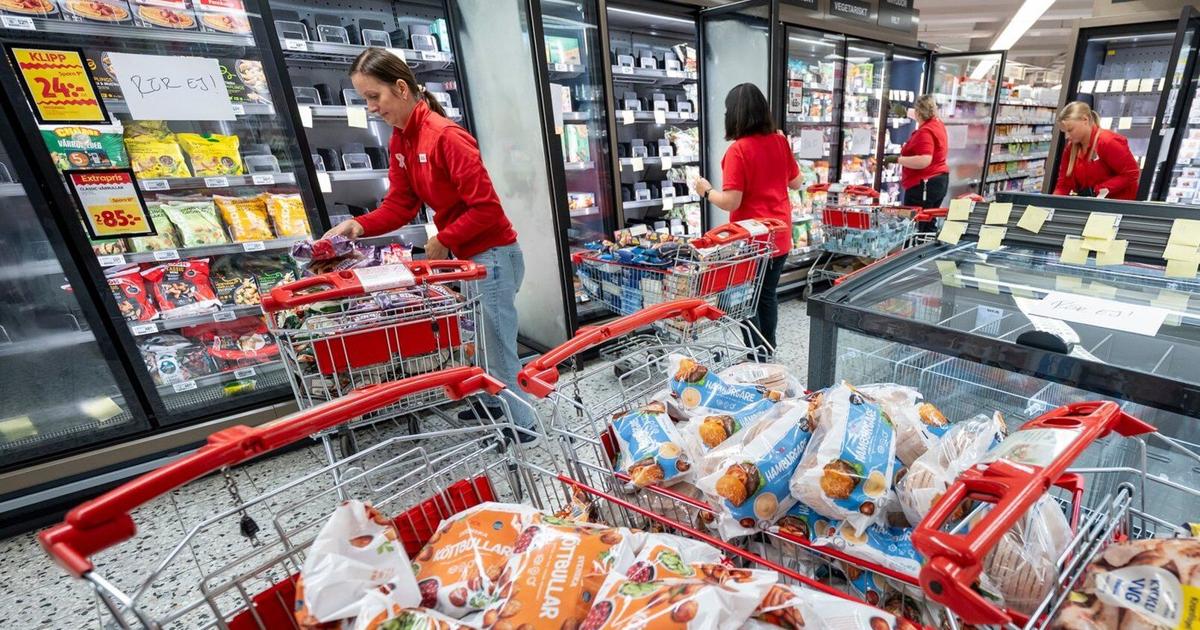
Photo via The Independent

European supermarket fridges got hacked. Again. Here's what to know

Read the original at The Independent ↗
Cite

Burrows, E., Chan, K., & Hadjicostis, M. (2026, November 3). European supermarket fridges got hacked. Again. Here's what to know. The Independent. https://www.independent.co.uk/news/world/europe/supermarkets-experts-france-belgium-french-b3078550.html

Dated from the outlet's own feed. Check the original for its byline.

The Independent · collected 2026-11-03 · by Emma Burrows, Kelvin Chan, Menelaos Hadjicostis

Quick Summary

Cyberattacks have recently hit refrigeration systems in multiple European countries including Sweden, Belgium, Luxembourg, Ireland, Italy, and Estonia, causing significant food spoilage. In one incident, a Greek butcher shop owner reported that someone remotely raised his refrigeration unit's temperature to 150 degrees Celsius, necessitating two hours for technicians to regain control. The attacks highlight security risks associated with internet-connected devices, as experts advise securing these systems like any other IT infrastructure to prevent unauthorized access and data breaches.
Written by AI on 2026-11-03, from this article's own text only (the story summary below draws on all the coverage).

AI analysis

Story summary

On November 2, supermarket freezers and refrigerators across multiple European countries, including Sweden, Belgium, and Luxembourg, experienced sudden temperature spikes. In Sweden, at least one store operated by ICA reported that its units were set to 50 degrees Celsius (122 F), similar to a cyberattack in France last month that caused significant food spoilage and fires. The affected stores included major chains like Coop, Carrefour, and Ahold Delhaize, with dozens of outlets impacted. By November 4, the number of countries reporting such incidents had grown to at least 11, including Germany, Romania, and the UK. EU officials are urging swift action to address the security vulnerabilities exposed by these coordinated cyberattacks.

Written for “Supermarket Freezer Cyber Attacks Europeans” on 2026-11-04, grounded in this article and the 39 other(s) covering the same event.

Story

📰 Supermarket Freezer Cyber Attacks Europeans
Technology · 40 article(s) covering the same event. Compare every outlet's account →

Compared with similar articles

This article reads unscored and hedges 10% of its claims. Each row says how that neighbour differs.
Toronto Star
Hedges 4 of 48 claims Outlet record 64/100
Global News
Hedges 0 of 15 claims Outlet record 63/100
Euronews
Hedges 1 of 4 claims Outlet record 60/100
BBC News
Hedges 5 of 29 claims Outlet record 66/100
The Straits Times
Hedges 0 of 19 claims Outlet record 66/100
NBC News
Hedges 2 of 23 claims Outlet record 78/100
South China Morning Post
Hedges 0 of 4 claims Outlet record 62/100
The Independent
Hedges 0 of 27 claims Outlet record 59/100
ABC News (AU)
Hedges 2 of 24 claims Outlet record 67/100
Dawn
Hedges 2 of 28 claims Outlet record 72/100
How this article was measured signals, leaning charts, publisher record, byline, topics and claims

Signals How these are calculated →

Claims extracted
40
sentences that state something as happening or true
Uncertain
10%
4 of 40 hedged ("reportedly", "may", "according to")
Leaning
not political
takes no side on a contested political question
Publisher signals
59/100
The Independent's corrections and hedging, across everything collected from it. Not a measure of accuracy.
Outlets on this story
40
Technology
Same framing elsewhere
1
articles that frame the event the way this one does
Analyzed 2026-11-03 · how these are computed

How this is being covered How these are calculated →

Article leaning vs. publisher reliability
Source leaning vs. consistency

Publisher

The Independent · 3696 article(s) · 10 correction(s) detected
Running correction rate · 10 correction(s)

Who wrote this

Emma Burrows
11 article(s) here · 1 carrying a prediction
🔮 One Swedish supermarket said its fridges and freezers had been hacked and set to 50 degrees Celsius (122 degrees Fahrenheit).
🔮 LONDON (AP) — Thousands of European troops will take part in a military exercise in Poland this month to prepare for a hypothetical postwar mission in Ukraine to boost the country’s economy and rebuild its armed forces.
🔮 Thousands of European troops will take part in a military exercise in Poland this month to prepare for a hypothetical postwar mission in Ukraine to boost the country’s economy and rebuild its armed forces.
🔮 The U.K. will likely face artificial intelligence cyberattacks on its critical infrastructure by 2028 as criminals and states, including China and Russia, increasingly use AI in their cyber activity, Britain's cyber chief warned Tuesday.
🔮 The vulnerabilities opened sites to a host of potential security concerns The official website for PHP and several other organizations and agencies released security advisories Wednesday urging PHP users to patch two critical vulnerabilities or shut down their sites if they couldn’t update them immediately.
🔮 WARSAW, Poland (AP) — NATO’s top military commander said the alliance is “ready to fight tonight” if it is attacked, as European officials warn Russia could test NATO’s defenses with increased covert attacks or a limited military incursion.
🔮 Stringer warned that Nato members need to be aware of the “febrile environment” and careful in their response because Putin would like to provoke the alliance into an “overreaction.”
🔮 Stringer warned that NATO members need to be aware of the “febrile environment” and be careful in their response because Putin would like to provoke the alliance into an “overreaction.”
Also by Emma Burrows
Nothing else under this byline is closely related to this article, so these are simply their most recent.
All 11 articles by Emma Burrows →
Kelvin Chan
6 article(s) here · 1 carrying a prediction
🔮 One Swedish supermarket said its fridges and freezers had been hacked and set to 50 degrees Celsius (122 degrees Fahrenheit).
🔮 The disclosures sparked furious debate about the safety of advanced artificial intelligence systems, including self-improving models that some fear could race out of human control.
🔮 A new Siri AI app will only be available in beta at first, so users need to join the waitlist through the settings menu.
Also by Kelvin Chan
Nothing else under this byline is closely related to this article, so these are simply their most recent.
All 6 articles by Kelvin Chan →
Menelaos Hadjicostis
4 article(s) here · 1 carrying a prediction
🔮 One Swedish supermarket said its fridges and freezers had been hacked and set to 50 degrees Celsius (122 degrees Fahrenheit).
🔮 His lawyer, Alexandros Alexandrou, told the Paphos District Court on Tuesday that his client's guilty plea acknowledges a momentary lapse of judgment but that he wasn't “willfully negligent.”
Also by Menelaos Hadjicostis
Nothing else under this byline is closely related to this article, so these are simply their most recent.

Topics

Belgium Copeland Danfoss European French

Subjects

European NORP · 3× French NORP · 3× Belgium GPE · 2× Copeland ORG · 2× Danfoss ORG · 2× France GPE · 1× Luxembourg GPE · 1× Netherlands GPE · 1× Sweden GPE · 1× Swedish NORP · 1×

Narrative

No evidence so far that AI was involved Advanced artificial intelligence systems from companies like Anthropic and OpenAI have come under fire recently after a string of revelations that they hacked into organizations while evading human control. Experts, however, said Tuesday that they didn't think these attacks were powered by AI.
framing: assertive · carried by 1 article(s) · first seen 2026-11-03
🔮 One Swedish supermarket said its fridges and freezers had been hacked and set to 50 degrees Celsius (122 degrees Fahrenheit).
2026-11-03 · The Independent
European supermarket fridges got hacked. Again. Here's what to know · assertive framing

Claims (40 extracted, 4 hedged)

Mysterious cyberattacks on European supermarket fridges have sent officials around the continent scrambling to figure out the cold, hard facts. asserted
cyberattacks → send → facts
Supermarkets in a number of European countries reported this week that their fridges and freezers warmed up after they were remotely taken over, resulting in tons of spoiled food at a total cost of millions of dollars (euros). asserted
they → report → dollars
One Swedish supermarket said its fridges and freezers had been hacked and set to 50 degrees Celsius (122 degrees Fahrenheit). asserted
fridges → say → degrees
It's a repeat of an earlier incident that struck refrigeration systems in hundreds of supermarkets and independent stores across France, Belgium and the Netherlands. asserted
that → strike → France
Here's a closer look: What happened and who was affected Supermarkets in at least half a dozen European countries, including Sweden, Belgium, Luxembourg, Ireland, Italy and Estonia, reported problems on Monday. asserted
Supermarkets → happen → Monday
The owner of a butcher shop in Athens told private Greek Skai TV Tuesday that someone hacked into the temperature control of a refrigeration unit, raising the temperature to 150 degrees Celsius (302 Fahrenheit). asserted
someone → tell → Celsius
George Boubas said his employees who start their shift at 4 a.m. at the shop in the Kifisia suburb first noticed the problem. asserted
who → say → problem
It took a technician two hours to wrest back control of the unit’s temperature settings, although the meat products weren’t affected, he said. asserted
he → take → settings
Boubas said the technician told him that an area supermarket and a fast-food restaurant experienced the same issue. asserted
supermarket → say → issue
He said they resorted to switching off the Wi-Fi connection to the refrigeration units to restrict outside access. asserted
they → say → access
Experts said the cyberattacks were a reminder of the risks that come as more things get connected to the internet. “This attack is a wake-up call. asserted
attack → say → internet
We have filled our homes and shops with devices that are really small computers, yet we still treat them like ordinary appliances," said Katerina Mitrokotsa, a cybersecurity professor at the University of St. Gallen, in Switzerland. asserted
Mitrokotsa → fill → Switzerland
“A fridge doesn’t look like a security risk, and that’s exactly why attackers like it.” asserted
attackers → look → it
Fridges are connected to save money and cut waste The cyberattack mirrors one that happened weeks earlier that affected mainly French and Dutch retailers. French cybersecurity investigators blamed problems with outdated remote control modules made by Danish company Danfoss as well as U.S.-based Copeland. asserted
investigators → connect → Danfoss
Danfoss said most affected systems were older products that no longer received software or security updates, while Copeland identified a vulnerability in discontinued controllers. asserted
Copeland → say → controllers
“Supermarkets connect their fridges so they can monitor temperatures around the clock across hundreds of stores, get alerts before food spoils, cut energy costs and let technicians fix faults remotely," Mitrokotsa said. asserted
Mitrokotsa → connect → faults
"This saves money and reduces food waste, but every connected fridge is also an entry point that needs to be secured like any other IT system.” asserted
that → save → system
Experts said many businesses are rushing to embrace trendy new technology while neglecting the vast network of connections that they rely on for their daily operations, from payment and ordering systems to warehouses, refrigeration and other building controls. asserted
they → say → warehouses
“Organizations are pouring budget into AI and digital transformation while the systems that keep food cold, water clean, and lights on often run on hardware that has not been funded since installation," said Nicole Carignan, senior vice president of security and AI strategy at cybersecurity company Darktrace. asserted
Carignan → pour → Darktrace
“Nobody broke into these refrigeration systems with a zero-day," she said, using a term for a flaw that has gone undetected by the system’s creators and security reviews. asserted
that → break → creators
"They got in through internet-facing controllers, end-of-life firmware, and default passwords. asserted
They → get → life
That is technical debt coming due.” asserted
That → come → ?
British cybersecurity officials on Tuesday shed little light on the latest attack, while pointing to what they called “legacy technology.” “The cyberattack on French supermarkets was a result of exploitation of known vulnerabilities,” U.K. cyber minister Liz Lloyd said in a speech. asserted
Lloyd → shed → speech
“It’s a clear demonstration that poor cyber hygiene, like weak passwords, continues to put organizations at risk.” asserted
hygiene → ’ → risk
Richard Horne, the head of the U.K.’s National Cyber Security Center, told reporters the French fridges were "connected directly to the internet with default passwords.” A team from the center issued warnings and worked through Monday night contacting organizations that had “vulnerable technology exposed,” he said. asserted
he → tell → organizations
No evidence so far that AI was involved Advanced artificial intelligence systems from companies like Anthropic and OpenAI have come under fire recently after a string of revelations that they hacked into organizations while evading human control. Experts, however, said Tuesday that they didn't think these attacks were powered by AI. asserted
attacks → involve → AI
“There is no evidence AI was used, and the techniques did not require it,” said Carignan. asserted
Carignan → be → it
“I think the key element of that is that this wasn’t an AI attack” said Paul Chichester, director of operations at the U.K. cyber center. asserted
Chichester → think → center
“This is using vulnerabilities that absolutely have been out there for a long period of time. asserted
that → use → time
And that’s where we really need to sort of focus on.” asserted
we → ’ → ?
Who’s behind it and what's the motive asserted
motive → ’ → it
Investigations have so far failed to discover who might have carried out the cyberattacks and why. uncertain
who → fail → cyberattacks
France’s national cybersecurity agency, ANSSI, said it has been investigating refrigeration-system breaches since mid-October and coordinating protective measures with “all sectors that could be affected.” uncertain
that → say → sectors
In a statement to The Associated Press, the agency said it knew of compromised remote refrigeration controllers in Danfoss’s AK-SM and AK-SC ranges, as well as Copeland and Dixell xweb systems. asserted
it → say → ranges
ANSSI said it was mobilized to assist “potential victims in France” and pointed to a security alert first published Oct. 12, which has been updated regularly. asserted
which → say → alert
Italian cybersecurity and intelligence officials were scheduled to meet Tuesday morning to discuss the incident, according to Italian news agency ANSA. uncertain
officials → schedule → ANSA
Officials at the European Union's executive Commission were also holding similar meetings. asserted
Officials → hold → meetings
European Commission spokesperson Thomas Regnier declined on Tuesday to comment on who might have carried out the hacks, saying that's up to the bloc's 27 national authorities to figure out. uncertain
that → decline → authorities
Regnier told reporters the incidents “are not isolated” and that Europeans "have to be collectively resilient and prepared for such cyber incidents.” ___ Hadjicostis reported from Nicosia, Cyprus. asserted
Hadjicostis → tell → Nicosia
AP writers Lorne Cook in Brussels, Lefteris Pitarakis in Athens and Thomas Adamson in Paris contributed to this report. asserted
Cook → contribute → report

💬Give feedback · no sign-in needed

No sign-in needed for now. Your note is sent without a name, so it cannot be answered.

🕘History 🎫Support