Photo via ABC News (AU)

'No need to sack the governor' and other reasons for the RBA's inflation target

Read the original at ABC News (AU) ↗
Cite

Hutchens, G. (2026, November 3). 'No need to sack the governor' and other reasons for the RBA's inflation target. ABC News (AU). https://www.abc.net.au/news/2026-11-04/reserve-bank-australia-origins-of-inflation-target-2-3-per-cent/107322960

Dated from the outlet's own feed. Check the original for its byline.

ABC News (AU) · collected 2026-11-03 · by Gareth Hutchens

Quick Summary

The Reserve Bank of Australia (RBA) has raised interest rates to their highest level in 18 years, aiming to reduce inflation from its current rate of 4.3% annually back down to the RBA’s 2 to 3 percent target range. The article explores why this specific range was chosen and delves into the history of the RBA's adoption of an inflation target in the early 1990s, which it adapted from New Zealand's model but with modifications due to concerns about the lower end of New Zealand’s original 0–2 percent target being too restrictive. Former RBA deputy governor Stephen Grenville explains that the RBA believed a little bit of inflation helps economies function better and preferred not to have strict penalties for missing the target, unlike initial proposals in New Zealand where exceeding the upper limit could lead to drastic measures like firing the central bank governor.
Written by AI on 2026-11-03, from this article's own text only (the story summary below draws on all the coverage).

AI analysis

Story summary

On November 3, 2026, the Reserve Bank of Australia (RBA) increased interest rates from 4.60% to 4.85%, marking an 18-year high and the fifth hike this year. The decision aims to combat inflation, which has risen above the RBA's target band of 2-3%. Despite Prime Minister Anthony Albanese calling interest rates a "blunt instrument," Governor Michele Bullock defended the move as necessary to prevent more severe economic consequences. However, economists warn that further hikes could push Australia into recession and exacerbate financial stress for households, particularly in New South Wales (NSW), where mortgage repayments are already among the highest nationally.

Written for “RBA Lifts Interest Rates For Fifth Time This Year” on 2026-11-04, grounded in this article and the 19 other(s) covering the same event.

Story

📰 RBA Lifts Interest Rates For Fifth Time This Year
Economy/Business · 20 article(s) covering the same event. Compare every outlet's account →

Compared with similar articles

This article reads unscored and hedges 10% of its claims. Each row says how that neighbour differs.
Daily Mail
⚖️ Leans left Hedges 7 of 31 claims Outlet record 69/100
The Sydney Morning Herald
Hedges 5 of 28 claims Outlet record 61/100
The Independent
⚖️ Leans right Hedges 3 of 17 claims Outlet record 59/100
The Guardian
Hedges 0 of 32 claims Outlet record 66/100
“While both articles discuss interest rate rises and their impacts, Article A predicts the RBA's decision before it happens, while Article B reports on the actual implementation of that rise.”
ABC News (AU)
Hedges 0 of 3 claims Outlet record 67/100
The Guardian
⚖️ Leans left Hedges 2 of 21 claims Outlet record 66/100
The Sydney Morning Herald
⚖️ Leans right Hedges 0 of 49 claims Outlet record 61/100
“The articles discuss different aspects of the Reserve Bank's decision to raise interest rates, but do not describe the same specific incident or outcome.”
The Sydney Morning Herald
⚖️ Leans left Hedges 4 of 40 claims Outlet record 61/100
“While both articles discuss an interest rate rise by the RBA on the same day, Article A focuses on warnings and fears about potential recession and unemployment, while Article B reports directly on the governor's comments and rationale for the rate increase.”
The Sydney Morning Herald
Hedges 1 of 14 claims Outlet record 61/100
“While both articles discuss the RBA's decision to lift interest rates and address inflation, they are written on different dates indicating separate reporting times.”
The Guardian
Hedges 5 of 18 claims Outlet record 66/100
“While both articles discuss the Reserve Bank's decision to raise interest rates and address inflation, they are not describing the exact same specific event happening at the same time. ARTICLE A predicts an upcoming rate hike, while ARTICLE B reports on a recent one that already occurred.”
How this article was measured signals, leaning charts, publisher record, byline, topics and claims

Signals How these are calculated →

Claims extracted
40
sentences that state something as happening or true
Uncertain
10%
4 of 40 hedged ("reportedly", "may", "according to")
Leaning
not political
takes no side on a contested political question
Publisher signals
67/100
ABC News (AU)'s corrections and hedging, across everything collected from it. Not a measure of accuracy.
Outlets on this story
20
Economy/Business
Same framing elsewhere
1
articles that frame the event the way this one does
Analyzed 2026-11-03 · how these are computed

How this is being covered How these are calculated →

Article leaning vs. publisher reliability
Source leaning vs. consistency

Publisher

ABC News (AU) · 4823 article(s) · 11 correction(s) detected
Running correction rate · 11 correction(s)

Who wrote this

Gareth Hutchens
12 article(s) here · 1 carrying a prediction
🔮 Any inflation target that contemplates getting to zero — or would think that being at, or near, zero is a good thing — just misunderstands the nature of inflation," he said.
🔮 It asks three questions about Australia's resource tax regime: - Is the system designed to collect more when prices and profits surge? - What level of revenue does the public actually collect? - Does stronger public capture automatically drive investment away? It says if Australia's system had better boom sensitivity, it would collect around $45 billion more every year across state and Commonwealth revenue streams, as it rode the global commodity price cycle.
🔮 The latest data show Australia's unemployment rate is 4.7 per cent, but economists say the RBA may not have finished lifting rates.
🔮 The "whole show" was built on housing, Schroder said, and it couldn't continue this way.
🔮 In February, Will Hetherton, the Future Fund's chief corporate affairs officer, defended the fund's investments in Palantir.
🔮 The Bureau of Statistics will release its September inflation data tomorrow.
2026-09-29 · assertive framing · Breaking: RBA lifts rates to highest level in 15 years
🔮 He rejected the idea that Australia has almost experienced runaway wage growth in recent years that could have fed into damaging inflation.
2026-09-22 · assertive framing · No evidence of a 'wage-price spiral' in Australia
🔮 The RBA's Monetary Policy Board will meet on September 28-29 to determine the next move in the cash rate target.
🔮 But farmers and the hospitality and tourism industries say the government's crackdown on working holiday visas will hit the economy and make labour shortages worse.
🔮 He is famous for his adage, called Goodhart's Law, that an observed statistical relationship will tend to collapse once you try to target it for policy purposes.
Also by Gareth Hutchens
Nothing else under this byline is closely related to this article, so these are simply their most recent.
All 12 articles by Gareth Hutchens →

Topics

Australia New Zealand New Zealand's RBA The Reserve Bank

Subjects

RBA ORG · 13× Grenville PERSON · 5× New Zealand GPE · 4× New Zealand's GPE · 4× Australia GPE · 2× Australian NORP · 1× Bullock PERSON · 1× Michele Bullock PERSON · 1× Stephen Grenville PERSON · 1× The Reserve Bank ORG · 1×

Narrative

"We are not looking to tip the economy into recession if we can avoid it, but we do need to get inflation down, and we do have excess demand at the moment, so that is the key," Ms Bullock said on Tuesday. But why does the RBA think annual inflation of 2 to 3 per cent is optimal?
framing: assertive · carried by 1 article(s) · first seen 2026-11-03
🔮 Any inflation target that contemplates getting to zero — or would think that being at, or near, zero is a good thing — just misunderstands the nature of inflation," he said.

Claims (40 extracted, 4 hedged)

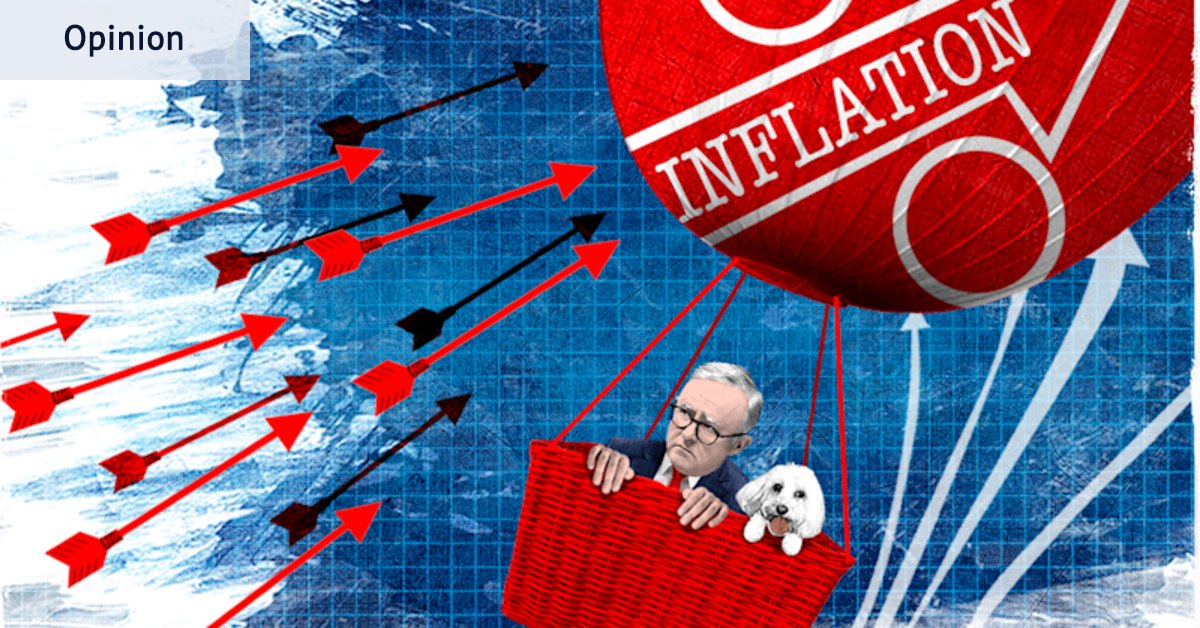
The Reserve Bank has lifted interest rates to their highest level in 18 years, delivering another blow to indebted households in its efforts to squash inflation. asserted
Bank → lift → inflation
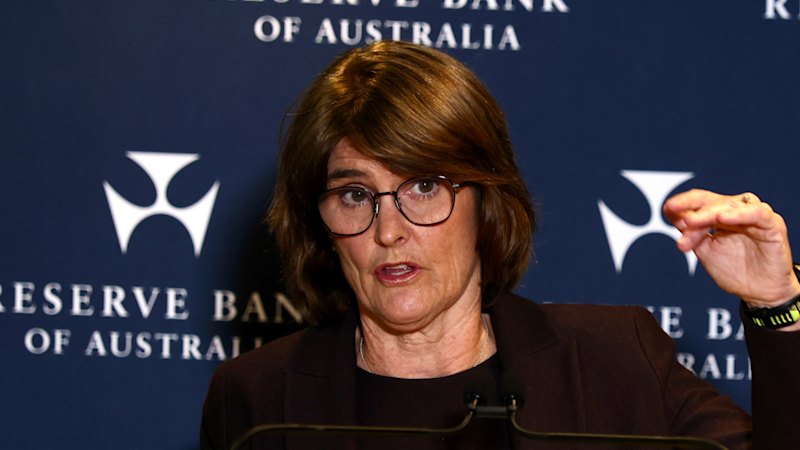
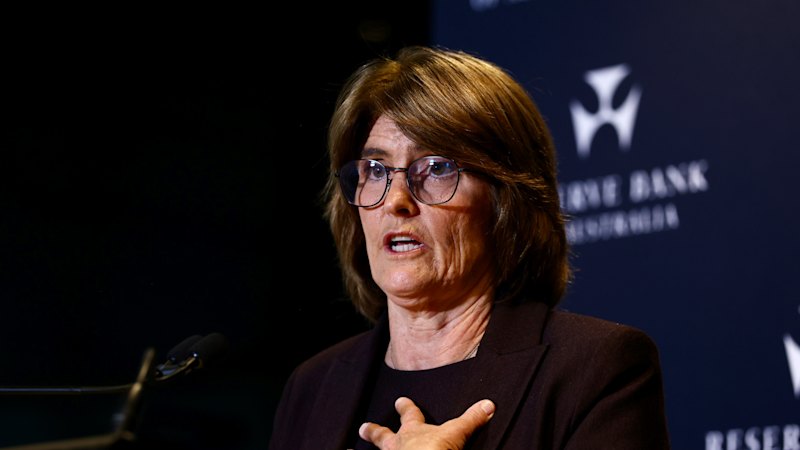
RBA governor Michele Bullock says inflation is too high and it has to be dragged back down into the RBA's 2 to 3 per cent target range. asserted
it → say → range
Headline inflation in Australia is rising at an annual pace of 4.3 per cent at the moment. asserted
inflation → rise → moment
"We are not looking to tip the economy into recession if we can avoid it, but we do need to get inflation down, and we do have excess demand at the moment, so that is the key," Ms Bullock said on Tuesday. But why does the RBA think annual inflation of 2 to 3 per cent is optimal? asserted
inflation → look → cent
Why does it target that particular range for inflation? asserted
it → target → inflation
Copy New Zealand's idea, but with an Australian twist The RBA adopted its inflation target in the early 1990s. asserted
RBA → copy → 1990s
It copied the idea from New Zealand, which pioneered the concept and became the first country in the world to formally adopt inflation targeting as we know it in 1990. asserted
we → copy → 1990
But the RBA didn't copy New Zealand's model completely. asserted
RBA → copy → model
New Zealand originally picked an inflation target of 0–2 per cent, and senior officials at the RBA thought that was misguided, and wanted a different target. asserted
that → pick → target
Stephen Grenville, a former RBA deputy governor, recalled the history in 2023 as part of the RBA's oral history collection of interviews. asserted
Grenville → recall → interviews
Dr Grenville worked at the RBA between 1982 and 2001 (his last five years as deputy governor). " asserted
Grenville → work → governor
Any inflation target that contemplates getting to zero — or would think that being at, or near, zero is a good thing — just misunderstands the nature of inflation," he said. asserted
he → contemplate → inflation
"Economies work much better with a little bit of inflation so that relative prices can change, and in any case, quality improvements and a whole lot of those technical issues mean that zero makes no sense. asserted
zero → work → sense
"They were also, we thought, 'inflation nutters' in that they thought inflation was the only thing that mattered,"he said. asserted
that → think → ?
Miss the target and the governor gets sacked? asserted
governor → miss → target
Dr Grenville said there were other reasons why the RBA didn't like New Zealand's 0–2 per cent target. asserted
RBA → say → target
One reason was that New Zealand's original target was going to have "electric fences" on it — the edges, zero and two, were "very clear penalty areas" — which didn't make sense to RBA officials. asserted
which → go → officials
"You could have 1.9 per cent [inflation] and that was OK, but if you slipped over to 2.1 [per cent], various bad things happened, and at least initially there was talk that the governor would be sacked," Dr Grenville recalled. uncertain
Grenville → have → 2.1
In the end, New Zealand didn't go ahead with that harsh plan, but they still saw it as a very bad thing if they ever recorded an inflation number bigger than 2 per cent. asserted
they → go → cent
"[W]hereas we thought the proper way to think about an inflation target was like an archer's target: that an archer always aims for the centre [and] doesn't expect to hit the centre of the bullseye all the time, but consistently aims for the bullseye," Dr Grenville said. asserted
Grenville → think → bullseye
[We] thought the right answer was to just mention a single number — which would be the centre of the target — and there wouldn't be any electric fences. asserted
which → think → target
The presumption, of course, would be the further away you were from the bullseye, the more you needed to do as the more you were off target. asserted
you → need → target
"So it was a much more graduated thing that you could be off the bullseye, and no need to sack the governor," he said. uncertain
he → sack → governor
Inflation under 2pc is too low, above 3pc is too high That's how the RBA stumbled upon its "2–3 per cent" target. asserted
RBA → stumble → target
Dr Grenville said in the early 1990s, after more than a decade of high inflation and economic disruption, RBA officials didn't think they could get Australia's annual inflation down to 2 per cent sustainably, but they still wanted to be ambitious. uncertain
they → say → cent
"We knew we'd had 'the recession we had to have' and we were going to make a lot of progress on inflation, but we didn't think we'd get much below 3 [per cent]," he said. " asserted
he → know → cent
We thought to mention 2 [per cent], which by then some other central bankers were talking about, and of course was the top of the New Zealand target. asserted
bankers → think → target
[So] 2 would be too ambitious, but 3 would sound like we weren't trying hard enough, so we suggested 2 to 3 [per cent, but] not as a range, and this was something we had a lot of trouble explaining. uncertain
we → sound → trouble
"We didn't think we would stay within 2 to 3 [per cent], because we really thought of it as — I think Glenn [Stevens] invented the term — a 'thick point'. asserted
Stevens → think → point
"We just wanted people to be saying: well, if we had a number starting with 2, most of the time we would regard that as a satisfactory outcome. asserted
we → want → outcome
"So that's one advance, as we saw it, over the New Zealand inflation targeting," he said. asserted
he → see → targeting
Add a time dimension and you're sweet Dr Grenville said the RBA also included a time dimension in its inflation target to allow for the fact that economies moved in cycles over many years. asserted
economies → add → years
"We somehow had to make sense of a single objective, so if people said to us 'don't you care about unemployment?', we would say 'this is where unemployment fits into our single objective'," he said. asserted
he → have → objective
"The critical thing was the time dimension, and I think we were clearly the first to grapple with that idea that you had to get a time dimension into the inflation target. asserted
you → think → target
"The time dimension we introduced was we wanted to get the 2 to 3 [per cent] over the course of the cycle, and that fitted with the idea that, yes, monetary policy does have some influence on the shape of the cycle. asserted
policy → introduce → cycle
"[And] over time, over the first four or five years of inflation targeting as it spread through more and more countries, everyone adopted our formula of 'over the course of the cycle', or gave themselves some time to get inflation back where it had to be," he said. asserted
he → spread → inflation
An eventual return to lower inflation So there you have it. asserted
you → have → it
Yesterday, after the RBA lifted interest rates for the fifth time in 2026, governor Michele Bullock acknowledged that home loan borrowers would feel more pain from the higher rates. asserted
borrowers → lift → rates
But she said if inflation didn't come down, the pain of prolonged high inflation would be worse. asserted
pain → say → inflation
And she said the RBA now expected headline inflation to peak at 4.5 per cent at the end of this year [up from 4.3 per cent currently] and to not return to the RBA's 2–3 per cent inflation target band until late 2027. asserted
inflation → say → 2027

💬Give feedback
🕘History 🎫Support