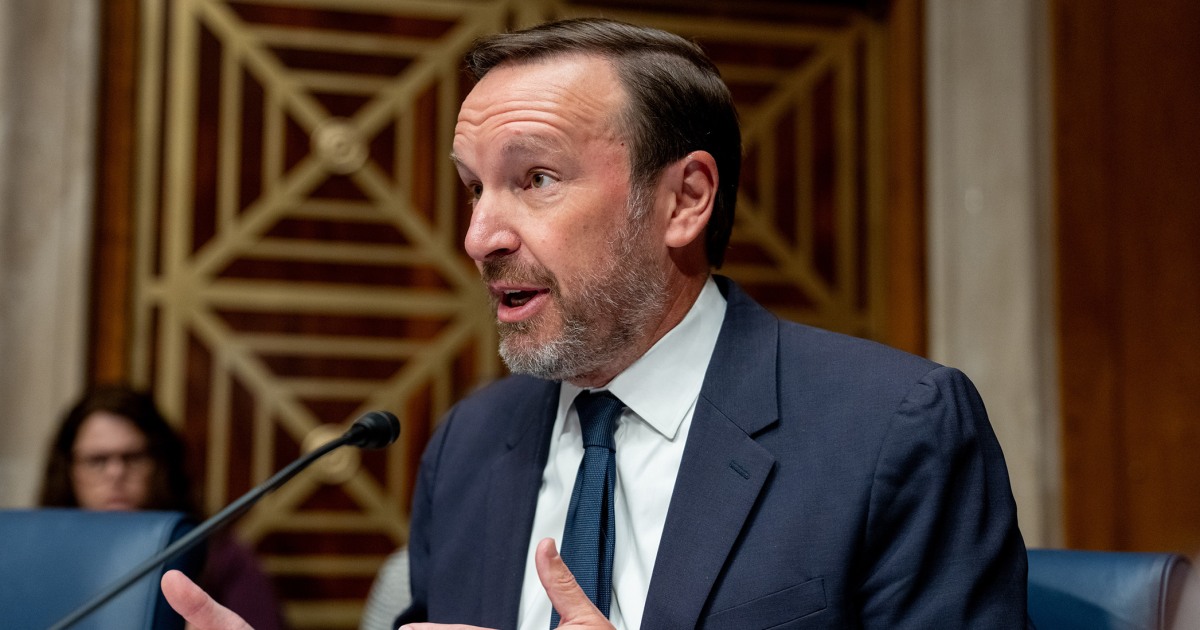
When Connecticut Democratic Sen. Chris Murphy was hospitalized this weekend after suffering a stroke, President Donald Trump told reporters he was “surprised” by the news.
asserted
he → hospitalize → news
“I just heard about it inside, and he’s a pretty young guy, so I was a little surprised to hear it,” the president said.
asserted
president → hear → it
“No, nobody wants to have that.”
asserted
nobody → want → that
Murphy, who is 53, is younger than many stroke victims, with most of the dangerous medical events occurring in people older than 65, according to Stanford Medicine.
uncertain
most → occur → Medicine
Though strokes may occur at any age, the risk for strokes rises as we get older and, each year, strokes kill 140,000 of the close to 800,000 people who have them.
uncertain
who → occur → them
The latest federal research shows the number of adults under age 44 who have had a stroke rose nearly 16 percent over the last decade and a University of Cincinnati study published in September found stroke rates in younger adults living in the Midwest nearly doubled from 1993 to 2020.
asserted
rates → show → 2020
That uptick is particularly concerning because stroke at a younger age can lead to living with disability for decades.
asserted
stroke → lead → decades
Fortunately, experts believe they know why they’ve seen this pattern, tracing the rise to the use of opioids as well as increased cardiovascular risk factors, including high blood pressure and obesity.
asserted
they → believe → pressure
“What we found is that young adults experiencing strokes increasingly have high blood pressure, diabetes, high cholesterol, obesity and smoking histories,” Aaron Shoskes, a neurologist at University of Utah Health’s Clinical Neurosciences Center, said in April.
asserted
Shoskes → find → April
“So, in many cases, this isn’t coming out of nowhere.”
asserted
this → come → cases
Interconnected risk
A stroke occurs when the blood supply to part of the brain is blocked or when a blood vessel in the brain bursts.
asserted
vessel → occur → brain
Obesity, a chronic accumulation of excess fat that increases the risk of health complications, can raise the risk of strokes by sending blood pressure skyrocketing.
asserted
that → increase → pressure
High blood pressure can lead to blood clots that cause stroke.
asserted
that → lead → stroke
Obesity is also a risk factor for developing diabetes, a chronic condition that affects the body’s ability to produce insulin, a hormone that regulates blood sugar.
asserted
that → develop → sugar
Diabetes can raise the risk for stroke by 1.5 times by leading to blood clots, too.
asserted
Diabetes → raise → clots
Both diabetes and obesity are linked to cancer, which may also be playing a role, Shoskes said.
uncertain
Shoskes → link → role
Cancer can raise the risk of stroke by making blood prone to clotting and 2019 Penn State College of Medicine research found cancer more than doubles the risk of dying from a stroke.
asserted
cancer → raise → stroke
“While it’s not the primary driver of the trend, it’s likely one of several contributing factors,” Shoskes said.
asserted
Shoskes → ’ → factors
Rates of obesity, have climbed 37 percent in the U.S. over the last 20 years, according to the American Heart Association.
uncertain
Rates → climb → Association
That’s partially thanks to an increasingly processed diet, with more foods containing bad fats and high sugar and salt content.
asserted
That → ’ → fats
Certain forms of cancer are on the rise in younger adults in the U.S. and worldwide, including colorectal cancer, pancreatic, prostate, kidney and multiple myeloma, according to Harvard experts.
uncertain
forms → include → experts
Doctors are still working to understand why, but believe obesity plays a part.
asserted
obesity → work → part
People can lower their risk of having a stroke by reducing their risk for obesity, diabetes and cancer.
asserted
People → lower → obesity
That means keeping blood pressure and blood sugar at normal levels, and staying at a healthy weight for your body through diet and exercise.
asserted
That → mean → diet
Following an overnight fast, blood sugar readings under 100 milligrams of sugar per deciliter of blood are considered to be normal, while those above 126 milligrams suggest a patient may have prediabetes or diabetes, according to the American Heart Association.
Blood pressure readings that are less than 120 systolic and less than 80 diastolic are considered OK, the association also notes.
uncertain
association → follow → Association
Systolic readings measure the force in your arteries as your heart beats, while diastolic readings measure blood pressure during the pause between the heartbeats.
asserted
readings → measure → heartbeats
To keep levels low, people should aim for 30 minutes of exercise each day, including cardio such as running, cycling and strength training.
asserted
people → keep → running
Experts also recommend that people follow a heart healthy diet, like the Mediterranean diet.
asserted
people → recommend → diet
The diet features anti-inflammatory foods, including dark leafy greens and olive oil.
asserted
diet → feature → greens
“These lifestyle changes may not sound exciting, but they are some of the most powerful ways to lower stroke risk,” Shoskes says.
uncertain
Shoskes → sound → risk
 The Aporia