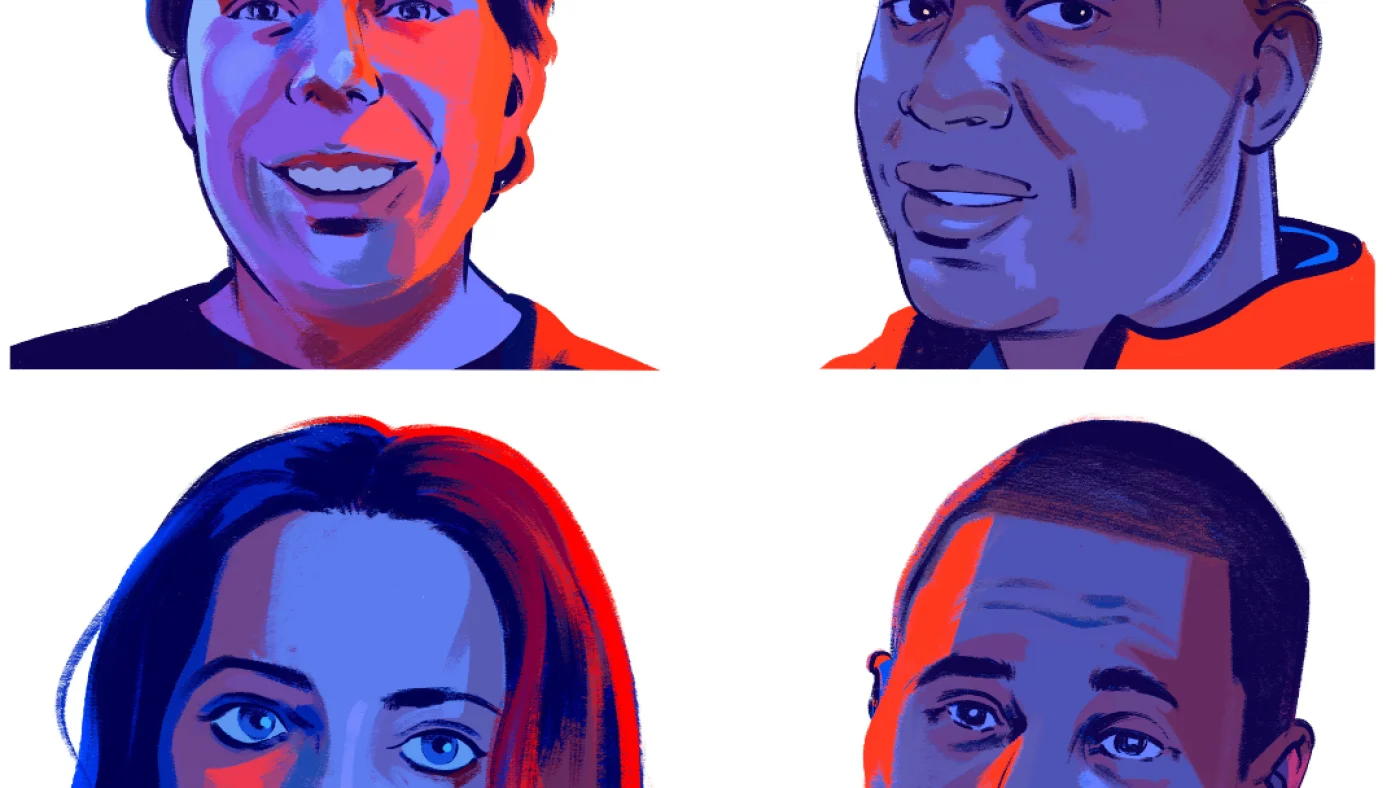
Photo via The Guardian

US voters share why they cast their ballots – from frustration with Trump to affordability concerns

Read the original at The Guardian ↗
Cite

Portland, R. T. i., Dearborn, J. G. i., Anchorage, E. P. i., & Atlanta, a. G. C. i. (2026, November 3). US voters share why they cast their ballots – from frustration with Trump to affordability concerns. The Guardian. https://www.theguardian.com/us-news/2026/nov/03/republican-voters-maine-susan-collins-trump

Dated from the outlet's own feed. Check the original for its byline.

The Guardian · collected 2026-11-03 · by Robert Tait in Portland, Joseph Gedeon in Dearborn, Ed Pilkington in Anchorage, and George Chidi in Atlanta

Quick Summary

Voters in Maine and Georgia discussed their choices in Tuesday’s US midterm elections, reflecting a range of concerns from national direction under President Trump to local issues like immigration enforcement. Todd Cox, an independent voter in Maine who previously supported Republican Senator Susan Collins, this time voted for her Democratic challenger Troy Jackson due to dissatisfaction with the administration's policies and tone. Meanwhile, David Boy, a Georgia attorney, cast his ballot for Republicans despite disliking Trump, illustrating mixed feelings about party loyalty versus presidential approval. Across the country, high turnout was observed, with voters citing affordability issues, immigration policy, and the Iran conflict as significant factors influencing their decisions.
Written by AI on 2026-11-04, from this article's own text only (the story summary below draws on all the coverage).

AI analysis

Story summary

On November 3, 2026, Troy Jackson defeated incumbent Susan Collins, a 30-year Republican senator from Maine, in a closely watched U.S. Senate race. Jackson's victory is seen as a significant gain for Democrats amid concerns over economic issues such as rising fuel and heating oil prices due to the Iran war and trade tensions with Canada. Voters like Todd Cox cited broader national issues, including "bullying" under the current administration, driving their decision to support Jackson. The win marks the end of Collins' long-standing career in the Senate and a major shift for Democrats aiming to regain control of the chamber.

Written for “Troy Jackson Wins Maine Senate Race” on 2026-11-04, grounded in this article and the 19 other(s) covering the same event.

Story

📰 Troy Jackson Wins Maine Senate Race
Politics · 20 article(s) covering the same event. Compare every outlet's account →

Compared with similar articles

This article reads unscored and hedges 2% of its claims. Each row says how that neighbour differs.
The Straits Times
⚖️ Leans left Hedges 0 of 12 claims Outlet record 66/100
Daily Mail
Hedges 6 of 71 claims Outlet record 69/100
“The articles describe different voters and their voting choices, not the same specific event or incident.”
New York Post
⚖️ Leans strongly right Hedges 1 of 22 claims Outlet record 66/100
“The articles describe different times and contexts related to Susan Collins' election campaign, with Article A referring to an event in Portland on a Saturday night and Article B discussing voter behavior on a Tuesday.”
NPR
Hedges 1 of 48 claims Outlet record 60/100
“The articles describe different voters' motivations in different states, not the same specific voting incident.”
Mother Jones
⚖️ Leans strongly left Hedges 2 of 35 claims Outlet record 60/100
“Article A describes voter sentiment on election day, while Article B reports on the outcome of the election and Collins' concession.”
ABC News (US)
Hedges 0 of 1 claims Outlet record 67/100
“The articles discuss voter sentiment and actions on Election Day but do not describe the same specific incident or outcome.”
Washington Examiner
⚖️ Leans left Hedges 0 of 25 claims Outlet record 69/100
“Article A describes voter opinions leading up to an election, while Article B reports on the outcome of the election itself.”
New York Post
⚖️ Leans left Hedges 0 of 16 claims Outlet record 66/100
“Article A describes voter sentiments and reasons for voting, while Article B reports on the outcome of the election. While they are related to the same election, they describe different aspects.”
NBC News
⚖️ Leans left Hedges 3 of 35 claims Outlet record 78/100
“Article A describes voter sentiment and motivations on election day, while Article B reports the projected outcome of the election. They cover related topics but are not describing the exact same incident.”
How this article was measured signals, leaning charts, publisher record, byline, topics and claims

Signals How these are calculated →

Claims extracted
56
sentences that state something as happening or true
Uncertain
2%
1 of 56 hedged ("reportedly", "may", "according to")
Leaning
withheld
no quote in the article backed the model's score
Publisher signals
66/100
The Guardian's corrections and hedging, across everything collected from it. Not a measure of accuracy.
Outlets on this story
20
Politics
Same framing elsewhere
1
articles that frame the event the way this one does
Analyzed 2026-11-04 · how these are computed

How this is being covered How these are calculated →

Article leaning vs. publisher reliability
Source leaning vs. consistency

Publisher

The Guardian · 2029 article(s) · 6 correction(s) detected
Running correction rate · 6 correction(s)

Who wrote this

Robert Tait in Portland
1 article(s) here · 1 carrying a prediction
🔮 But these are midterm elections – not presidential – and he looked beyond his view of the current occupant of the White House in a bid to elect candidates he believed would act on the issues he cared about.
The only article under this byline in the corpus.
Joseph Gedeon in Dearborn
1 article(s) here · 1 carrying a prediction
🔮 But these are midterm elections – not presidential – and he looked beyond his view of the current occupant of the White House in a bid to elect candidates he believed would act on the issues he cared about.
The only article under this byline in the corpus.
Ed Pilkington in Anchorage
1 article(s) here · 1 carrying a prediction
🔮 But these are midterm elections – not presidential – and he looked beyond his view of the current occupant of the White House in a bid to elect candidates he believed would act on the issues he cared about.
The only article under this byline in the corpus.
and George Chidi in Atlanta
1 article(s) here · 1 carrying a prediction
🔮 But these are midterm elections – not presidential – and he looked beyond his view of the current occupant of the White House in a bid to elect candidates he believed would act on the issues he cared about.
The only article under this byline in the corpus.

Topics

Guardian Iran Maine Republican Senate

Subjects

Guardian ORG · 4× Maine GPE · 4× Trump PERSON · 4× Iran GPE · 3× Republican NORP · 3× Cox PERSON · 2× Democrats NORP · 2× Georgia GPE · 2× Portland GPE · 2× Senate ORG · 2×

Narrative

As millions lined up to cast their ballots nationwide, the question looming over Tuesday’s US midterm elections – with control of US Congress and key checks and balances on Donald Trump at stake – was just how many Americans felt the same way.
framing: assertive · carried by 1 article(s) · first seen 2026-11-04
🔮 But these are midterm elections – not presidential – and he looked beyond his view of the current occupant of the White House in a bid to elect candidates he believed would act on the issues he cared about.

Claims (56 extracted, 1 hedged)

In the battleground state of Maine, Todd Cox, 63, has supported the state’s incumbent Republican senator Susan Collins not once, but twice, in previous elections. asserted
Cox → support → elections
On Tuesday, Cox, a technology professional, cast his vote for Collins’ Democratic challenger Troy Jackson – driven not by pressing local issues, but broader concern “for the direction the country is going in”, he said. asserted
he → cast → direction
“We definitely haven’t become kinder and gentler under this administration,” Cox told the Guardian. asserted
Cox → become → Guardian
“There’s a lot of bullying that goes on. asserted
that → ’ → bullying
It goes back to affordability. asserted
It → go → affordability
It’s the war in Iran – that shouldn’t be happening. asserted
that → ’ → Iran
It’s the disregard for the rule of law. asserted
It → ’ → law
It just seems like they’re thumbing their nose at it.” asserted
they → seem → it
As millions lined up to cast their ballots nationwide, the question looming over Tuesday’s US midterm elections – with control of US Congress and key checks and balances on Donald Trump at stake – was just how many Americans felt the same way. asserted
Americans → line → stake
To win control of the US Senate in Washington, Democrats must flip four Republican-held seats and retain all of those currently held by the party. asserted
Democrats → win → party
They meanwhile need a net gain of just three seats to obtain a majority in the House. asserted
They → need → House
In interviews with the Guardian across the country, voters cited affordability concerns, Trump’s war on Iran and his administration’s aggressive crackdown on immigration as among the key issues that had driven them to cast their votes. asserted
that → cite → votes
Lines formed outside polling stations in key states including Texas and Maine. asserted
Lines → form → Texas
In Maine, a steady stream of voters entered the Merrill auditorium polling station in Portland’s busy downtown district in mid-morning, leading to queues of up to half an hour to cast a ballot, according to organizers. uncertain
stream → enter → organizers
“I’m concerned about ICE raids that have been happening here in Portland,” said Maple Razsa, 55, a global studies professor at Colby College in Waterville. asserted
Razsa → ’m → Waterville
“The political system is just run amok at this point.” asserted
system → run → point
“I voted straight Republican,” said a 63-year-man in Maine, who declined to give his name. asserted
who → vote → name
“I don’t know much about the issues, but I’m not ready to throw away Israel yet. asserted
I → know → Israel
I don’t really see the war in Iran as a real war. asserted
I → see → war
What have we lost? asserted
we → lose → What
We lose hundreds and thousands in these wars and if they have a nuclear bomb, we’re going to have a nuclear war anyway.” asserted
we → lose → war
In Georgia, where heated races for the Senate and governor are playing out, David Boy, an attorney from Johns Creek, voted for Republicans yesterday despite his staunch antipathy for the president. asserted
Boy → play → president
“I don’t like Trump. asserted
I → like → Trump
I’ve never voted for him,” he told the Guardian. asserted
he → vote → Guardian
“I want to go to my deathbed saying I never did.” asserted
I → want → deathbed
But these are midterm elections – not presidential – and he looked beyond his view of the current occupant of the White House in a bid to elect candidates he believed would act on the issues he cared about. asserted
he → look → issues
“I’ve got school-age kids, so making sure the schools are good for them,” said Boy. asserted
Boy → get → them
I’m in the prime earning years right now, so paying taxes … and then also for me, personally, my faith and integrity and moral issues. asserted
I → ’m → me
And then, I want things to be run well. asserted
things → want → ?
Honestly, I want our government to be run efficiently and effectively.” asserted
government → want → ?
These remain divided times. asserted
These → remain → ?
Jason Griffin, an engineer from Johns Creek, Georgia, told the Guardian he was specifically motivated to vote for Democrats on Tuesday by Trump. asserted
he → tell → Trump
“I used to like the policies of most of the Republicans,” he said. asserted
he → use → Republicans
Others were driven by local concerns. asserted
Others → drive → concerns
“Michigan is in a dumpster fire,” Sona, a Dearborn resident in her 60s who declined to give her last name, said of another key swing state that both parties have chased on the path to controlling the Senate. asserted
parties → decline → Senate
She voted Republican. asserted
She → vote → Republican
Sona described herself as a lifelong conservative who opposes abortion and is concerned about “transgenderism”, specifically transgender athletes in women’s sports – an issue Republicans have sought to hammer in recent months. asserted
Republicans → describe → months
She also pointed to wages she said run about $10,000 below those in neighboring states, and to high electric bills. asserted
she → point → bills
In Alaska, another battleground state, Republican voter John House had a mixed assessment of Trump. asserted
House → have → Trump
“He talks too much, but he’s done so much for us,” he told the Guardian. asserted
he → talk → Guardian
…and 16 more, not listed.

💬Give feedback · no sign-in needed

No sign-in needed for now. Your note is sent without a name, so it cannot be answered.

🕘History 🎫Support