Democrats have swept the midterm congressional elections after a Republican administration launched an unpopular war in a Middle Eastern country.
asserted
administration → sweep → country
But the opposition pulls its punches and is unable to assert Congress' check on the president.
asserted
opposition → pull → president
Democrats have swept the midterm congressional elections after a Republican administration launched an unpopular war in a Middle Eastern country.
asserted
administration → sweep → country
What will happen next?
asserted
What → happen → ?
Despite President Donald Trump's insistence that his "excursion" to Iran would be nothing like the invasion of Iraq, the domestic politics are looking quite similar.
asserted
politics → look → Iraq
Both the failures of the war itself and the economic damage caused by setting an oil-rich region on fire became major political liabilities for the president's party.
asserted
failures → cause → party
Exit polling shows that 62 percent of voters consider the war a mistake and 74 percent considered it a major factor in their votes.
asserted
it → show → votes
Some of the newly elected Democrats were upstarts who had ridden the wave of antiwar sentiment in the primaries to beat establishment favorites seen as complicit with the war.
asserted
who → elect → war
"If it is still around next term, on day one, Democrats will pass a bill to end the Iran war," Rep. Ted Lieu (D–Calif.) told The New Republic in July 2026.
asserted
Lieu → pass → July
Translating that popular mandate into policy is easier said than done.
asserted
Translating → translate → policy
Trump has shown multiple times that the president can simply veto or ignore war powers resolutions from Congress demanding an end to the war.
asserted
president → show → war
Congress' only direct leverage is over the military budget—and threatening to withhold it is itself a politically risky maneuver, as newly elected lawmakers discovered after the 2006 elections.
asserted
lawmakers → threaten → elections
Party leadership that is willing to attack Republicans' execution of the war may not share a principled antiwar commitment.
uncertain
that → attack → commitment
"I had serious misgivings about the decision of this administration to go forward and still do.
asserted
I → have → administration
But it comes down to this.
asserted
it → come → this
We have to decide whether or not we will provide the funds necessary to support the men and women in uniform…
asserted
we → have → uniform
I don't support a precipitous withdrawal," Sen. Dick Durbin (D–Ill.) told NPR in May 2006, a few months before the midterms.
uncertain
Durbin → support → midterms
The Iraq War was popular from the beginning and took some time to become unpopular, while the Iran war is the first U.S. war to start without majority support since mass opinion polling began.
asserted
polling → take → support
Rather than building legal support with an authorization from Congress, as President George W. Bush did for the Iraq War, the Trump administration simply attacked Iran by surprise and dared Congress to stop it.
asserted
administration → build → it
The administration also stated from the beginning that it entered the war "at the request of and in the collective self-defense of its Israeli ally," tying the decision to a foreign nation that is becoming controversial in American politics.
asserted
that → state → politics
And unlike in Iraq, where U.S. troops quickly occupied the country and then became bogged down fighting guerrillas, the U.S. military is engaged in an on-again, off-again naval and aerial standoff with an intact Iranian government.
asserted
military → occupy → government
"I would stop the funding.
asserted
I → stop → funding
The House and the Senate should stop the funding for any further actions in the Iran war.
asserted
House → stop → war
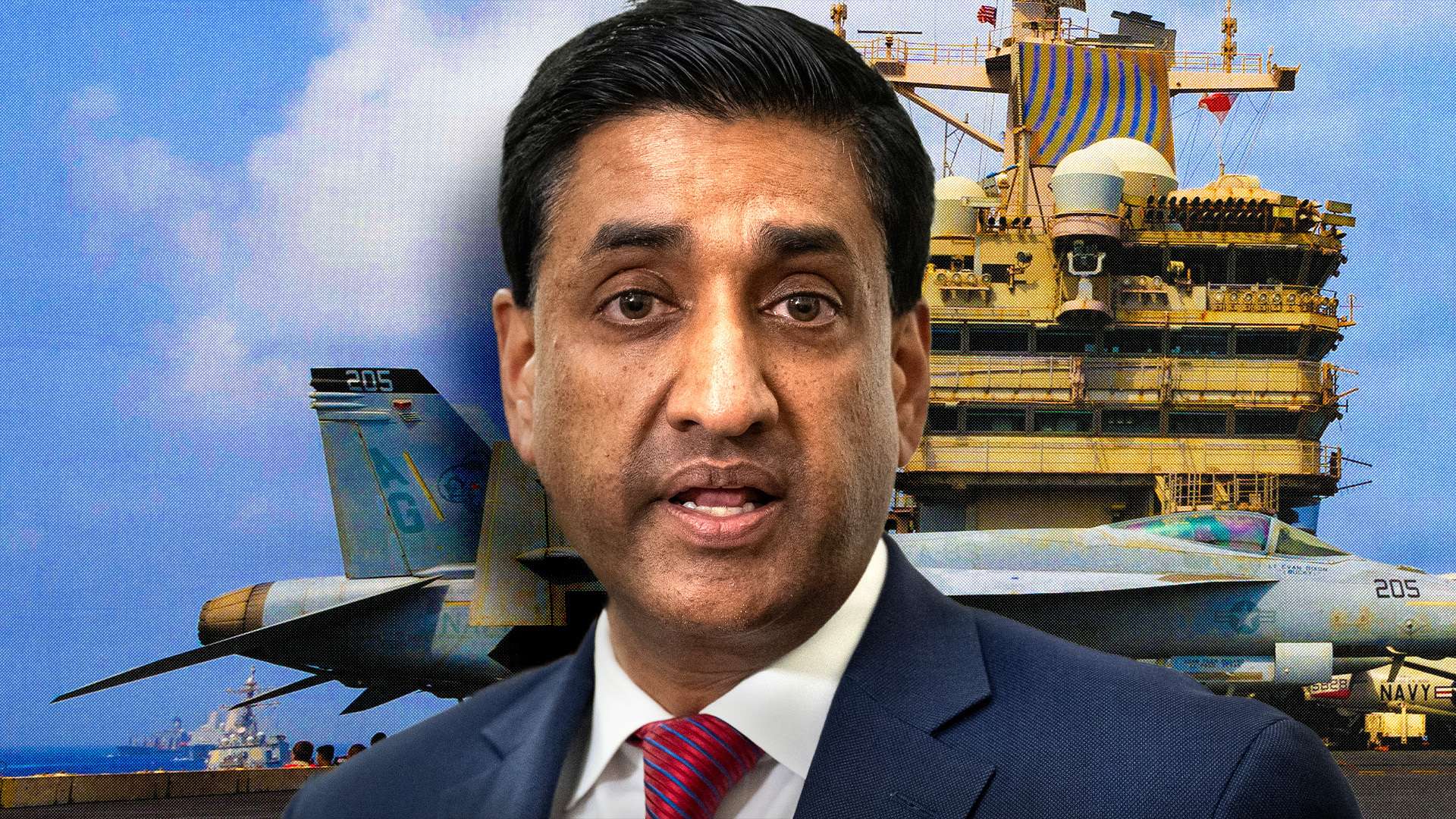
That's what we did to stop the Vietnam War," Rep. Ro Khanna (D–Calif.) told Fox News the week before the midterm.
asserted
Khanna → do → midterm
(After a 1973 ceasefire in Vietnam, lawmakers forbade the Nixon administration from using any military funds to reenter the war.)
asserted
lawmakers → forbid → war
On paper, Khanna's faction can win this fight.
asserted
faction → win → fight
Even some Republicans were shocked at the Trump administration's initial $200 billion funding request for the Iran war in March 2026.
asserted
Republicans → shock → March
The administration folded the cost of the war into the general military budget a few months later, and all but six Democrats voted against that bill in the House of Representatives.
asserted
Democrats → fold → Representatives
Democrats now have at least a seven-seat House majority, which is expected to grow, according to AP News as of early Wednesday morning.
uncertain
which → have → morning
But they don't have the two-thirds majority necessary to override a presidential veto—and past experience shows that can be fatal for any attempt to defund the war.
asserted
that → have → war
In 2007, the Bush administration asked the newly elected Congress for $93.4 billion to sustain U.S. forces in Iraq.
asserted
administration → ask → Iraq
Democrats initially passed a $123 billion bill that gave the military until September 2008 to withdraw from the country.
asserted
that → pass → country
Bush vetoed it, claiming that the "terrorists" would simply "mark their calendars and gather their strength."
asserted
terrorists → veto → strength
Faced with a dilemma between giving Bush a blank check or leaving the military without funding, Democrats backed down, passing a war budget without a deadline.
asserted
Democrats → face → deadline
U.S. troops would stay for the entirety of the Bush administration.
asserted
troops → stay → administration
The sporadic nature of the fighting with Iran does make the politics different from an ongoing ground war.
asserted
politics → make → war
Aside from U.S. naval escorts for oil tankers, which cost $2 billion to $3 billion per month, U.S. forces exclusively see action when there's a flare-up, which has only happened when Trump decided to escalate.
asserted
Trump → cost → action
"The only sure way to protect our troops is to end this war as soon as possible," Senate Democratic leader Chuck Schumer (D–N.Y.) contended.
asserted
Schumer → protect → war
On one hand, opponents of the Iran war can more easily deflect from accusations of unpatriotism and even present themselves as defending Americans' interests against foreigners.
asserted
opponents → deflect → foreigners
Democratic Senate candidate Abdul El-Sayed argued that both Iran and Israel "have proven dangerous in their own way" during the Michigan debate.
asserted
Iran → argue → debate
…and 29 more, not listed.
 The Aporia