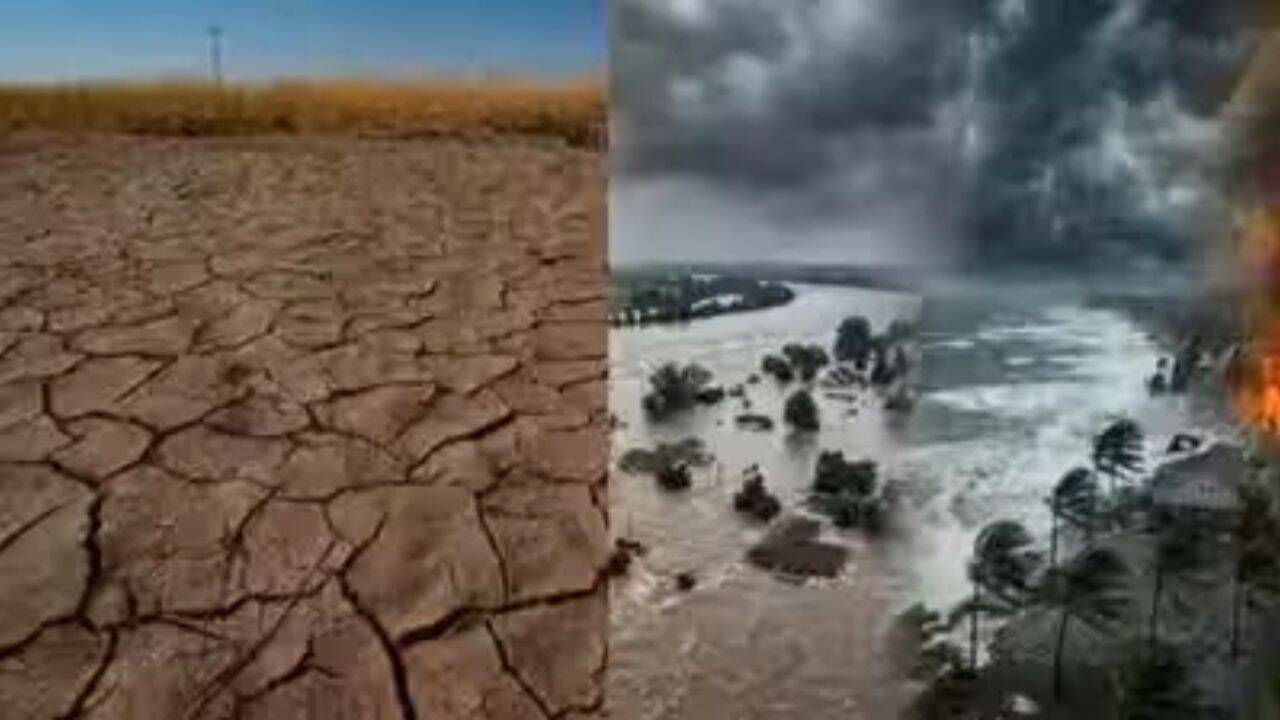
For people living along the coastlines of the Philippines, Taiwan, China and Japan, extreme weather is a familiar reality.
asserted
weather → live → Philippines
However, the past few months have brought an unusually severe spell of storms, with their intensity and unpredictable movements causing widespread devastation.
asserted
intensity → bring → devastation
A series of powerful weather systems, intensified by the El Niño phenomenon, has claimed dozens of lives, disrupted air travel, damaged infrastructure and destroyed crops across large parts of East Asia.
asserted
series → intensify → Asia
According to BBC, in October, Taiwan virtually came to a standstill as an enormous storm approached its north-eastern coastline.
uncertain
storm → accord → coastline
The typhoon, large enough to cover the island of 23 million people, generated winds of up to 295 kmph (193 mph), comparable to those of a Category 5 hurricane.
asserted
typhoon → cover → hurricane
Its strength was sufficient to destroy houses and generate powerful, potentially destructive waves.
asserted
strength → destroy → waves
However, the storm did not make landfall in Taiwan, passing close to the island while bringing heavy rainfall.
asserted
storm → make → rainfall
Despite avoiding a direct hit, it caused significant disruption across the region.
asserted
it → avoid → region
Hundreds of flights were cancelled in Hong Kong, Taiwan and Japan.
asserted
Hundreds → cancel → Kong
In the Philippines' Batanes archipelago, coastal highways were closed as enormous waves battered the shoreline, while around 15,000 households in Japan's southern Okinawa islands experienced power outages.
asserted
households → close → outages
A succession of powerful storms
El Niño is a naturally occurring climate phenomenon associated with unusually warm ocean waters in the eastern Pacific and changes in atmospheric circulation.
asserted
Niño → occur → circulation
These conditions can influence weather patterns worldwide, increasing the likelihood of extreme weather events.
asserted
conditions → influence → events
The phenomenon typically occurs every two to seven years and can last for approximately a year.
asserted
phenomenon → occur → year
The current episode, which the UK met office has described as potentially the strongest in living memory, is expected to continue until February or March.
asserted
office → meet → February
The region has already experienced several major storms in recent months.
asserted
region → experience → months
In June, Japan faced the simultaneous approach of Typhoon Mekkhala and Severe Tropical Storm Higos towards its eastern coastline, prompting evacuation orders for nearly one million people.
asserted
Japan → face → people
The following month, tropical storm Narra moved close to China's southern coastline near Guangxi, inundating villages and forcing tens of thousands of residents to leave their homes.
asserted
Narra → move → homes
In August, super typhoon dolphin travelled across the Pacific for 16 days before striking eastern China, triggering severe flooding and causing dozens of casualties.
asserted
dolphin → travel → casualties
Later that month, Typhoon Saudel made landfall in three cities in south-eastern China within a week, disrupting transport services and prompting thousands to evacuate.
asserted
Saudel → make → thousands
Pacific Ocean generating greater storm intensity
asserted
Ocean → generate → intensity
According to the accumulated cyclone energy (ACE) index, which measures the combined intensity of tropical cyclones during a season, the Pacific Ocean has accumulated substantial energy as a result of record-high temperatures linked to El Niño.
uncertain
Ocean → accord → Niño
The ACE reading for South-East and East Asia is projected to reach almost twice its 30-year average this year.
asserted
reading → project → average
Changes in wind patterns associated with El Niño are also influencing where typhoons develop.
asserted
typhoons → associate → Niño
Storms are increasingly forming further east than usual and have more time to gather strength while travelling over unusually warm ocean waters.
asserted
Storms → form → waters
Ana Liza Solis, head of climatology at the Philippines' national weather bureau, compared the pacific ocean to a person "burning with fever", warning at a Manila press briefing in September that it could soon experience severe disturbances.
The outlook remains concerning.
uncertain
outlook → compare → disturbances
In October, sea surface temperatures in the equatorial pacific, monitored by the Japan meteorological agency for its El Niño forecasts, reached 4 degrees Celsius above normal.
asserted
temperatures → monitor → Celsius
This was the highest level recorded since observations began in 1949.
asserted
observations → record → 1949
The previous record was 3.6 degrees celsius, registered in December 1997.
asserted
record → register → December
China's climate agency has also cautioned that ocean temperatures could continue increasing over the following three months because of El Niño.
uncertain
temperatures → caution → Niño
Although the typhoon season generally reaches its peak between September and October, the continued warming of ocean waters has raised concerns that the region could face further destructive storms after enduring repeated weather emergencies.
uncertain
region → reach → emergencies
Scientists warn of escalating climate risks
In August, typhoon chan-hom surprised weather observers in Japan by travelling across the country from east to west, rather than following the more common south-to-north route.
asserted
hom → warn → route
Japan's extensive disaster preparedness systems and well-equipped authorities enabled a swift evacuation response.
asserted
systems → equip → response
However, countries with fewer resources and weaker emergency infrastructure could struggle to respond effectively to similarly unpredictable storms.
uncertain
countries → struggle → storms
To assess how rising temperatures could worsen extreme weather, manila-based climatologist Rafaela Jane Delfino and her research team simulated the potential effects of warmer conditions on some of the Philippines' most destructive storms.
uncertain
Delfino → assess → storms
Their analysis included super typhoon Haiyan, also known as Yolanda, which struck in 2013 and killed more than 6,000 people.
asserted
which → include → people
The researchers arrived at what Delfino described as "very, very scary findings".
asserted
Delfino → arrive → findings
Their simulations indicated that higher temperatures could increase total accumulated rainfall by 26%.
uncertain
temperatures → indicate → %
Such an increase could have devastating consequences for the Philippines, where flooding caused by monsoon rains and approximately 20 tropical storms annually remains a major natural disaster threat.
uncertain
flooding → have → rains
In recent years, severe flooding has brought entire cities to a standstill for several days.
asserted
flooding → bring → days
Growing frustration over repeated flood-related disasters has also prompted Filipinos to protest against alleged corruption, which they claim has diverted millions of dollars allocated for flood-control infrastructure.
uncertain
they → grow → infrastructure
…and 12 more, not listed.
 The Aporia