In short:
The commanding officer for RAAF pilot Robert Crawford has given evidence at the trial for the murder of 49-year-old Frances Crawford.
asserted
officer → command → Crawford
The court heard claims that Ms Crawford wanted her husband to leave the Air Force and that his job was a source of tension in their marriage.
What's next?
The trial continues.
uncertain
trial → hear → marriage
A former RAAF pilot accused of killing his wife told his boss she “didn’t want him to be in the Air Force anymore” and changed his work duties for her before she died, a jury has heard.
asserted
jury → accuse → her
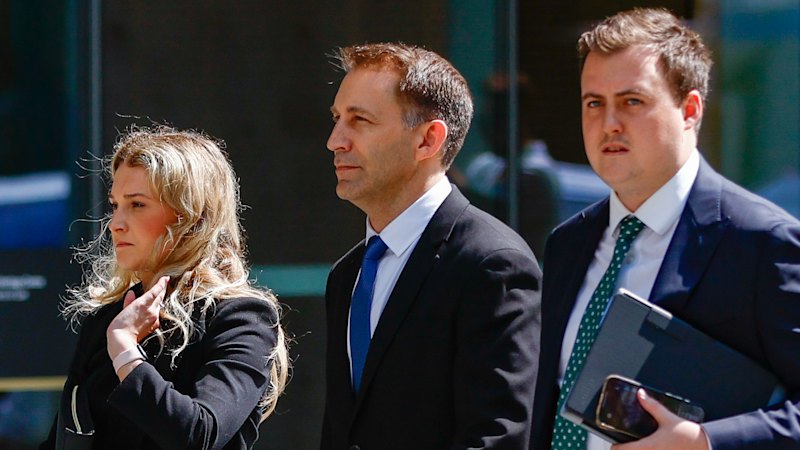
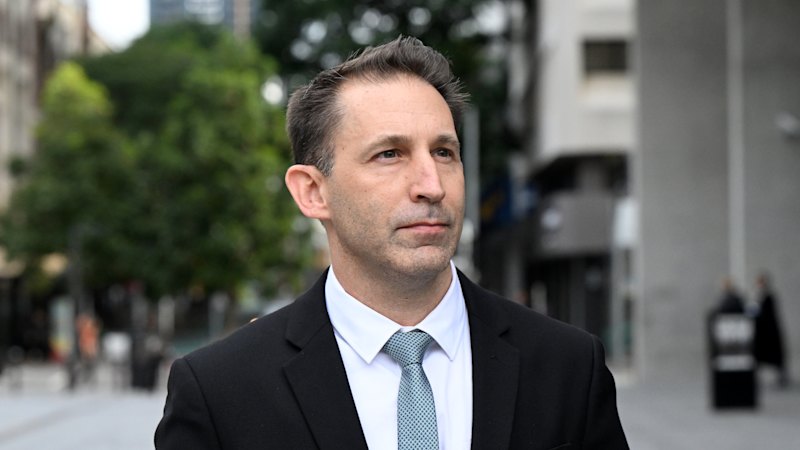
Robert Crawford is on trial in the Supreme Court in Brisbane, charged with the murder of 49-year-old Frances Crawford.
asserted
Crawford → charge → Crawford
The 49-year-old denies killing her and has pleaded not guilty.
In July 2024, Ms Crawford's body was found at the bottom of a retaining wall on their Upper Lockyer property beside an overturned ride-on lawn mower.
asserted
body → deny → mower
Prosecutors allege Mr Crawford caused her death, before manipulating the scene to look like an accident.
asserted
Crawford → allege → accident
On Thursday, Mr Crawford's commanding officer in his squadron, Mark Seery was called to give evidence.
asserted
officer → command → evidence
Mr Seery told the jury in 2023 and 2024 Mr Crawford discussed his marriage issues with him and often became upset.
asserted
Crawford → tell → him
"He said they were having difficulties," he said.
asserted
he → say → difficulties
The jury has previously heard during this period the couple went through a separation, due to Ms Crawford discovering Mr Crawford had been unfaithful.
asserted
Crawford → hear → separation
Mr Seery told the jury he was not aware of specific problems, but recalled Mr Crawford once telling him Ms Crawford began taking medication which was "creating disruption between them".
asserted
which → tell → them
He told the jury Mr Crawford also divulged his job was a source of tension in his relationship, and he claimed Ms Crawford no longer wanted him to travel.
asserted
him → tell → relationship
"She didn't want him to be in the Air Force anymore," he said.
asserted
he → want → Force
The jury was shown text messages between Mr Seery and Mr Crawford sent in February 2024.
asserted
jury → show → February
In the messages, Mr Crawford said "big joint counselling session went better than I thought it would" and he was planning to move back into the family home the following month.
asserted
he → say → home
He went on to say in another message, "still a long road ahead".
asserted
He → go → message
After the couple reconciled, Mr Seery told the jury, Mr Crawford expressed still having difficulties, which centred around him travelling for work.
asserted
him → reconcile → work
He told the jury Mr Crawford said his wife took issue with a trip he took to Townsville.
asserted
he → tell → Townsville
"We had discussed bringing him back sooner," he said.
asserted
he → discuss → him
After this trip, Mr Seery told the jury he allowed Mr Crawford to take regular days off on a weekly basis, to help ease the stress at home.
asserted
Crawford → tell → home
In more text messages shown to the jury, Mr Seery thanked Mr Crawford for going on a last-minute trip to Papua New Guinea in the weeks before Ms Crawford's death.
asserted
Seery → show → death
Mr Seery said: "I hope it hasn't stressed the home front too much."
asserted
it → say → front
Mr Crawford replied "it wasn't fun when I told her, but it was good for me to get away tbh".
He went on to say "I feel happy when I come to work".
Mr Seery told the jury he believed Mr Crawford was "eager to get home".
After this, he told the jury Mr Crawford arranged to do "local flights only" which meant "not flying overnight" anywhere.
asserted
which → reply → flights
The jury has already heard Mr Crawford told police he believed his wife was trying to move the lawnmower that night because sprinklers were due to come on.
asserted
sprinklers → hear → lawnmower
Earlier Detective Sergeant Troy Weston gave evidence about tests he did on the sprinkler systems.
asserted
he → give → systems
Sergeant Weston told the jury he found timers had been set for the afternoon and evening but conceded he did not run the sprinklers with water, to check if they operated correctly.
asserted
they → tell → water
He also admitted he did not know Mr Crawford advised there was another sprinkler system, which would go off randomly, and also did not research how the sprinkler system worked.
asserted
system → admit → ?
"I didn't read the instructions," he said.
asserted
he → read → instructions
The trial continues.
asserted
trial → continue → ?
 The Aporia