What to watch for as Carney introduces his 2nd federal budget
Canadians will get a look at the books as Ottawa promises measures to juice growth
asserted
Ottawa → watch → growth
Prime Minister Mark Carney will deliver his second federal budget on Thursday as the Liberal government reveals next steps in its plan to support the country through an affordability crunch and the trade war.
asserted
government → deliver → crunch
Carney has spent much of the first 20 months of his prime ministership retooling the Canadian economy with an eye toward growth.
asserted
Carney → spend → growth
Finance Minister François-Philippe Champagne is promising more details on what's to come next to further boost economic expansion.
asserted
what → promise → expansion
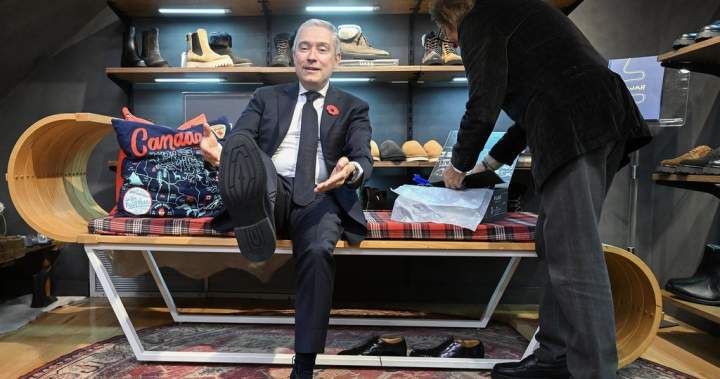
Speaking to reporters on Wednesday while helping make his own shoes — continuing the budget tradition of finance ministers getting a new pair before delivering an economic update — Champagne said this document will reveal how Canada will become "masters of our destiny."
"You need to invest in growth, you need to invest alongside businesses.
asserted
you → speak → businesses
You also need to invest in sovereignty," he said.
asserted
he → need → sovereignty
Champagne holds up a boot during a tour of the Pajar shoe factory in Montreal on the eve of the budget.
asserted
Champagne → hold → budget
Some indicators suggest those investments are paying off: the Bank of Canada and the International Monetary Fund are projecting roughly two per cent GDP growth next year.
asserted
Bank → suggest → growth
The OECD expects growth to be lower than that, but still higher than all other G7 countries except the U.S.
The unemployment rate, which has seen some relatively wild swings amid the trade uncertainty, is lower than it was a year ago.
Foreign direct investment into Canada is high and the government's recently announced "productivity mega-deduction," a big ticket item that lets companies write off investments in a tax-advantaged way, is designed to spur things along even more.
asserted
companies → expect → things
Canadians will also get a chance to take some ownership in the projected growth: the budget may include details on how individual investors could eventually buy into the Canada Growth Fund, a new Crown-controlled sovereign wealth fund that will take ownership stakes in some major projects and businesses.
uncertain
that → get → projects
Still, Champagne suggested more work is needed on the issue many voters tell pollsters they care about most: the rising cost of living, which worsened late last month when the Bank of Canada raised interest rates to tame inflation.
uncertain
Bank → suggest → inflation
"Mark Carney remains one of the most popular prime ministers we've ever had.
asserted
we → remain → ministers
And all of that is happening in the context of people still saying that affordability is the top issue," Abacus Data pollster David Coletto said in an interview.
asserted
Coletto → happen → interview
"But it doesn't mean that that immunity lasts forever.
asserted
immunity → mean → ?
People still need to feel that this government cares about those day-to-day issues."
asserted
government → need → issues
The most recent Statistics Canada jobs data also shows that while average hourly wages rose about 2.3 per cent year-over-year as of September, that fell short of the three per cent climb in consumer prices reported over the same period.
asserted
that → show → period
Canadian food bank usage hit record highs this year as some people struggle to buy the groceries they need.
asserted
they → hit → groceries
Food bank usage continues to grow in Canada.
asserted
usage → continue → Canada
The government has kept a lid on immigration since coming into office, dramatically dialling back the number of temporary migrants to tamp down housing prices.
asserted
government → keep → prices
That may have worked to some extent: national average home sale prices are 22 per cent lower than they were at the March 2022 peak while rent has dropped about nine per cent from its all-time high in May 2024, according to the latest industry figures.
The budget will reveal immigration targets for the coming two years.
The Conservatives have hammered the government for rising prices, demanding Carney do more to help consumers shoulder energy price increases largely driven by the U.S. and Israel-Iran war.
uncertain
consumers → work → war
They also want Ottawa to cut immigration levels further, framing it as part of the affordability agenda.
asserted
Ottawa → want → agenda
"Save you money — that's our mission as Conservatives, and it's our demand for the budget," Conservative Leader Pierre Poilievre told reporters on Wednesday, reiterating his call for further tax relief on energy products.
"After a year and a half of Mark Carney, everything's worse."
asserted
everything → save → Carney
NDP Leader Avi Lewis, meanwhile, wants Ottawa to create a wealth tax, build 50 government-run grocery stores and make "a nation-building investment in health care."
asserted
Ottawa → want → care
The government is sensitive to the charge that it hasn't done enough to address affordability concerns, routinely pointing to last year's income tax cut, the move to scrap the consumer carbon tax and temporarily lifting federal levies on gas as ways it has helped.
asserted
it → do → ways
But after U.S. voters handed Trump's Republican Party a shellacking in this week's midterms, partly due to higher prices, politicians in this country are clearly attuned to demands that more needs to be done to avoid a voter backlash.
asserted
more → hand → backlash
"We need to take care of Canadians, make life more affordable," Champagne said.
asserted
Champagne → need → Canadians
"We've already taken a number of measures to support Canadians, but at the same time we understand we need to support them now."
asserted
we → take → them
While Ottawa rolls out new initiatives it's also mindful of the deficit, which could be smaller than expected thanks to higher oil prices that have been a huge boon to government coffers.
uncertain
that → roll → coffers
Even if smaller than planned, the figure is still expected to be higher than the historical norm before the 2020s — and the parliamentary budget officer expects those figures to remain elevated for years.
asserted
figures → plan → years
The spring economic update pegged the deficit at $75 billion for the 2026-27 fiscal year.
asserted
update → peg → year
This number will almost certainly change after accounting for energy-related revenue spikes and increased spending on initiatives like propping up tariff-hit industries like autos and steel.
asserted
number → change → autos
The PBO projects the deficit will be about $63 billion this year before rising to $70 billion in the next, further adding to the federal debt, which is increasingly costly as interest rates rise.
asserted
rates → project → debt
Carney has rejigged how the government reports its spending, dividing federal outlays into two buckets: day-to-day operational spending and capital infrastructure.
asserted
government → rejigge → day
The government is expected to lay out its plan to balance the operational budget by 2027-28.
asserted
government → expect → 2027
Canadians will also learn more details in this budget about the government's plan to privatize some of Canada's major airport operations.
asserted
Canadians → learn → operations
Those sales would result in a cash windfall, which could then be used to spend more on other planned capital-intensive infrastructure projects or pay down debt.
uncertain
which → result → debt
Whatever comes about, Poilievre isn't buying it: "Mark Carney is out of touch.
asserted
Carney → come → touch
Canadians will likely get a better sense in the budget of how much the Carney government's defence buildup is costing, where the money is going and where it will be coming from.
asserted
it → get → where
Tens of billions of dollars have been poured into national defence over the last year and a half to meet the old NATO benchmark of two per cent of the gross domestic product.
asserted
billions → pour → product
The Western military alliance is now asking members to increase spending further to five per cent of GDP (3.5 per cent direct military expenditures and 1.5 per cent on defence infrastructure) by 2035.
asserted
alliance → ask → 2035
…and 6 more, not listed.
 The Aporia