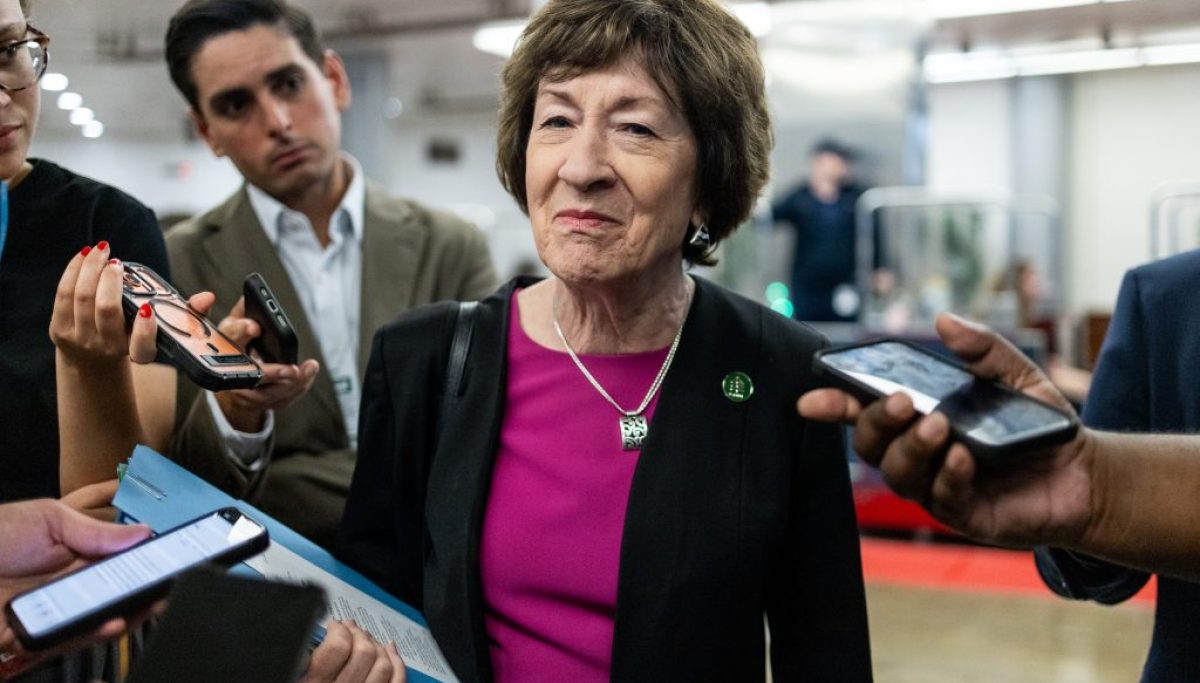
A Democratic wave swept the United States Congress as Americans turned out in near-record numbers to strip President Donald Trump’s Republicans of their majorities in both the House of Representatives and the Senate.
asserted
Americans → sweep → Representatives
About 122.7 million ballots have already been counted in the November 3 midterm elections, according to preliminary estimates from the University of Florida’s Election Lab.
uncertain
ballots → count → Lab
About 48.8 percent of the eligible population voted, the second-highest midterm turnout in more than a century, just below 2018.
asserted
percent → vote → 2018
In this visual explainer, Al Jazeera maps the seats Democrats flipped, charts turnout across the country, and looks at the history made on election night.
What are the latest results?
asserted
results → map → night
Votes are still being counted, but as of 09:00 GMT on Thursday, November 5, Democrats have won at least 240 seats in the House and 54 in the Senate, enough to control both chambers.
asserted
Democrats → count → chambers
Republicans have won 147 House seats and 44 in the Senate.
asserted
Republicans → win → Senate
Forty-eight House races and two Senate races, in Alaska and Mississippi, have yet to be called.
asserted
races → have → Alaska
Democrats could end up with more than 260 seats in the House and 56 in the Senate.
uncertain
Democrats → end → Senate
The widget below shows the latest results as they come in.
asserted
they → show → results
Who voted?
asserted
Who → vote → ?
Of about 210 million registered voters, 54.5 million had already cast their ballots early by 10am US East Coast time (15:00 GMT) on Sunday, November 1, according to the University of Florida’s Election Lab.
uncertain
million → register → Lab
About 30 million voted in person and 24 million by mail.
asserted
million → vote → mail
By the time polls closed on Tuesday, the total had more than doubled.
asserted
total → close → Tuesday
The Election Lab estimates that 122.7 million ballots have been tallied, with 48.76 percent of eligible voters casting a ballot.
asserted
percent → estimate → ballot
Turnout varied widely by state.
asserted
Turnout → vary → state
Maine recorded the highest, with 65.78 percent of eligible voters casting a ballot, followed by Minnesota (65.16 percent) and Michigan (63.65 percent).
asserted
percent → record → Minnesota
West Virginia had the lowest, at 33.33 percent, followed by Oklahoma (37.08 percent) and Hawaii (37.68 percent).
asserted
Virginia → have → Oklahoma
The map below shows voter turnout by state.
asserted
map → show → state
How Democrats regained the Senate
asserted
Democrats → regain → Senate
Democrats needed a net gain of four Senate seats to reach 51, the number needed for a majority, because Vice President JD Vance can break a 50-50 tie in Republicans’ favour.
asserted
Vance → need → favour
They went well beyond that, flipping seven Republican-held seats and securing at least 54 seats in the incoming Senate.
asserted
They → go → Senate
James Talarico won in Texas, Roy Cooper in North Carolina, Annie Andrews in South Carolina, Sherrod Brown in Ohio, Josh Turek in Iowa, and Adam Hamilton in Kansas.
asserted
Talarico → win → Kansas
In Maine, Democrats unseated Susan Collins.
asserted
Democrats → unseat → Collins
Democrats also held onto all their existing seats, even when they had a new candidate, like Abdul El-Sayed in Michigan.
asserted
they → hold → Michigan
How Democrats regained the House
In the 435-member House, the target was 218 seats for a majority.
asserted
target → regain → majority
Democrats crossed that threshold with ease, flipping at least 31 Republican-held districts across the country, including in areas reshaped by new congressional maps.
asserted
Democrats → cross → maps
The gains came both in closely contested districts and in places where Democratic victories were less expected.
asserted
victories → come → places
In New York’s 17th congressional district, Cait Conley defeated Mike Lawler, and in New Jersey’s 7th, Rebecca Bennett unseated Thomas Kean Jr.
asserted
Bennett → defeat → Jr.
In Virginia’s 2nd, Elaine Luria defeated Jen Kiggans, while in Wisconsin’s 3rd, Rebecca Cooke defeated Derrick Van Orden.
asserted
Cooke → defeat → Orden
In Michigan’s 4th, Democrat Sean McCann defeated Bill Huizenga, an eight-term incumbent.
asserted
McCann → defeat → Huizenga
In Texas, Democrat James Talarico defeated Republican Ken Paxton, giving the state its first Democratic senator since 1993.
asserted
Talarico → defeat → 1993
Gina Hinojosa also unseated Republican Governor Greg Abbott, becoming the state’s first Latina governor, and its first Democratic governor since 1994.
asserted
Hinojosa → unseat → 1994
The breakthroughs reached well beyond Texas.
asserted
breakthroughs → reach → Texas
Kansas elected its first Democratic senator since 1932, and South Carolina will have its first since 2005.
asserted
Carolina → elect → 2005
Democrats also flipped seats in Iowa, Maine, North Carolina and Ohio.
asserted
Democrats → flip → Iowa
Together, the wins broke through Republican strongholds across the South and Midwest, stripping Trump’s party of its Senate majority with two years of his term remaining.
asserted
years → break → term
Several other candidates also made history:
asserted
candidates → make → history
- Michigan: Abdul El-Sayed became the first Muslim elected to the US Senate.
asserted
Sayed → become → Senate
- New Hampshire: Chris Pappas became the first openly gay man elected to the Senate.
asserted
Pappas → become → Senate
- Georgia: Keisha Lance Bottoms, the great-great-granddaughter of a slave, became the first Black woman elected governor of a US state.
asserted
Bottoms → become → state
…and 7 more, not listed.
 The Aporia