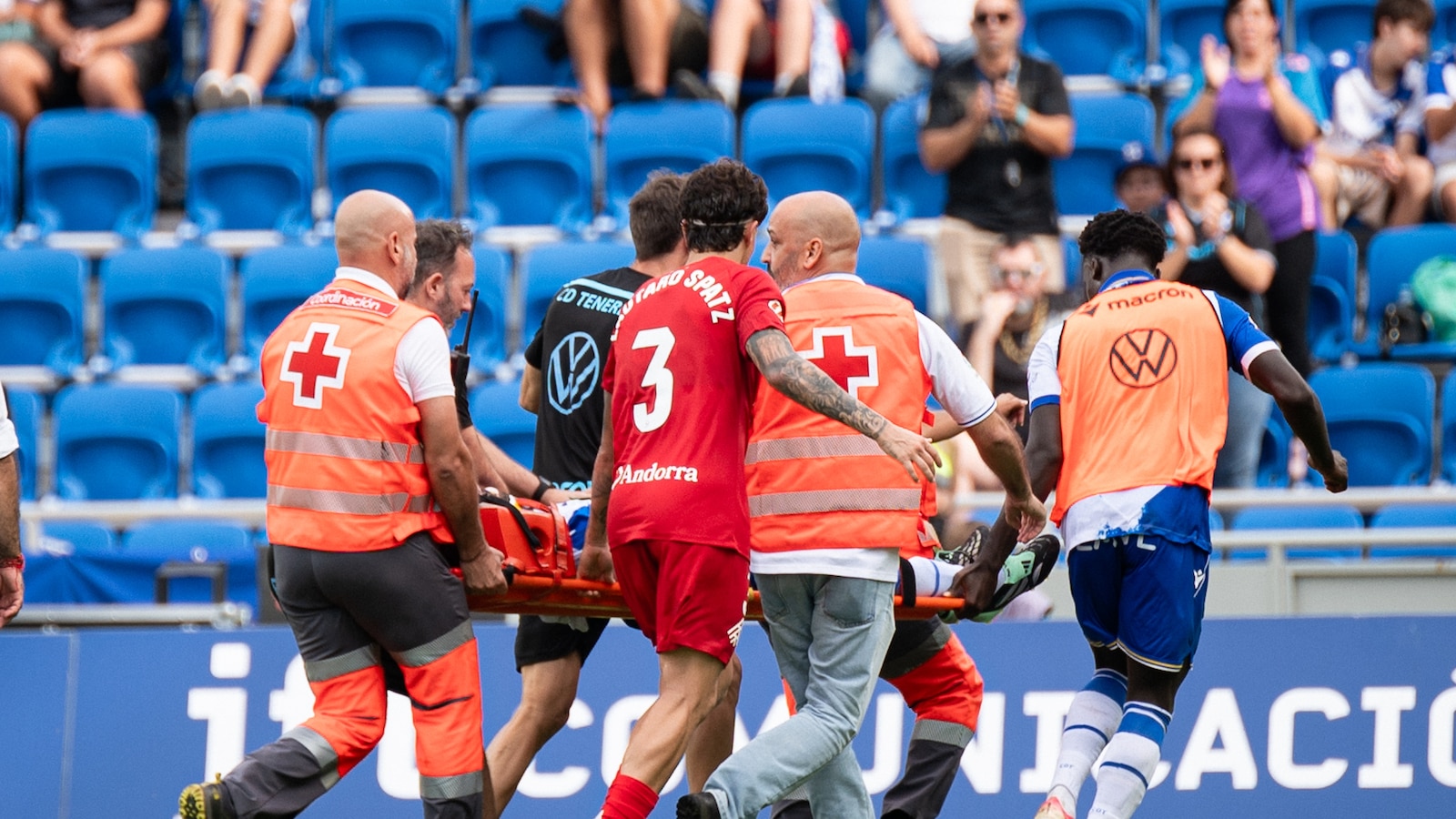
A recent incident during a Spanish Segunda División match between CD Tenerife and FC Andorra resulted in the tragic death of Tenerife player Jesús de Miguel.
asserted
incident → result → Miguel
Although no official statement has confirmed the cause of his death, some reports suggest it could have been commotio cordis.
uncertain
it → confirm → death
This is a rare but well-known medical condition that can cause sudden cardiac arrest after a blow to the chest.
asserted
that → know → chest
Commotio cordis means “agitation of the heart”.
asserted
cordis → mean → heart
It was first described by doctors in the 1850s.
asserted
It → describe → 1850s
In 1932, researchers in Germany identified three factors that help explain how it happens: the type of impact, its speed and where it strikes the chest.
asserted
it → identify → chest
The heart sits inside the chest, protected by the ribs and the sternum, the flat bone at the front of the chest.
asserted
heart → sit → chest
Its lower tip points towards the left side of the body.
asserted
tip → point → body
Unlike other muscles, the heart contains specialised muscle cells that generate their own electrical signals, allowing it to beat without conscious effort.
asserted
it → contain → effort
It contracts thousands of times a day to keep blood circulating around the body, adjusting its activity to meet changing demands.
asserted
It → contract → demands
Heart muscle also does not tire in the same way as the muscles we use to walk, run or lift things.
asserted
we → tire → things
It can keep working throughout our lives because it relaxes between beats, giving itself time to recover.
asserted
it → keep → time
This relaxation depends on a carefully timed electrical process.
asserted
relaxation → depend → process
During part of each heartbeat, the heart’s cells reset their electrical charge so they are ready to contract again.
asserted
they → reset → charge
This stage is known as the T-wave and can be seen on an electrocardiogram (ECG), which records the heart’s electrical activity.
asserted
which → know → activity
During this brief period, the cells are normally less likely to respond to another electrical signal.
asserted
cells → respond → signal
But a powerful blow to the chest can send energy through the body’s tissues and disturb the electrical activity of the heart.
asserted
blow → send → heart
For commotio cordis to occur, the impact must happen at a very specific moment in the heartbeat.
asserted
impact → occur → heartbeat
The vulnerable part of the T-wave lasts for roughly 30 milliseconds – just three hundredths of a second.
asserted
part → last → second
A blow during this tiny window can interfere with the heart’s normal electrical rhythm.
asserted
blow → interfere → rhythm
Instead of contracting in a coordinated way to pump blood around the body, the heart’s lower chambers, called the ventricles, begin to quiver chaotically.
asserted
chambers → contract → body
Blood can no longer circulate effectively to vital organs, including the brain.
asserted
Blood → circulate → brain
This causes cardiac arrest, in which the heart stops pumping blood properly and the person loses consciousness.
asserted
person → cause → consciousness
Heart appears normal
One unusual feature of commotio cordis is that the heart and surrounding tissues can appear completely normal afterwards.
asserted
heart → appear → cordis
This distinguishes it from cardiac arrest caused by injuries that physically damage the heart or chest.
asserted
that → distinguish → heart
The condition is rare but life-threatening.
asserted
condition → threaten → ?
It is most commonly reported in children and teenagers aged four to 18.
asserted
It → report → children
Most recorded cases involve males, who account for 94% of sporting cases and 93% of non-sporting cases.
asserted
who → record → cases
Younger people may be more vulnerable because their chest bones and muscles are still developing.
uncertain
bones → develop → ?
Their chest may offer less protection against the force of an impact reaching the heart.
uncertain
chest → offer → heart
Women account for a larger proportion of non-sporting cases, at around 13%.
asserted
Women → account → %
Football has seen deaths linked to commotio cordis before.
asserted
Football → see → cordis
A study examining sudden deaths in football worldwide between 2014 and 2018 recorded 617 player deaths.
asserted
study → examine → deaths
Among players aged 35 and younger who died suddenly while playing, 9% had, or were thought likely to have had, commotio cordis.
asserted
% → age → players
In 11 cases, the impact came from a football hitting the chest.
asserted
football → come → chest
In three, it came from an opponent’s fist or elbow.
asserted
it → come → fist
The condition has been reported more frequently in other contact sports.
asserted
condition → report → sports
Baseball is often cited as the sport with the highest number of cases.
asserted
Baseball → cite → cases
Ice hockey, American football and lacrosse have also recorded more deaths than football.
asserted
hockey → record → football
One of the best-known recent cases involved NFL player Damar Hamlin, who suffered commotio cordis during a televised match.
asserted
who → know → match
…and 11 more, not listed.
 The Aporia