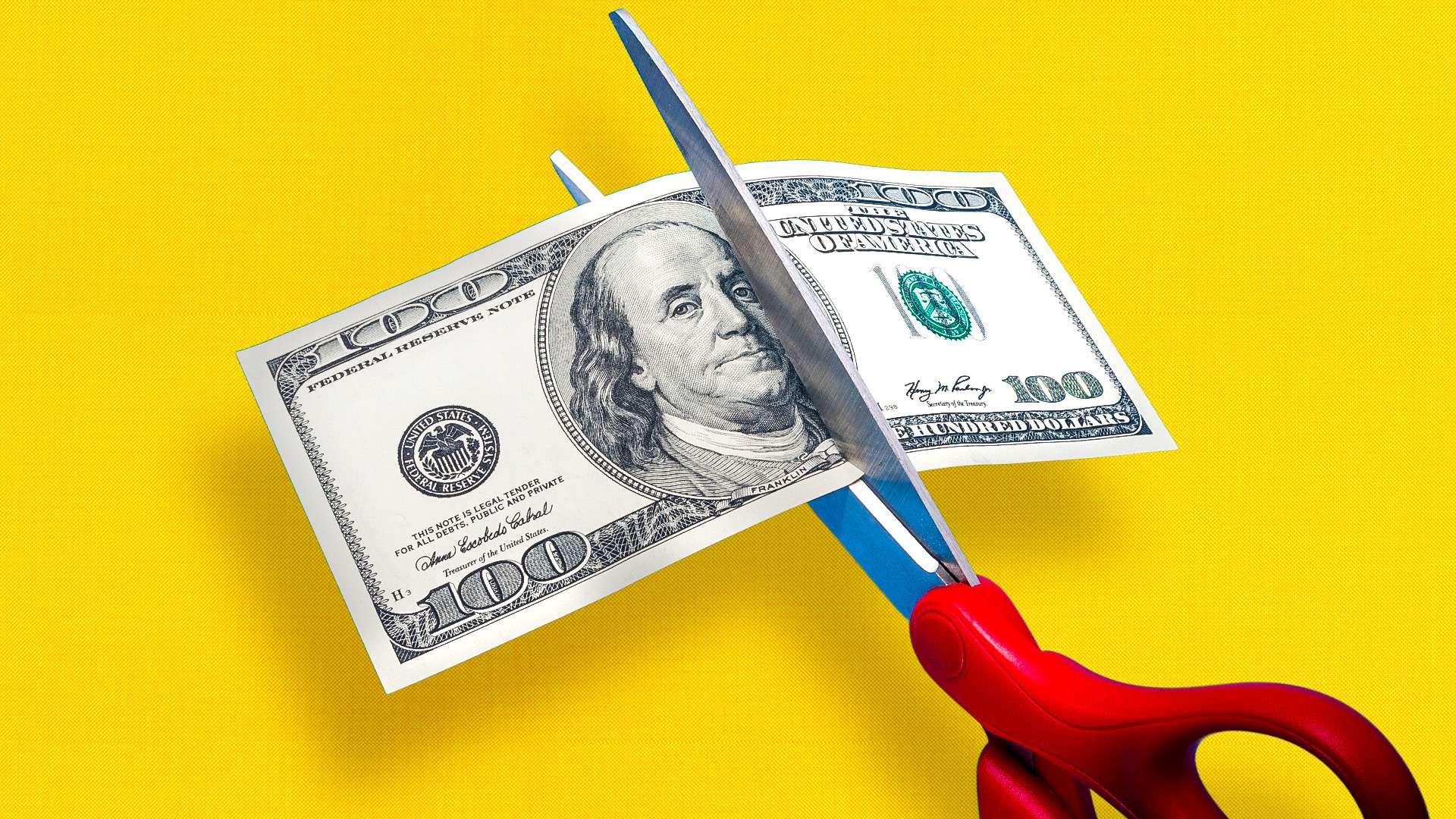
Photo via Reason

Tax Cuts Won and Lost in the Midterms

Read the original at Reason ↗
Cite

Ibrahim, R. (2026, November 5). Tax Cuts Won and Lost in the Midterms. Reason. https://reason.com/2026/11/05/tax-cuts-won-and-lost-in-the-midterms/

Dated from the outlet's own feed. Check the original for its byline.

Reason · collected 2026-11-05 · by Reem Ibrahim

Quick Summary

In the recent midterm elections, despite Republican losses overall, several states approved measures supporting lower taxes. North Carolina voters passed an amendment capping personal and corporate income taxes at 3.5%, making future tax hikes highly unlikely. Similarly, Iowa voters endorsed a constitutional requirement for a two-thirds legislative majority to raise income taxes, solidifying the state’s flat tax rate of 3.8%. In Florida, Amendment 3 increased the property tax exemption on primary residences to $250,000 and reduced the annual increase in assessed values for non-primary residences from 10% to 5%, though this raises questions about local government revenue impacts.
Written by AI on 2026-11-05, from this article's own text only (the story summary below draws on all the coverage).

AI analysis

Story summary

In the recent midterm elections, voters in North Carolina approved changes to the state constitution that would cap personal and corporate income taxes at 3.5 percent, with 61.2 percent of the vote. This measure makes it nearly impossible for the Legislature to raise future tax rates above this level. Meanwhile, North Carolina's 2027 personal income tax rate is expected to drop to 3.49 percent, and its corporate income tax rate stands at just 2 percent, set to be eliminated by 2030 under a previous law. Despite Republican candidates receiving significant defeats in the midterms, voters did not reject their favored low-tax policies entirely.

Written for “Tax Cuts Midterm Results” on 2026-11-06, grounded in this article and the 0 other(s) covering the same event.
Why this leaning score
The article's own words the score was based on. Each is quoted verbatim and was checked against the article text before being stored, so you can find it in the original.
Reading Leans strongly right (beta estimate) Confidence high 3 quote(s) discarded as not found in the article
Leaning: leans strongly right for article 132434 (high confidence, 2 verified quotes) · logged 2026-11-05

Story

📰 Tax Cuts Midterm Results
Politics · 1 article(s) covering the same event.

Compared with similar articles

This article reads leans strongly right and hedges 0% of its claims. Each row says how that neighbour differs.
Global News
⚖️ Leans strongly left further left than this Hedges 3 of 50 claims Outlet record 63/100
“The articles discuss different aspects of the midterm elections; one focuses on voter sentiment and Trump's impact, while the other covers specific tax policy outcomes in states.”
ABC News (AU)
Hedges 7 of 60 claims Outlet record 67/100
“The articles discuss different aspects of the midterm election results; Article A focuses on Republicans' blame game post-election, while Article B covers specific tax policy outcomes in certain states.”
Fox News
⚖️ Leans strongly left further left than this Hedges 0 of 20 claims Outlet record 68/100
“The articles cover different aspects of the midterms and do not describe the exact same incident or outcome.”
Fox News
⚖️ Leans right further left than this Hedges 6 of 45 claims Outlet record 68/100
“The articles discuss different aspects of the midterm elections; Article A focuses on the overall outcome and loss for Trump, while Article B discusses specific state ballot initiatives related to taxes.”
Washington Examiner
⚖️ Leans left further left than this Hedges 1 of 37 claims Outlet record 69/100
“While both articles discuss the results of the 2026 midterm elections, they focus on different aspects: Article A covers the overall political control shift and President Trump's reaction, while Article B focuses specifically on tax-related outcomes in various states.”
Fox News
⚖️ Leans left further left than this Hedges 2 of 55 claims Outlet record 68/100
“The articles cover different aspects of the midterm elections; one focuses on surprising results and seat flips, while the other highlights tax-related ballot measures.”
Al Jazeera
⚖️ Leans left further left than this Hedges 5 of 49 claims Outlet record 60/100
“The articles discuss different aspects of the midterm elections; Article A focuses on the overall control shift in Congress, while Article B covers specific ballot initiatives regarding tax policies.”
CBS News
⚖️ Leans left further left than this Hedges 4 of 22 claims Outlet record 69/100
“The articles discuss different aspects of the midterm elections; one focuses on overall Democratic gains due to economic issues, while the other covers specific state-level tax initiatives.”
Al Jazeera
⚖️ Leans strongly left further left than this Hedges 0 of 27 claims Outlet record 60/100
“The articles cover different aspects of the same election day but do not describe the same specific incident or outcome.”
Mother Jones
⚖️ Leans left further left than this Hedges 2 of 8 claims Outlet record 60/100
“The articles cover different aspects of the midterm elections; one focuses on overall Democratic victories and Republican defeats, while the other discusses specific tax policy outcomes in some states.”
How this article was measured signals, leaning charts, publisher record, byline, topics and claims

Signals How these are calculated →

Claims extracted
44
sentences that state something as happening or true
Uncertain
0%
0 of 44 hedged ("reportedly", "may", "according to")
Leaning
Leans strongly right
of the writing, not the subject · beta estimate
Publisher signals
67/100
Reason's corrections and hedging, across everything collected from it. Not a measure of accuracy.
Outlets on this story
1
Politics
Same framing elsewhere
1
articles that frame the event the way this one does
Analyzed 2026-11-05 · how these are computed

How this is being covered How these are calculated →

Article leaning vs. publisher reliability
Source leaning vs. consistency

Publisher

Reason · 1162 article(s) · 4 correction(s) detected
Running correction rate · 4 correction(s)

Who wrote this

Reem Ibrahim
16 article(s) here · 1 carrying a prediction
🔮 Voters in North Carolina approved changes to the state constitution that would cap personal and corporate income taxes at 3.5 percent.
2026-11-05 · assertive framing · Tax Cuts Won and Lost in the Midterms
🔮 In European cities, I would often spend evenings hopping between bars on organized bar crawls, but this Halloween I wasn't able to because of Washington, D.C.'s prohibition on pub crawls.
🔮 Under the new plans, many departments could see staffing reductions of anywhere from 20 to 60 percent, according to the letter.
🔮 Singer says that removing barriers that prevent new companies from competing with established providers could not only increase choice but also drive down prices.
🔮 Starting next week, Pennsylvania will begin enforcing a law prohibiting the sale of e-cigarettes that have not been explicitly approved by the state.
🔮 There's no way to guarantee a risk-free environment, that there will not be major hacks, scams, or negative consequences of AI, Altman says.
🔮 On Wednesday, Sen. Rand Paul (R–Ky.) blocked efforts to pass the Senate's Kids Online Safety Act (KOSA)—a bill that would legally require platforms to "exercise reasonable care" in creating any "design feature" that could foreseeably harm minors—through unanimous consent (a fast-track procedure that would only pass if no senator objects).
🔮 And the fact that they also maybe seemed to be interacting in some way also seemed weird and not like typical bot behavior." After assuming they were bots, Blanchard deleted the comments, but then noticed new ones pop up.
🔮 Rep. William Jefferson (D–La.) was famously caught with $90,000 in cash stuffed in his freezer in 2005.
🔮 On Sunday, he said that the arch would, in fact, be a "Military Complex" with "large numbers of drones, plus Snipers.
Also by Reem Ibrahim
Nothing else under this byline is closely related to this article, so these are simply their most recent.
All 16 articles by Reem Ibrahim →

Topics

Amendment 1 Iowa Legislature North Carolina Republicans

Subjects

Iowa GPE · 4× Legislature ORG · 3× North Carolina GPE · 3× California GPE · 2× Florida GPE · 2× Republicans NORP · 2× Washington GPE · 2× GOP ORG · 1× North Carolina's GPE · 1× the Tar Heel State GPE · 1×

Narrative

The state had already enacted substantial cuts to property taxes—in 2025 Wyoming introduced a 25 percent exemption on the first $1 million of a primary residence's market value—so perhaps voters did not see the need for another cut. Although voters rejected Republican politicians at elections, it isn't clear that they embraced Democratic policies either.
framing: assertive · carried by 1 article(s) · first seen 2026-11-05
🔮 Voters in North Carolina approved changes to the state constitution that would cap personal and corporate income taxes at 3.5 percent.
2026-11-05 · Reason
Tax Cuts Won and Lost in the Midterms · assertive framing

Claims (44 extracted, 0 hedged)

Republicans received a thumping defeat in the midterm elections. asserted
Republicans → receive → elections
As voters overwhelmingly rejected GOP candidates, they didn't outright repudiate tax policies that have historically been championed by Republicans. asserted
that → reject → Republicans
While some states passed ballot initiatives to raise taxes, there were several wins for fans of low taxes. asserted
states → pass → taxes
Voters in North Carolina approved changes to the state constitution that would cap personal and corporate income taxes at 3.5 percent. asserted
that → approve → percent
The measure, which passed with 61.2 percent of the vote, does not change North Carolina's taxes for now, but it does make it nearly impossible for the Legislature to raise taxes in the future. asserted
Legislature → pass → future
The state's 2027 personal income tax rate is now expected to drop to 3.49 percent, below the new cap. asserted
rate → expect → cap
Meanwhile, its corporate income tax rate stands at just 2 percent, following the passage of a 2021 law that will eliminate the tax by 2030. asserted
that → stand → 2030
Voters in the Tar Heel State also approved a constitutional amendment requiring the state Legislature to impose limits on how much local governments can increase their property tax collections. asserted
governments → approve → collections
However, unlike the income tax amendment, this measure does not specify what the tax limits should be. asserted
limits → specify → amendment
Instead, it allows lawmakers to determine how restrictive those limits should be and whether any exemptions should apply. asserted
exemptions → allow → ?
With property taxes accounting for more than one-third of local government funding in North Carolina, those limitations are unlikely to be drastic. asserted
limitations → account → Carolina
Still, these votes signal statewide support for lessening the tax burden. asserted
votes → signal → burden
Iowa Iowa voters approved a constitutional amendment requiring a two-thirds majority in both chambers of the state Legislature to increase corporate or individual income taxes. asserted
voters → approve → taxes
Amendment 1 was passed with 56.2 percent of the vote and follows years of income tax reductions in the state. asserted
Amendment → pass → state
In 2025, Iowa introduced a flat personal income tax rate of 3.8 percent. asserted
Iowa → introduce → percent
Free market think tanks praised the reform, with the Buckeye Institute arguing that "Iowa's economy is becoming more competitive because of the flat tax." asserted
economy → praise → tax
Although Amendment 1 does not reduce taxes, it makes it harder for future legislatures to reverse its recent low-tax reforms. 3. asserted
legislatures → reduce → reforms
Florida was among a few states to pass property tax reforms, but the Sunshine State's were the most significant. asserted
State → pass → reforms
Amendment 3 passed with 62 percent of the vote, increasing the property tax exemption on primary residences to $250,000 and halving the maximum annual increase in assessed values for non-primary residences from 10 percent to 5 percent. asserted
Amendment → pass → percent
While this does signal popular support for low taxes, rolling back property taxes "can be a tricky issue for libertarians to parse," notes Reason's Christian Britschgi. asserted
Britschgi → signal → taxes
Property taxes are generally considered the least damaging tax to economic behavior. asserted
taxes → consider → behavior
So the "wisdom of a property tax cut," Britschgi writes, "comes down to how local governments respond to the lost revenue and the design of the tax cut itself. asserted
governments → write → cut
"If they respond by hiking sales taxes or demanding more state financial aid, the result would be the same-sized government, more inefficient taxes, and greater fiscal centralization. asserted
result → respond → aid
4. California California voters considered Proposition 42, a constitutional amendment that would prohibit new state taxes on personal property—including stocks, business interests, and retirement savings—as well as certain retroactive taxes. asserted
that → consider → stocks
It was introduced to nullify Proposition 40, which would introduce a one-time 5 percent tax on billionaires' wealth. asserted
which → introduce → wealth
(At press time, Proposition 40 is still too close to call.) asserted
Proposition → call → time
But Proposition 42's implications are far more widespread than billionaire wealth: The measure will protect anyone with money in a savings, retirement, or investment account. asserted
measure → protect → account
Washington voters rejected Initiative 645, a proposal to repeal the state's newly introduced 9.9 percent income tax on annual earnings above $1 million. asserted
voters → reject → million
It would also have prohibited state and local governments from introducing personal income taxes in the future. asserted
It → prohibit → future
The measure was rejected by 58.12 percent of voters, meaning the millionaire tax will take effect in 2028. asserted
tax → reject → 2028
Opponents of the millionaire tax made a compelling case against it, arguing that it will likely be extended to non-millionaires, too. asserted
it → make → millionaires
"Not one single person we talked to believes Olympia when they say [the income tax] is not coming for them," said Brian Heywood, the founder of Let's Go Washington, the organization behind Initiative 645, at a rally in July. asserted
Heywood → talk → July
"They know it's coming for them." asserted
it → know → them
However, fear of public spending cuts eventually outweighed fear of taxes for the Washington electorate. asserted
fear → outweigh → electorate
Activists argued that repealing the tax would "cut funding for K-12 schools, higher education and healthcare." asserted
repealing → argue → schools
Oklahoma voters rejected State Question 847, a constitutional amendment that would have tightened existing limits on annual increases in property valuations used to calculate property taxes. asserted
that → reject → taxes
The proposal, which was defeated by 54.3 percent of voters, would have reduced the maximum annual increase in taxable property values from 3 percent to 1.75 percent for primary residences and agricultural land, and from 5 percent to 4 percent for other properties. asserted
which → defeat → properties
Wyoming voters rejected Initiative 1, which would have slashed taxes on some residential property by 50 percent. asserted
which → reject → percent
The measure came to the ballot with more than 30,000 signatures, but 55.1 percent of voters dismissed it. asserted
percent → come → it
Voters rejected the measure in part because of their fear that it would result in cuts to public services. asserted
it → reject → services
…and 4 more, not listed.

💬Give feedback · no sign-in needed

No sign-in needed for now. Your note is sent without a name, so it cannot be answered.

🕘History 🎫Support