Photo via Semafor

Where AI money worked in the midterms

Read the original at Semafor ↗
Cite

Gold, A. (2026, November 5). Where AI money worked in the midterms. Semafor. https://www.semafor.com/article/11/05/2026/where-ai-money-worked-in-the-midterms

Dated from the outlet's own feed. Check the original for its byline.

Semafor · collected 2026-11-05 · by Ashley Gold

Quick Summary

In Tuesday's midterm elections, AI-funded super PACs showed mixed results, with Leading the Future spending $4.8 million supporting Republican Darline Graham, who lost her race for Senate. Meanwhile, Public First Action spent $20 million and saw some success, backing several winning candidates but also backing losing Republicans. Notably, the Guardrails Alliance PAC went 5-0 against five data center development ballot measures that passed across the country, reflecting a broader trend of voter concern over such projects.
Written by AI on 2026-11-06, from this article's own text only (the story summary below draws on all the coverage).

AI analysis

Story summary

In Tuesday's midterm elections, AI-funded super PACs saw mixed results, with the newly launched Guardrails Alliance PAC achieving a perfect 5-0 record in its spending. Leading the Future, an AI advocacy group, spent $4.8 million supporting Republican Darline Graham’s Senate bid but lost to Democratic candidate Annie Andrews. Public First Action, another major AI-related super PAC, invested $20 million and had some success with candidates like Rep.-elect Brian Poindexter in Ohio and Rep.-elect Manny Rutinel in Colorado winning their races, while others it backed were unsuccessful. Despite these efforts, the most significant impact was on local ballot measures across 40 states curbing data center development, an issue AI money did not sway.

Written for “AI In Midterm Elections” on 2026-11-06, grounded in this article and the 0 other(s) covering the same event.
Why this leaning score
The model judged this article politically coded and scored it -0.65, but all 3 of its quote(s) are attributed speech - words the article quotes from someone, not the article's own narration, so the score is not published.
Written under an earlier scoring contract, which gave a paragraph rather than checkable quotes. Re-analysing this article replaces it.
Leaning score withheld for article 132785: attributed speech only · logged 2026-11-06

Story

📰 AI In Midterm Elections
Technology · 1 article(s) covering the same event.

Compared with similar articles

This article reads unscored and hedges 7% of its claims. Each row says how that neighbour differs.
The Guardian
⚖️ Leans strongly left Hedges 27 of 194 claims Outlet record 65/100
“The articles discuss different political campaigns and funding activities in distinct election contexts.”
New York Post
⚖️ Leans left Hedges 1 of 8 claims Outlet record 66/100
“The articles describe different aspects of AI funding in politics: one details a donation from Anthropic before the election, while the other discusses the overall effectiveness and outcomes of AI-funded efforts during the midterms.”
The Straits Times
⚖️ Leans left Hedges 2 of 37 claims Outlet record 66/100
“Article A discusses overall spending trends and outcomes for major donors including Musk, crypto, and AI in the midterms, while Article B focuses on specific outcomes of AI-funded PACs' investments.”
Semafor
⚖️ Leans strongly left Hedges 1 of 8 claims Outlet record 68/100
“Article A discusses Democrats running anti-tech ads in various races, while Article B focuses on AI-funded super PACs' effectiveness in the midterms. They describe different aspects of tech-related political activities.”
Washington Examiner
⚖️ Leans right Hedges 0 of 5 claims Outlet record 69/100
“The articles discuss different aspects of election outcomes and AI funding impacts, rather than the same specific incident.”
TIME
⚖️ Leans strongly left Hedges 10 of 70 claims Outlet record 59/100
“The articles discuss different aspects of AI's impact on the midterms; Article A covers a broader overview and Democrats' success, while Article B focuses on the mixed effectiveness of AI-funded super PACs.”
Semafor
⚖️ Leans left Hedges 0 of 34 claims Outlet record 68/100
“The articles discuss different aspects of AI's role in the midterm elections; Article A focuses on policy and voter sentiment, while Article B details spending by AI-focused PACs.”
How this article was measured signals, leaning charts, publisher record, byline, topics and claims

Signals How these are calculated →

Claims extracted
14
sentences that state something as happening or true
Uncertain
7%
1 of 14 hedged ("reportedly", "may", "according to")
Leaning
withheld
no quote in the article backed the model's score
Publisher signals
68/100
Semafor's corrections and hedging, across everything collected from it. Not a measure of accuracy.
Outlets on this story
1
Technology
Same framing elsewhere
1
articles that frame the event the way this one does
Analyzed 2026-11-06 · how these are computed

How this is being covered How these are calculated →

Article leaning vs. publisher reliability
Source leaning vs. consistency

Publisher

Semafor · 1548 article(s) · 4 correction(s) detected
Running correction rate · 4 correction(s)

Who wrote this

Ashley Gold
31 article(s) here · 1 carrying a prediction
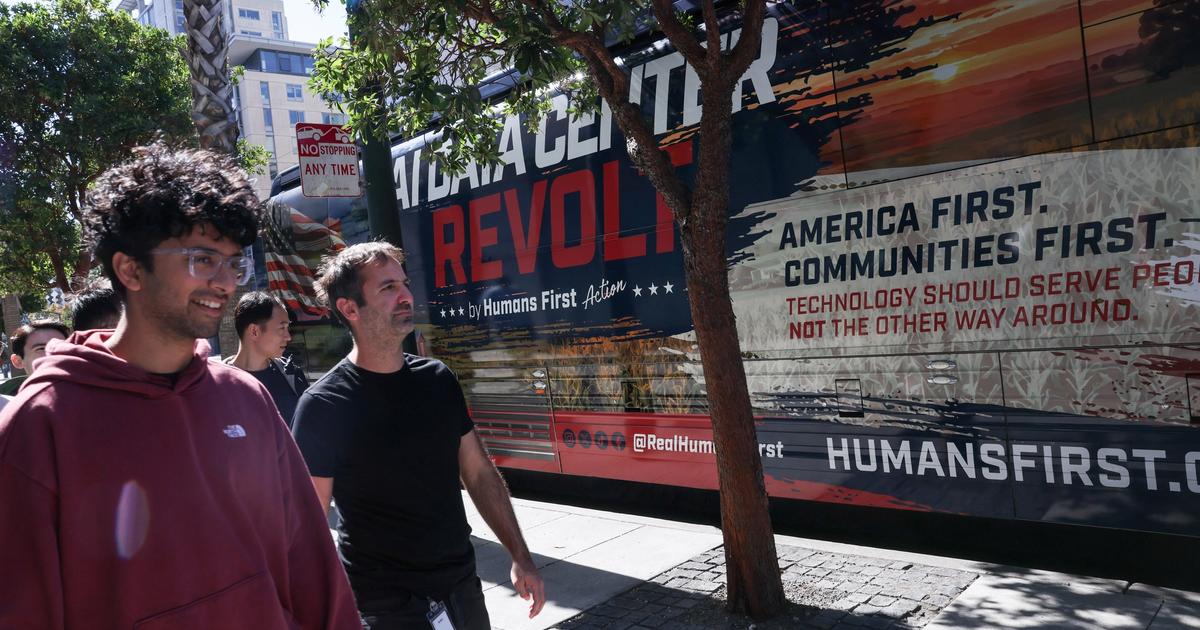
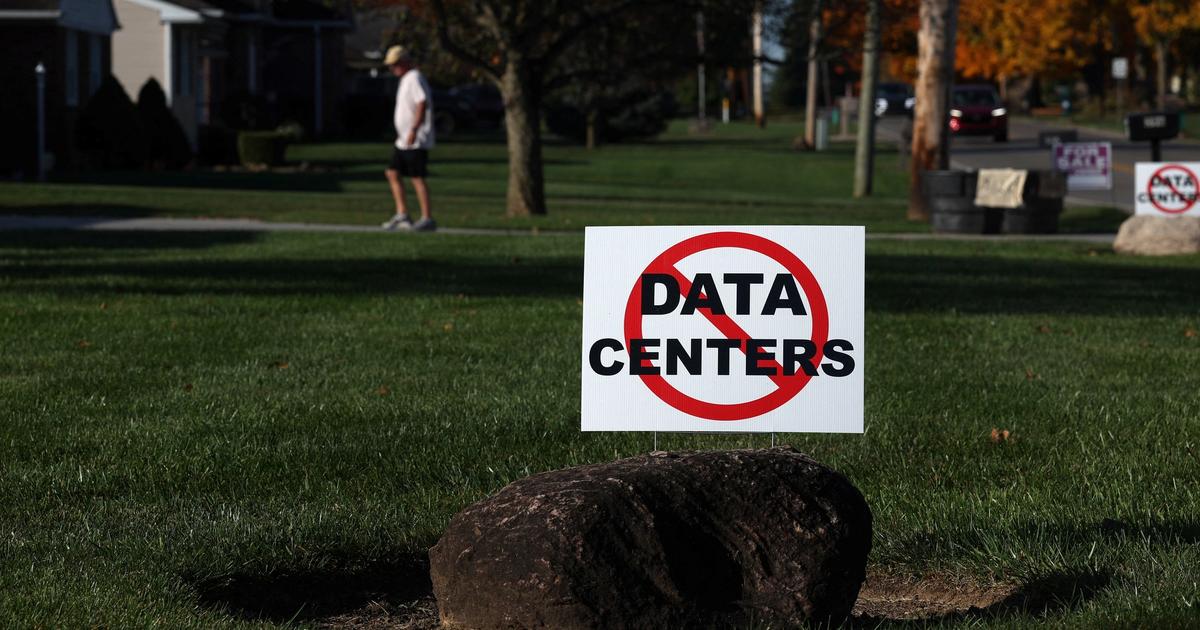
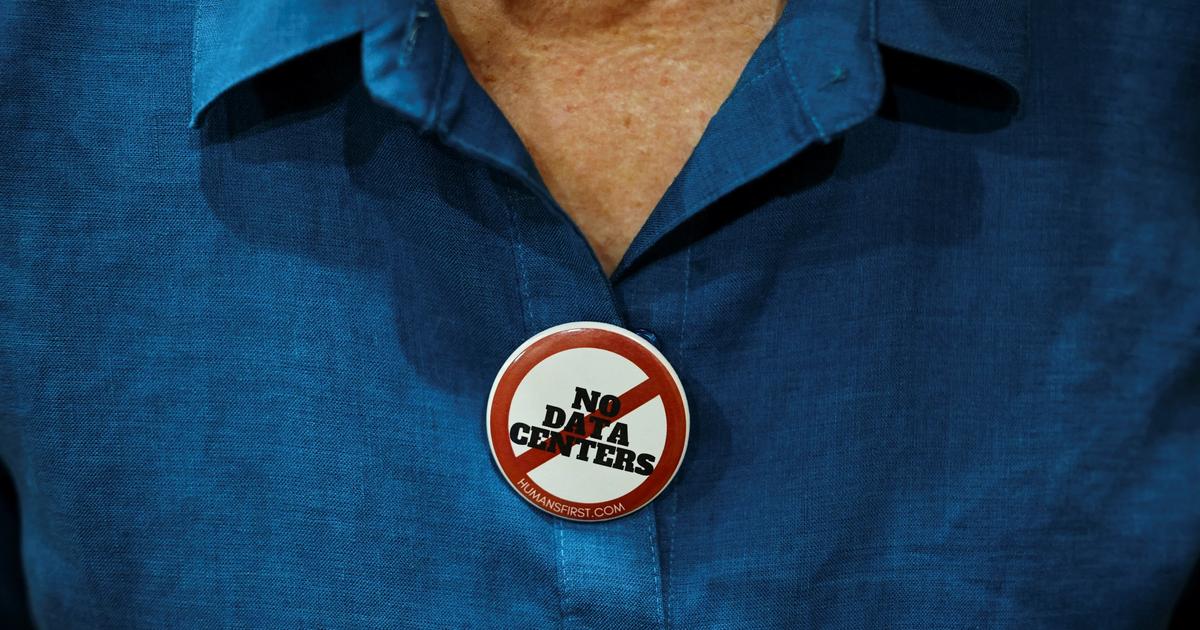
🔮 But money could not buy influence on the most salient AI-related outcome of the election: local ballot measures curbing data center development, about 40 of which passed across the country on Tuesday.
2026-11-05 · assertive framing · Where AI money worked in the midterms
🔮 However, divisions between the more progressive wing of the party and more business-friendly moderates, along with disagreements between the House and the Senate, will make it difficult for the newly empowered party to quickly pass any sweeping AI rules.
2026-11-05 · assertive framing · Democrats are fired up on AI. Consensus is harder.
🔮 A full-throated embrace of Trump’s light-touch AI regulatory agenda would be a mistake for future Republican candidates, according to the group, which is pushing for a greater level of AI guardrails than the administration.
2026-11-04 · assertive framing · Conservative group issues warning on AI
🔮 “It would be a betrayal of their campaign promises, and not only would it squander our victory –— it would create resentment in the base that will cost us in 2028,” it continues.
2026-11-03 · assertive framing · Democrats run more anti-tech ads amid AI boom
🔮 If initial reactions from AI safety advocates are any indication, AI and tech companies have a long way to go to convince both voters and Democrats, who will likely hold more power in Washington after Tuesday, that their efforts are sincere and not just an attempt at face-saving.
2026-11-03 · assertive framing · OpenAI pushes policy rebrand to a skeptical audience
🔮 Both OpenAI and Anthropic will have “war rooms” dedicated to ensuring their platforms provide accurate information about the midterm elections, a first for both companies.
2026-11-02 · assertive framing · Election ‘war rooms’ enter the AI age
🔮 And the government will devote £10 million per year to research on how AI is shaping employment.
2026-10-28 · assertive framing · Britain’s AI testing agency outguns US
🔮 Could the Tesla-SpaceX merger that Elon Musk floated this week pose antitrust problems?
2026-10-23 · mixed framing · SpaceX-Tesla merger could face antitrust scrutiny
🔮 Anthropic’s lobbying form lists the Collaboration on Adversarial Threats and Security Risks Act, a bill that would allow labs to coordinate with each other on security risks, as a point of focus for the company on Capitol Hill.
🔮 New York City could be the first place in the country where consumers are protected from a “doom loop” of AI-powered customer service chatbots, per a rule proposed today by Mayor Zohran Mamdani’s administration.
Also by Ashley Gold
Nothing else under this byline is closely related to this article, so these are simply their most recent.
All 31 articles by Ashley Gold →

Topics

Democratic Guardrails Alliance PAC Leading the Future Republican Senate

Subjects

Leading the Future ORG · 3× Republican NORP · 2× Annie Andrews PERSON · 1× Darline PERSON · 1× Darline Graham PERSON · 1× Data Center ORG · 1× Democratic NORP · 1× Graham PERSON · 1× Guardrails Alliance PAC ORG · 1× Senate ORG · 1×

Narrative

” “We are committed to a multi-cycle effort and 2028 will show who actually cares about passing a national regulatory framework on AI and who wants to politicize an issue that’s extremely consequential to the future of our country,” he continued.
framing: assertive · carried by 1 article(s) · first seen 2026-11-06
🔮 But money could not buy influence on the most salient AI-related outcome of the election: local ballot measures curbing data center development, about 40 of which passed across the country on Tuesday.
2026-11-06 · Semafor
Where AI money worked in the midterms · assertive framing

Claims (14 extracted, 1 hedged)

AI-funded super PACs saw mixed effectiveness in Tuesday’s midterm elections, while the newly launched Guardrails Alliance PAC, which promotes AI rules, went 5-0 in its spending. asserted
which → fund → spending
Leading the Future, an AI advocacy group, spent $4.8 million supporting Republican Darline Graham’s bid to replace her late brother in the Senate. asserted
Leading → lead → Senate
Graham lost; Democratic winner Annie Andrews dubbed her “Data Center Darline” during the campaign. asserted
Andrews → lose → campaign
Leading the Future’s other spending in the general helped propel Rep. Jared Moskowitz, D-Fla., to victory despite redistricting, but Republican House candidates the super PAC supported lost, per Wired. asserted
PAC → lead → Wired
The other major AI-related and Anthropic-affiliated super PAC, Public First Action, spent $20 million in the general election, somewhat successfully. asserted
PAC → relate → election
It backed winners Rep. Valerie Foushee, D-N.C., Rep.-elect Brian Poindexter in Ohio, Rep.-elect Manny Rutinel in Colorado, and Rep.-elect Scott Wiener in California. asserted
It → back → California
The Republicans backed by Public First’s network lost. asserted
Republicans → back → network
Guardrails Alliance spent more than $3.1 million total opposing five candidates who lost, the group announced. asserted
group → spend → candidates
But money could not buy influence on the most salient AI-related outcome of the election: local ballot measures curbing data center development, about 40 of which passed across the country on Tuesday. uncertain
40 → buy → Tuesday
The ballot initiatives coincide with hyperscalers’ scramble to figure out a way forward in certain jurisdictions and overhaul their messaging around the projects. asserted
initiatives → coincide → projects
One GOP operative told Semafor that Leading the Future was taken by surprise by the success of the data center ballot measures and had not put any resources into fighting them. asserted
Future → tell → them
“We’re proud that many of the pro-innovation champions we supported this cycle won on Tuesday,” Leading the Future spokesman Jesse Hunt said. asserted
Hunt → ’re → Tuesday
“Our investments are about building a durable coalition that can advance a national regulatory framework, unleash American innovation, and ensure workers, families, and communities are protected. asserted
workers → build → innovation
” “We are committed to a multi-cycle effort and 2028 will show who actually cares about passing a national regulatory framework on AI and who wants to politicize an issue that’s extremely consequential to the future of our country,” he continued. asserted
he → commit → country

💬Give feedback · no sign-in needed

No sign-in needed for now. Your note is sent without a name, so it cannot be answered.

🕘History 🎫Support