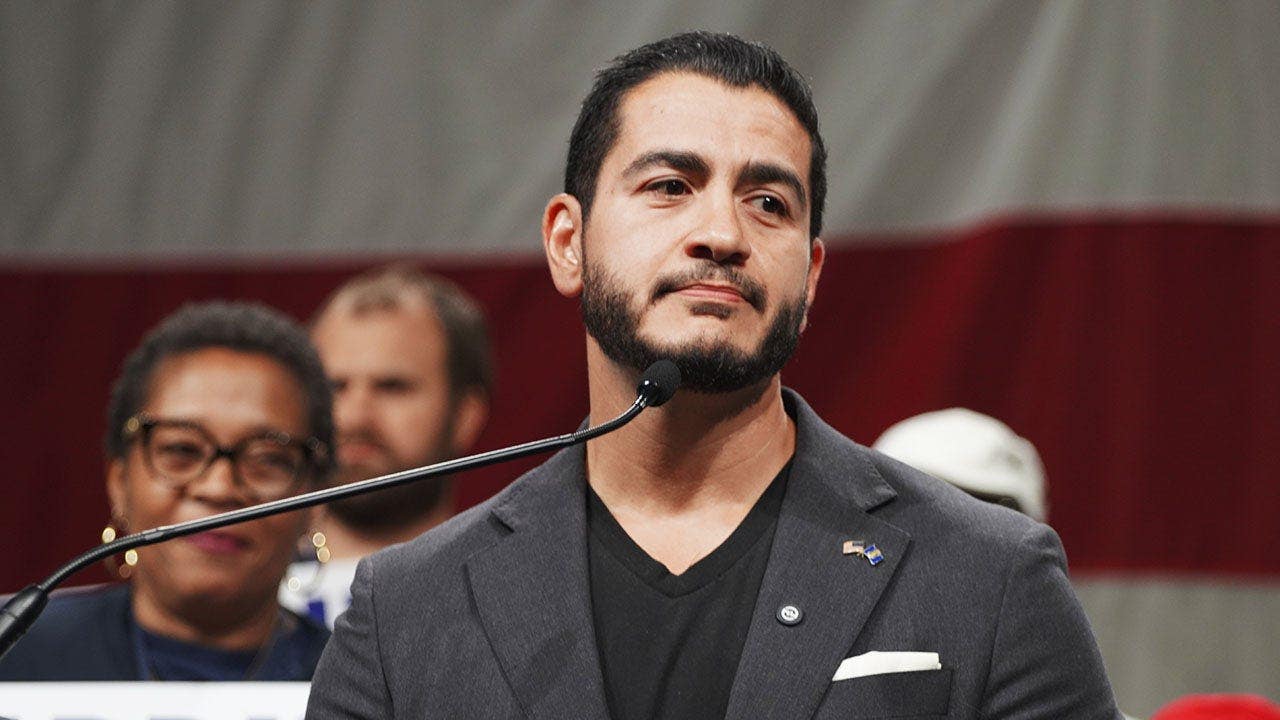
"The View" co-host Sara Haines pressed Michigan Sen.-elect Abdul-El Sayed about his response to an attack on a Jewish synagogue in the state and his delay in apologizing for his comments.
asserted
Haines → press → comments
On March 12, a man drove a truck into Temple Israel in West Bloomfield Township and exchanged gunfire with security personnel before killing himself, according to authorities.
uncertain
man → drive → authorities
El-Sayed condemned the attack but drew criticism for subsequently saying "Hurt people, hurt people," referring to the attacker's relatives who had been killed in an Israeli airstrike in Lebanon.
asserted
who → condemn → Lebanon
"Your response, that, ‘Hurt people, hurt people’ after the Temple Israel attack in Michigan in March, really stuck with a lot of people," Haines said.
asserted
Haines → hurt → people
"And you did apologize for that.
asserted
you → apologize → that
But it took you a while to, it took about five months to seemingly understand why that landed wrong with people and voters and constituents.
asserted
that → take → people
"
"You know, do you think that leaders have a responsibility to challenge the extremist views in their own religion, especially considering you're the first Muslim senator of the United States?" she asked.
asserted
she → know → States
"Yeah, well, I really appreciate that question," El-Sayed said.
asserted
Sayed → appreciate → question
"And I agree with you entirely that we want to live in a world where faith is something that's used to uplift all of us, rather than to justify the worst human actions that sometimes drag us down."
asserted
that → agree → us
He recalled having visited the temple after the attack and having been there for a bar-mitzvah in his youth.
asserted
He → recall → youth
"You know, I condemned it immediately, and I wanted to offer context, but ... You know, when people are hurting, context is secondary, and I just should have stood with their pain, and I learned from that experience, and I'm not above apologizing when I make a mistake."
asserted
I → know → mistake
El-Sayed continued and said he had tried to "offer context around the fact that that individual had lost a child, niece and nephew in an airstrike.
asserted
individual → continue → airstrike
And I want us to be thinking a little bit about, A, how we demonstrate our ability as leaders to stand with people's pain with no exceptions and no asterisks around them? And also be able to have an adult conversation about the ways in which actions ricochet around the world and create worse for all of us.
asserted
actions → want → us
"I respect that.
asserted
I → respect → that
I just think that if that had been done anywhere near what I believed, I would be so furiously enraged that they would use the words that I have led my life with to hurt people that way," Haines said.
asserted
Haines → think → people
So I just was surprised it took a minute for you to understand that part."
asserted
you → take → part
"I hear you on that," El-Sayed said.
asserted
Sayed → hear → that
"Better late than never," co-host Joy Behar said.
asserted
Behar → say → ?
Jesse Arm, a vice president at the Manhattan Institute and a pollster originally from Michigan, told Fox News Digital, "Imagine an American politician responding to Dylann Roof’s massacre of black worshippers at Bible study by saying ‘Hurt people, hurt people,’ then asking us to consider the killer’s grievances.
asserted
politician → tell → grievances
That politician would rightly be run out of American public life.
asserted
politician → run → life
"Why should the standard be any different when the targets are Jewish children and the attacker is an Islamist?" he asked.
asserted
he → ask → ?
"El-Sayed’s comments were grotesque, and this interview compounds the problem," Arm continued.
asserted
Arm → compound → problem
"He’s still presenting his mistake as a matter of timing—as though the same rationalization would have been acceptable once the victims had time to grieve.
asserted
victims → present → time
The problem wasn’t when he offered it.
asserted
he → offer → it
The problem was suggesting that events overseas somehow mitigate responsibility for trying to massacre Americans at home.
asserted
events → suggest → home
"Whatever someone has suffered, there is no justification for attacking a synagogue full of children.
asserted
someone → suffer → children
None," Arm wrote.
asserted
Arm → write → ?
"Americans deserve leaders who can say that without pivoting to the terrorist’s pain.
asserted
who → deserve → pain
Our politics is in a dangerous place when that basic moral clarity becomes negotiable depending on the identities of the attacker and the intended victims."
asserted
clarity → become → attacker
 The Aporia