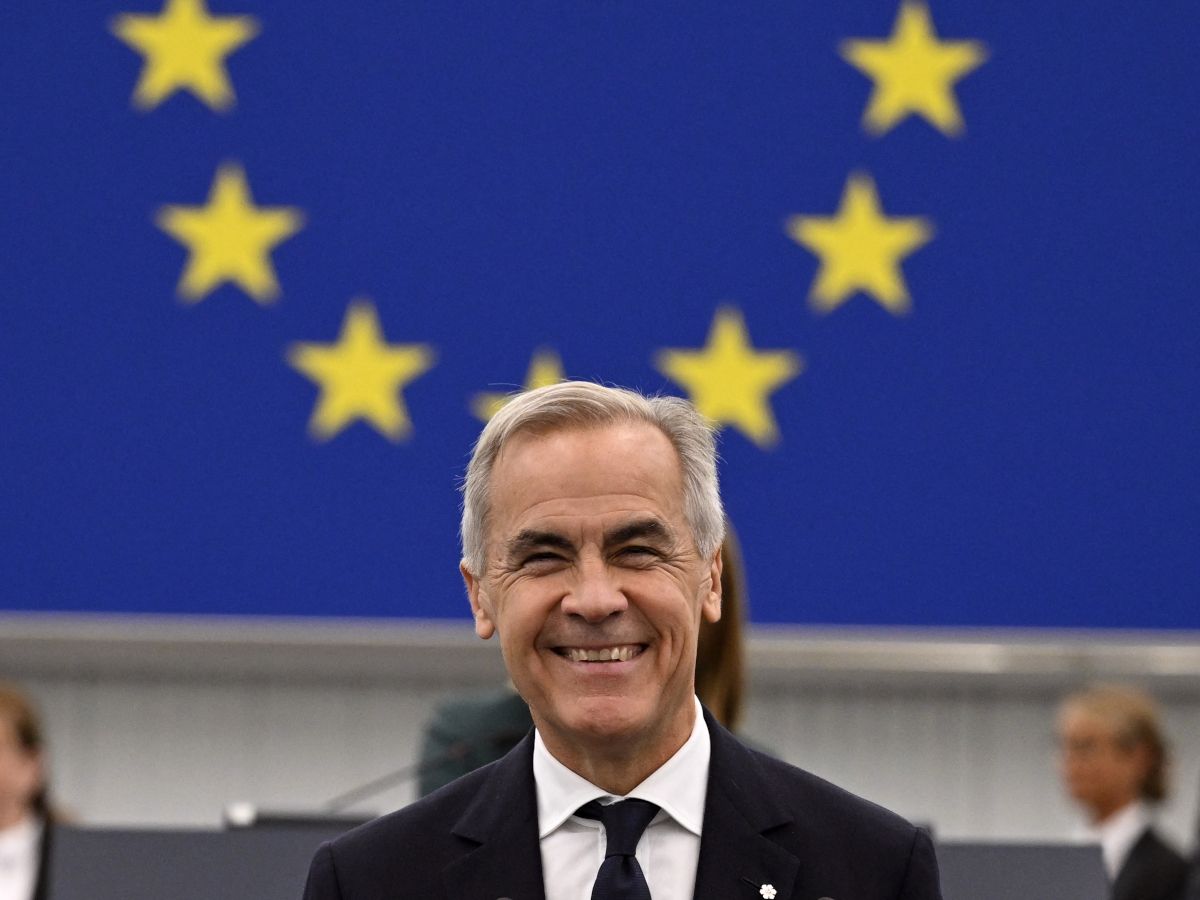
Photo via Toronto Sun

EDITORIAL: Guess who benefits from high oil prices?

Read the original at Toronto Sun ↗
Cite

Postmedia News. (2026, November 6). EDITORIAL: Guess who benefits from high oil prices? Toronto Sun. https://torontosun.com/opinion/editorials/editorial-guess-who-benefits-from-high-oil-prices

Dated from the outlet's own feed. Check the original for its byline.

Toronto Sun · collected 2026-11-06 · by Postmedia News

Quick Summary

This editorial in the Toronto Sun criticizes Prime Minister Mark Carney’s government for profiting from high oil prices by increasing spending and accumulating public debt. The federal budget plans to spend $142.1 billion of anticipated windfall tax revenues over five years, leading to rising interest costs on Canada's $1.37 trillion public debt, with projected annual deficits ranging from $52.9 billion to $62.5 billion. Critics argue that Carney’s promise to balance the budget is misleading due to reclassifying expenditures as capital investments rather than operating expenses.
Written by AI on 2026-11-06, from this article's own text only (the story summary below draws on all the coverage).

AI analysis

Story summary

On November 5, 2026, Prime Minister Mark Carney's Liberal government presented Canada’s federal budget, aiming to reduce the country’s economic dependence on the United States. Finance Minister Francois-Philippe Champagne emphasized the need for a new growth model that ensures Canadian resilience and sovereignty in the face of global trade changes. The budget, titled "Masters of our Destiny," includes plans to spend $142.1 billion over five years from windfall tax revenues, primarily aimed at boosting domestic commerce within Canada. Opposition leaders from the NDP, Bloc Québécois, and Green Party criticized the budget for lacking substance and not adequately addressing affordability issues. The budget's goal is to make Canada more economically independent despite ongoing challenges with U.S.-Canada trade relations.

Written for “Canada Budget 2026 Highlights” on 2026-11-06, grounded in this article and the 35 other(s) covering the same event.
Why this leaning score
The model judged this article politically coded and scored it -0.65, but every quote it verified points right, so the score is not published.
Written under an earlier scoring contract, which gave a paragraph rather than checkable quotes. Re-analysing this article replaces it.
Leaning score withheld for article 133411: score contradicts its own evidence · logged 2026-11-06

Story

📰 Canada Budget 2026 Highlights
Politics · 36 article(s) covering the same event. Compare every outlet's account →

Compared with similar articles

This article reads unscored and hedges 0% of its claims. Each row says how that neighbour differs.
Toronto Sun
Hedges 0 of 27 claims Outlet record 96/100
The Straits Times
⚖️ Leans left Hedges 0 of 18 claims Outlet record 66/100
“Article A describes the unveiling and presentation of the budget on Nov 5, while Article B is an editorial that discusses the implications and spending plans based on the released budget, likely from a day later.”
The Globe and Mail
⚖️ Leans strongly left Hedges 5 of 61 claims Outlet record 52/100
“While both articles discuss a federal budget announcement in Canada, they do not describe the exact same incident; Article A is reporting on the content of the budget and its aims, while Article B is an editorial commentary about who benefits from high oil prices in relation to the budget.”
Global News
Hedges 0 of 15 claims Outlet record 63/100
“Article A describes Poilievre's call to end diesel taxes and cut spending ahead of Carney's budget announcement, while Article B discusses Carney's actual budget plans based on high oil prices.”
CBC News
Hedges 7 of 46 claims Outlet record 71/100
“Article A discusses Mark Carney's approach to climate policy and his potential budget plans before entering politics, while Article B talks about the actual federal budget released after he became Prime Minister and its implications for government spending.”
Global News
⚖️ Leans left Hedges 0 of 34 claims Outlet record 63/100
“The articles discuss different aspects related to Carney's budget announcement; Article A describes the details and risks of the budget, while Article B is an editorial about who benefits from high oil prices in relation to the budget.”
Toronto Star
⚖️ Leans left Hedges 0 of 2 claims Outlet record 64/100
“Article A reports on the content and details of Federal Budget 2026, while Article B provides an editorial perspective on who benefits from high oil prices in relation to the budget. They cover different aspects and angles.”
Global News
Hedges 0 of 7 claims Outlet record 63/100
“Article A describes the unveiling and tabling of the budget, while Article B discusses the content and implications of the budget itself.”
CBC News
⚖️ Leans left Hedges 3 of 38 claims Outlet record 71/100
“Article A describes the details and context of Carney's second budget announcement, while Article B is an editorial commenting on who benefits from high oil prices in relation to the budget. They are not reporting on the same specific incident but rather one article detailing the event and another providing commentary.”
How this article was measured signals, leaning charts, publisher record, byline, topics and claims

Signals How these are calculated →

Claims extracted
14
sentences that state something as happening or true
Uncertain
0%
0 of 14 hedged ("reportedly", "may", "according to")
Leaning
withheld
no quote in the article backed the model's score
Publisher signals
96/100
Toronto Sun's corrections and hedging, across everything collected from it. Not a measure of accuracy.
Outlets on this story
36
Politics
Same framing elsewhere
1
articles that frame the event the way this one does
Analyzed 2026-11-06 · how these are computed

How this is being covered How these are calculated →

Article leaning vs. publisher reliability
Source leaning vs. consistency

Publisher

Toronto Sun · 10 article(s) · 0 correction(s) detected
No corrections detected for this publisher. That may mean careful reporting, or simply that nothing has been checked.

Who wrote this

Postmedia News
6 article(s) here · 1 carrying a prediction
🔮 Recommended Videos Because of that, Carney plans to spend $142.1 billion out of $158.3 billion in anticipated windfall tax revenues over the next five years on new government programs he says will boost the Canadian economy, while the costs of servicing Canada’s $1.37 trillion public debt will soar.
2026-11-06 · assertive framing · EDITORIAL: Guess who benefits from high oil prices?
🔮 Article content See more Toronto Sun on Google — save as a Preferred Source The federal government enacted changes to Canada’s asylum process on Tuesday that would speed up the deportation of illegal immigrants.
🔮 Buying through us may earn us a commission, which supports our work.
2026-10-27 · assertive framing · Five Canadian horror movies to watch this Halloween
🔮 If you’ve got a majority government with two years left and an unpopular record to defend, calling a snap election might not seem like a great idea.
🔮 And while Carney’s idea is dubious and of questionable benefit, Dade explains why he thinks we might not have much choice but to try it.
🔮 He will now be suing not only the tech firms that scrape News Corp.’s journalism, but the customers who buy the stolen intellectual property, too.
Wire or desk byline, not an individual reporter.
Also by Postmedia News
Nothing else under this byline is closely related to this article, so these are simply their most recent.
All 6 articles by Postmedia News →

Topics

Canada Canadian Google Toronto Sun the Montreal Economic Institute

Subjects

Carney PERSON · 4× Canada GPE · 2× Canadian NORP · 2× Gabriel Giguere PERSON · 1× Giguere PERSON · 1× Google ORG · 1× Liberal NORP · 1× Mark Carney PERSON · 1× Toronto Sun ORG · 1× the Montreal Economic Institute ORG · 1×

Narrative

Recommended Videos Because of that, Carney plans to spend $142.1 billion out of $158.3 billion in anticipated windfall tax revenues over the next five years on new government programs he says will boost the Canadian economy, while the costs of servicing Canada’s $1.37 trillion public debt will soar.
framing: assertive · carried by 1 article(s) · first seen 2026-11-06
🔮 Recommended Videos Because of that, Carney plans to spend $142.1 billion out of $158.3 billion in anticipated windfall tax revenues over the next five years on new government programs he says will boost the Canadian economy, while the costs of servicing Canada’s $1.37 trillion public debt will soar.
2026-11-06 · Toronto Sun
EDITORIAL: Guess who benefits from high oil prices? · assertive framing

Claims (14 extracted, 0 hedged)

While high oil prices are crushing the life out of Canadian families, Thursday’s federal budget reveals they have been great news for Prime Minister Mark Carney’s government, which is rolling in our dough. asserted
which → crush → dough
Recommended Videos Because of that, Carney plans to spend $142.1 billion out of $158.3 billion in anticipated windfall tax revenues over the next five years on new government programs he says will boost the Canadian economy, while the costs of servicing Canada’s $1.37 trillion public debt will soar. asserted
costs → plan → debt
This year, federal taxpayers will pay $60.2 billion in interest on the debt, more than the $57.4 billion the feds will transfer to the provinces and territories for health care. asserted
feds → pay → care
By 2030-31, paying interest on debt is expected to soar to $85.5 billion on $1.6 trillion in public debt, a 42% increase over five years, with annual deficits ranging from $52.9 billion to $62.5 billion and no plan to balance the federal budget, ever. asserted
paying → pay → budget
At that point, paying $85.5 billion annually in interest on debt will be almost as much as the $89.9 billion the federal government will transfer to the provinces and territories for health care and social programs combined. asserted
government → pay → care
The only good news is that last year’s deficit came in at $39.3 billion compared to $66.9 billion in April’s spring economic update. asserted
deficit → come → update
“Each new dollar of debt generated by this budget is a dollar borrowed from Canada’s future generations,” said Gabriel Giguere, senior policy analyst at the Montreal Economic Institute. asserted
Giguere → generate → Institute
He noted Carney’s parlour trick of claiming he will balance the federal operating deficit next year, by reclassifying some government expenditures as capital investments, is meaningless. asserted
he → note → investments
“Whether an expenditure is listed in an operating budget or a capital budget changes nothing for lenders,” Giguere said. asserted
Giguere → list → lenders
“Interest rates are unaffected by the use to which funds are put by the federal government, and this reclassification of spending just obscures the budget picture.” asserted
reclassification → put → picture
Remember when Carney promised to “spend less, invest more” when running for the Liberal leadership last year? asserted
Carney → remember → leadership
As it turns his government will spend more — $602.6 billion this year up from $565.7 billion last year, rising to $682.1 billion in 2030-31. asserted
government → turn → 2030
Carney grandly titled his second budget “Masters of Our Destiny”. asserted
Carney → title → Destiny
It sounds more like we’re on the way to the poorhouse. asserted
we → sound → poorhouse

💬Give feedback · no sign-in needed

No sign-in needed for now. Your note is sent without a name, so it cannot be answered.

🕘History 🎫Support