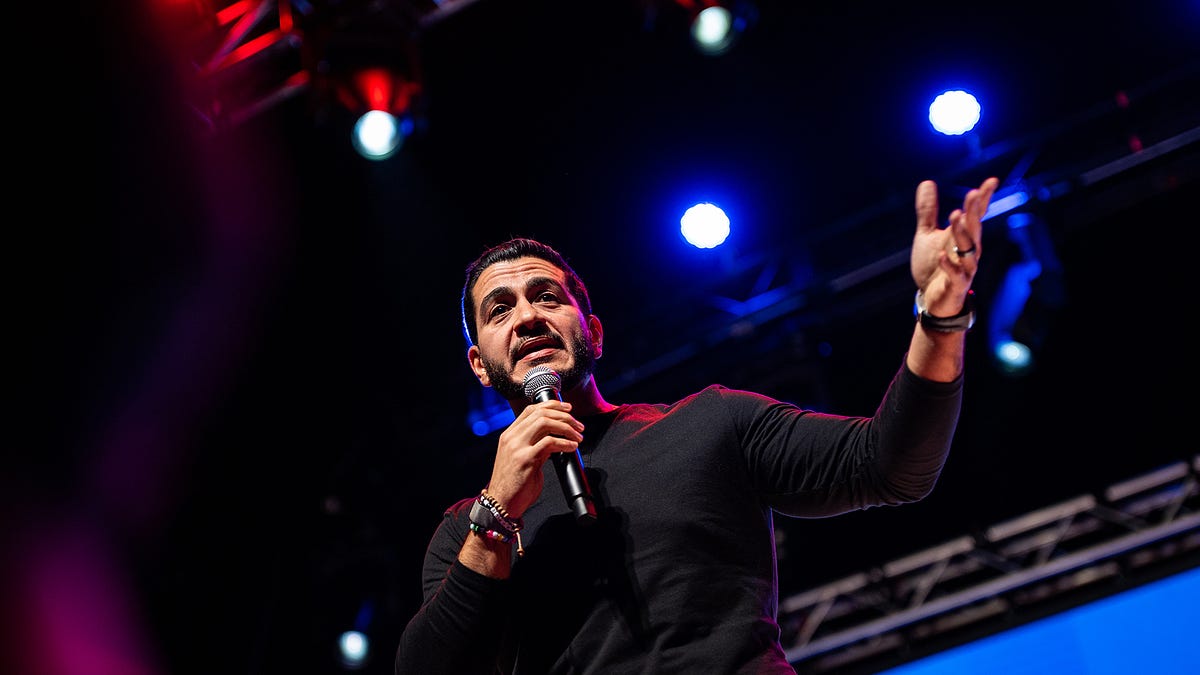
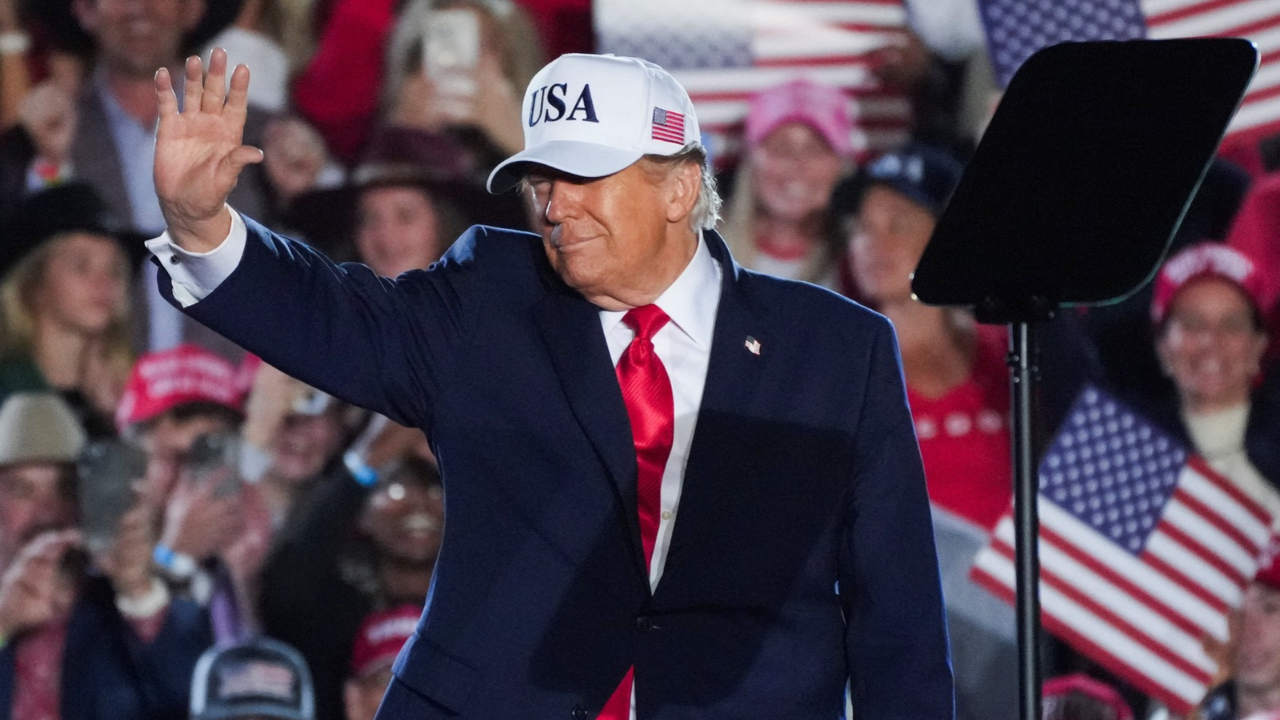
Photo via The Guardian

‘Shawarma law’: Abdul El-Sayed never shied away from Islamophobic provocations

Read the original at The Guardian ↗
Cite

Detroit, J. G. i. (2026, November 6). ‘Shawarma law’: Abdul El-Sayed never shied away from Islamophobic provocations. The Guardian. https://www.theguardian.com/us-news/2026/nov/06/abdul-el-sayed-islamophobia-michigan-senate-seat

Dated from the outlet's own feed. Check the original for its byline.

The Guardian · collected 2026-11-06 · by Joseph Gedeon in Detroit

Quick Summary

Abdul El-Sayed, the son of Egyptian immigrants, won his race for US Senate in Michigan with 52.5% of the vote against Republican Mike Rogers. During his campaign, El-Sayed faced significant Islamophobic attacks but refused to back down, stating he wasn’t "shying away" from rightwing fixations. His victory is seen as a triumph over religious discrimination and has solidified his position as one of the most prominent Democrats emerging from this election cycle, despite opposition from some Jewish leaders regarding his stance on Israel.
Written by AI on 2026-11-09, from this article's own text only (the story summary below draws on all the coverage).

AI analysis

Story summary

Abdul El-Sayed, the son of Egyptian immigrants, became the first Muslim elected to the US Senate after winning Michigan's midterm elections on November 7, 2026. He defeated his Republican rival Mike Rogers with about 52.5% of the vote compared to Rogers' 45.5%, a margin of seven points. El-Sayed campaigned openly against Islamophobic attacks and provocations, famously telling an attendee at a town hall not to shy away from right-wing fixations when asked about disavowing the Muslim Brotherhood. Despite facing objections from some Jewish leaders regarding his stance on Israel, he secured majorities among Black voters and significant support from early Jewish voters in Wayne, Oakland, and Macomb counties. His victory is seen as part of a broader "blue wave" nationwide.

Written for “Shawarma Law Controversy” on 2026-11-09, grounded in this article and the 0 other(s) covering the same event.
Why this leaning score
The article's own words the score was based on. Each is quoted verbatim and was checked against the article text before being stored, so you can find it in the original.
Reading Leans left (beta estimate) Confidence high 1 quote(s) discarded as not found in the article
Leaning: leans left for article 134484 (high confidence, 1 verified quote) · logged 2026-11-09

Story

Shawarma Law Controversy
Politics · 1 article(s) covering the same event.

Compared with similar articles

This article reads leans left and hedges 5% of its claims. Each row says how that neighbour differs.
Toronto Star
Hedges 3 of 56 claims Outlet record 64/100
“While both articles discuss Abdul El-Sayed's Senate victory and his significance as the first Muslim elected to the U.S. Senate, they describe different aspects of the event and are published on different dates.”
The Hindu
Leans left Hedges 0 of 4 claims Outlet record 78/100
“The articles describe different aspects of Abdul El-Sayed's political journey rather than a single specific incident.”
Zeteo
Leans strongly left further left than this Hedges 0 of 15 claims
“The articles discuss different aspects of Abdul El-Sayed's political career and campaign, rather than describing the same specific incident at a particular time and place.”
CBC News
Leans strongly left further left than this Hedges 5 of 36 claims Outlet record 60/100
“While both articles discuss Abdul El-Sayed's victory, Article A reports on his win in the election itself, whereas Article B discusses his campaign and its provocations leading up to the election.”
The Guardian
Hedges 3 of 28 claims Outlet record 65/100
“The articles describe different encounters involving Abdul El-Sayed; one involves a town hall attendee and the other involves a British TV journalist.”
New York Post
Leans strongly right further right than this Hedges 2 of 25 claims Outlet record 66/100
“The articles discuss different aspects of Abdul El-Sayed's campaign and public statements over time rather than a single specific incident.”
Times of India
Hedges 2 of 22 claims Outlet record 59/100
“Article A reports on Trump's specific comments about Abdul El-Sayed at a rally in Iowa, while Article B discusses El-Sayed's general approach to addressing Islamophobic provocations during the campaign.”
The Guardian
Leans left Hedges 3 of 23 claims Outlet record 65/100
“Article A reports on El-Sayed's victory in the Senate race, while Article B discusses his campaign and responses to provocations.”
Al Jazeera
Leans strongly left further left than this Hedges 4 of 51 claims Outlet record 60/100
“The articles cover different aspects of Abdul El-Sayed's election campaign and victory, rather than a single specific incident or moment.”
The Daily Wire
Hedges 2 of 29 claims Outlet record 95/100
“The articles discuss different political appointments and controversies involving distinct public figures in Michigan.”
How this article was measured signals, leaning charts, publisher record, byline, topics and claims

Signals How these are calculated →

Claims extracted
38
sentences that state something as happening or true
Uncertain
5%
2 of 38 hedged ("reportedly", "may", "according to")
Leaning
Leans left
of the writing, not the subject · beta estimate
Publisher signals
65/100
The Guardian's corrections and hedging, across everything collected from it. Not a measure of accuracy.
Outlets on this story
1
Politics
Same framing elsewhere
1
articles that frame the event the way this one does
Analyzed 2026-11-09 · how these are computed

How this is being covered How these are calculated →

Article leaning vs. publisher reliability
Source leaning vs. consistency

Publisher

The Guardian · 2194 article(s) · 7 correction(s) detected
Running correction rate · 7 correction(s)

Who wrote this

Joseph Gedeon in Detroit
5 article(s) here · 1 carrying a prediction
Abdul El-Sayed said he did not expect to be “a main character of this midterms”, but the first Muslim elected to the US Senate in history will take his seat in January after a vitriolic campaign that cast him as the central villain of the president and his party.
His opponent and detractors, including Donald Trump, led a largely Islamophobic campaign against him, often pointing to his name and faith, including the president alleging he was a “jihadist” and that he would need to walk through a metal detector to get into the Senate.
Having failed to stop Abdul El-Sayed in the primary, Stevens chose to back Republican Mike Rogers on Sunday, a candidate who she previously warned would enable Trump’s agenda – apparently because the Democrat who won refuses to share her position on Israel.
The Michigan Senate race – which could help decide which party controls the entire chamber – is close, according to polls, which have typically given El-Sayed a small lead over his Republican opponent, Mike Rogers.
Barack Obama told a Detroit crowd on Saturday that Abdul El-Sayed was “fighting for change, real change, that will get money out of politics and put money in your pocket”, as he threw his weight behind the Democratic Senate candidate and the rest of the ticket on the first day of early voting in Michigan.
Also by Joseph Gedeon in Detroit
Nothing else under this byline is closely related to this article, so these are simply their most recent.

Topics

Jewish Michigan Muslim Republican the US Senate

Subjects

El-Sayed PERSON · 7× Jewish NORP · 3× Michigan GPE · 3× Muslim NORP · 3× Republican NORP · 3× Abdul PERSON · 2× Detroit GPE · 2× Abdul El-Sayed PERSON · 1× the Associated Press ORG · 1× the US Senate ORG · 1×

Narrative

He won with majorities among Black voters and Jewish early voters, and with a larger share of the vote than Kamala Harris or senator Elissa Slotkin in 2024 in Wayne, Oakland and Macomb counties, despite Republican attacks on his faith and objections from some Jewish leaders to his stance on Israel.
framing: assertive · carried by 1 article(s) · first seen 2026-11-09
Abdul El-Sayed said he did not expect to be “a main character of this midterms”, but the first Muslim elected to the US Senate in history will take his seat in January after a vitriolic campaign that cast him as the central villain of the president and his party.

Claims (38 extracted, 2 hedged)

Abdul El-Sayed said he did not expect to be “a main character of this midterms”, but the first Muslim elected to the US Senate in history will take his seat in January after a vitriolic campaign that cast him as the central villain of the president and his party. asserted
that → say → president
By October he told the Associated Press he was “not shying away” from those rightwing fixations. asserted
he → tell → fixations
“What are you implying?” El-Sayed, the son of Egyptian immigrants, replied when a town hall attender asked if he would disavow the Muslim Brotherhood, in a now-viral exchange. asserted
he → imply → exchange
On Tuesday, Michigan voters helped the pugnacious progressive cap off a transcendental blue wave nationwide, defeating his Republican rival, Mike Rogers, by about seven points, 52.5% to 45.5%. asserted
progressive → help → points
“My name is Abdulrahman Mohamed El-Sayed,” he said at the beginning of his victory speech in downtown Detroit on Tuesday night, as the crowd erupted in cheers. asserted
crowd → say → cheers
He then thanked the voters of Michigan, for taking a “chance on the unlikeliest of candidates”. asserted
He → thank → candidates
He won with majorities among Black voters and Jewish early voters, and with a larger share of the vote than Kamala Harris or senator Elissa Slotkin in 2024 in Wayne, Oakland and Macomb counties, despite Republican attacks on his faith and objections from some Jewish leaders to his stance on Israel. asserted
He → win → Israel
Now he takes that mandate to Washington as one of the most visible Democrats to have emerged from this election cycle. asserted
he → take → cycle
“He is a charismatic, social media-savvy politician, so he will come to DC with a lot more initial interest than most freshman politicians,” said Matt Grossmann, director of Michigan State University’s Institute for Public Policy and Social Research. asserted
Grossmann → come → Policy
“He won’t be able to say he had some sort of unique vision that worked above all others, but he will be able to say people said he couldn’t win in a swing state, and he did. asserted
he → say → state
I think that will matter.” asserted
that → think → ?
The test, according to Shekar Narasimhan, founder and chair of the AAPI Victory Fund, a Super Pac focused on Asian American and Pacific Islander political power, is less about identity than delivery. uncertain
test → accord → delivery
“I think the onus on Abdul is less about being the first Muslim senator. asserted
onus → think → Abdul
Obviously, there is a weight for that, but it’s more about how he represents Michigan given the $165m that was thrown at him in both the primary and the general election,” Narasimhan said. asserted
Narasimhan → be → primary
“I think he does have to carry an agenda, and I think the caucus is going to give him some leadership position to be able to carry it out.” asserted
caucus → think → it
Maya Berry, executive director of the Arab American Institute, called voters’ rejection of the attacks on El-Sayed “tremendous” for “every little boy named Abdul, every little girl named Zainab”, arguing that the question at stake was whether the country supports an inclusive democracy. asserted
country → call → democracy
Donald Trump and other Republicans repeatedly used Islamophobia to target his faith. asserted
Trump → use → faith
At a rally in Port Huron on 25 October, the president baselessly called El-Sayed a jihadist and a Muslim Brotherhood member, said he was “on the side of the terrorists”, and claimed he would “have to go through a metal detector” before entering the Senate. asserted
he → call → Senate
John Kennedy, the senator from Louisiana, said El-Sayed “sleeps in a Bin Laden jersey”, while Ted Cruz, the senator from Texas, called him a “jihadist leprechaun”, and JD Vance called him “evil”. asserted
Vance → say → him
Campaign mailers paid for by the Senate Leadership Fund, a prominent Republican Super Pac, and seen by the Guardian would link El-Sayed with Sharia law, with text that said his specific views “dictates how women dress”, “requires women have a guardian” and “prohibits women from divorcing”. asserted
women → pay → women
El-Sayed dismissed those attacks, quipping that he supported “shawarma law”. asserted
he → dismiss → law
On election night, Dearborn’s mayor, Abdullah Hammoud, said voters chose El-Sayed “regardless of the direction in which he prays”. asserted
he → say → which
He called it “a beautifully American story”. asserted
He → call → it
Some Jewish leaders, such as the Detroit community director for the American Jewish Committee, Amy Sapeika, said El-Sayed’s rhetoric, and even his victory speech, made many in the community “feel excluded as Jews and as people who support Israel”. asserted
who → say → Israel
While exit polls and preliminary analyses show that a majority of Michigan Jews voted for El-Sayed, his margins in heavily Jewish communities trailed other Democrats in the state, such as the governor-elect, Jocelyn Benson. asserted
margins → show → elect
In West Bloomfield, where a synagogue attack took place in March, Rogers’s share of the vote rose to 46% from 42% two years ago, when he ran against Slotkin for the Senate. asserted
he → take → Senate
El-Sayed would reach the same parity with Black voters as Slotkin’s win in 2024, where he won about 86% compared to her 85%, according to an exit poll by NBC. uncertain
he → reach → NBC
On Israel, El-Sayed has not changed his position since being elected. asserted
Sayed → change → position
On election day morning, Trump said on Fox & Friends that roughly $4bn in annual US military aid to Israel would be “cut off at the end of the year”, citing “lunatics like an El-Sayed”. asserted
4bn → say → Sayed
El-Sayed, who campaigned on ending the aid, welcomed the announcement and called for an end to arms sales as well. asserted
who → campaign → sales
While Congress appropriates the aid, Grossmann said Trump had “basically credited Abdul with changing his position on aid to Israel”, giving him an early win. asserted
Trump → appropriate → win
Narasimhan called the announcement “a good starting point”. asserted
Narasimhan → call → announcement
He said efforts by Bernie Sanders and other Democrats to restrict offensive weapons were “as far as he’s going to get in this environment on Israel”. asserted
he → say → Israel
Asked on CNN on Thursday about working with the president and vice-president, El-Sayed made clear he was not softening his tone. asserted
softening → ask → tone
He said he would “take every opportunity” to “differentiate between what JD Vance says and what JD Vance does”, and that he finds the pair “odious” in how they behave outside their official roles. asserted
they → say → roles
But he also said he would work with them. asserted
he → say → them
“I’ll work with anybody to serve the people of the state of Michigan,” he said. asserted
he → work → Michigan
“If they’re serious about doing that, let’s get some stuff done.” asserted
stuff → ’re → that

Give feedback · no sign-in needed

No sign-in needed for now. Your note is sent without a name, so it cannot be answered.

History Support