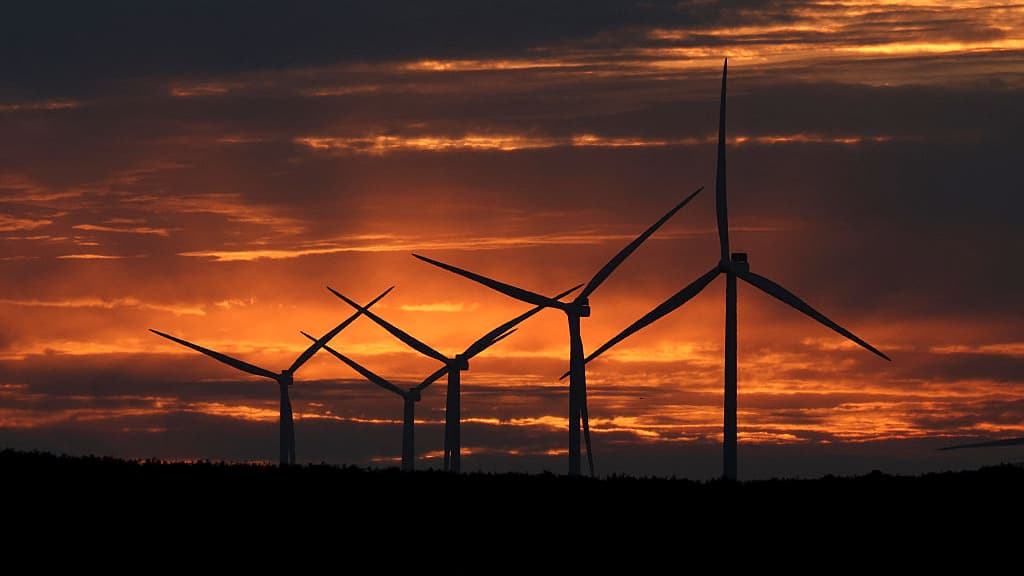
Photo via TIME

Why The Democrats' Next Climate Agenda Will Look Different

Read the original at TIME ↗
Cite

Worland, J. (2026, November 6). Why The Democrats' Next Climate Agenda Will Look Different. TIME. https://time.com/article/2026/11/06/democrats-new-climate-agenda-midterm-elections/

Dated from the outlet's own feed. Check the original for its byline.

TIME · collected 2026-11-06 · by Justin Worland

Quick Summary

Climate advocates see potential for renewed climate action following recent election results, despite climate change not being a major topic during midterms. New Democratic senators are taking an "all-of-the-above" approach that includes protecting oil-and-gas jobs and addressing data center energy usage, signaling a shift from previous Green New Deal rhetoric. This new strategy aims to balance economic concerns with environmental goals across diverse states, potentially leading to more durable climate policies.
Written by AI on 2026-11-08, from this article's own text only (the story summary below draws on all the coverage).

AI analysis

Story summary

After two years under what many consider the most anti-climate presidential administration in U.S. history, Democrats gained momentum in the recent midterm elections, raising hopes among climate advocates despite climate change being a marginal issue during the campaign. However, the new Democratic wave is unlikely to revert to previous climate policies like the Green New Deal or the Inflation Reduction Act. Instead, newly elected senators are emphasizing an "all-of-the-above" energy strategy that includes protecting oil-and-gas jobs and promoting affordable energy production. James Talarico, a senator-elect from Texas, and Adam Hamilton from Kansas, both highlight this approach as they prepare to take office.

Written for “Democrats Climate Agenda Shifts” on 2026-11-09, grounded in this article and the 0 other(s) covering the same event.

Story

Democrats Climate Agenda Shifts
Politics · 1 article(s) covering the same event.

Compared with similar articles

This article reads unscored and hedges 16% of its claims. Each row says how that neighbour differs.
Semafor
Leans right Hedges 1 of 17 claims Outlet record 68/100
“The articles discuss different aspects of the election results and their implications for Big Oil and climate policy, rather than describing the exact same incident.”
Mother Jones
Leans strongly left Hedges 2 of 54 claims Outlet record 60/100
“The articles discuss different aspects of the election results and their implications for environmental policy, rather than describing the exact same incident or moment.”
Mother Jones
Leans strongly left Hedges 7 of 54 claims Outlet record 60/100
“The articles discuss different aspects of climate policy and elections, not a single specific incident.”
The Straits Times
Leans strongly left Hedges 6 of 55 claims Outlet record 66/100
“The articles discuss different time periods and contexts related to climate policy under Trump's presidency and potential changes after Democrats' victory, but do not describe the same specific incident or occurrence.”
TIME
Leans strongly left Hedges 1 of 34 claims Outlet record 59/100
“The articles discuss different aspects of the implications of the midterm election results for climate policy and cooperation, rather than describing the same specific incident or occurrence.”
Just The News
Leans left Hedges 1 of 46 claims Outlet record 95/100
“While both articles discuss Democrats' plans regarding climate and energy policies post-midterm elections, they do not describe the same specific incident or occurrence. ARTICLE A provides a broader context of hope among climate advocates following the election results, while ARTICLE B focuses on the specifics of restoring renewable subsidies and the potential actions by Democrats in Congress.”
The Daily Caller
Hedges 8 of 64 claims Outlet record 92/100
“The articles discuss different aspects of the Democratic win in the 2026 midterms: one focuses on future climate policies, while the other covers immediate implications for energy and permitting deals.”
How this article was measured signals, leaning charts, publisher record, byline, topics and claims

Signals How these are calculated →

Claims extracted
19
sentences that state something as happening or true
Uncertain
16%
3 of 19 hedged ("reportedly", "may", "according to")
Leaning
withheld
no quote in the article backed the model's score
Publisher signals
59/100
TIME's corrections and hedging, across everything collected from it. Not a measure of accuracy.
Outlets on this story
1
Politics
Same framing elsewhere
1
articles that frame the event the way this one does
Analyzed 2026-11-08 · how these are computed

How this is being covered How these are calculated →

Article leaning vs. publisher reliability
Source leaning vs. consistency

Publisher

TIME · 863 article(s) · 2 correction(s) detected
Running correction rate · 2 correction(s)

Who wrote this

Justin Worland
7 article(s) here · 1 carrying a prediction
Over the next two years, elected officials in Washington will forge the next wave of climate policy, and there’s a good chance it may look pretty different from what we’ve seen in recent history.
For the last year, I’ve been asking corporate executives how they might expect anticipated Democratic victories in the midterm elections to shape the future of the U.S. climate and energy agenda.
But take a closer look and it’s hard to miss how climate change—and the related deployment of clean energy—will play an important role in economic performance.
But it will also force businesses and governments to confront costs they have largely been able to defer.
2026-10-03 · assertive framing · Europe’s Approach to Climate Is Entering a New Era
For a brief moment last year, it seemed like the anti-climate atmosphere created by the Trump Administration might kill New York Climate Week.
2026-09-25 · assertive framing · Everyone's Still Talking About Climate Change, Actually
At a time when companies are racing to deliver commercial fusion energy and promising a new generation of geothermal wells across the U.S., three-wheel electric vehicles may not seem like the most exciting clean energy technology.
Higher profits mean more farmers can afford to stay in the business and younger people will be enticed to join, thereby creating a more sustainable food system for the continent.
2026-09-13 · assertive framing · Will Africa's Next Growth Story Start on the Farm?
Also by Justin Worland
Nothing else under this byline is closely related to this article, so these are simply their most recent.
All 7 articles by Justin Worland →

Topics

Democrat Democratic Democrats Kansas Texas

Subjects

Democratic NORP · 4× Democrats NORP · 4× Democrat NORP · 2× Kansas GPE · 2× Texas GPE · 2× Adam Hamilton PERSON · 1× Capitol Hill ORG · 1× James Talarico PERSON · 1× U.S. GPE · 1× Washington GPE · 1×

Narrative

But even with Democrats on the rise, don’t expect a return to the old climate order where the Green New Deal dominated Capitol Hill chatter, and the big-spending Inflation Reduction Act served as a watered down compromise.
framing: assertive · carried by 1 article(s) · first seen 2026-11-08
Over the next two years, elected officials in Washington will forge the next wave of climate policy, and there’s a good chance it may look pretty different from what we’ve seen in recent history.
2026-11-08 · TIME
Why The Democrats' Next Climate Agenda Will Look Different · assertive framing

Claims (19 extracted, 3 hedged)

After two years of the most anti-climate presidential administration in U.S. history, Tuesday’s election results have many climate advocates feeling a sense of hope. asserted
advocates → have → hope
Even though explicit mention of climate change was far from the heart of midterm discussions, Democrats have a history of taking big swings to cut emissions. asserted
Democrats → have → emissions
But even with Democrats on the rise, don’t expect a return to the old climate order where the Green New Deal dominated Capitol Hill chatter, and the big-spending Inflation Reduction Act served as a watered down compromise. asserted
Act → expect → compromise
Over the next two years, elected officials in Washington will forge the next wave of climate policy, and there’s a good chance it may look pretty different from what we’ve seen in recent history. uncertain
we → elect → history
The biggest indicator of what this might look like may just be a quick survey of how the new crop of Democratic senators have talked about climate and energy issues. uncertain
crop → look → issues
James Talarico, Texas’s Democratic senator-elect, has promised to protect oil-and-gas jobs as part of an all-of-the-above energy strategy. asserted
Talarico → promise → strategy
Kansas Democratic Senator-elect Adam Hamilton has also called for “all-of-the above-energy production” as part of an energy affordability strategy. asserted
Hamilton → call → strategy
And South Carolina Senator-elect Annie Andrews has called for a suspension of the federal gas tax. asserted
Andrews → call → tax
All three, along with virtually every newly elected Democrat, have also put a spotlight on the role data centers are playing in the power system, calling on big tech firms to pay more for the costs they incur. asserted
they → elect → costs
Green New Dealers calling for a rapid end to fossil fuels this batch is not. asserted
Dealers → call → fuels
But that doesn’t mean that there is no prospect of climate policy. asserted
that → mean → policy
In fact, a slew of factors mean that energy and climate policy will be on the agenda—even if it’s not labeled as such. asserted
it → mean → agenda
The energy affordability crisis, the war in Iran, the rise of power-guzzling data centers, and competition from China all mean that climate will be top priorities for the coming national political dialogue. asserted
climate → guzzle → dialogue
It’s also possible that having a crop of Democrats from red states could prove productive for climate policy that stands the test of time. uncertain
that → ’ → time
Measures that need to account for the political economy of states like Texas and Kansas as well as California and New York are less likely to be reversed with the next political swing. asserted
that → need → swing
This has a number of practical implications for the future of a range of industries, especially the power and oil-and-gas sectors. asserted
This → have → industries
It goes without saying that Democrats won’t be in a position to enact big policy measures unless and until a Democrat takes the White House in 2029. asserted
Democrat → go → 2029
But the new makeup of the Democratic congressional delegation is likely to shape policy discussions already underway at think tanks and in working groups. asserted
makeup → shape → groups
Exactly in what direction remains to be seen. asserted
in → remain → ?

Give feedback · no sign-in needed

No sign-in needed for now. Your note is sent without a name, so it cannot be answered.

History Support