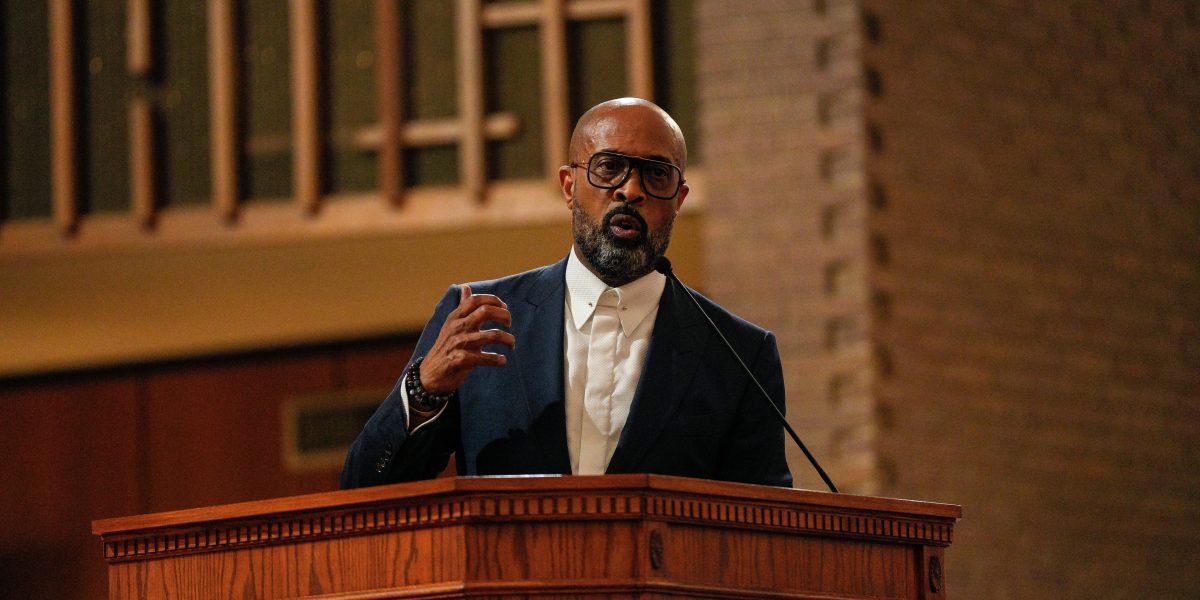
Photo via The Intercept

Republicans Are Desperate to Pretend They Never Supported the War With Iran

Read the original at The Intercept ↗
Cite

Stephens, A. (2026, November 6). Republicans Are Desperate to Pretend They Never Supported the War With Iran. The Intercept. https://theintercept.com/2026/11/06/jd-vance-midterms-republicans-iran-war/

Dated from the outlet's own feed. Check the original for its byline.

The Intercept · collected 2026-11-06 · by Alain Stephens

Quick Summary

Alain Stephens reports on how Republicans are distancing themselves from their previous support of the ongoing war with Iran following significant electoral losses to Democrats. Vice President JD Vance openly attributes these defeats to the war, which has become a political liability for many Republicans who now seek to dissociate from it to salvage their political futures. Meanwhile, former president Donald Trump still defends the conflict despite acknowledging its negative impact on his party's electoral performance. The article highlights how Republican candidates are navigating this issue by expressing public opposition to the war while voting against measures to end hostilities in competitive races.
Written by AI on 2026-11-08, from this article's own text only (the story summary below draws on all the coverage).

AI analysis

Story summary

On November 6, 2026, Democrats won control of both houses of Congress and made significant gains in traditionally Republican states like Kansas and Texas, signaling a major shift in American politics. This victory was largely attributed to widespread discontent over the ongoing war with Iran, which had been championed by President Trump but led to economic hardships for many Americans. The Republicans, once staunch supporters of the war, are now distancing themselves from it as they seek to salvage their political futures. The election results in Texas, a state with 40 Electoral College votes, particularly highlighted this shift, suggesting future presidential elections may also be affected.

Written for “Republicans Backtrack on Iran War Support” on 2026-11-09, grounded in this article and the 0 other(s) covering the same event.

Story

Republicans Backtrack on Iran War Support
Politics · 1 article(s) covering the same event.

Compared with similar articles

This article reads leans left and hedges 10% of its claims. Each row says how that neighbour differs.
Times of India
Hedges 4 of 22 claims Outlet record 59/100
“The articles discuss different perspectives and analyses regarding the Republican defeat in the midterm election but describe distinct events with different focuses.”
The Sydney Morning Herald
Leans left Hedges 2 of 44 claims Outlet record 61/100
“The articles discuss different dates and aspects of the Republican electoral losses; Article A refers to a Tuesday's results while Article B discusses immediate reactions following the election day.”
The Independent
Leans left Hedges 4 of 46 claims Outlet record 59/100
“While both articles discuss Democrats gaining control of Congress following the midterm elections, they appear to be discussing different aspects or stages of the overall election results.”
Semafor
Leans left Hedges 0 of 5 claims Outlet record 68/100
“The articles describe similar outcomes from the election but focus on different aspects and are written on different dates, suggesting coverage of broader implications rather than a single incident.”
BBC News
Hedges 0 of 12 claims Outlet record 66/100
“While both articles discuss the outcome of the US midterm elections and the shift in political power, they describe different aspects of the event and are from different dates.”
Evening Standard
Hedges 1 of 24 claims Outlet record 64/100
“Article A discusses the results of the US midterm election, while Article B focuses on the reaction to those election results and their implications.”
Daily Mail
Leans right further right than this Hedges 3 of 107 claims Outlet record 69/100
“The articles discuss Republicans' reactions to election results but focus on different aspects and timelines, with Article B not specifically matching Article A's content.”
How this article was measured signals, leaning charts, publisher record, byline, topics and claims

Signals How these are calculated →

Claims extracted
68
sentences that state something as happening or true
Uncertain
10%
7 of 68 hedged ("reportedly", "may", "according to")
Leaning
Leans left
of the writing, not the subject · beta estimate
Publisher signals
97/100
The Intercept's corrections and hedging, across everything collected from it. Not a measure of accuracy.
Outlets on this story
1
Politics
Same framing elsewhere
1
articles that frame the event the way this one does
Analyzed 2026-11-08 · how these are computed

How this is being covered How these are calculated →

Article leaning vs. publisher reliability
Source leaning vs. consistency

Publisher

The Intercept · 168 article(s) · 0 correction(s) detected
No corrections detected for this publisher. That may mean careful reporting, or simply that nothing has been checked.

Who wrote this

Alain Stephens
3 article(s) here · 1 carrying a prediction
During an October 25 ABC interview, Hinson said she would not rule out a post-election U.S. offensive and said she trusted Trump and the military to choose the right timetable.
Both men are making a deceptively simple argument in some of the staunchly staunch red-as-hell, Republican territory in America, one that might transcend the conventional wisdom about national campaigns and the millions poured into competing campaign war chests: When far-right policy translates into actual pain, at what point does intervening become a spiritual obligation? Amid the big-ticket ad buys, fundraising appeals, and armies of political consultants, Talarico and Haynes are tapping into a political tradition that has long sustained communities across the South: showing up.
2026-10-30 · assertive framing · The Rise of the Christian Left in Texas
As a Black woman, she couldn’t even vote; in her isolation, her best job security was to carry a pistol.
Also by Alain Stephens
The Rise of the Christian Left in Texas
2026-10-30 · The Intercept
Nothing else under this byline is closely related to this article, so these are simply their most recent.

Topics

American Americans Iran Republican Republicans

Subjects

Trump PERSON · 8× Iran GPE · 6× Republican NORP · 6× Americans NORP · 4× Michigan GPE · 3× Republicans NORP · 3× Senate ORG · 3× American NORP · 2× Hinson PERSON · 2× Alain Stephens PERSON · 1×

Narrative

The defense secretary responded to the criticisms in a nearly six-minute-long video posted online on Thursday, in which he seemed to make the case for keeping his job, touting his elimination of the “Marxist ideology” of diversity, equity, and inclusion initiatives and tarring transgender troops as having a “mental illness.”
framing: assertive · carried by 1 article(s) · first seen 2026-11-08
During an October 25 ABC interview, Hinson said she would not rule out a post-election U.S. offensive and said she trusted Trump and the military to choose the right timetable.
2026-11-08 · The Intercept
Republicans Are Desperate to Pretend They Never Supported the War With Iran · assertive framing

Claims (68 extracted, 7 hedged)

Alain Stephens is an investigative reporter covering gun violence, arms trafficking, and federal law enforcement. asserted
Stephens → cover → violence
To say that Americans were pissed off is an understatement. On Tuesday, Democrats didn’t just seize control of both houses of Congress. asserted
Democrats → say → Congress
They redrew the American political map, capturing offices that had remained reliably Republican for generations, from the Deep South to Kansas and Texas. asserted
that → redrew → Kansas
The Lone Star State alone, with its 40 Electoral College votes, now raises the possibility of a seismic shift in the calculus of future presidential elections. asserted
State → raise → elections
The sheer scale of the historic Democratic surge delivered an unmistakable rebuke to America’s supposedly populist president. asserted
scale → deliver → president
The message was clear and simple: We do not like you. asserted
We → like → you
Much of Americans’ rapid disillusionment with the Trump administration can be traced to a single word — Iran — and the cascading economic hardships Americans have endured as the war has dragged on. asserted
war → trace → word
The war has gone from a Republican loyalty test to a political albatross for many of its former supporters, one that many Republicans are now jettisoning themselves away from to salvage their own political futures. asserted
Republicans → go → futures
By Wednesday, it had become the chief explanation for the party’s sweeping electoral defeat, with Vice President JD Vance declaring unequivocally on X that “the reason we lost is the war.” asserted
we → become → X
“If you’d like to argue it was worth it, that losing the Senate for the next 6 years was worth it, then do so. asserted
losing → like → years
Argue it was a worthwhile cost to pay. asserted
it → argue → ?
Agree or disagree, that’s at least honest,” he wrote. asserted
he → agree → ?
“But everyone knows why we lost. asserted
we → know → ?
And any honest conversation about where we go from here must start there.” asserted
we → go → ?
Coming from Trump’s own vice president, it was a striking about-face. asserted
it → come → president
The tirade also raised an awkward question ahead of the 2028 presidential race: How does a potential successor to the MAGA mantle campaign against a war waged by his own administration? asserted
successor → raise → administration
Trump, however, has not gone nearly as far as his VP. asserted
Trump → go → VP
Although the president acknowledged the war hurt Republicans, he still defended it on its merits. asserted
he → acknowledge → merits
Speaking with reporters Wednesday after expounding at length about his White House ballroom, Trump said, “The Iran thing we had to do, and we continue to do it.” asserted
we → speak → it
Where Did All the Warmongers Go? asserted
Warmongers → go → ?
In September, ABC News identified 17 Republican lawmakers and candidates who had called for ending the war through public statements or votes. asserted
who → identify → statements
Much of the pressure came in competitive midterms races, as the conflict’s effects on oil, diesel, and fertilizer prices reached American households. asserted
effects → come → households
In Iowa, Republican Senate candidate Ashley Hinson called for a “successful and immediate end” to the war in September, warning that voters were paying the price at gas pumps and grocery stores. asserted
voters → call → pumps
Yet she voted six times against House measures directing Trump to halt the attacks. asserted
she → vote → attacks
During an October 25 ABC interview, Hinson said she would not rule out a post-election U.S. offensive and said she trusted Trump and the military to choose the right timetable. asserted
she → say → timetable
Despite the president praising her weight loss at a recent rally, tepidly breaking with Trump wasn’t enough to get Hinson over the line, and she lost to Democrat Josh Turek by 4.5 percentage points. asserted
she → praise → points
Michigan also had its share of Iran backtrackers. asserted
Michigan → have → backtrackers
Republican Senate hopeful Mike Rogers described Iran as an “imminent threat” when the bombing began on February 28. asserted
bombing → describe → February
In May, he called the conflict a potential “win-win-win.” uncertain
he → call → conflict
But with the midterms fast approaching, Rogers released a campaign ad declaring “the war with Iran needs to end” quickly and warned Michigan families could no longer afford the economic fallout. uncertain
families → approach → fallout
Rep. John James, the Republican candidate for Michigan governor, likewise praised Trump’s use of force early in the war, saying the president “had the balls” to “assure the survival and success of liberty.” asserted
president → praise → liberty
He voted against six House war-powers resolutions, including as recently as September. asserted
He → vote → September
Days after that vote, he said the war needed to wrap up “quickly.” asserted
war → say → vote
He went on to declare in an interview, “the position has always been, I hate war.” asserted
I → go → war
Both Rogers and James lost their races. asserted
Rogers → lose → races
Even Florida Gov. Ron DeSantis, a possible contender in the Republican Party’s next presidential contest who could reportedly be up for Pete Hegseth’s job, warned Monday that the war was a “big, big drag” on his party. uncertain
war → warn → party
Trump, DeSantis pointed out, campaigned against another Middle Eastern war. asserted
DeSantis → point → war
Now voters are dealing with higher fuel costs, and Republicans who refuse to acknowledge the connection are “gaslighting” them. asserted
who → deal → them
But back in spring, DeSantis defended the strikes on Iranian leadership, describing its government as “a fanatical, apocalyptic, militant Islamist regime.” asserted
DeSantis → defend → regime
The polling helps explain the Republican panic. asserted
polling → help → panic
…and 28 more, not listed.

Give feedback · no sign-in needed

No sign-in needed for now. Your note is sent without a name, so it cannot be answered.

History Support