Europe’s far-right leaders have shown signs of distancing themselves from President Donald Trump after his Republican Party suffered significant blows in the midterm elections, losing control of both the House and Senate.
asserted
Party → show → House
The steps back, although slight, are notable considering how Europe’s right-leaning figures have previously celebrated sharing ideological ties with Trump.
asserted
figures → consider → Trump
When the now-embattled President returned to the White House in January 2025, Italian Prime Minister Giorgia Meloni and Santiago Abascal, the leader of Spain's far-right Vox party, were among the European lawmakers invited to his Inauguration Day.
asserted
Meloni → embattle → Day
But the tide may now be turning.
uncertain
tide → turn → ?
While left-leaning European leaders have celebrated the Democrats’ gains in the U.S. midterms, some far-right figures in Europe appear keen to succinctly separate themselves from Trump and his policies.
asserted
figures → lean → Trump
Trump ran in 2024 on a campaign that promised to avoid dragging the U.S. into foreign wars, instead focusing on home prosperity.
asserted
that → run → prosperity
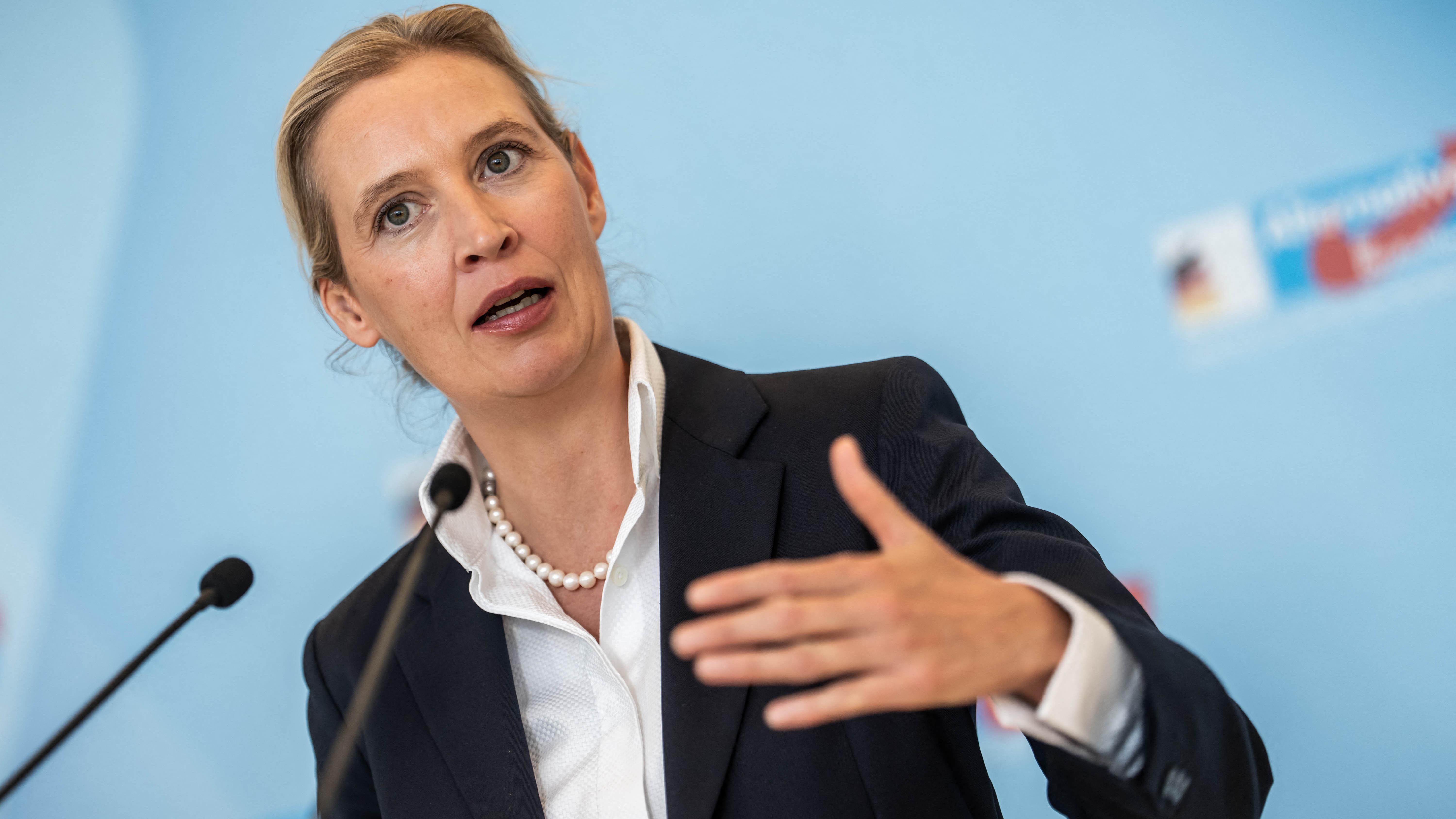
His war with Iran, which is now in its ninth month, has gone against that campaign pledge—a point Alice Weidel, co-leader of the far-right Alternative for Germany (AfD) party, brought up in her assessment of the GOP’s midterm losses.
asserted
Weidel → go → losses
"Trump had promised his voters he would not pursue an interventionist foreign policy," Weidel told Germany’s T-online outlet on Wednesday.
asserted
Weidel → promise → Wednesday
"This broken campaign promise has now come back to haunt the Republicans."
asserted
promise → come → Republicans
While Weidel acknowledged that the political party in control of the White House typically loses seats in Congress during the midterms, she said that the scale of the Republican defeat “is remarkable” and can be explained primarily by the “devastating consequences of the Iran war."
asserted
scale → acknowledge → war
The commentary marked a shift in tone for a party that has often welcomed the support of the Trump Administration, both overtly and covertly.
asserted
that → mark → Administration
Weidel met with Vice President J.D. Vance in February 2025, just days before the German election.
asserted
Weidel → meet → election
During that trip, Vance spoke at the Munich Security Conference and took time out of his speech to criticize what is known as the “firewall” approach in Germany—the agreement among other political parties that they will not work with the AfD.
asserted
they → speak → AfD.
In another show of support, billionaire Elon Musk, while heading the Trump Administration’s now-defunct Department of Government Efficiency (DOGE), made a virtual appearance at an AfD campaign event.
asserted
Musk → head → event
After the AfD won a state election in September, Trump, who has long accused European countries of holding weak immigration policies, remarked: “The populist party in Germany just had a really big night.
asserted
party → win → night
They finally got tired of the absolutely horrible immigration rules and regulations, which have hurt Germany.”
asserted
which → get → Germany
A political shift from Europe
Further efforts to create distance from the MAGA brand came from Jordan Bardella, president of France’s far-right National Rally.
asserted
efforts → create → Rally
When asked about the Republicans’ midterm losses by a French radio show, Bardella said the “American intervention in Iran" had carried “very heavy consequences” for world economies.
asserted
intervention → ask → economies
“What is certain is that Donald Trump's second term differs quite significantly, in its philosophy and foreign policy, from his first, during which his political ambition was to withdraw the United States from major global conflicts,” he said.
asserted
he → differ → conflicts
Georgios Samaras, assistant professor of public policy at King’s College London, tells TIME that the scale of the Republican defeat sent “shock waves across the continent.”
asserted
scale → tell → continent
“After two years of catastrophic economic management, [Trump’s] international standing is gone.
asserted
standing → go → management
It's practically like the far-right [is] losing their global leader,” he says, adding that Trump’s loss is likely to be seen as “a gift to all liberals.”
asserted
loss → lose → liberals
In Spain, Abascal, who will take part in a snap election at the end of November, also backed away from any midterms discussion.
asserted
who → take → discussion
“I'm not in Michigan to analyze an election, I'm in Ciudad Real.
asserted
I → analyze → Real
And considering the November 29th elections, I couldn't care less about what happens in other countries,” he told reporters.
asserted
he → consider → reporters
His positioning stood in stark contrast to the U.S. alliance he nurtured last year, when Trump during the 2025 Conservative Political Action Conference praised Abascal for doing a “great job” in Spain.
asserted
Trump → stand → Spain
In 2022, Trump made a virtual appearance at one of Abascal's rallies in Madrid.
asserted
Trump → make → Madrid
When approached about how Europe's far-right leaders have reacted to the GOP's midterm losses, White House deputy press secretary Anna Kelly told TIME: “President Trump has effectively restored American strength on the global stage and strengthened relationships with world leaders.”
asserted
Trump → approach → leaders
Aurélien Mondon, a professor of politics at the University of Bath who specializes in reactionary politics, points to how far-right parties in Europe have benefited from “transnational cooperation” with the MAGA movement.
asserted
parties → specialize → movement
That cooperation has spanned years, ranging from Trump ally Steve Bannon’s efforts to bolster right-wing parties in Europe to the Trump Administration’s antagonistic posture toward Europe’s mainstream political parties and leaders.
asserted
cooperation → span → parties
Trump’s influence has also extended to political campaigns, with his ally in Britain, Reform UK leader Nigel Farage, staging MAGA-style rallies during last year’s local elections in England.
asserted
ally → extend → England
“These kinds of transnational networks have served [the far-right] well in many ways, and it allowed them to mainstream their politics,” says Mondon, who warns that such alliances can also be limited and opportunistic.
asserted
alliances → serve → politics
“At the end of the day, these parties are about the nation, and so they can very easily detach themselves from the failures of their counterparts elsewhere.”
asserted
they → detach → counterparts
Signs of strained relations between Trump and European allies
The growing distance between Trump and some of his far-right European allies is not entirely new.
asserted
distance → grow → allies
Mujtaba Rahman, managing director for Europe at Eurasia Group, a political-risk consultancy, says that “far-right leaders across the European continent have been distancing themselves from MAGA for quite some time.”
asserted
leaders → say → time
“It's been clear to different persuasions of the far-right in the E.U. that association with the Trump brand, the MAGA brand, is an electoral liability,” he says.
asserted
he → say → brand
“That happened in the aftermath of Trump's Greenland pronouncements, and the aftermath of the war in Iran, and the impact that's having on cost-of-living issues, which is a key political issue.
asserted
which → happen → issues
In 2024, Bardella said his “heart leans toward Trump,” but he has since criticized some of the President’s policies.
asserted
he → say → policies
In January, when Trump ramped up his threats to annex Greenland, Bardella urged the European Union to unite against what he referred to as “a direct challenge to the sovereignty of a European country.”
asserted
he → ramp → country
AfD leadership also distanced itself from the annexation rhetoric.
asserted
leadership → distance → rhetoric
…and 26 more, not listed.
 The Aporia