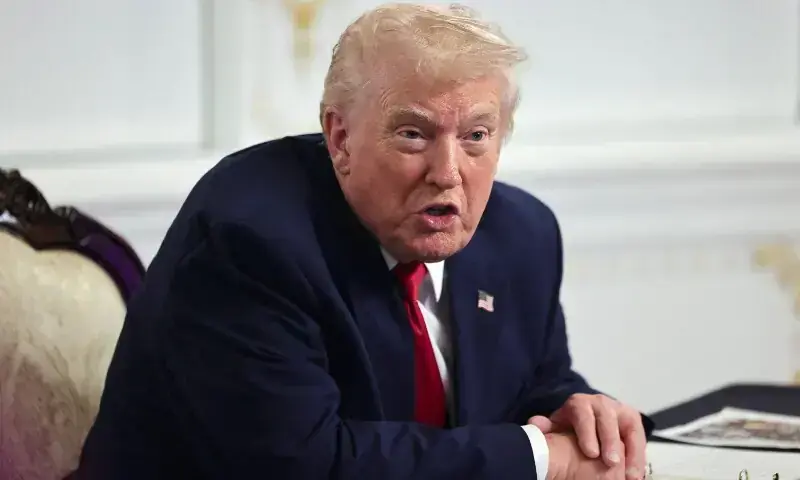
Since the dramatic victories of the Democrats on Tuesday, Trump has been posting increasingly provocative material on social media in what appears to be an attempt to turn attention away from the Democrats and back to himself.
asserted
what → post → himself
Amidst all that mess, there are signs that the president is deeply concerned about anyone getting a window into how his administration has been operating.
asserted
administration → be → window
Yesterday he insisted that the Democrats are “threatening a lot of people…just because they happen to be Republicans, or Republican supporters.”
asserted
they → insist → people
He said that the Democrats’ promises to investigate the administration are themselves crimes and that he is ordering the Department of Justice (DOJ) to investigate.
asserted
he → say → Justice
The post is convoluted, but Trump insists that “there have been no impeachable acts committed, or even thought of, by the victims of this illegal process.”
asserted
Trump → insist → process
Shortly after, he posted, “These SLEAZEBAGS should go to jail for what they are doing”, “The Senate must act, and stop being pushed around to the point of the Republican Party losing Elections, and worse!” he insisted.
asserted
he → post → Elections
In another post he suggested just what that “worse” might be.
uncertain
worse → suggest → post
Apparently worried that, this time, his impeachment by the House might lead to a conviction by the Senate, Trump posted creative math to argue that the outcome of the Senate race in Alaska, where Democrat Mary Peltola is ahead, is really a romp by Republican Dan Sullivan.
uncertain
Peltola → worry → Sullivan
Trump got there by counting the actual votes for Sullivan and then adding to that total the votes for everyone else in the race other than Peltola.
asserted
Trump → get → Peltola
“The Alaska Race is OVER,” he said, “Dan Sullivan WON, BY A LOT!”
asserted
Sullivan → say → LOT
It feels desperate.
asserted
It → feel → ?
As Perry Stein and Jeremy Roebuck of the Washington Post wrote today, congressional Democrats are already building the investigative staff of the committees they will begin to lead in January.
asserted
they → write → January
In a line that shows just how much things have changed, Stein and Roebuck write that the congress members have “been hiring from the large pool of former career prosecutors who were fired or departed from the Justice Department since the start of Trump’s second term.”
asserted
who → show → term
As social media user ctrl+alt+RESIST commented: “Trump purged DOJ to bury the evidence and instead handed Congress a staff of people who know exactly where everything is filed.
asserted
everything → comment → people
You cannot shred institutional memory.
asserted
You → shred → memory
It just changed employers.”
asserted
It → change → employers
Attorney General Todd Blanche appears to have thought events through in a similar fashion.
asserted
Blanche → appear → fashion
Today on CNN, he seemed rattled as he tried to frame upcoming investigations as a system of threats and revenge against Republicans.
asserted
he → seem → Republicans
Asked by Dana Bash what crime Democrats were committing by saying they would exercise their duty of oversight, Blanche did not have one.
asserted
Blanche → ask → one
Asked if Democrats should be imprisoned as Trump suggested, Blanche said it depended on what they had done.
uncertain
they → ask → what
When asked about the Trump administration’s attacks on Trump’s perceived enemies, he tried to dismiss them by saying such cases are only a few of the thousands the department has brought.
asserted
department → ask → thousands
While Trump has perverted the Department of Justice by using it as his own personal weapon, in fact, accountability is not revenge; it is fundamental to maintaining the rule of law.
asserted
it → pervert → law
One hundred and fifty years ago, after the Civil War, General Ulysses S. Grant believed the cause of the Confederacy was “one of the worst for which a people ever fought, and for which there was the least excuse.”
asserted
people → believe → which
But when he accepted General Robert E. Lee’s surrender of the Army of Northern Virginia in the hamlet of Appomattox Court House, Virginia, in April 1865, he allowed Confederate soldiers to go home with only a promise that they would not take up arms again, in the hope that they would “be able to put in a crop to carry themselves and their families through the next winter.”
asserted
they → accept → winter
It was a humanitarian gesture and also a practical one, for southerners were starving, and if they missed planting season, the devastation would get worse.
asserted
devastation → starve → season
Grant’s amnesty also reflected the widespread belief among northerners that the blame for secession and the war that killed more than 600,000 Americans fell on the political leaders who had taken their states out of the Union to create a new slave-holding nation they could dominate.
uncertain
they → reflect → nation
But President Andrew Johnson, who took office after the death of President Abraham Lincoln at the hands of an assassin, made a partisan decision to pardon all but about 1,500 of those leaders, returning to them all the privileges of citizenship in a nation they had tried to destroy in hopes that they would support him.
asserted
they → take → him
Never facing accountability for their attack on the United States, southern white leaders resurrected the ideology the North had defeated during the war.
asserted
North → face → war
They changed the memory of what had happened at Appomattox, turning Grant’s clemency into something entirely different.
asserted
what → change → something
Rather than being a gesture of a victor’s mercy, it was, they argued, a recognition of the superiority of the southern cause, proof that the Confederates were right all along and had lost only because they were overawed by the North’s superior firepower.
asserted
they → argue → firepower
The lack of accountability for attacking the United States of America meant that the Confederates’ treason never became odious.
asserted
treason → attack → America
Former Confederates were able to spread their ideology across the country in the postwar years.
asserted
Confederates → spread → years
In 1871—just six years after the surrender at Appomattox—the first Confederate secretary of state, Robert Toombs, was being quoted in northern newspapers about the dangers of permitting poor men, especially poor Black men, to vote and his advocacy for a property requirement for voting.
asserted
secretary → quote → voting
Within a decade, white southerners were lamenting the “Lost Cause,” and northern sympathizers threw Black Americans overboard in their rush to reunite with white southerners against a government that worked for all Americans.
asserted
that → lament → Americans
The true history of the Confederacy—a brief rebellion against the United States to create a slave-holding nation—was whitewashed as a stand against federal overreach.
asserted
history → create → overreach
As such, it endured, carrying racism and rebellion forward for more than a century.
asserted
it → endure → century
In 2021, when rioters stormed the U.S. Capitol in an attempt to overturn the results of the 2020 presidential election, some of them carried Confederate battle flags.
asserted
some → storm → flags
That same partisan reworking of history took place after President Gerald Ford issued a preemptive pardon to President Richard Nixon for his actions surrounding the 1972 break-in at the Democratic National Committee’s headquarters at the Watergate complex in Washington, D.C. Although Ford relied on the 1915 Burdick v. United States decision that said accepting a pardon carries with it “an imputation of guilt, acceptance, a confession of it,” Nixon never publicly accepted responsibility for his obstruction of justice, abuse of power, and contempt of Congress.
asserted
Nixon → take → Congress
Instead, Nixon blamed the press, whose members designed their “leaks and accusations and innuendo” to destroy him.
asserted
members → blame → him
“When the president does it, that means that it is not illegal,” Nixon told interviewer David Frost in 1977.
asserted
Nixon → do → 1977
…and 20 more, not listed.
 The Aporia