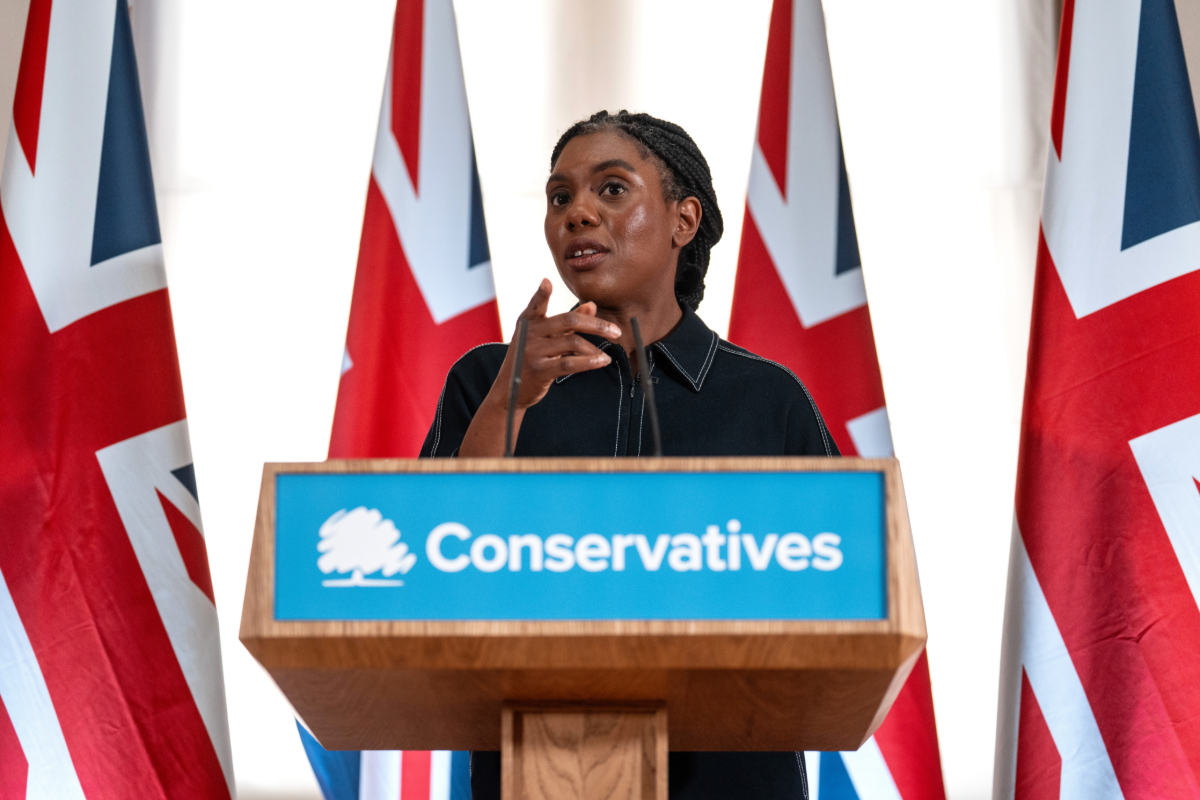
The Conservatives have published a plan to cut the welfare bill by more than £36bn a year as the party pledged to find spending reductions in order to support the public finances.
asserted
party → publish → finances
The opposition party has published a 50-page document detailing its welfare savings plans, expanding on previous commitments that would see disability spending and other benefits offered to families radically cut back.
asserted
spending → publish → families
Shadow work and pension secretary Helen Whately said the benefits bill was “out of control” as she said “hard graft” by Tory researchers showed the party was prepared to get the welfare bill down.
asserted
party → say → bill
A large chunk of the savings would come from reforming disability and sickness benefits, which includes ending claims for “mild mental health conditions”.
uncertain
which → come → conditions
The Conservatives’ document said it forecast cuts to spending from not offering the “standard rates of personal independence payments for milder mental health issues and neurodiversity conditions such as anxiety, depression and ADHD”.
asserted
it → say → anxiety
Reforms on back pain, arthritis and whiplash assessments, plus changes to how pensioners claim benefits, could add additional savings.
uncertain
pensioners → claim → savings
In addition to the near-£14bn savings on sickness and disability benefits, about £9.5bn would be cut by ending access to the welfare state for foreign nationals excluding settled EU citizens plus billions more from housing benefit reforms and ending access for foreign nationals.
asserted
9.5bn → cut → nationals
The Tories would also re-instate the two-child benefit cap, which was scrapped by Rachel Reeves in 2025 following pressure from Labour backbenchers.
asserted
which → re → backbenchers
Changes to Motability, housing benefits and reducing fraud and error would add welfare savings up to £36bn.
asserted
Changes → reduce → 36bn
Kemi Badenoch said the party’s new system would better reflect the contribution millions of people make to the economy.
asserted
millions → say → economy
In a speech on Tuesday, she is expected to point out that “double amputees run marathons” and “people with autism run some of the biggest tech companies in the world”.
asserted
people → expect → world
“If you tell a young person that their ADHD means they are defective and will never amount to anything, that mindset is likely to be more destructive to their future than the condition itself.
asserted
mindset → tell → condition
That is what our welfare system is currently doing,” she will also say.
asserted
she → do → what
“Conservatives believe in a system that looks at people through the lens of what they can do, not what they cannot.”
asserted
they → believe → what
The party is bringing forward further details on welfare savings just as the government is set to hear from Alan Milburn and Sir Stephen Timms on full reviews of the benefits system for young people out of work and disabled people.
asserted
government → bring → work
The Milburn review is expected to recommend larger investment in employment, with changes to benefits also set to feature.
asserted
changes → expect → benefits
Andy Burnham’s spokesman has said a white paper on welfare reform will be published early next year.
asserted
paper → say → reform
The Labour government has not committed to bring the welfare bill down by 2030.
asserted
government → commit → 2030
It has also been suggested that his flagship 10-year plan speech could only come next year, rather than by the end of 2026.
uncertain
speech → suggest → 2026
The 10-year plan is facing heavy scrutiny from City analysts as Burnham pushes to expand his “public control” agenda.
asserted
Burnham → face → agenda
The speech could include pledges to strip down arms-length bodies and transfer powers across transport and other areas of the state to ministers and mayors, according to the Telegraph.
uncertain
speech → include → Telegraph
A report by the right-leaning think tank Policy Exchange has called on ministers to seize control of more than a dozen quangos across the Department for Education (DfE) and the Department for the Environment, Food and Rural Affairs (Defra) in order to limit the scope of bureaucracy and “unnecessary” extensions of the state over businesses and people’s lives.
asserted
report → lean → businesses
The report’s authors argued that spending on quangos in either department amounts to about £3bn a year while power should be returned to “politicians the public can hold to account”.
asserted
public → argue → account
Burnham is reviewing the power and scope of quangos ahead of drafting his 10-year plan, according to reports.
uncertain
Burnham → review → reports
Alex Burghart, the deputy leader of the Conservatives, said that the Tories would consider proposals in the report as it forms policies before the next election.
asserted
it → say → election
 The Aporia