JERUSALEM — Benjamin Netanyahu remains Israel’s prime minister when the new parliament takes office on Tuesday, but its new, less friendly composition could make his life much more difficult.
uncertain
life → remain → Tuesday
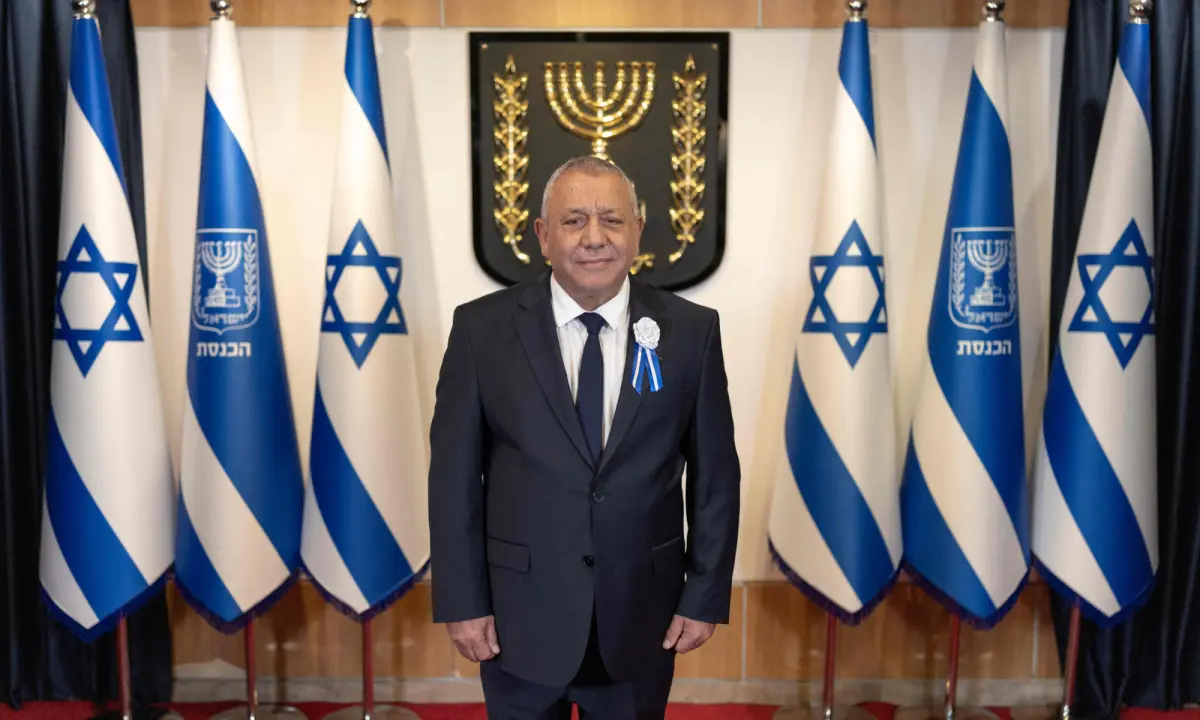
Gadi Eisenkot, a former military chief seeking to move Israel to the centre, was given the mandate Sunday by President Isaac Herzog to form a new government, a complicated task as neither he nor Netanyahu command a majority.
asserted
he → seek → majority
Netanyahu, Israel’s longest-serving leader, remains caretaker prime minister until then — but the new 120-member parliament can still go to battle against him.
asserted
parliament → serve → him
The lack of a new government “does not infringe upon the Knesset’s prerogatives,” said Assaf Shapira, a political expert at the Israel Democracy Institute.
asserted
Shapira → infringe → Institute
Eisenkot has also warned military chiefs that Netanyahu does not have a mandate to resume war against Iran — although the statement was more about politics than the law with Netanyahu still in charge of national security.
asserted
Netanyahu → warn → security
Netanyahu’s bloc slipped to 53 seats in the new parliament, down from the decisive 68 it commanded previously.
asserted
it → slip → 68
Eisenkot’s core opposition bloc has fewer seats than Netanyahu at 48, but the new parliament also has a record 19 lawmakers from Arab-majority parties that are vehemently opposed to Netanyahu and his hard-right government — although it remains unclear if Eisenkot will seek to work with Israeli Arabs directly.
uncertain
Eisenkot → have → Arabs
Here are ways in which the new parliament could turn on Netanyahu:
uncertain
parliament → turn → Netanyahu
Commission on Oct. 7 attacks
One of the opposition’s main campaign promises has been to set up a commission of inquiry to probe failures in the famously high-security country that allowed Hamas’s Oct. 7, 2023, attack, the deadliest ever day for Israel.
asserted
that → set → Israel
While Netanyahu denies any wrongdoing on his part, his government has consistently opposed the creation of a national, independent commission of inquiry that would have broad investigative authority with Netanyahu instead supporting a review by political appointees.
asserted
Netanyahu → deny → appointees
Even before a new government is formed, the incoming parliament could set up a special committee on the attack, which would hand over its findings to an eventual commission of inquiry, Shapira said.
uncertain
Shapira → form → inquiry
Eisenkot declared after the election that forming a commission would be an immediate priority.
asserted
forming → declare → commission
Repealing Netanyahu-era laws
The new parliament could also move quickly to repeal some of the most controversial laws under Netanyahu, including his efforts to revamp the judiciary — seen by the prime minister as an enemy after he was charged with corruption.
uncertain
he → repeal → corruption
The judicial revamp triggered some of Israel’s largest protests with liberals worried about the future of democracy, although the Hamas attack and subsequent wars quickly shifted public attention.
asserted
attack → trigger → attention
The new parliament could aim to repeal the last coalition’s laws that limited the powers of the Supreme Court and made it easier to remove the country’s attorney general.
uncertain
it → aim → general
Lawmakers could also roll back exemptions for ultra-Orthodox Jews from serving in the military.
uncertain
Lawmakers → roll → military
The exemption has angered many Israelis at a time that the military is stretched thin, although the laws did not go far enough for ultra-Orthodox parties, who are being wooed by at least one opposition figure.
asserted
who → anger → figure
Shapira said repealing Netanyahu-era laws was as simple as calling a vote and reverting to previous policies.
asserted
repealing → say → policies
But the process to pass new laws could take weeks as the opposition co-ordinates its priorities.
uncertain
opposition → pass → priorities
The first political clash will concern electing a new parliament Speaker.
asserted
clash → concern → Speaker
According to parliamentary rules, the vote for Speaker can take place as early as during the inaugural session and must happen before a new government is sworn in.
uncertain
government → accord → session
An initial clash took place Thursday when three parties in the Eisenkot bloc sent letters to the outgoing Speaker requesting that his successor be elected at the opening session — a timing that Shapira agreed was more common.
asserted
Shapira → take → session
Ohana responded that it was customary to elect the Speaker on the day a new government is sworn in.
asserted
government → respond → day
Naftali Bennett, a key opposition figure, vowed to act “urgently” on the bloc’s priorities.
“We will take control of the Knesset as quickly as possible.”
asserted
We → vow → Knesset
 The Aporia