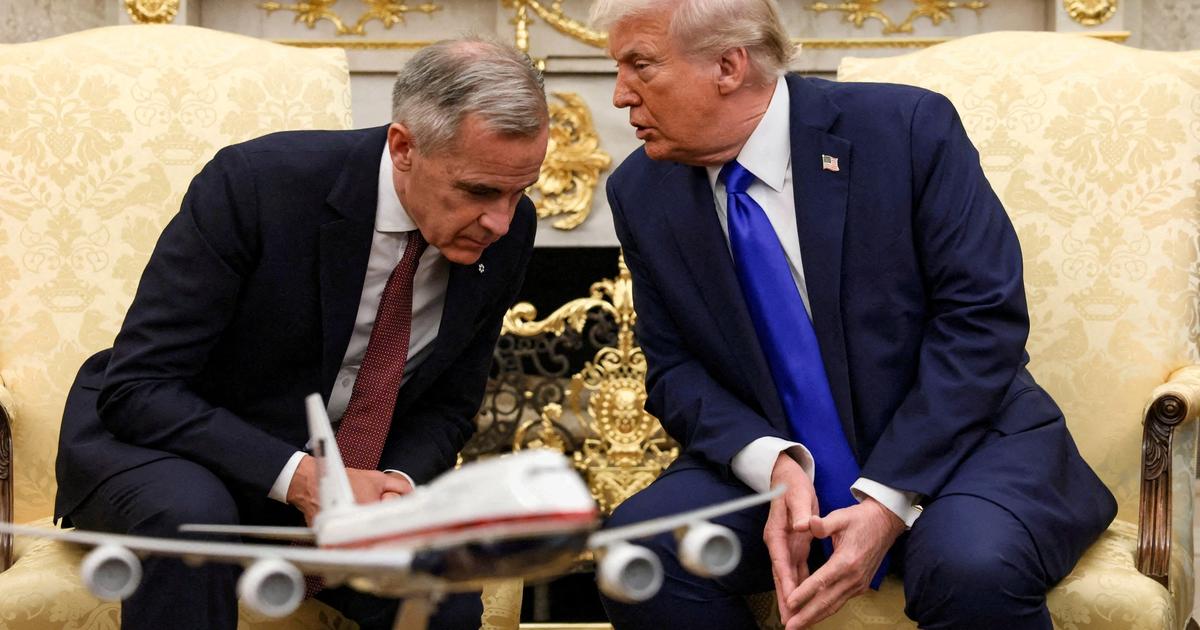
Where Trump goes now on the big 3: tariffs, Iran war, immigration
In surprise White House briefing, Trump downplays key issues that swung voters against Republicans
After his party's calamitous loss in the midterms, a looming question is whether U.S. President Donald Trump will shift course on any of his three biggest initiatives since returning to the White House: tariffs, the war with Iran and immigration enforcement.
asserted
Trump → go → Iran
Trump has come across as somewhat subdued in his public appearances over the past week.
asserted
Trump → come → week
Yet in both his words and actions, Trump has shown defiance in the face of the results, which saw the biggest drop in Republican House candidates' share of the vote in any election since the Watergate scandal of the early 1970s.
asserted
which → show → 1970s
He named Stephen Miller — the chief architect of Trump's hard-line immigration policy and the driving force behind much of his unprecedented use of executive orders — as his new chief of staff, the most powerful adviser to the president.
asserted
He → name → president
Many observers see the move to elevate Miller as a signal that Trump intends to double down on immigration enforcement rather than ease off.
asserted
Trump → see → enforcement
Then, during an unscheduled briefing Monday afternoon in the White House, Trump mostly brushed aside the issues that drove the vote swing against the Republicans, declaring the war in Iran "effectively over" and describing the U.S. as "doing better than it's ever done before."
With the firm caveat that Trump is often highly unpredictable, here's what analysts expect from the president on his three key initiatives in the wake of the midterms.
asserted
analysts → brush → midterms
Trump's long-standing love affair with tariffs is no secret.
asserted
affair → stand → tariffs
Even though tariff-driven price increases played a significant role in the Republicans' midterm drubbing, the president appears highly unlikely to toss out the policy entirely.
asserted
president → drive → policy
But some observers do see room for Trump to back down on select tariffs, particularly ones that are politically unpopular, as tariffs on Canadian goods proved to be in border states like Michigan and Maine during the election campaign.
asserted
tariffs → see → campaign
Republicans took big hits in the U.S. midterms.
asserted
Republicans → take → midterms
Does that mean Trump's political era is over?
asserted
era → mean → ?
- Analysis
Republicans ran away from Trump's Canadian tariffs, but not far enough
Barbara Weisel, an international trade and investment policy adviser, says there's potential for Trump's team to fine-tune its tariffs, using them in a more strategic and targeted way.
asserted
team → run → way
"The scale of the Democratic wave and public anger may prompt the administration to rethink its approach, and it can do so without completely abandoning Trump’s beloved tariffs," Weisel wrote in a post-midterm article published by the Carnegie Endowment for International Peace.
uncertain
Weisel → prompt → Peace
Drew Fagan, professor at the University of Toronto's Munk School of Global Affairs and Public Policy, says much will depend on whether Trump and his top advisers "actually want to solve the problems that they've created."
asserted
they → say → that
Commerce Secretary Howard Lutnick, seen here with U.S. President Donald Trump in the Oval Office on Sept. 28, has been one of the chief backers of Trump's tariff strategy.
asserted
Lutnick → see → strategy
"He's in denial with regard to the degree to which voters saw the economy, inflation, the weakness of their paycheques versus cost as the fundamental issue, and tariffs were part of this," Fagan told CBC News Network on Monday.
asserted
Fagan → see → Monday
One data point that could signal whether Trump intends to shift his trade agenda will be whether any of the top advocates for tariffs in his administration either leave or get pushed out, chiefly Commerce Secretary Howard Lutnick or U.S. Trade Representative Jamieson Greer.
uncertain
any → signal → administration
War with Iran
Senior members of the Trump administration, including to some extent the president himself, are acknowledging the war's impact on gas prices hurt Republicans in the midterms.
asserted
impact → include → midterms
While Trump and his team continue to defend the decision to go to war with Iran, they are signaling they want it to end.
asserted
it → continue → Iran
However their path to doing so remains anything but clear.
asserted
path → do → ?
Hegseth defends record as Pentagon chief, slams 'sham' push for his impeachment
U.S. House Republican moves to force vote on impeaching Pete Hegseth
"
asserted
House → defend → Hegseth
We're seeing momentum toward the end of this conflict.
asserted
We → see → conflict
I think it's going to be ending fairly soon," Trump said during the Monday briefing.
asserted
Trump → think → briefing
Trump has said for months that the war would end soon.
asserted
war → say → months
The question becomes whether the end will be found through a peace deal or military escalation.
asserted
end → become → deal
A diplomatic agreement could "reinforce perceptions that his war was an unmitigated disaster that damaged U.S. national security, the Republican Party’s electoral prospects and his personal legacy," said William F. Wechsler, a former Pentagon official responsible for special operations and combating terrorism.
uncertain
Wechsler → reinforce → terrorism
"The only way out, Trump may therefore conclude, is to win the war.
uncertain
Trump → conclude → war
That could lead to a decision to restart major combat operations, if not immediately, then in the months to come," Wechsler wrote in a piece for the Atlantic Council, a Washington, D.C.-based think-tank.
uncertain
Wechsler → lead → Council
In his interview with 60 Minutes, recorded Friday, Trump said the administration may have been too tough in its deportation policy.
uncertain
administration → record → policy
But when asked during Monday's briefing whether he has told Miller he wants changes to immigration enforcement, Trump's response suggests there won't be a substantial shift.
"
uncertain
response → ask → enforcement
We have a very strong deportation policy," Trump said.
asserted
Trump → have → policy
"My policy hasn't changed."
asserted
policy → change → ?
Earlier this year, after federal agents in Minneapolis shot and killed two American citizens, the administration toned down the high-profile, aggressive nature of Immigration and Customs Enforcement (ICE) tactics.
asserted
administration → shoot → tactics
However, ICE actually stepped up its overall pace of detentions to hit record highs in the summer, according to analysis by the Deportation Data Project, based at the University of California Berkeley and UCLA.
uncertain
ICE → step → California
U.S. Customs and Border Protection agents detain a man outside the U.S. Immigration and Customs building during a protest in Portland, Ore., in June 2025.
asserted
agents → detain → June
Sarah Binder, a professor of political science at George Washington University, is skeptical that Trump will move in any significant way toward softening his immigration policy.
asserted
Trump → move → policy
"It doesn't seem likely, not with this decision to have Stephen Miller running the show," Binder said Monday in a post-midterm briefing organized by the Brookings Institution, a think-tank in Washington.
asserted
Binder → seem → Washington
Yemisi Egbewole, who served as chief of staff in former president Joe Biden's press office, says it's hard to reconcile Trump's appointment of Miller as chief of staff with his claim to 60 Minutes that he's willing to reach a compromise with the Democrats on immigration.
uncertain
he → serve → immigration
"That really speaks to the duality of the president.
asserted
That → speak → president
He says one thing, but then his actions deliver another totally different result," Egbewole told CBC News Network on Monday.
asserted
Egbewole → say → Monday
…and 2 more, not listed.
 The Aporia