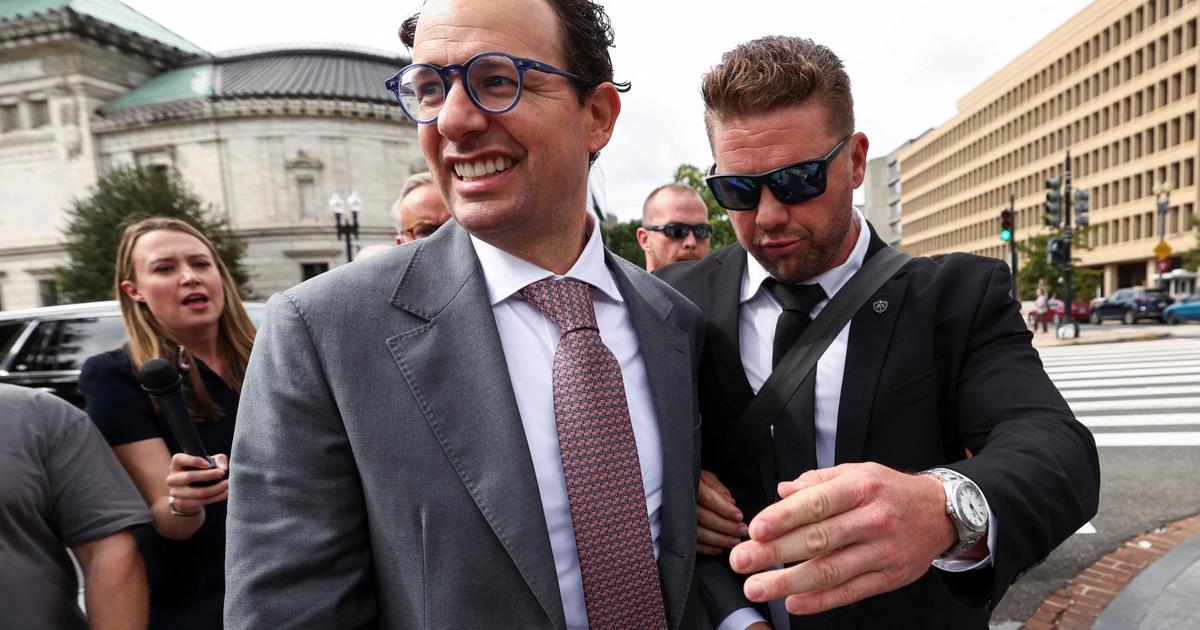
Photo via Global News

Canada joins AI safety declaration but without ‘teeth,’ what can it do?

Read the original at Global News ↗
Cite

Boutilier, A. (2026, November 10). Canada joins AI safety declaration but without ‘teeth,’ what can it do? Global News. https://globalnews.ca/news/12144853/canada-joins-ai-safety-statement/

Dated from the outlet's own feed. Check the original for its byline.

Global News · collected 2026-11-10 · by Alex Boutilier

Quick Summary

Canada has signed an international AI safety declaration initiated by France, joining other nations like Japan and Norway in committing to greater information sharing and early warning systems for AI risks. Major tech companies such as Anthropic, OpenAI, Microsoft, and Canada’s Cohere have also endorsed the initiative. However, experts like Florian Martin-Bariteau from the University of Ottawa are skeptical about its effectiveness due to the lack of binding regulations and enforcement mechanisms. The declaration focuses on developing a public repository for AI risk assessments and fostering legal frameworks that protect citizens while enabling innovation.
Written by AI on 2026-11-10, from this article's own text only (the story summary below draws on all the coverage).

AI analysis

Story summary

Canada has joined an international AI safety declaration led by France, which aims to increase information sharing and establish early warning systems for serious cyber and AI control incidents. The initiative includes commitments from nations like Japan, Norway, the Netherlands, and Bahrain, as well as major U.S.-based companies such as Anthropic, OpenAI, Microsoft, and Canada’s Cohere. However, experts are skeptical about the effectiveness of these voluntary measures, arguing that they lack enforceable regulations. Florian Martin-Bariteau, director of the University of Ottawa's Centre for Law, Technology and Society, emphasized that non-binding agreements do not address the need for serious regulation in the AI industry. He cited the failure of previous voluntary standards to protect communities like Tumbler Ridge from the negative impacts of the AI sector.

Written for “Canada Joins AI Safety Declaration” on 2026-11-11, grounded in this article and the 0 other(s) covering the same event.
Why this leaning score
The article's own words the score was based on. Each is quoted verbatim and was checked against the article text before being stored, so you can find it in the original.
Reading Leans left (beta estimate) Confidence high 1 quote(s) discarded as not found in the article
Leaning: leans left for article 142793 (high confidence, 1 verified quote) · logged 2026-11-10

Story

Canada Joins AI Safety Declaration
Technology · 1 article(s) covering the same event.

Compared with similar articles

This article reads leans left and hedges 5% of its claims. Each row says how that neighbour differs.
Semafor
Leans strongly left further left than this Hedges 1 of 4 claims Outlet record 68/100
“The articles describe different events: one about AI safety groups planning in Washington and the other about Canada joining an international AI safety declaration.”
How this article was measured signals, leaning charts, publisher record, byline, topics and claims

Signals How these are calculated →

Claims extracted
19
sentences that state something as happening or true
Uncertain
5%
1 of 19 hedged ("reportedly", "may", "according to")
Leaning
Leans left
of the writing, not the subject · beta estimate
Publisher signals
63/100
Global News's corrections and hedging, across everything collected from it. Not a measure of accuracy.
Outlets on this story
1
Technology
Same framing elsewhere
1
articles that frame the event the way this one does
Analyzed 2026-11-10 · how these are computed

How this is being covered How these are calculated →

Article leaning vs. publisher reliability
Source leaning vs. consistency

Publisher

Global News · 3066 article(s) · 12 correction(s) detected
Running correction rate · 12 correction(s)

Who wrote this

Alex Boutilier
24 article(s) here · 1 carrying a prediction
However, experts are skeptical that its voluntary nature and say without teeth, such agreements will not work.
The budget documents devoted a few short sentences to how the biggest cash injection in the agency’s history will be used, other than it will allow CSIS to better “engage” Canadians and protect against threats like terrorism, foreign interference and espionage.
“But if they don’t execute, then, it means that our debt metrics will have considerably deteriorated and it will be up to a workforce that is aging to support all of that into the future …
The budget notes that money will come from existing National Defence resources.
The Liberal government is set to table its 2026 budget Thursday amid continued economic uncertainty and the ongoing trade war with U.S. President Donald Trump’s administration.
Americans will head to the polls Tuesday to vote in consequential midterm elections that could hobble U.S. President Donald Trump’s administration for the next two years.
Finance Minister Francois-Philippe Champagne said Monday that this week’s federal budget will focus more on the government’s efforts to build up Canada’s economy and trade than the ongoing trade war with U.S. President Donald Trump.
A recent analysis by the Parliamentary Budget Office suggested reaching that target would require “core” defence spending to increase from $95.7 billion in 2030 to $163.7 billion in 2035-36.
America’s top diplomat in Ottawa appears to be conflating public diplomacy with “foreign interference” as the Republicans brace for what polls suggest could be a bruising in the U.S. midterms.
While court documents revealed that the RCMP believed Wallin had broken the law and were trying to gather proof of criminal wrongdoing, the police force announced in 2016 that Wallin would not be charged.
Also by Alex Boutilier
Nothing else under this byline is closely related to this article, so these are simply their most recent.
All 24 articles by Alex Boutilier →

Topics

Canada France Japan Netherlands Norway

Subjects

Canada GPE · 3× Carney PERSON · 3× Cohere ORG · 2× Martin-Bariteau PERSON · 2× Bahrain GPE · 1× France GPE · 1× Japan GPE · 1× Netherlands GPE · 1× Norway GPE · 1× U.S.-based GPE · 1×

Narrative

After well-publicized opposition to the construction of AI data centres in Canada and the United States, AI Minister Evan Solomon announced an agreement — again, a completely voluntary one — with leading AI companies to limit the environmental and noise pollution from new data centres, and to work with communities over concerns about the facilities’ water and electricity needs.
framing: assertive · carried by 1 article(s) · first seen 2026-11-10
However, experts are skeptical that its voluntary nature and say without teeth, such agreements will not work.

Claims (19 extracted, 1 hedged)

Canada has signed on to an international AI safety declaration committing companies and nations to greater information sharing and “early warning systems” to flag “serious cyber and AI control incidents.” asserted
Canada → sign → incidents
The France-led initiative drew initial endorsements from national governments — including Japan, Norway, the Netherlands and Bahrain — as well as major U.S.-based AI companies like Anthropic, OpenAI, Microsoft and Canada’s Cohere. asserted
initiative → lead → Anthropic
However, experts are skeptical that its voluntary nature and say without teeth, such agreements will not work. asserted
agreements → say → teeth
Florian Martin-Bariteau, the director of the University of Ottawa’s Centre for Law, Technology and Society, said in an interview that while non-binding statements do send a signal about the Carney government’s approach to AI, they do not replace the need for serious regulation for the industry. asserted
they → say → industry
Martin-Bariteau said you can “go talk to the families in Tumbler Ridge” if you want to know how effective the AI industry’s voluntary standards are. asserted
standards → say → Ridge
“It doesn’t work. asserted
It → work → ?
The prime minister doesn’t seem to like actual regulators,” Martin-Bariteau said. asserted
Bariteau → seem → regulators
“I have nothing against anything in the statement, this is what we need … but if there is no teeth, if there are no people to do the follow-ups, the regulators, it will never work. asserted
it → have → ups
Because it hasn’t worked before.” asserted
it → work → ?
The non-binding communiqué suggests agreement between governments and frontier AI companies in three general areas: a common risk management framework for the technology’s development, the principles of “responsibility and accountability” for all actors in the “AI ecosystem,” and increased information sharing to flag major threats. uncertain
communiqué → suggest → threats
On risk management, signatories said the would work to develop a public repository of non-sensitive information about AI risk assessments, with a standardized format to compare different models — something that would cut through the cryptic warnings AI companies often issue about the danger posed by their own models. asserted
companies → say → models
“Frontier models transcend national borders in their development, deployment and impact, and their opportunities and risks are therefore inherently global,” the statement, released by the Prime Minister’s Office on Monday, read. asserted
statement → transcend → Monday
“We all have a role in protecting our societies while enabling research, innovation and the wider use of AI.” asserted
We → have → AI
The declaration also stresses the need for governments to develop legal frameworks that give AI companies “certainty” about their development — as well as protect citizens “in case of large-scale damages.” asserted
that → stress → damages
Prime Minister Mark Carney and his government have repeatedly touted the potential for AI to drive economic growth and innovation, launching the national “AI for All” strategy in June. asserted
AI → tout → June
After well-publicized opposition to the construction of AI data centres in Canada and the United States, AI Minister Evan Solomon announced an agreement — again, a completely voluntary one — with leading AI companies to limit the environmental and noise pollution from new data centres, and to work with communities over concerns about the facilities’ water and electricity needs. asserted
Solomon → publicize → needs
Ahead of last week’s federal budget, Carney announced that the federal government would make a $1.6 billion investment in Canadian AI company Cohere. asserted
government → announce → Cohere
“We are not waiting for the future of AI to be decided somewhere else by those we don’t know or by whom we don’t trust. asserted
we → wait → whom
We’re building it right here in the right way,” Carney told reporters last month. asserted
Carney → build → reporters

Give feedback · no sign-in needed

No sign-in needed for now. Your note is sent without a name, so it cannot be answered.

History Support